

What makes shoppers stop—but not step in
Shoppers don’t decide inside your booth.
They decide at the edge.
If they slow down, look—and keep walking—it’s not random. It means something caught their attention, but nothing showed them where to go next.
This article breaks down what’s actually happening in that moment—and why most booths create attention without direction.
Because if they don’t step in, nothing else gets a chance to work.
Craft booth displays don’t fail at the table.
They fail at the edge.
—
You’ve seen it.
Someone slows down as they approach your booth.
They don’t walk straight past.
They hesitate.
They lean slightly.
They look across your display—
but their feet stay in the aisle.
And then…
they keep moving.
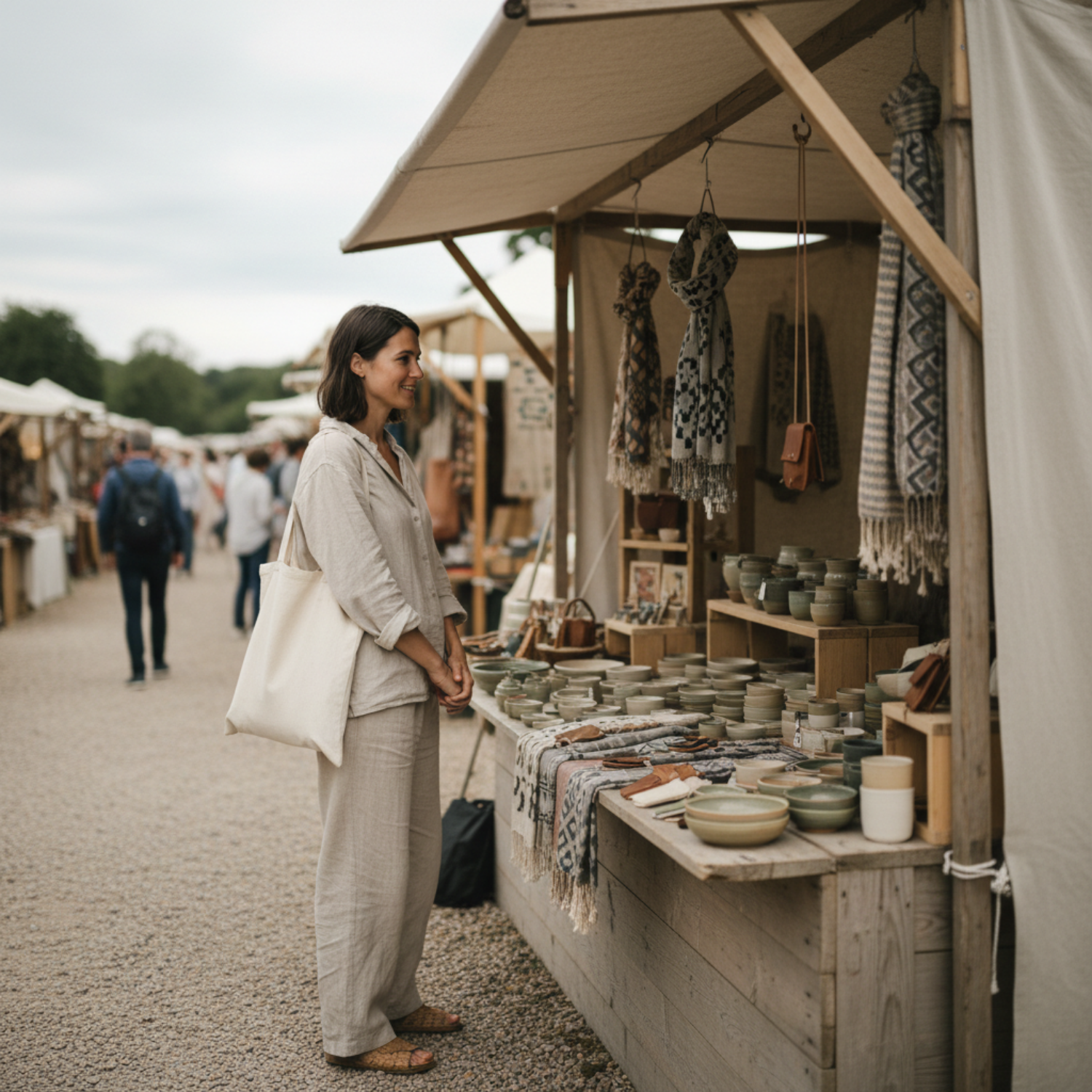
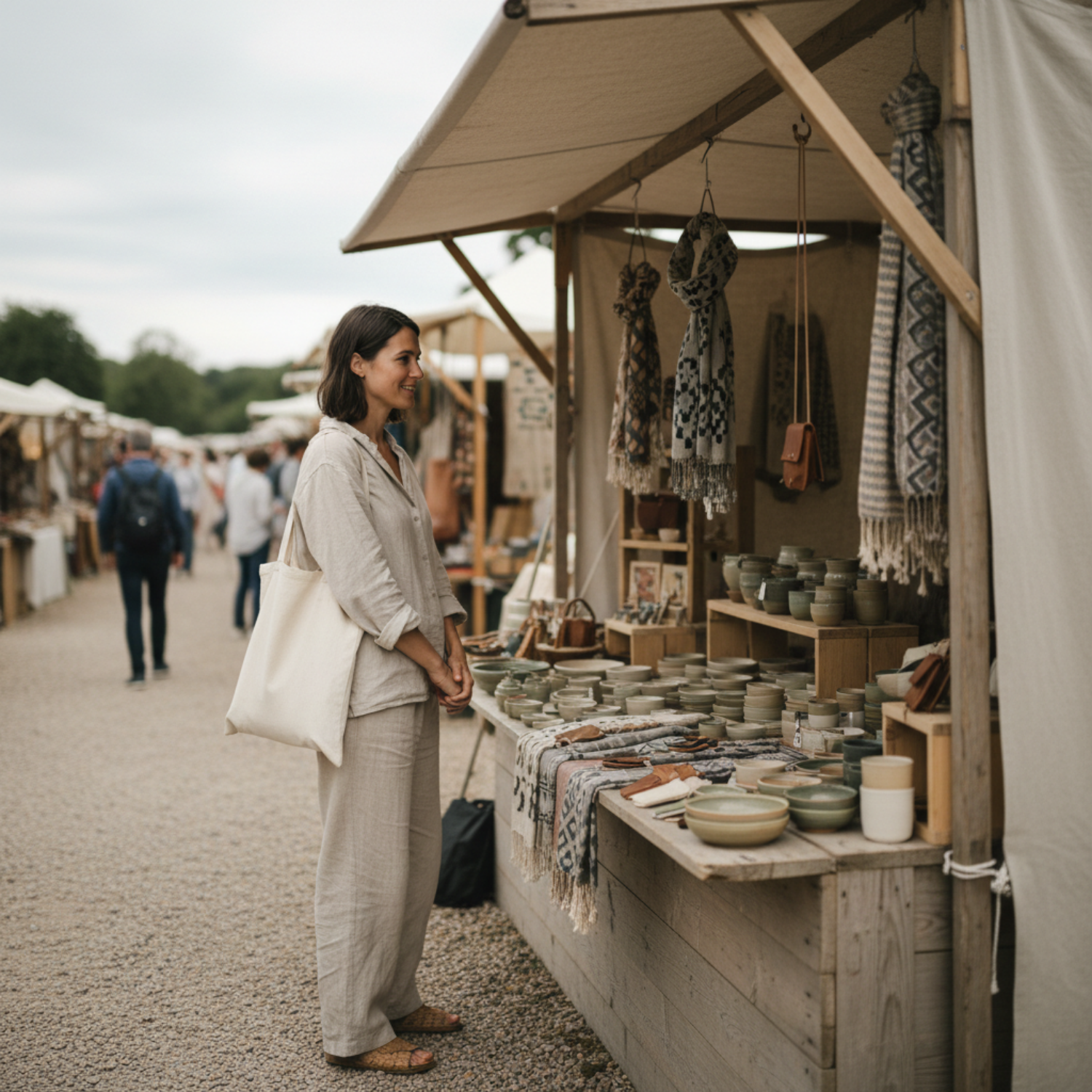
A shopper pauses at the edge—interested, but not stepping in. The moment where attention starts… and then drops.
That moment matters more than anything happening inside your booth.
Because if they don’t step in,
nothing else has a chance to work.
The Pattern
Shoppers are reacting to your booth—
but not committing to it.
They’re noticing something.
Enough to slow down.
Enough to look.
But not enough to enter.
—
So the interaction never actually begins.
It starts—
right at the edge—
and then drops.
The Cause
Stepping into a booth isn’t just about interest.
It’s about clarity.
—
When a booth works,
the next step is obvious.
There’s a clear place to look first.
A clear place to move next.
A clear sense of where they belong.
—
When that’s missing,
the shopper stays where they are—
in the aisle—
trying to figure it out from a distance.
—
And if they have to figure it out,
they don’t step in.
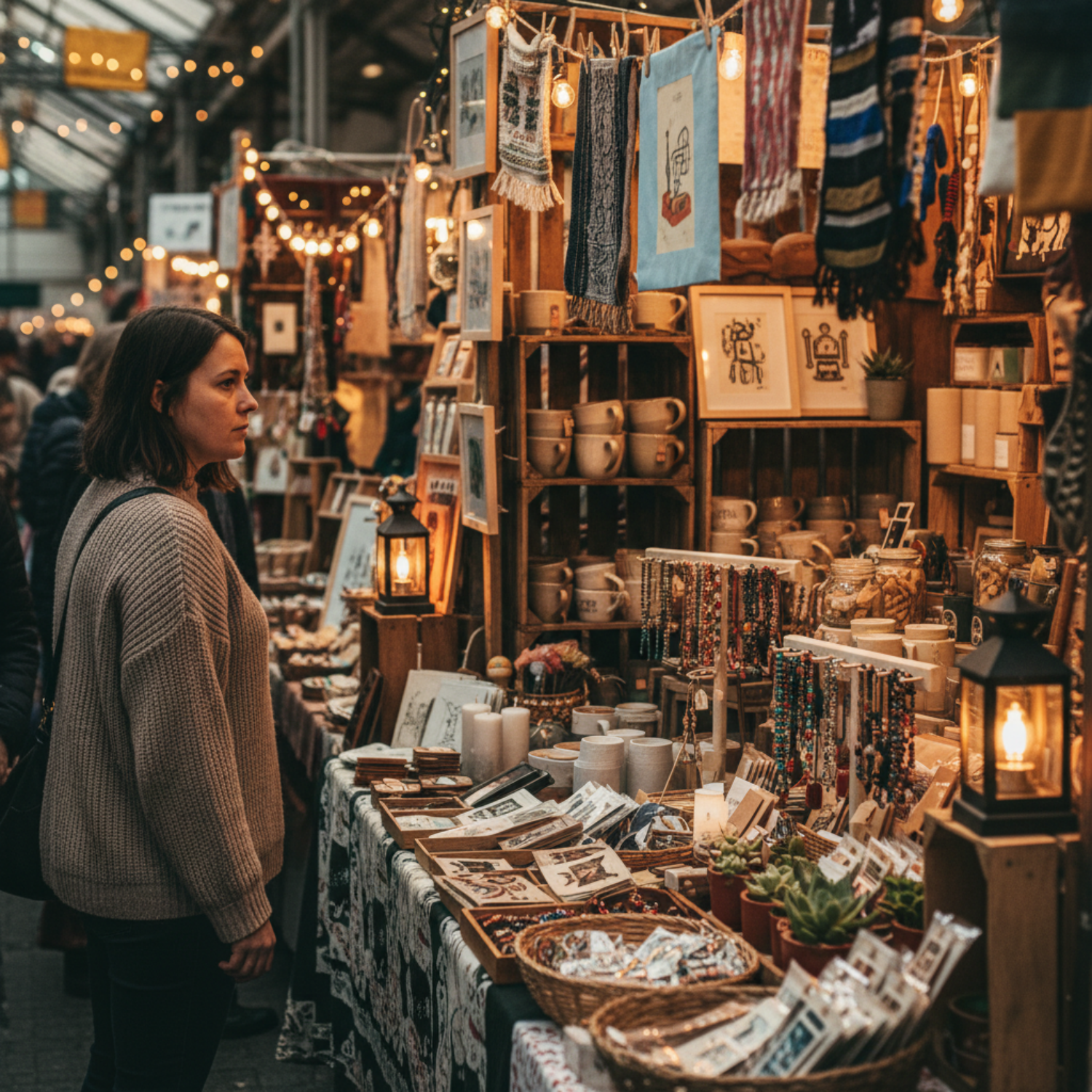
From the aisle, everything competes for attention—so nothing pulls the shopper in. This is where scanning replaces shopping.
What’s Actually Happening at the Edge
From the shopper’s perspective, this is happening fast:
They approach
→ Something catches their eye
→ They slow down
Then immediately:
Where do I start?
Where do I stand?
What am I supposed to look at first?
—
If those answers aren’t clear within seconds,
their attention spreads out across everything.
Nothing stands out enough to pull them forward.
—
So instead of stepping in,
they stay at the edge—
and scan.
—
And scanning is not shopping.
The Structural Break
Most booths are built to be seen—
not entered.
—
Everything is presented at once:
Multiple products
Multiple display heights
Decor layered throughout
—
But nothing is doing one specific job:
👉 pulling the shopper into the space
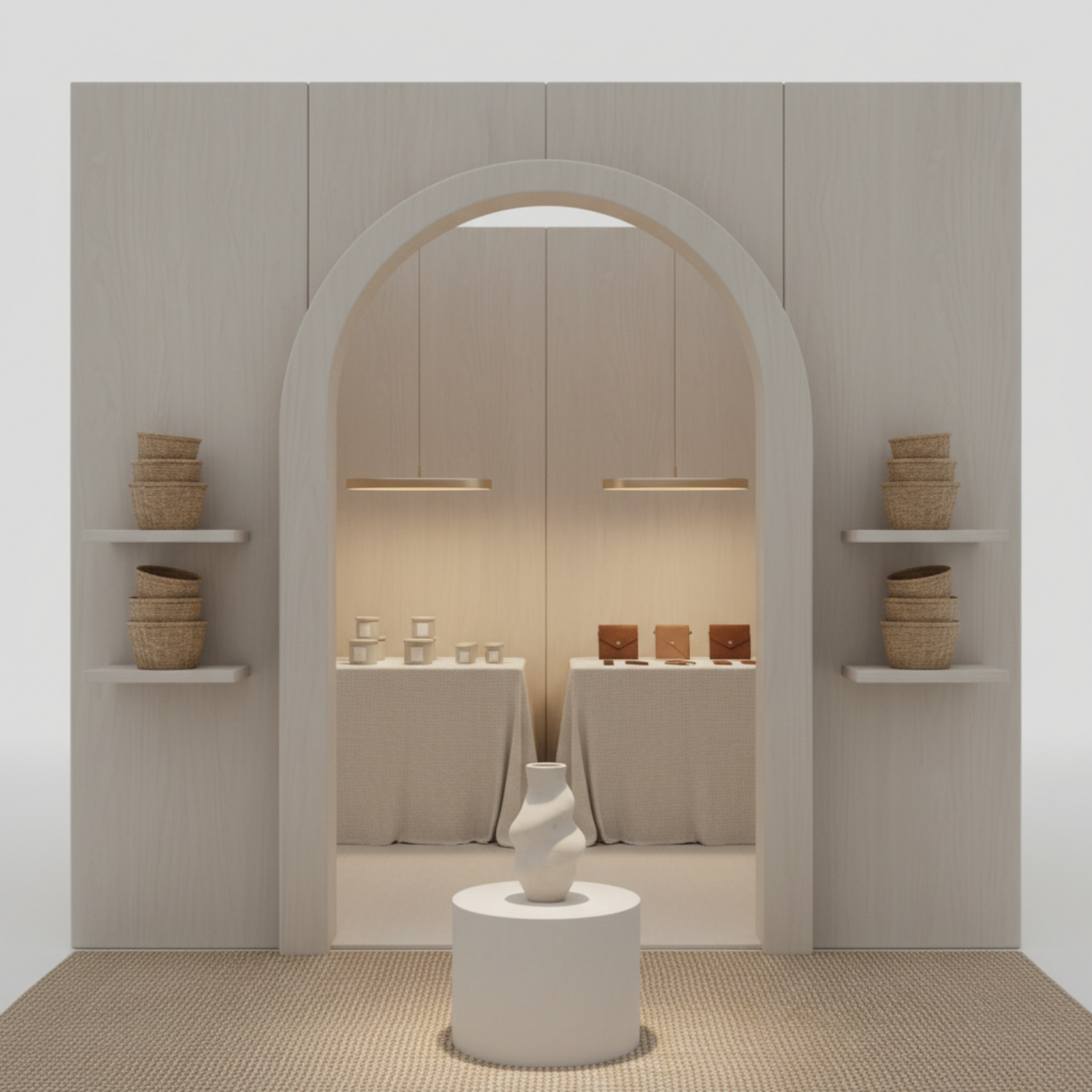
A defined entry changes everything—one clear focal point pulls attention in, and the space shows exactly where to go next.
So the booth works visually—
but not physically.
It doesn’t guide movement.
It doesn’t create an entry.
It doesn’t give permission to step in.
The Constraint (Why This Keeps Happening)
This is where most makers get stuck.
Because the booth looks good.
—
It feels styled.
It matches what they’ve seen online.
It looks like it should work.
—
So the instinct is to:
Add more
Adjust small details
Refine the look
—
But none of that changes the actual problem.
Because the issue isn’t how the booth looks.
It’s how it functions at the edge.
—
And if that doesn’t change,
the same moment repeats—
all day.
The Shift
What matters isn’t whether your booth gets attention.
It’s whether that attention turns into movement.
—
And that only happens when the entry is clear.
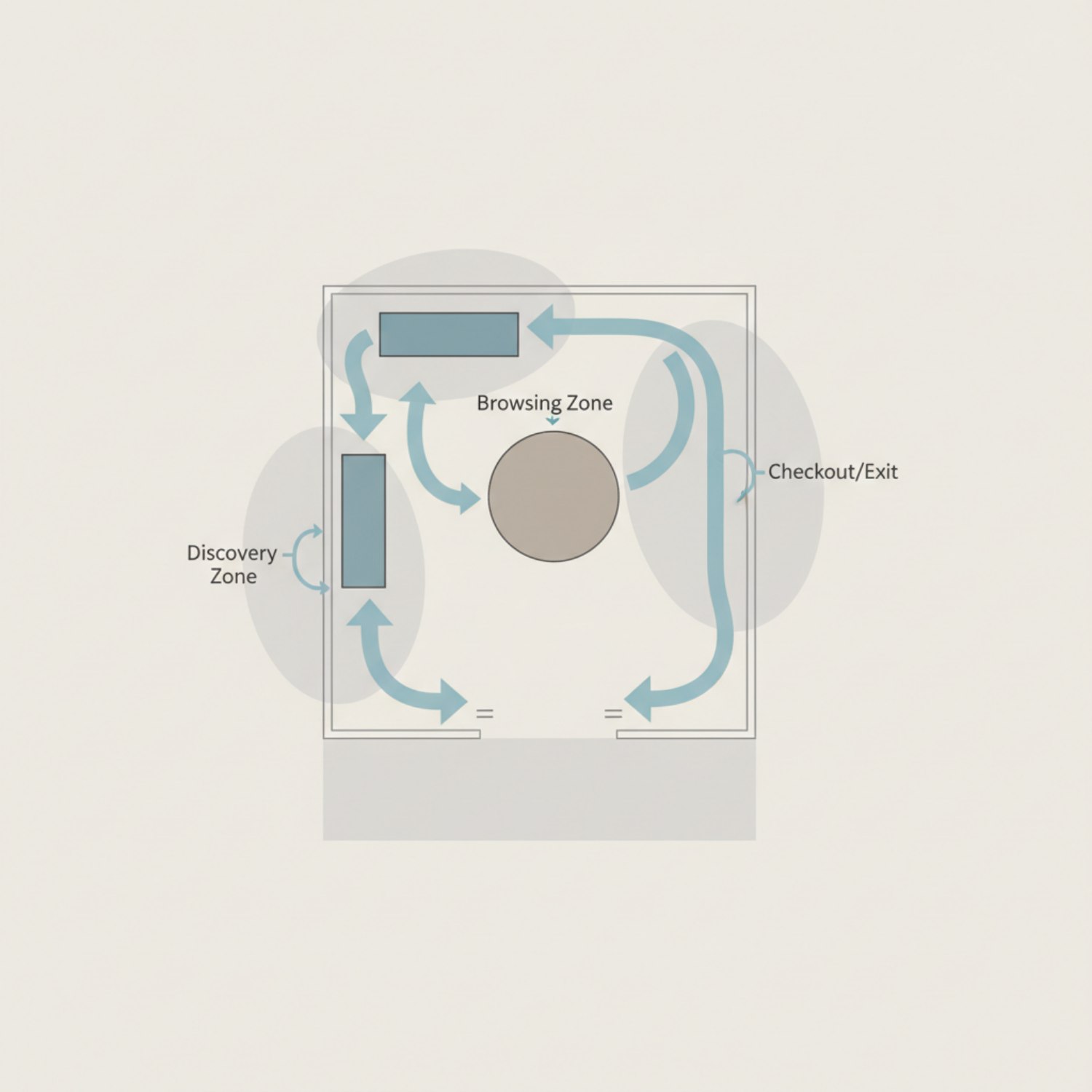
When the path is clear, movement follows—discovery leads to browsing, and browsing leads naturally to checkout.
A booth that works creates a sequence:
Something stands out first
→ That pulls attention in
Something holds attention next
→ That keeps them from moving on
Something invites movement
→ That brings them into the space
—
Without that sequence,
everything stays at the surface.
Diagnostic Checks
If this is happening in your booth, you’ll see it clearly:
If shoppers slow down—but don’t step in
→ your entry point isn’t defined
If they look across the display instead of into it
→ your focal point isn’t clear
If they hesitate at the aisle without changing direction
→ nothing is pulling them forward
If they scan quickly and move on
→ attention isn’t landing anywhere
—
These are all signs of the same issue:
👉 the booth isn’t guiding the first step
What This Means
Right now, your booth is creating attention—
but not direction.
—
And without direction,
attention doesn’t turn into action.
—
So the shopper never crosses the line from:
looking
to
entering.
—
And if they don’t enter—
nothing else matters.
Where This Leads
If this keeps happening,
you’re not dealing with a product problem.
You’re not dealing with pricing.
You’re not even dealing with interest.
—
You’re dealing with structure.
—
And until the entry is clear,
every other improvement stays invisible.
—
What’s Next:
👉 What to Focus On When Shoppers Slow Down—but Don’t Step Into Your Booth
When Your Booth Looks Good—But Still Doesn’t Work
Your booth doesn’t have a trend problem—it has a structure problem.
If shoppers aren’t entering, moving, or staying, nothing you add will fix it.
This is what to focus on first.
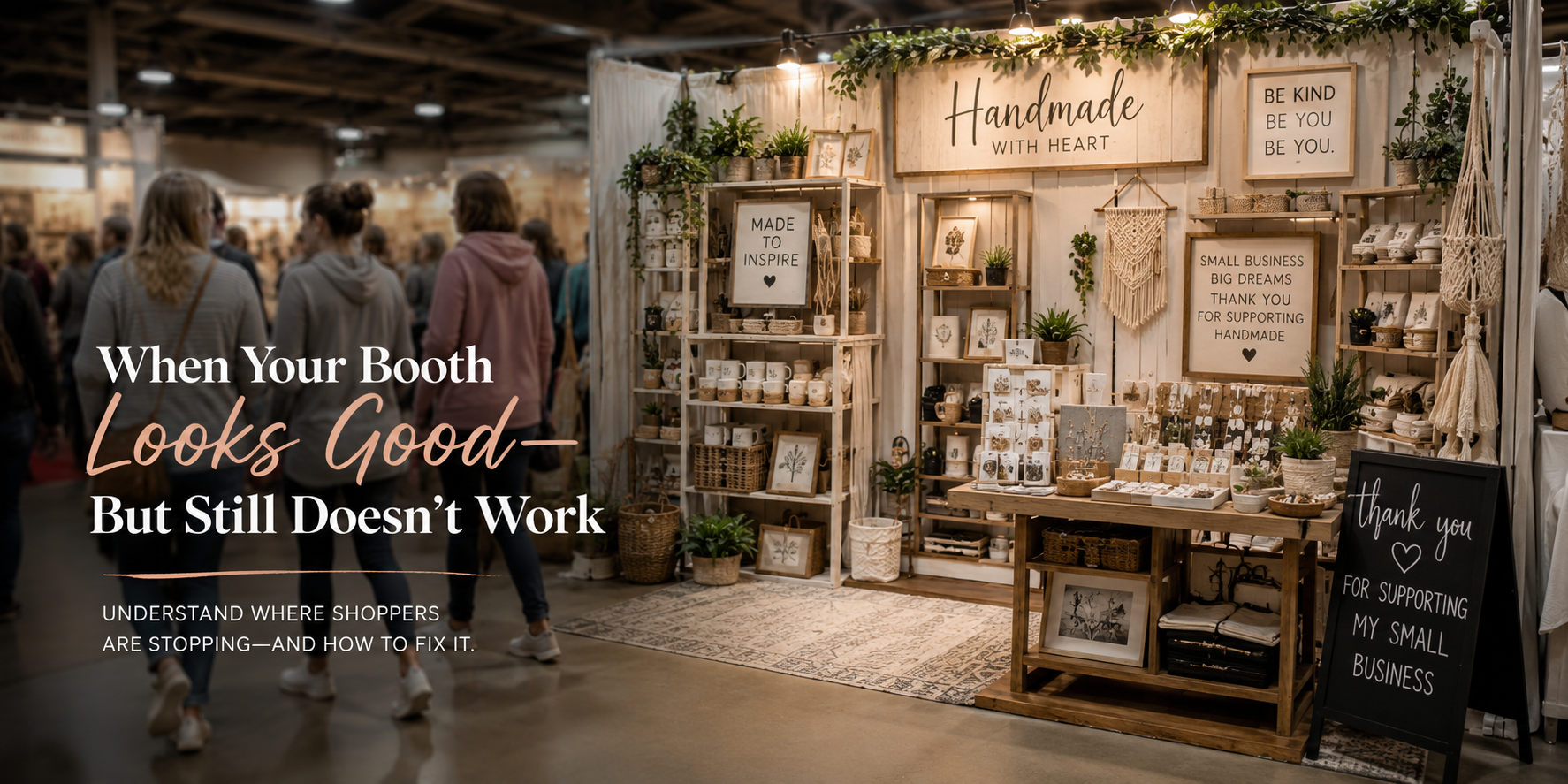
An attractive booth and an effective booth aren't always the same thing.
Your booth looks good.
You've worked on it.
You've improved displays.
You've rearranged products.
You've invested in signs.
Maybe other vendors have even complimented it.
And honestly?
You like how it looks too.
Which is why it's so frustrating when the results don't match the effort.
Because if the booth looks good…
why doesn't it seem to work?
Why This Happens
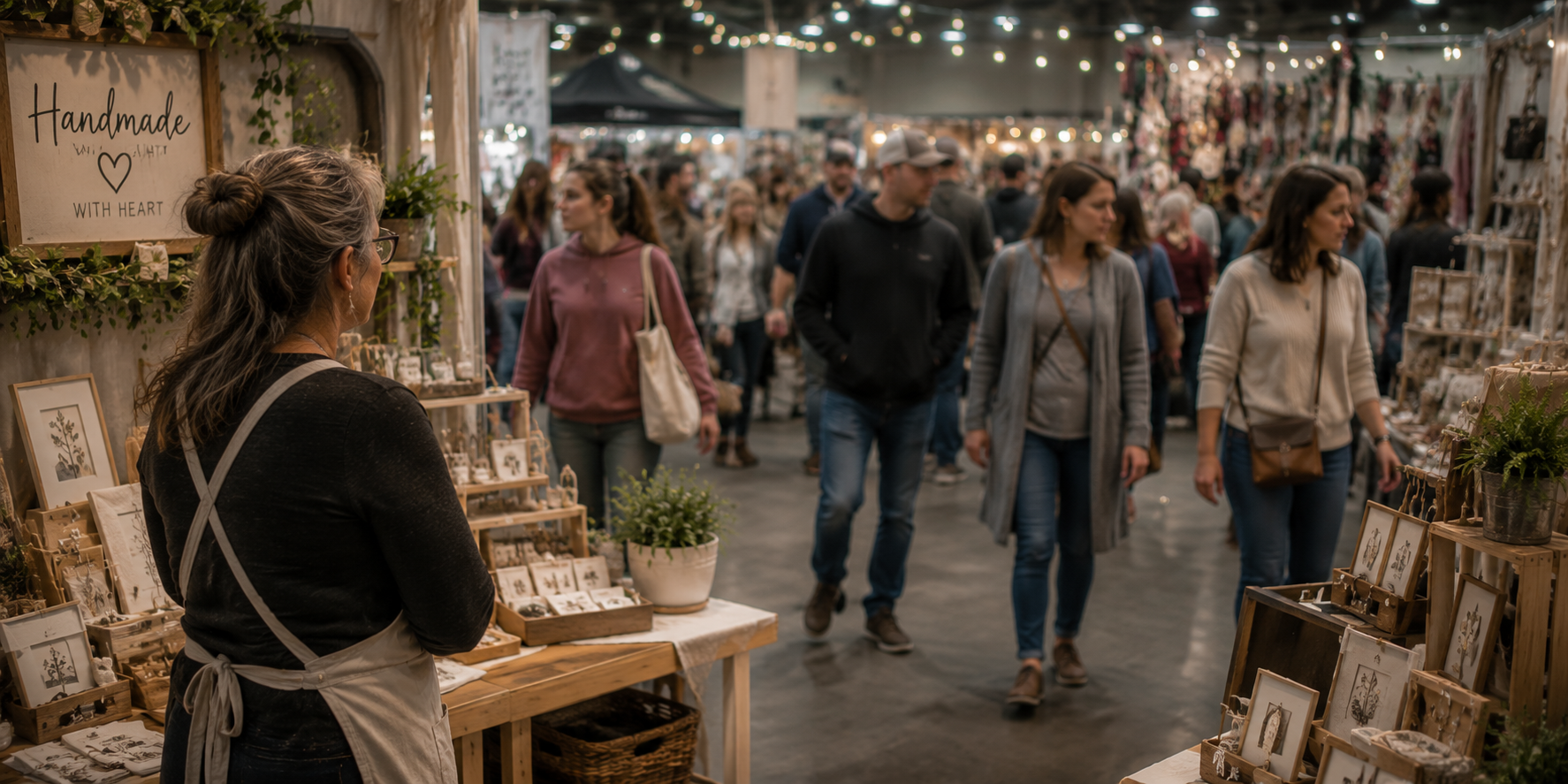
Shoppers don't see hours of preparation. They experience what it feels like to approach, enter, and browse.
Looking good and working well aren't always the same thing.
Shoppers don't experience your booth the way you do.
They don't see hours of preparation.
They don't know how much you've improved.
They simply experience what it feels like to approach, enter, and browse.
And sometimes a booth that photographs beautifully still creates friction in real life.
Signs This Might Be Happening
You might recognize some of these:
People compliment your setup but rarely buy.
Visitors stop briefly and move on.
You keep tweaking things from show to show.
Nothing seems obviously wrong.
The booth feels better than it performs.
The frustrating part?
You can't point to one thing and say:
"That's the problem."
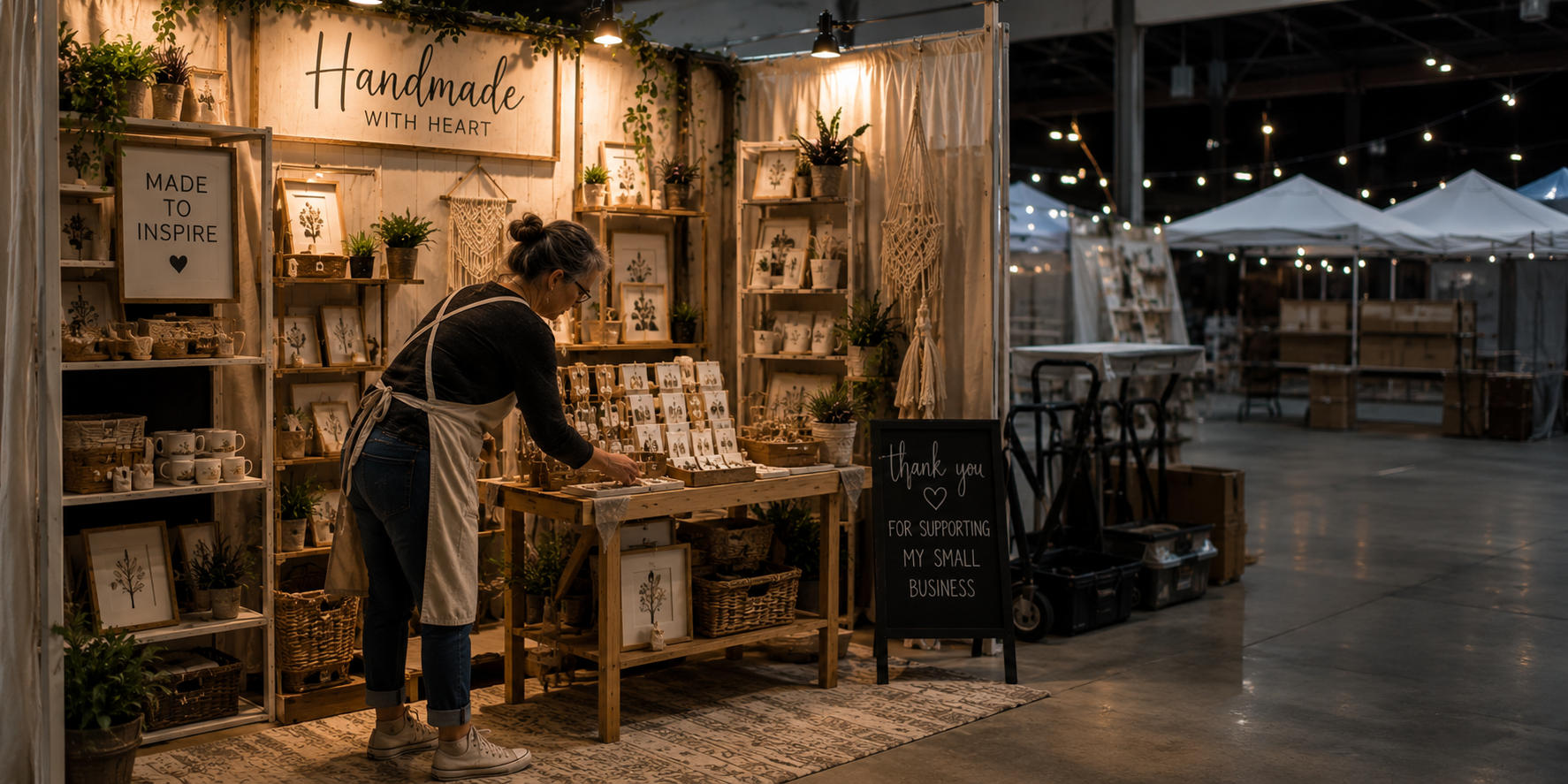
Sometimes nothing looks wrong. It just feels like something isn't connecting.
Instead, it just feels like something isn't connecting.
What To Focus On First
Before changing everything again, try asking:
Where are shoppers stopping?
Because booths usually don't fail everywhere.
People might:
walk past
slow down
hesitate
browse
become overwhelmed
Understanding where things break is often more useful than redesigning the whole booth.
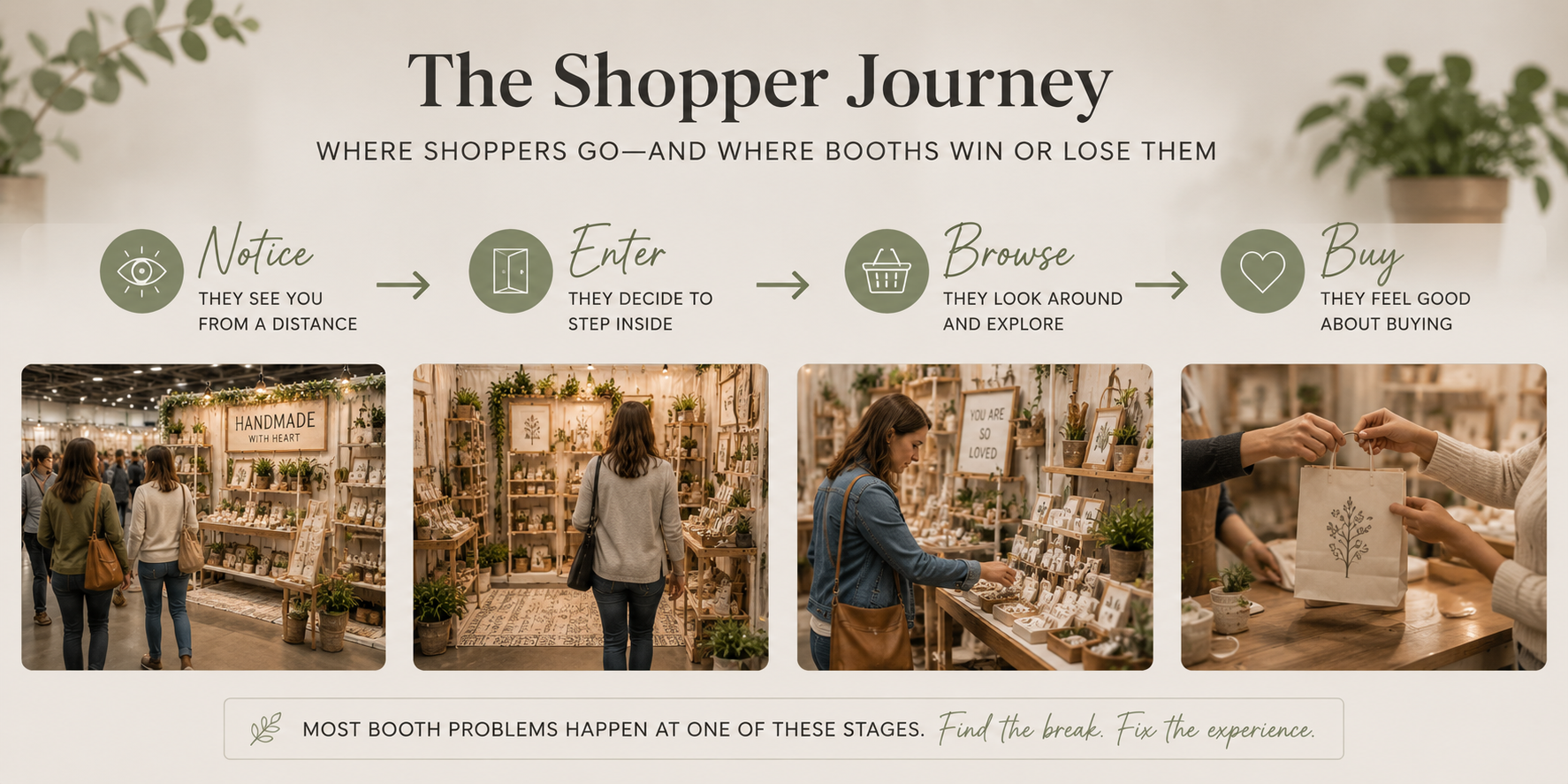
Most booth problems happen at one stage of the shopper journey—not everywhere.
A Simple Way To Think About It
Every shopper goes through a journey.
First they notice.
Then they decide whether to enter.
Then they browse.
Eventually they decide whether to buy.
Most booth problems happen somewhere along that path.
And once you know where the break is, fixing it becomes much easier.
Ask Yourself
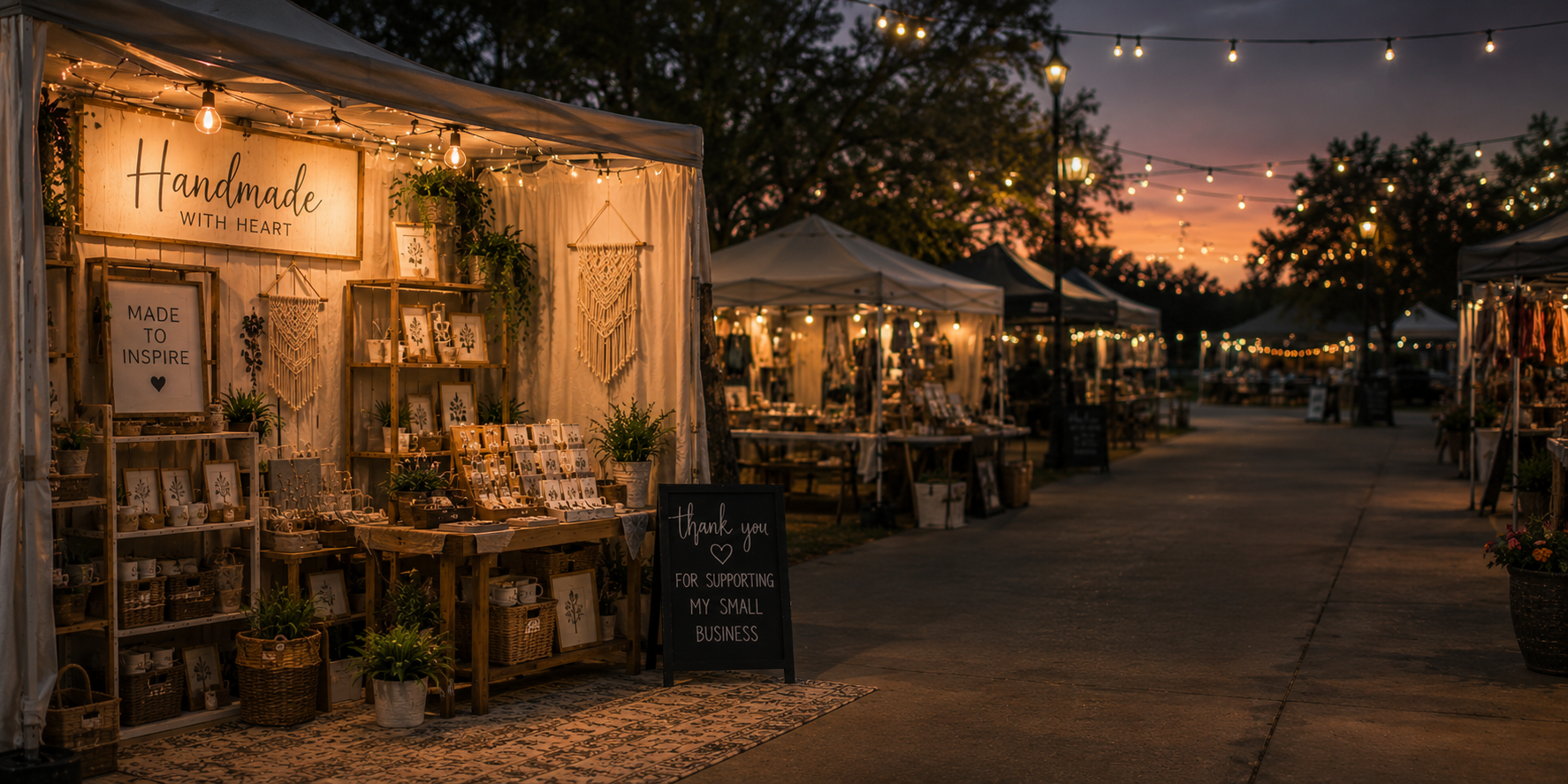
Sometimes the best changes begin by stepping back and seeing the booth through a shopper's eyes.
Are people seeing the booth?
Are they entering?
Are they staying?
Are they comfortable browsing?
Am I trying to fix everything instead of finding the real problem?
What This Doesn't Mean
This doesn't mean your booth looks bad.
And it doesn't mean all your effort was wasted.
In fact, a booth that already looks good usually needs smaller changes than you think.
Sometimes the answer isn't adding more.
Sometimes it's understanding how shoppers experience the booth you already have.
Remember
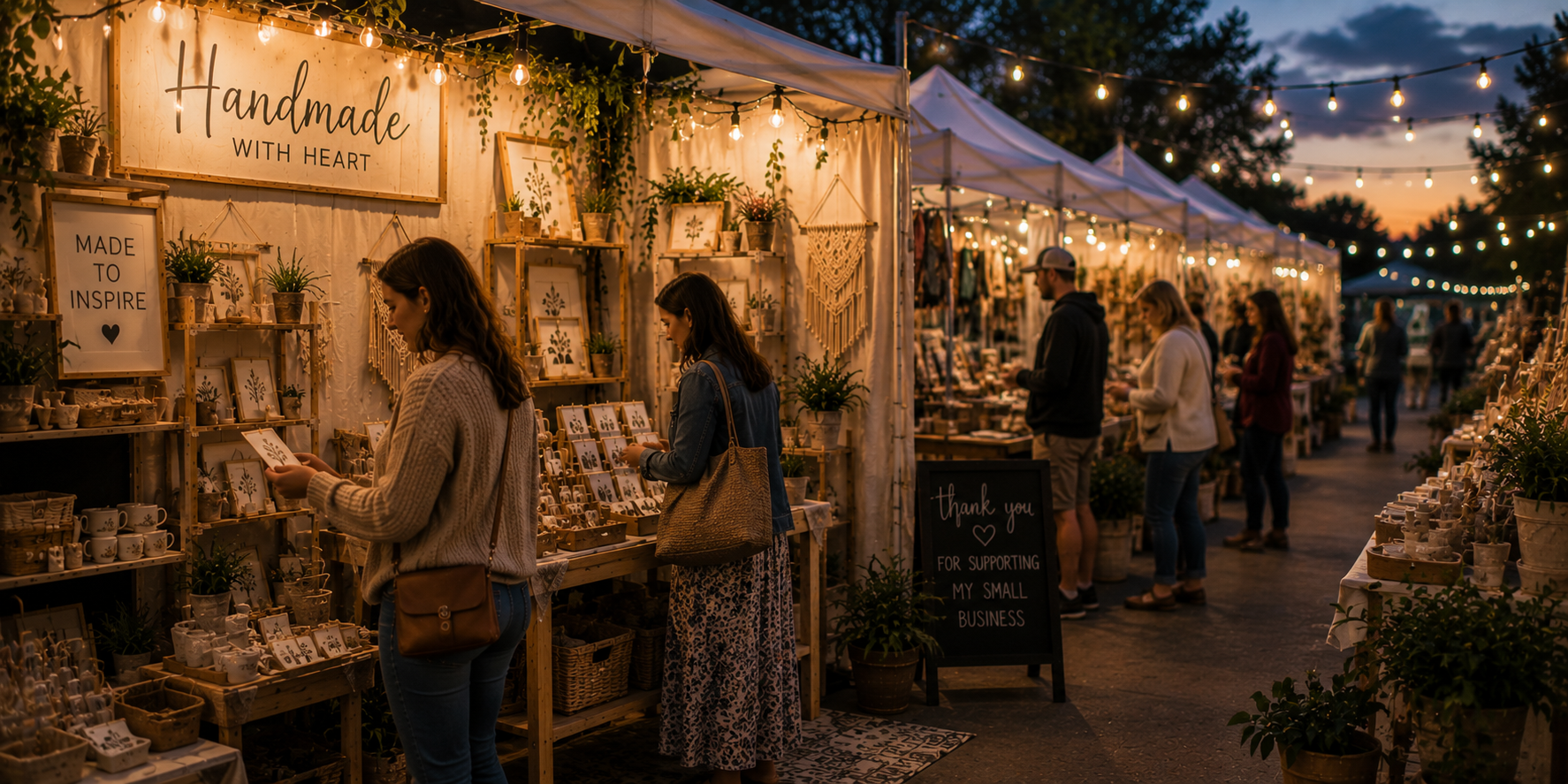
Better results usually come from small improvements, not complete reinventions.
Beautiful booths can struggle.
Simple booths can thrive.
And most of the time, the difference isn't talent.
It's understanding where shoppers are getting stuck.
Because when your booth starts working, it usually doesn't happen all at once.
It happens one small improvement at a time.
Related Articles
What Customers Notice First in a Craft Booth
Why Shoppers Slow Down—but Never Step Into Your Booth
Why Shoppers Browse Your Booth But Don't Buy
Helpful Resource
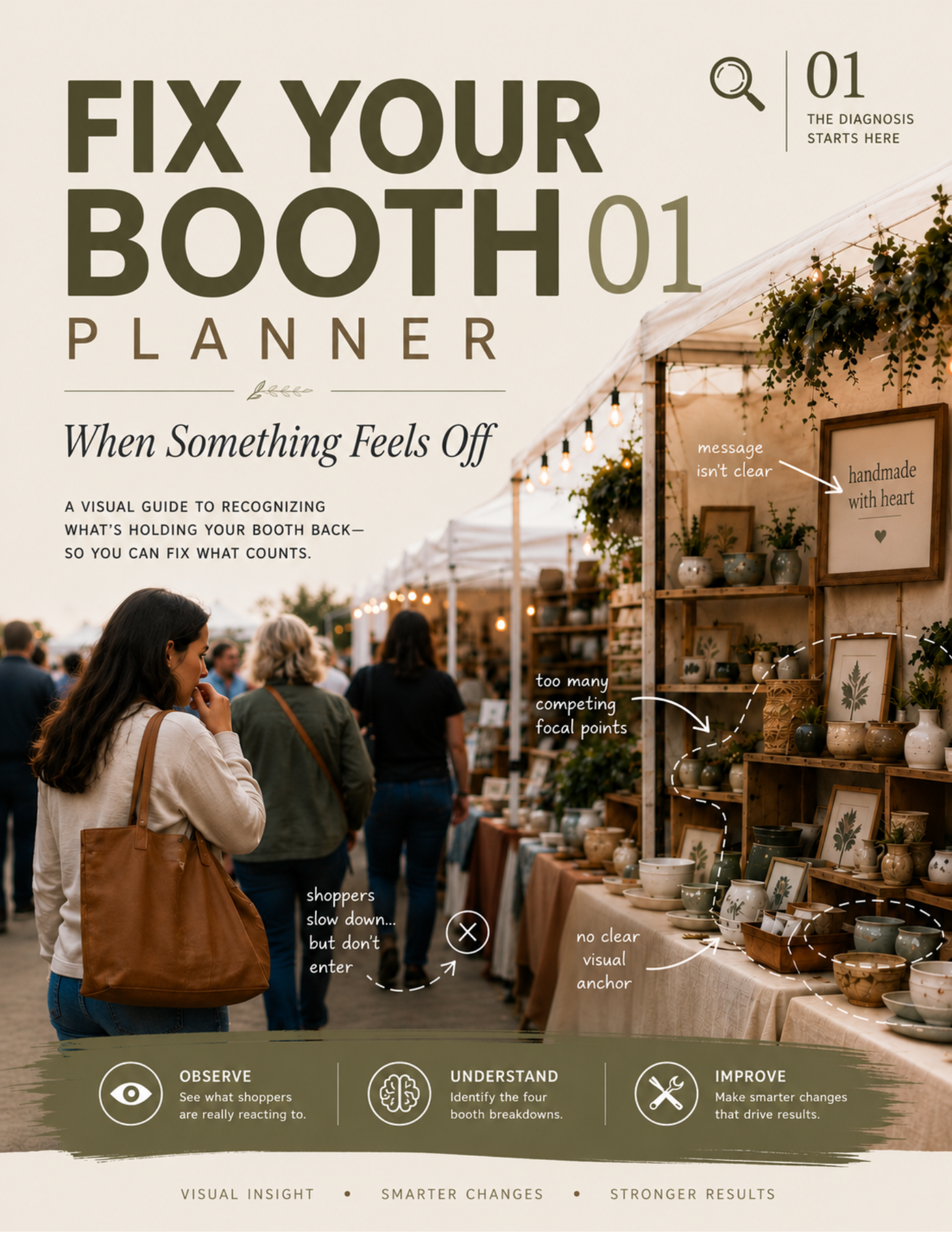
If something feels off but you can't tell why, this planner helps you recognize what's holding your booth back and focus on what matters most.
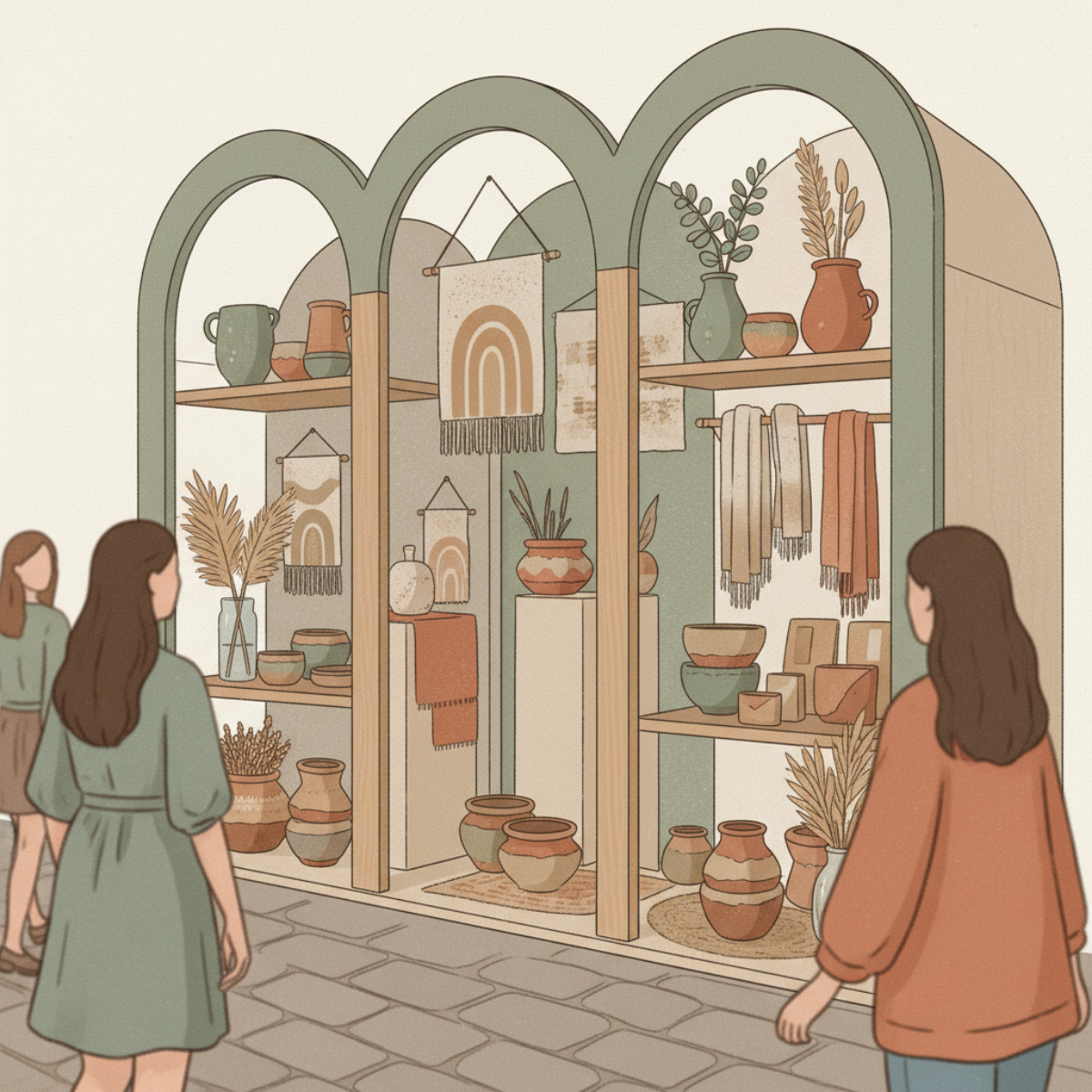
When Your Booth Looks Trendy—but Still Feels Off
Your booth can look stylish, curated, and on-trend—but still feel hard to enter or shop. Learn why shoppers hesitate even when a booth “looks good,” and what to focus on instead.
They Slow Down
They don’t walk straight past.
That would be easier to ignore.
They slow down.
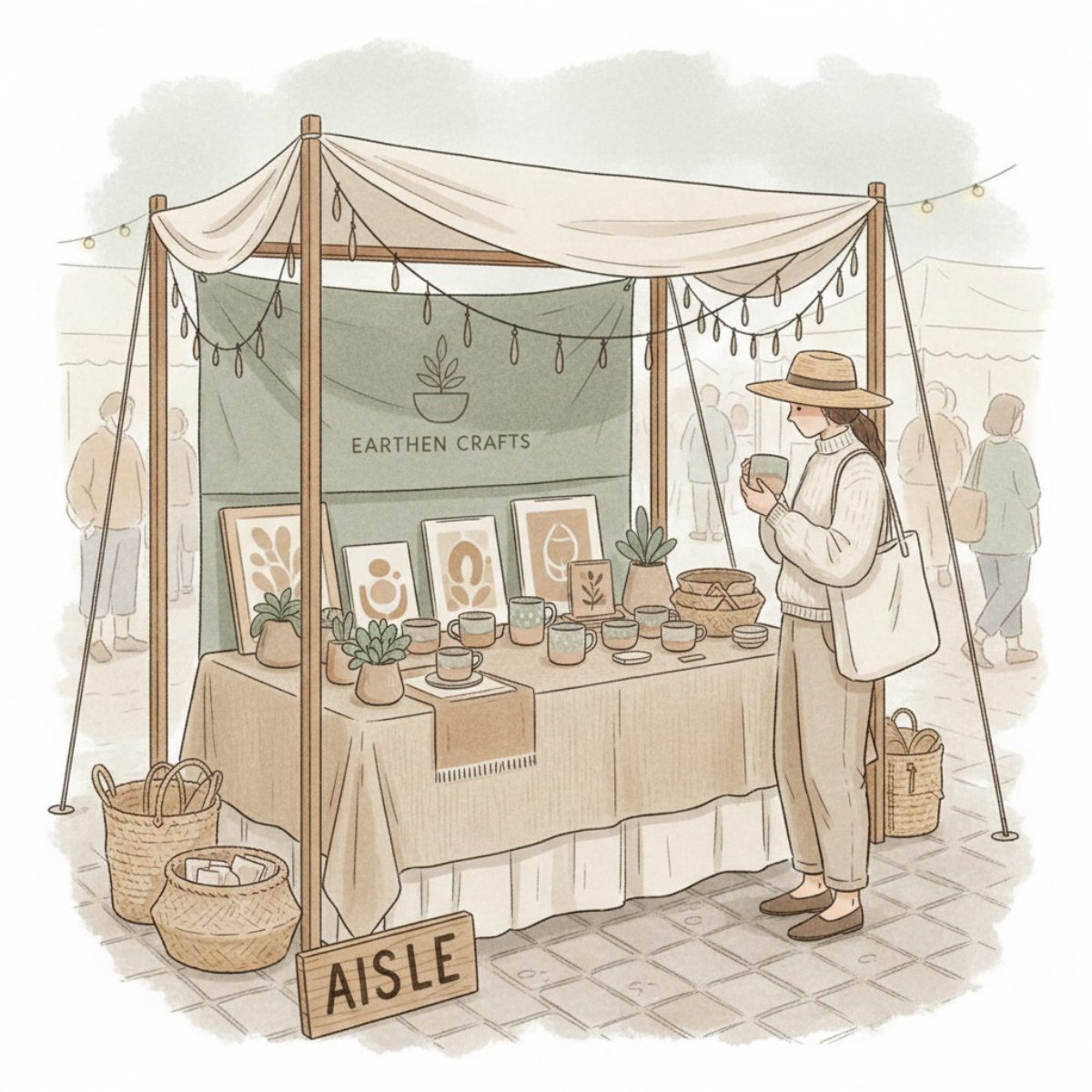
Getting people to slow down is important—but what happens next matters even more.
You can see the moment.
They reach the front of your booth—
but their feet stop at the aisle.
They lean in just slightly.
Look across the table.
Not into the booth.
Across it.
They Don’t Step In
They don’t step in.
They don’t turn their body.
They just… hover.
And then they keep moving.
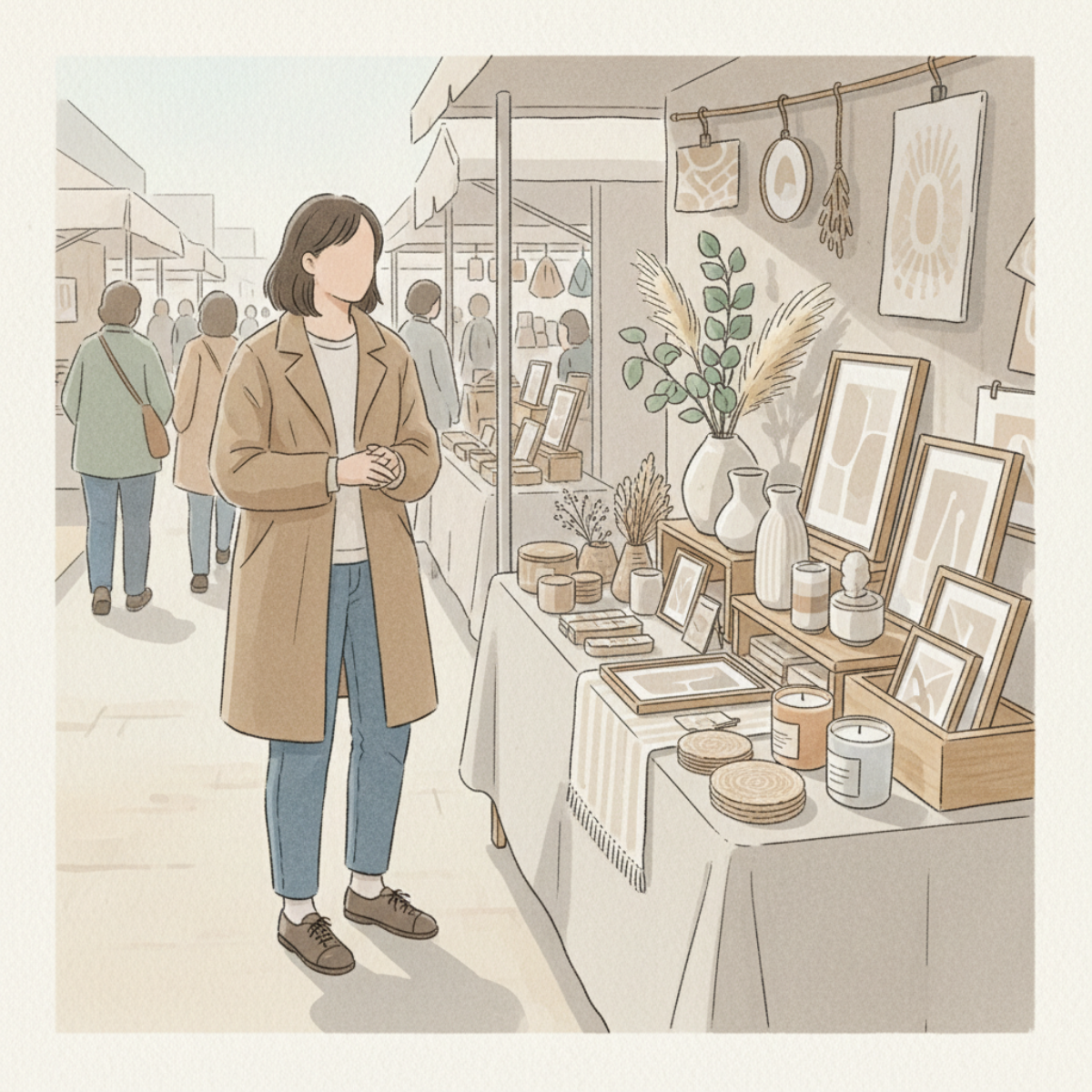
Interest and comfort aren't always the same thing. Sometimes shoppers look—but never quite step in.
They Scan—But Don’t Land
It keeps happening.
Someone else slows down.
Their eyes move across the display—
left to right.
Top to bottom.
Quick scan.
No pause point.
And then—
they’re already past you.
Not because they didn’t see anything.
They saw it.
They just never settled on anything.
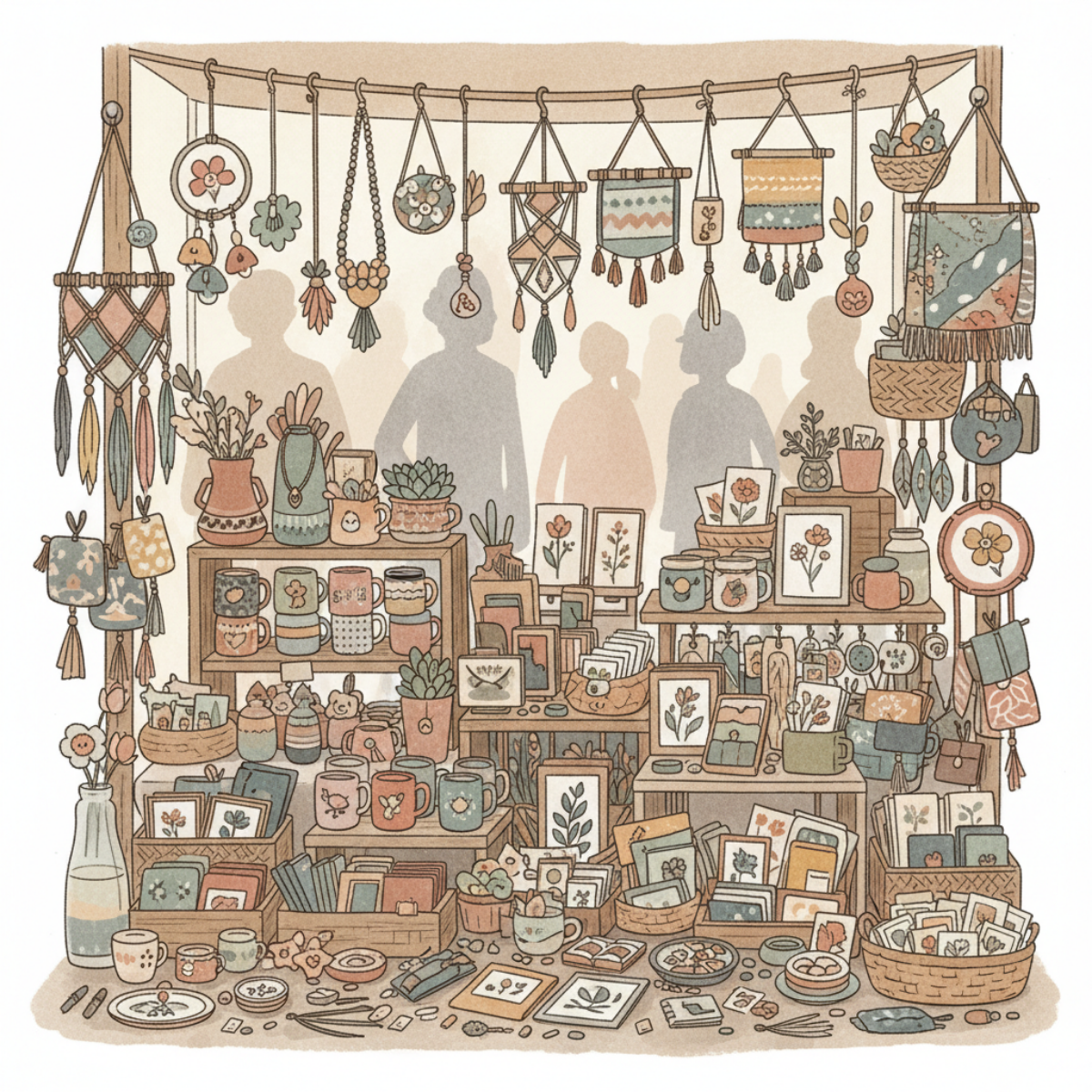
When everything asks for attention, shoppers often don't know where to begin.
This Is Where It Breaks
And that’s where it breaks.
Because the booth looks like it should be working.
It matches what you’ve been seeing.
It feels styled.
It feels current.
But the moment never locks.
It starts—
right at the edge—
and then slips.
Before anything builds.
Nothing Holds Them There
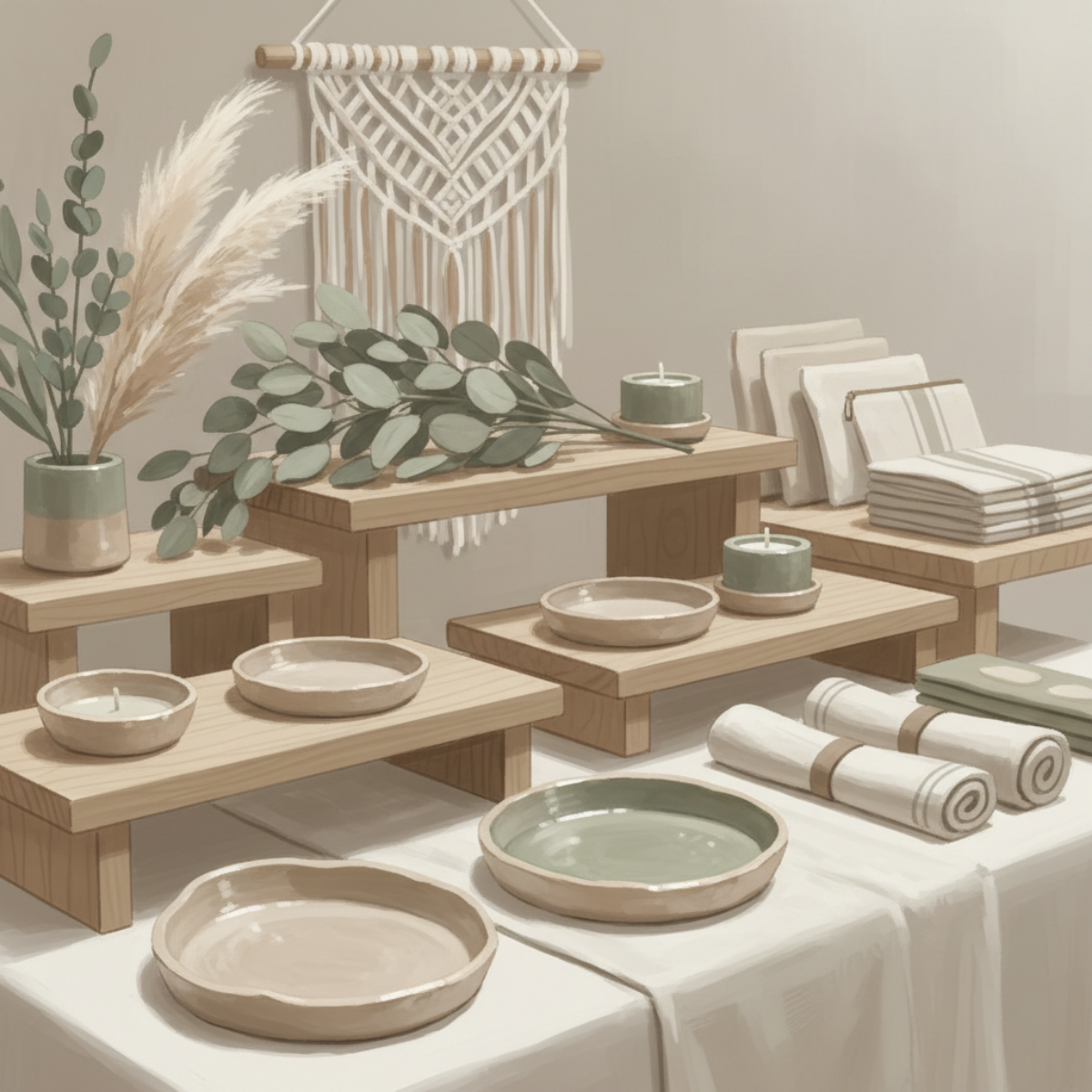
Looking calm and looking memorable aren't always the same thing.
So people react—
but they don’t commit.
They notice something.
They register it.
But they don’t move toward it.
They don’t step in.
They don’t reach.
They don’t pause long enough for anything to happen next.
It’s Not Random
And once you see that,
you start noticing exactly where it breaks.
Not after they walk away.
Right before they ever step in.
If this keeps happening,
it’s not random.
The moment starts—
but it never turns into anything.
Attention Isn’t Stopping
Because right now,
your booth is getting attention…
right at the edge—
but it’s not turning into stopping.
And those are not the same thing.
Once You See It…
Once you see that,
you can’t unsee it.
Ask Yourself
Am I adding trends faster than I'm improving the shopping experience?
Does the booth feel clear or cluttered?
Are shoppers slowing down and entering?
Is there a strong focal point?
Am I changing things because they help—or because they're popular?
What This Doesn't Mean
This doesn't mean trends are bad.
And it doesn't mean your booth needs to look plain.
In fact, beautiful details and current styles can help attract attention.
But trends work best when they support the experience—not when they compete with it.
Sometimes the answer isn't adding the next popular idea.
Sometimes it's making the booth you already have feel easier to understand.
Remember
Trends change.
Shoppers don't.
People still want booths that feel welcoming.
They still want clarity.
They still want to know where to look and what to do next.
And most of the time, the booths that feel timeless are the ones that make shopping feel easy.
Related Articles
What Customers Notice First in a Craft Booth
Why Some Booths Feel Easy to Shop (and Others Don't)
When Your Booth Looks Good—But Still Doesn't Work
Helpful Resource
If something feels off but you can't tell why, this planner helps you recognize what's holding your booth back and focus on what matters most.
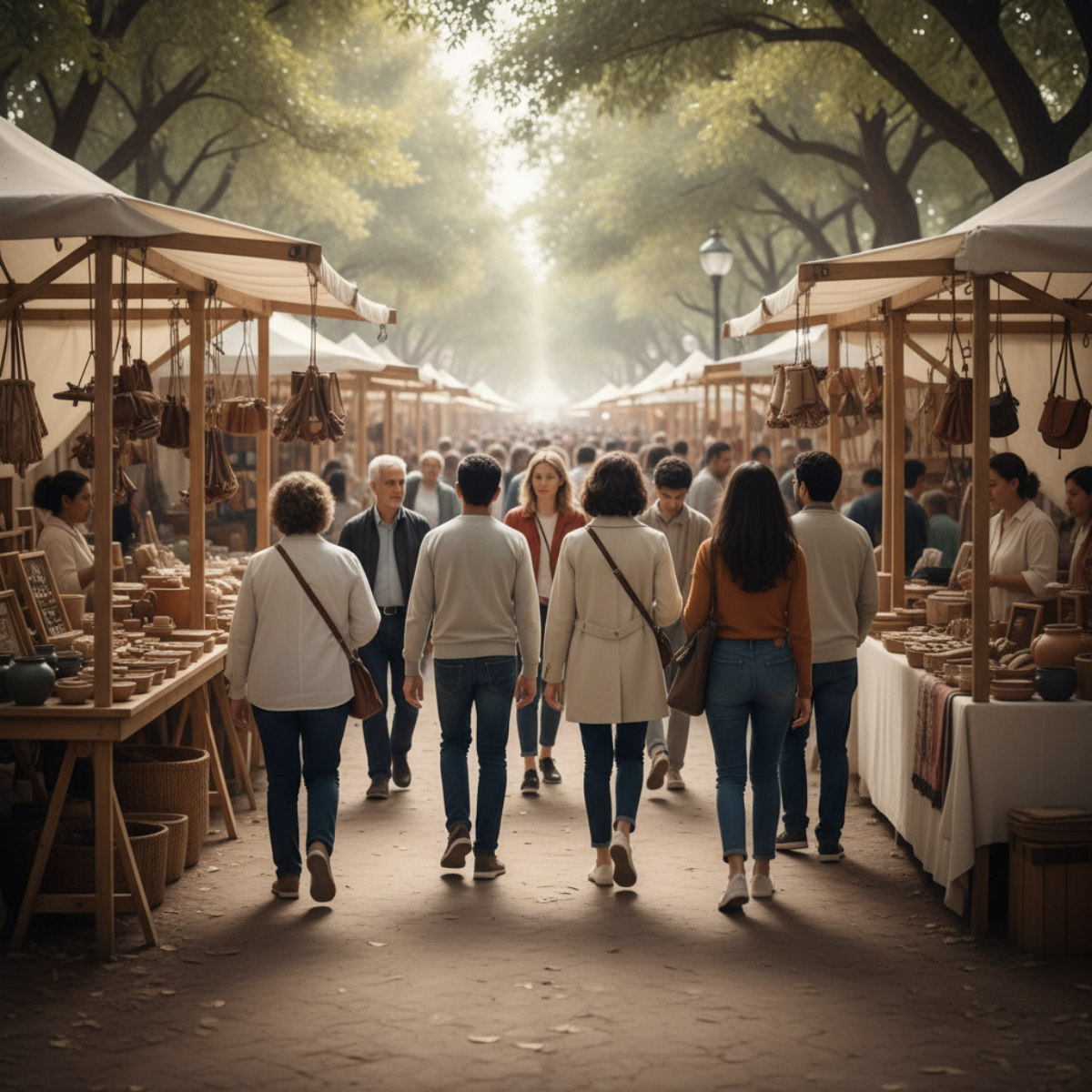
What to Focus On When Your Booth Feels Busy - But Isn’t Selling
Your booth can feel active all day—people stopping, browsing, even picking things up—and still not convert into sales.
That’s usually not a traffic problem.
It’s a flow problem.
Something is catching attention, but it isn’t guiding shoppers into a clear next step. They enter just enough to look… but not enough to stay, engage, or buy.
When a booth feels busy but isn’t selling, the issue isn’t effort—it’s structure.
Fix the flow, and the behavior changes.
People are coming into your booth.
That’s not the problem.
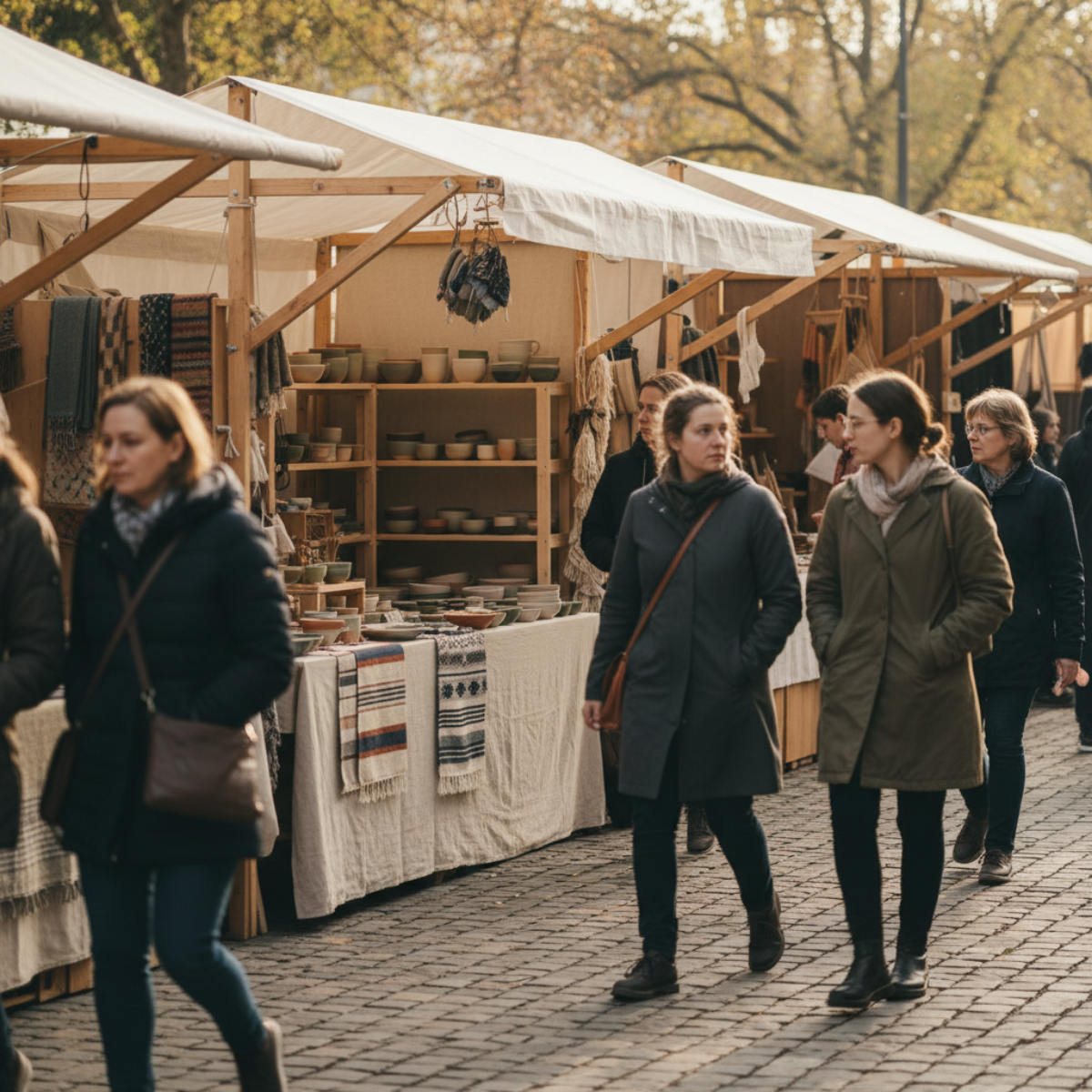
People are already coming through—but nothing is causing them to stop.
They step in.
They look.
They keep moving.
Nothing changes once they’re inside.
That’s the break.
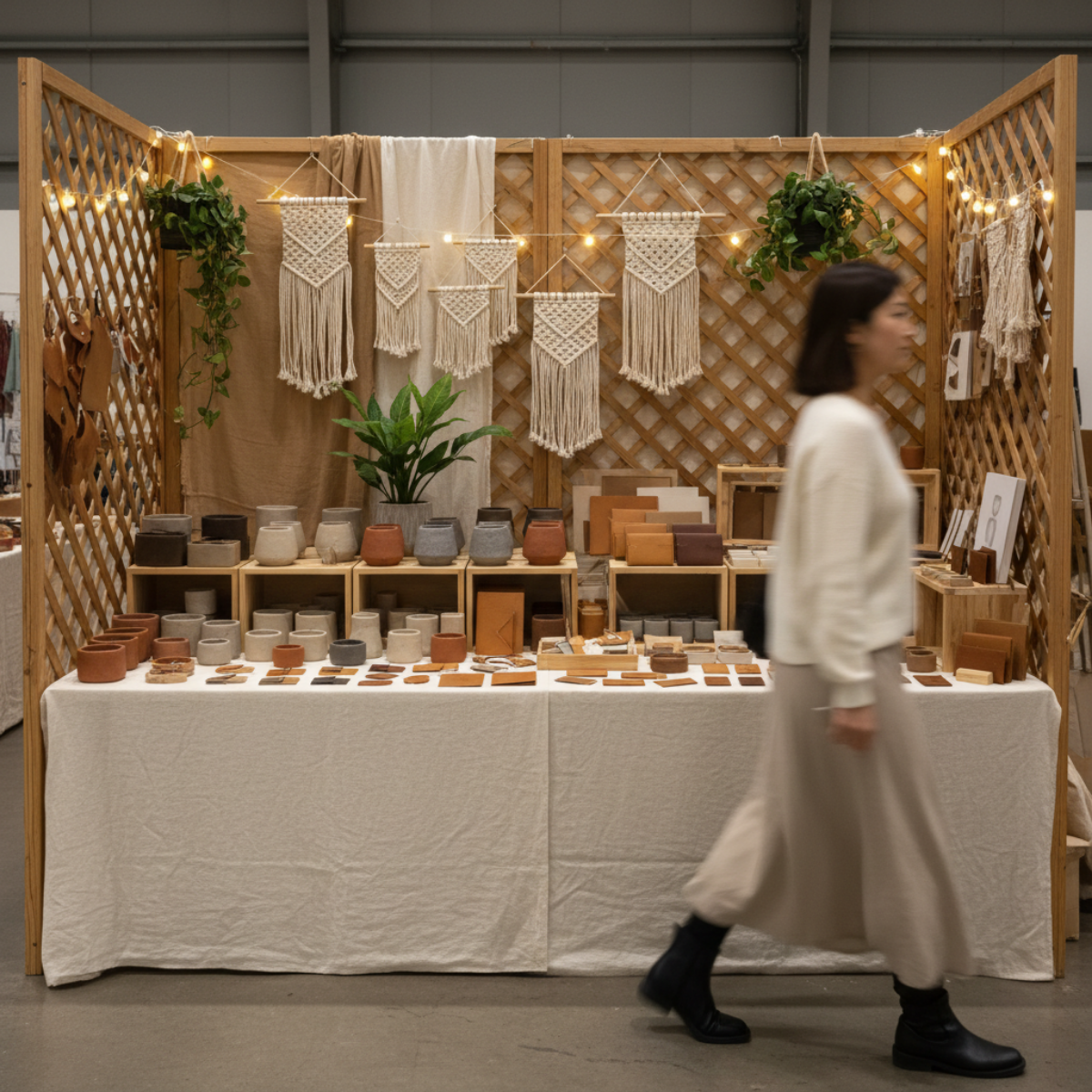
The booth looks complete—but nothing is interrupting the flow enough to make someone stop.
Not outside the booth.
Not before they enter.
Inside.
You’re not dealing with a traffic problem.
You’re dealing with uninterrupted movement.
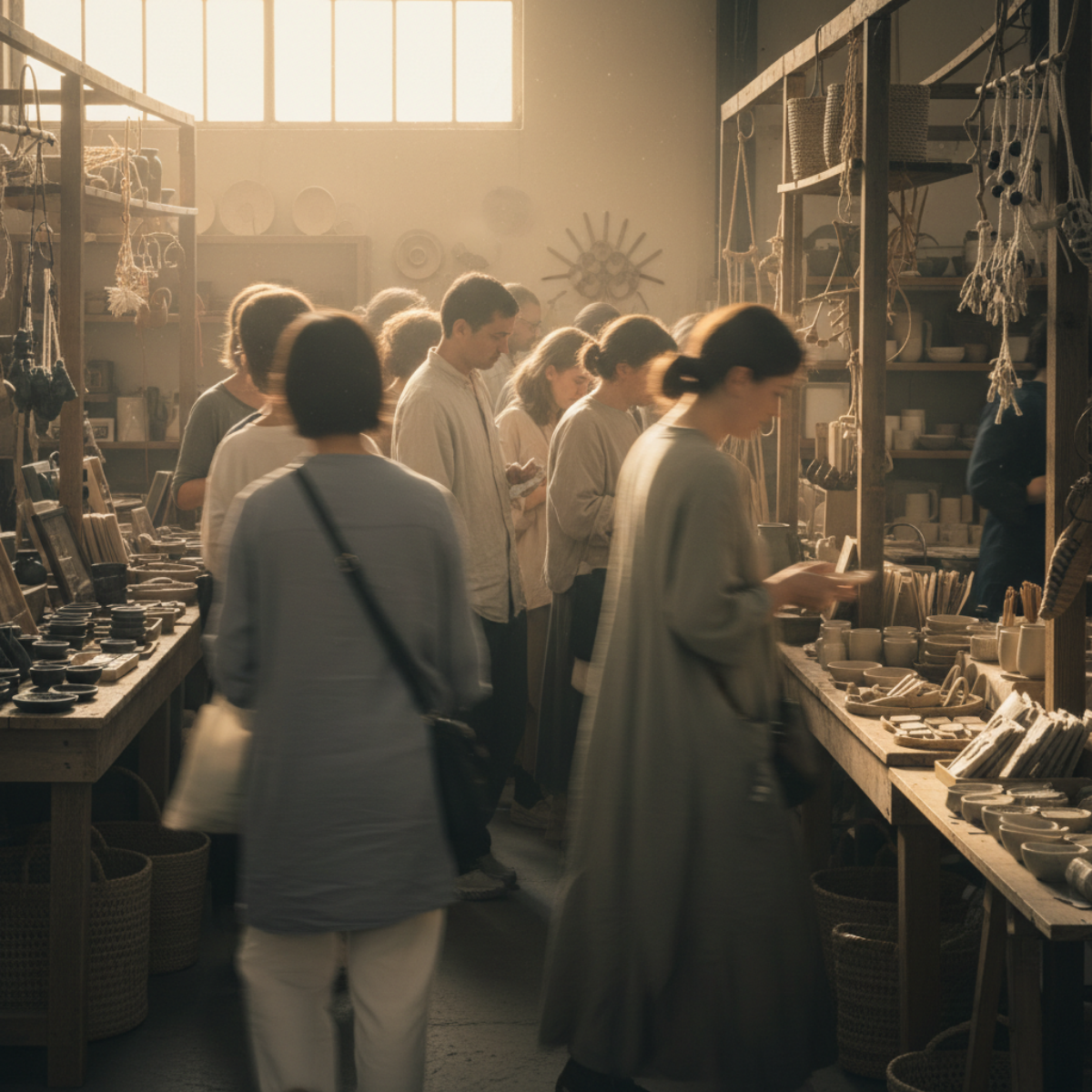
It feels busy—and it is—but without a clear point of focus, the movement never turns into decisions.
And if movement doesn’t break—
nothing builds.
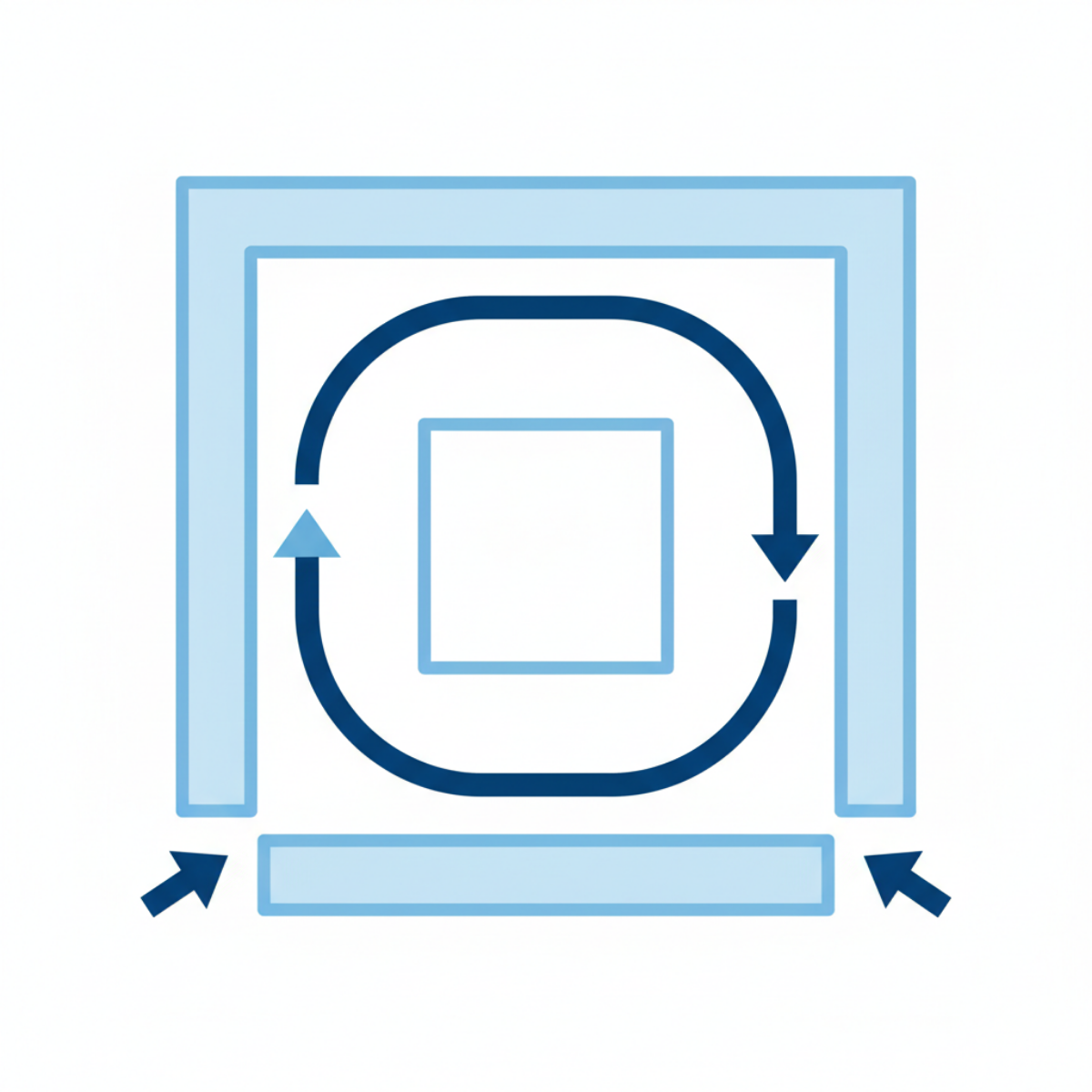
When the layout creates a smooth loop, people keep moving—because nothing tells them where to stop.
This is already decided
Every time someone walks in and walks out without stopping—
the outcome was already set.
Not because they weren’t interested.
Because nothing changed their behavior once they entered.
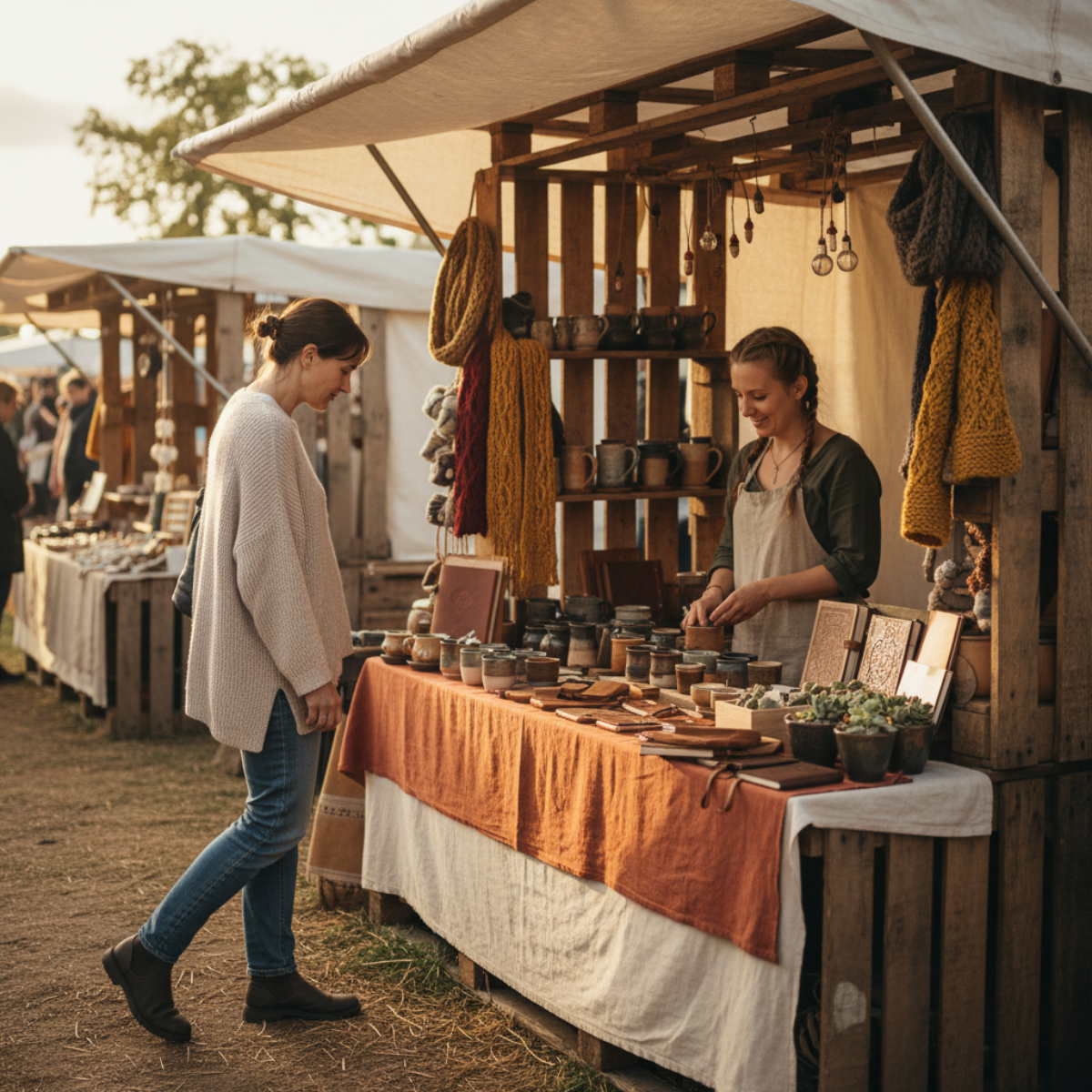
When something pulls attention forward and gives it a place to land, the moment doesn’t pass—it turns into interaction.
They did exactly what the booth allowed them to do.
So this is the focus
Not more products.
Not more setup changes.
Not more traffic.
Those don’t interrupt movement.
They add to it.
One job
Create a point where movement stops.
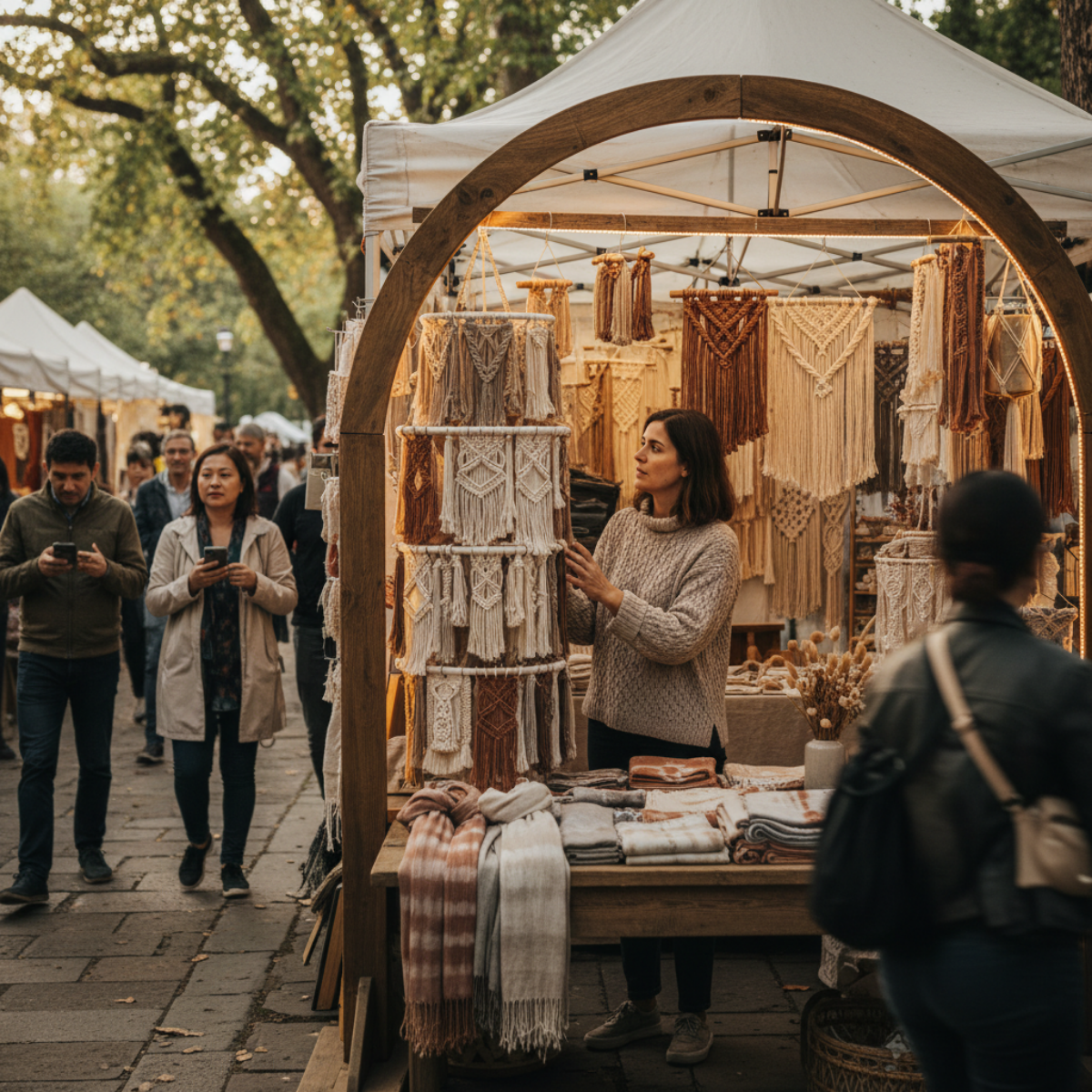
When the front of your booth invites interaction instead of just showing products, shoppers don’t just pass—they step in.
Not slows.
Not hesitates.
Stops.
A place where:
they pause
they look longer
they stay
Because that’s the moment everything depends on.
If that moment doesn’t exist—
nothing else matters.
This is where booths fail
They look active.
People are coming through.
It feels like something should be happening.
But nothing builds.
Because nothing holds.
The shift
You stop trying to improve the booth.
You start forcing a break in the pattern.
Because the pattern is the problem.
And until that changes—
nothing else will.
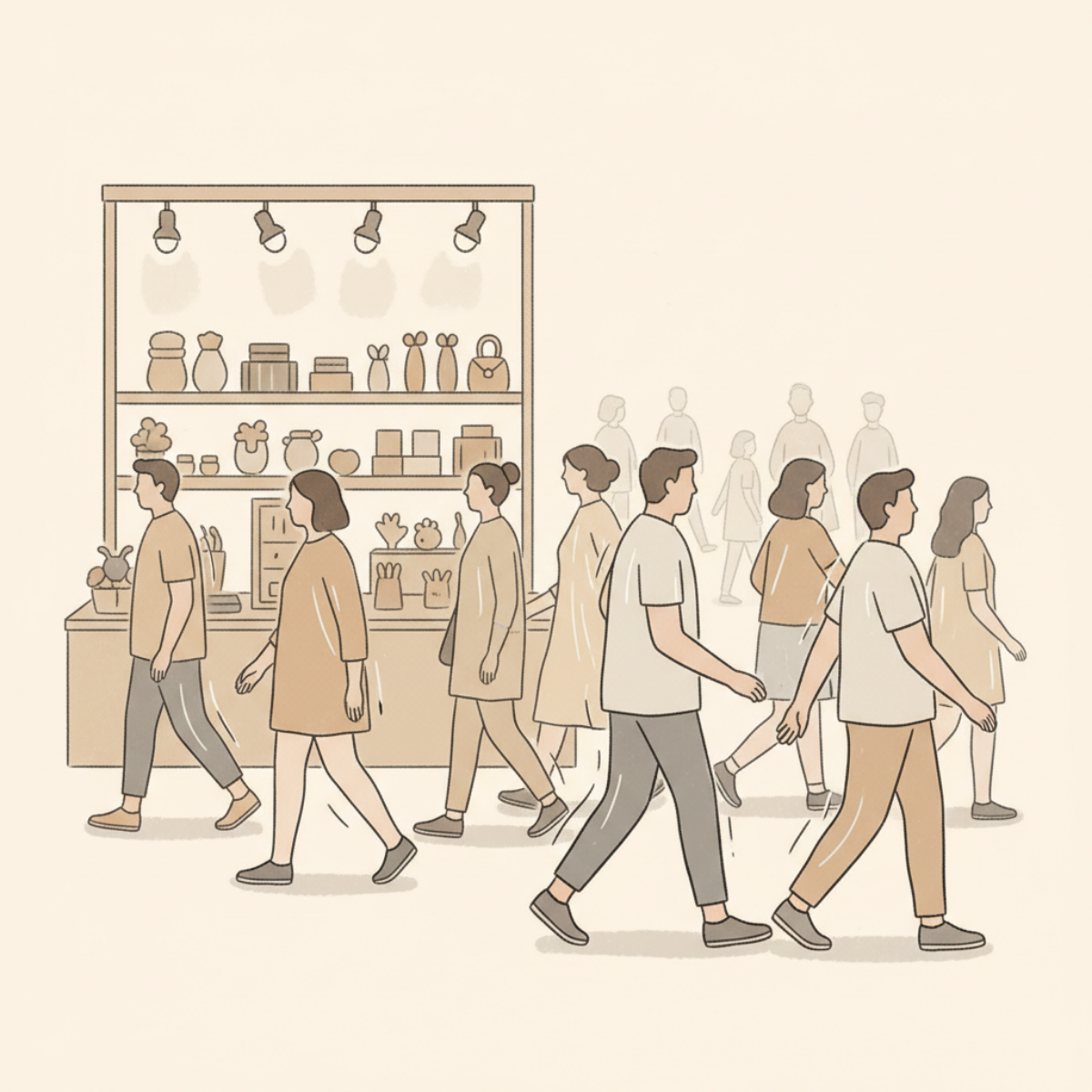
When People Move Through Your Booth—but Nothing Actually Happens
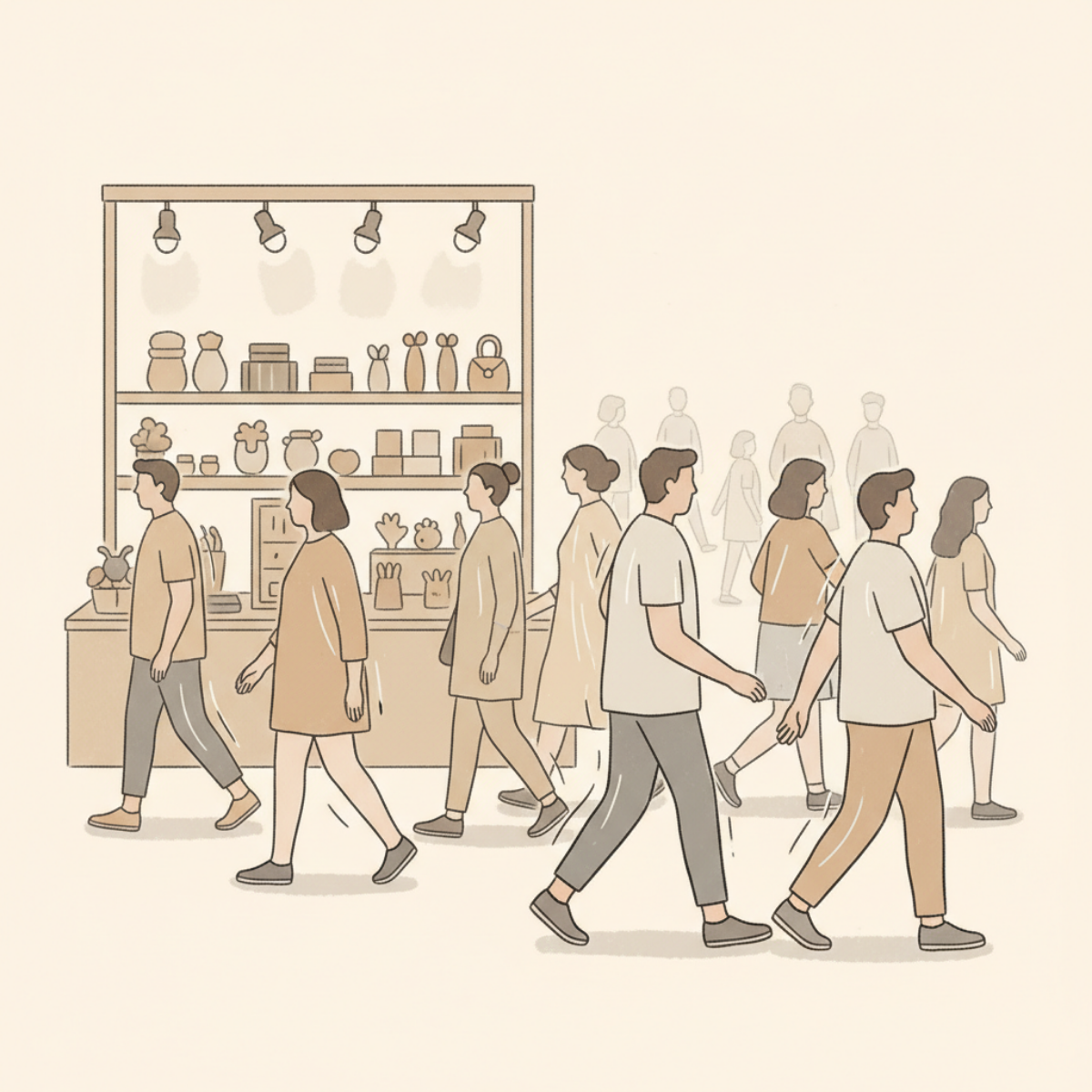
Shoppers walk past a craft booth display without stopping or interacting, moving in a steady flow while the products remain untouched.
They come in.
They don’t stop.
They don’t stay.
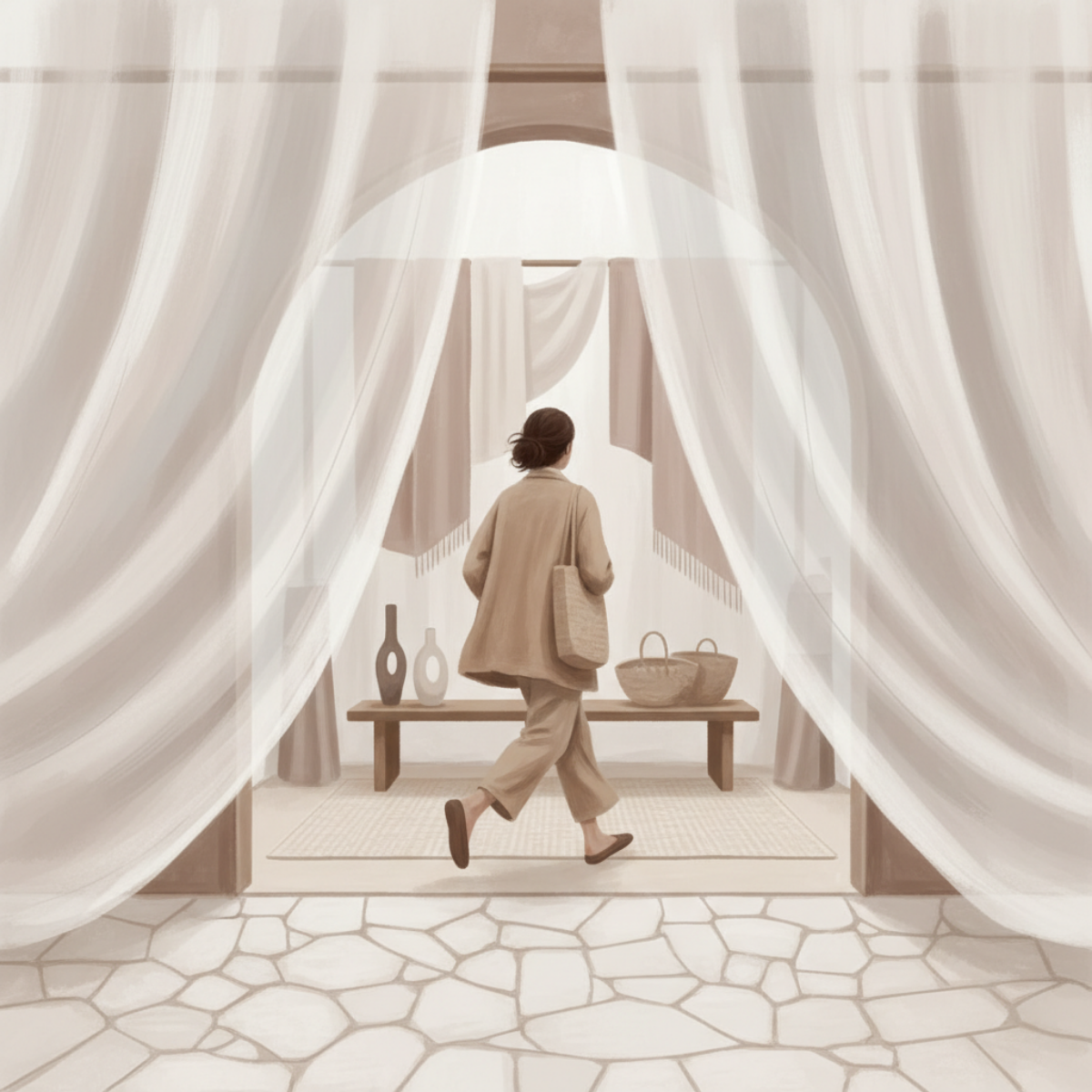
A shopper walks into a craft booth through soft draped curtains, moving toward the display without stopping or interacting.
One slow pass.
Eyes across the table—
not on anything.
Then they keep moving.
Another person does the same thing.
In.
Around.
Out.
And then another.
No one stops in one place.
No one settles into anything.
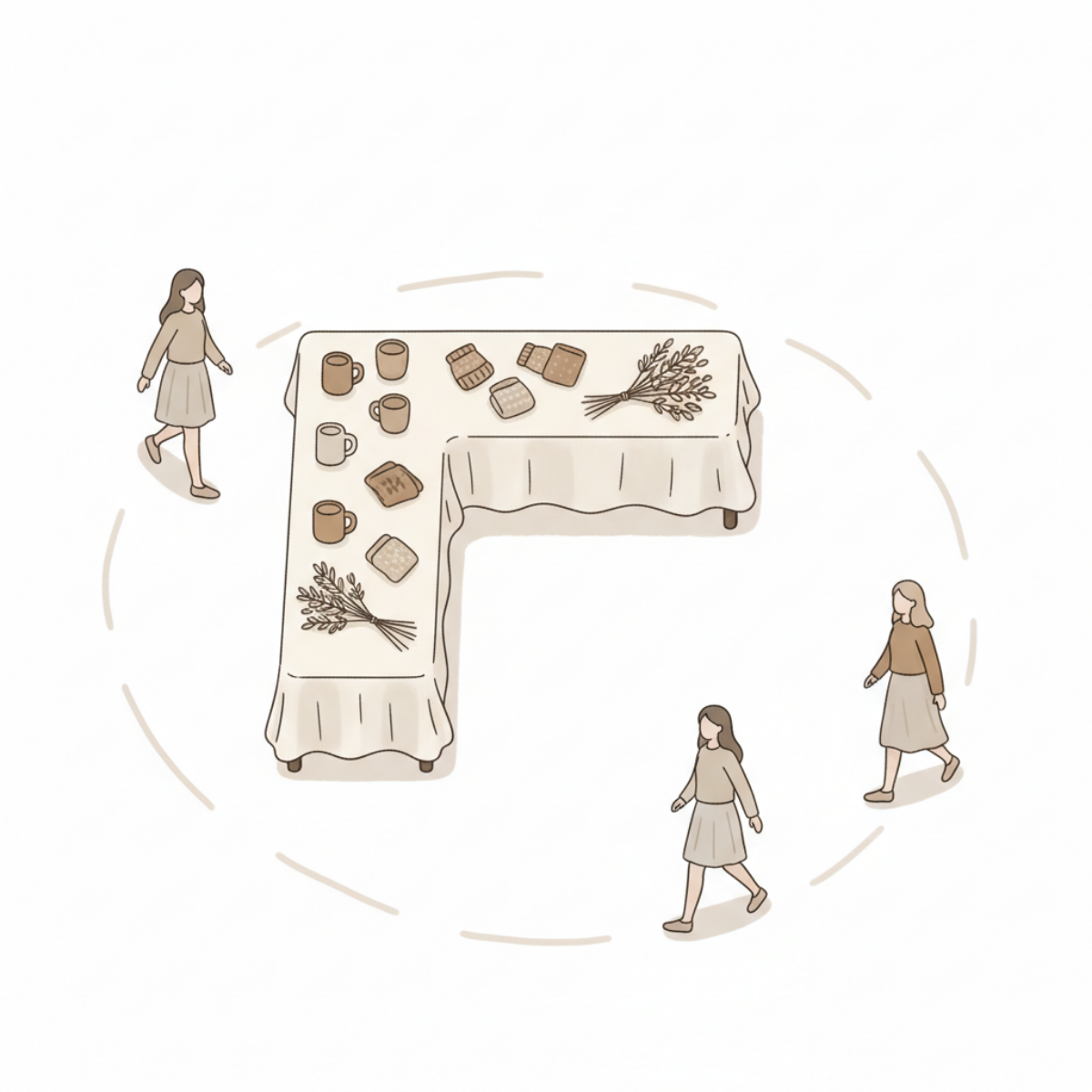
Shoppers walk in a circular path around a craft booth table, moving continuously without stopping to interact with any items.
Someone hesitates for a second.
Just enough to look like it might turn into something—
but it doesn’t.
They shift.
They keep moving.
Nothing holds them there.
They don’t lean in.
They don’t stay long enough for anything to change.
They don’t stay long enough for anything to start.
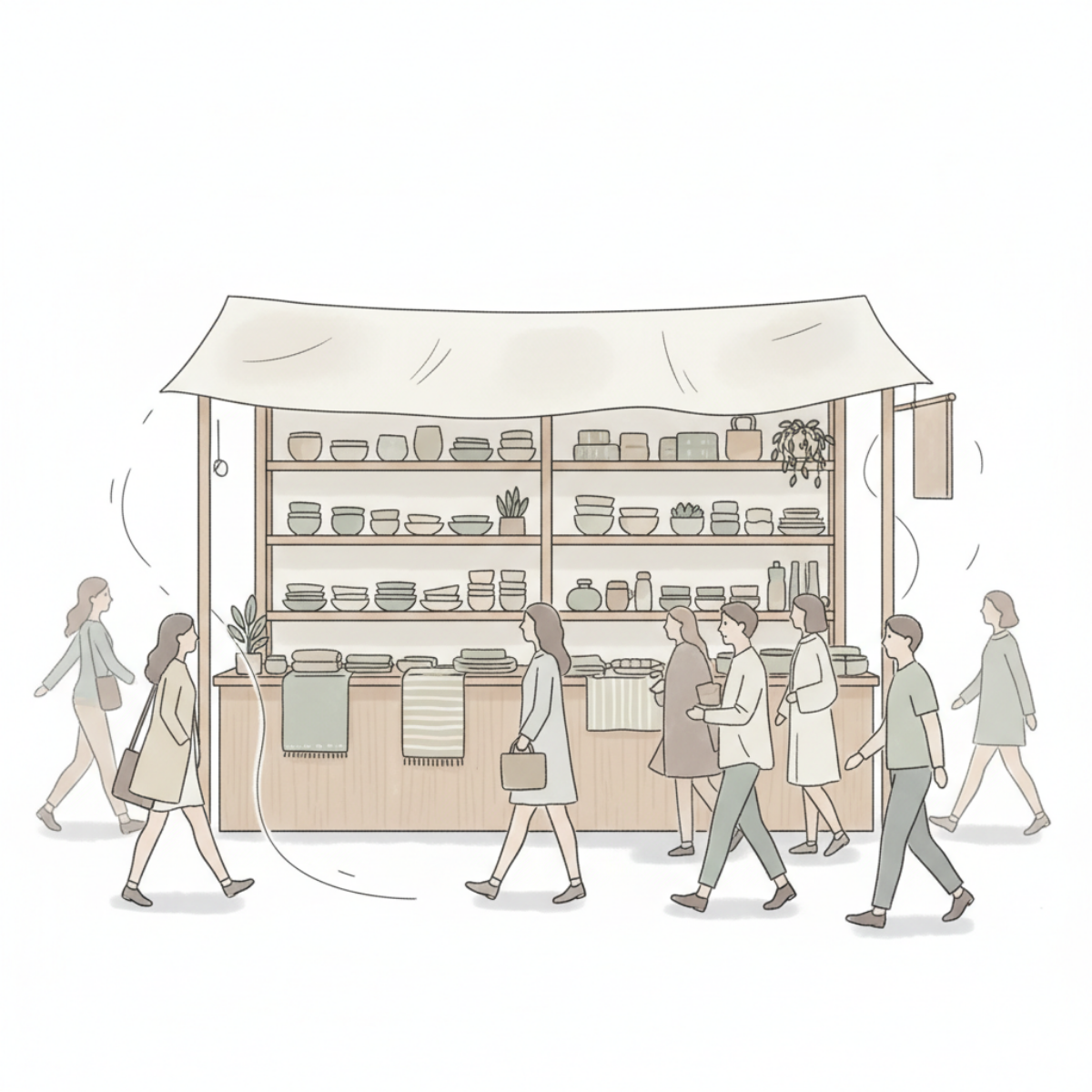
Shoppers walk past a fully stocked craft booth display in a steady flow without stopping to interact or engage with the products.
It keeps repeating.
In.
Around.
Out.
In.
Around.
Out.
More people come through.
The movement never really stops.
But nothing builds.
Nothing ever turns into anything more.
They don’t miss your booth.
They just don’t stay in it.
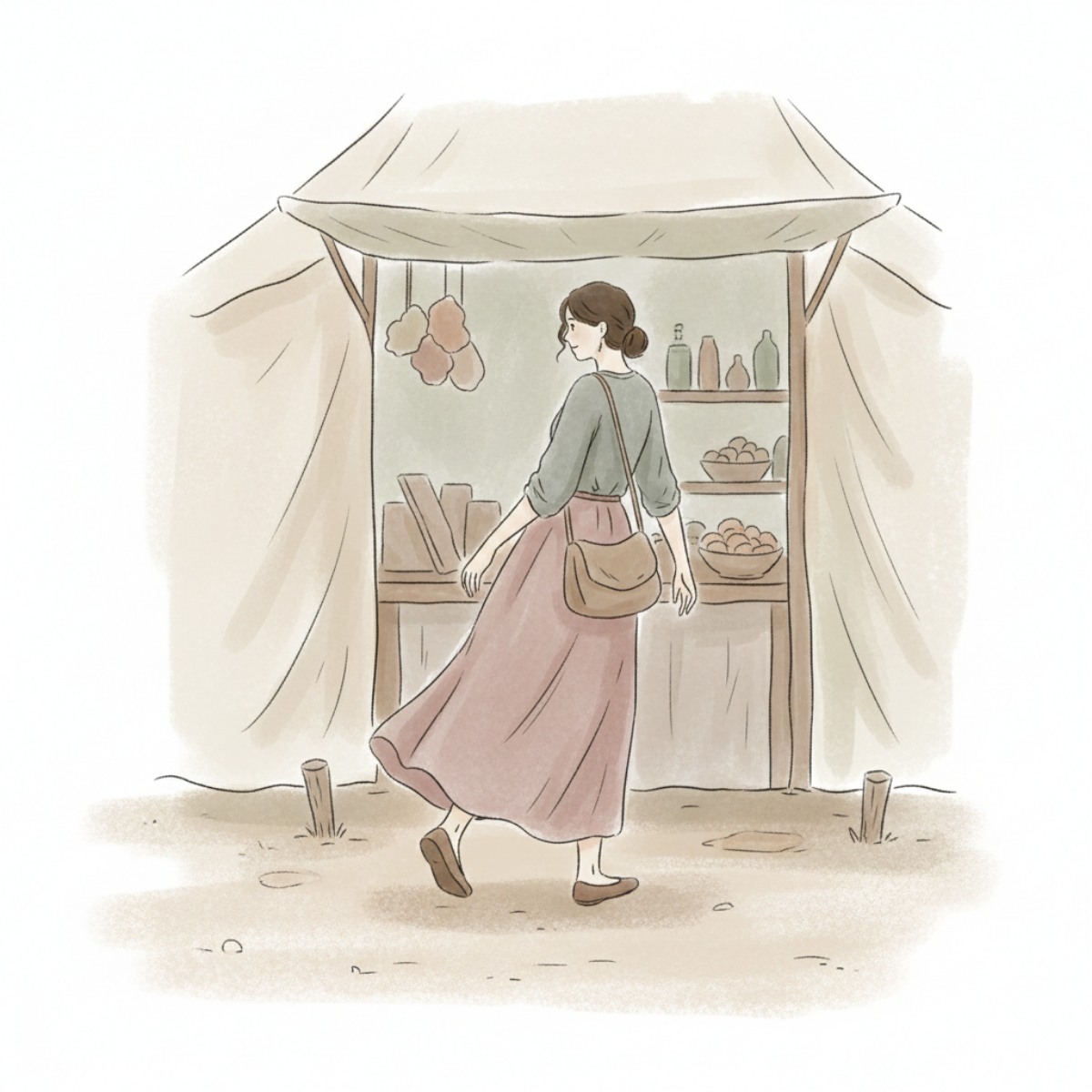
A shopper walks past a small craft booth display without stopping, continuing on without interacting with the products.
No one slows it down.
No one breaks the pattern.
It just keeps cycling—
the same way,
every time.
And after a while—
you don’t just see people coming in.
You start seeing how they move.
If this keeps happening,
it’s not random.
It’s the same motion,
repeating cleanly—
without ever turning into anything else.
And once you see that—
you can’t unsee it.
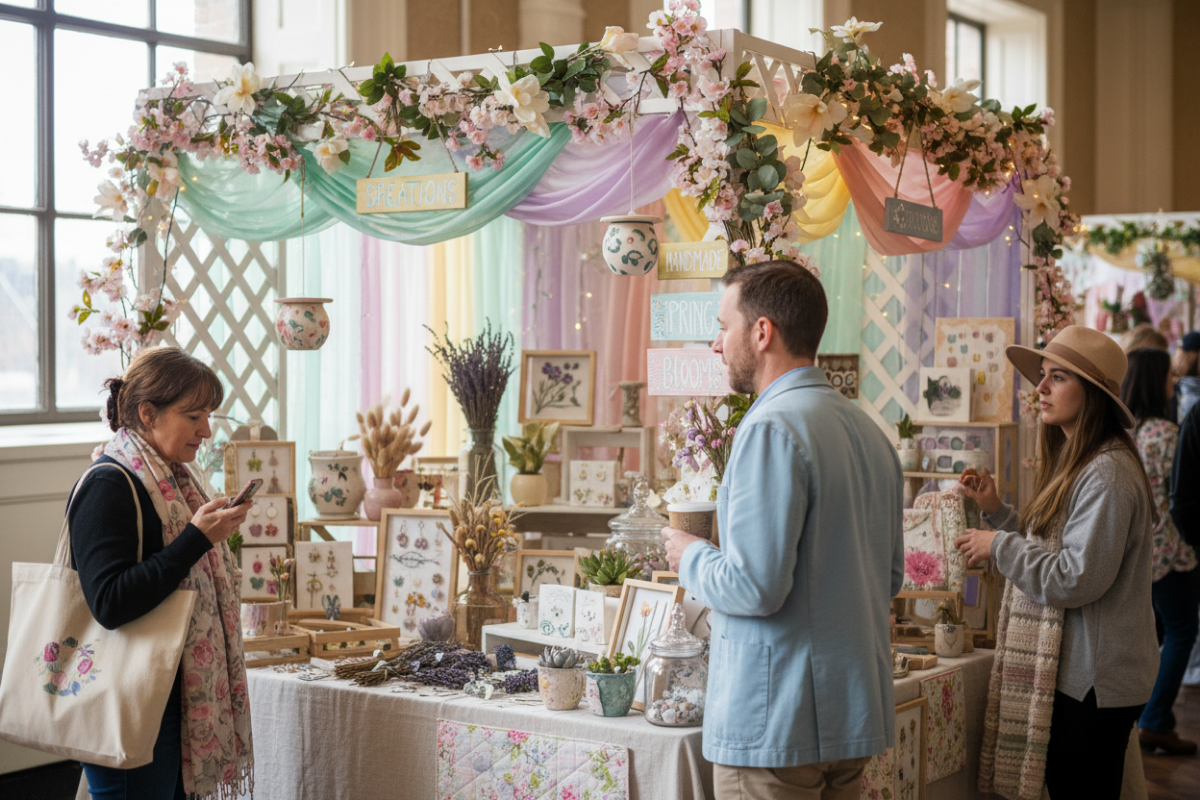
Spring Craft Booth Trends That Actually Get Customers to Stop (And What They Mean)
These booth trends are showing up everywhere right now—
and they’re getting people to stop.
But stopping isn’t the same as staying.
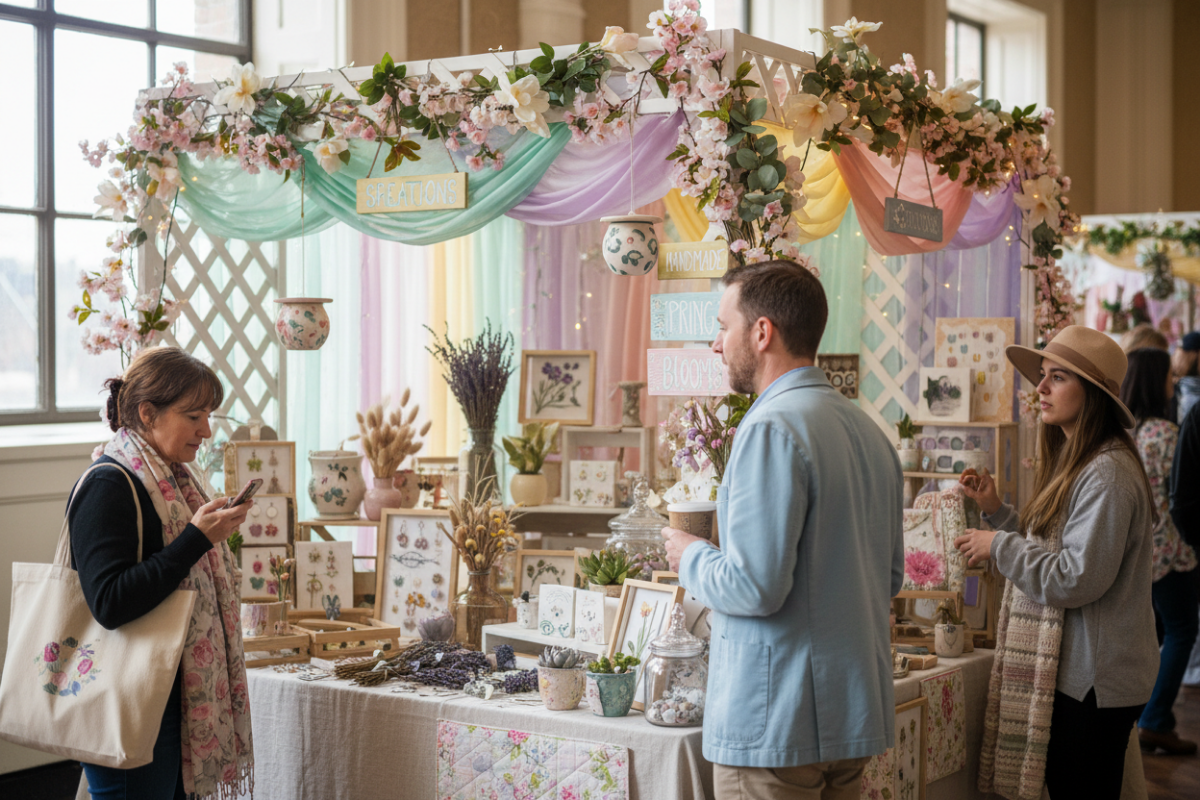
These are the booth trends showing up everywhere right now—
soft color, styled displays, and a calm, curated feel.
They’re getting people to stop.
But attention is only the first step.
What’s Getting People to Stop Right Now
Booths are getting attention right now.
You can see it.
People slow down.
They glance over.
They step in just enough to look.
And then—
they move on.
The Patterns Showing Up Across Spring Booths
A few things are showing up again and again this season:
1. Softer, styled displays
Neutral tones. Light woods. Clean layouts that feel calm and curated.
2. Small, easy-to-browse products
Jewelry trays. mini items. grouped pieces that invite a quick look.
3. “Giftable” presentation
Items that feel ready to pick up and give—simple, approachable, low-pressure.
4. Visual cohesion across the booth
Everything matches. Everything feels intentional.
None of this is random.
These are the booths pulling people in.
You’re seeing this across markets.
Booths that feel lighter.
More styled.
Easier to step into.
And they’re working—at least at first.
What These Trends Are Actually Showing
These setups are doing one thing really well:
They make people stop.
They lower resistance.
They feel easy to approach.
They invite a quick look without pressure.
That part is working.
But there’s a gap.
Because stopping isn’t the same as staying.
What This Points To
When attention improves—but buying doesn’t follow—
it starts to point somewhere specific.
Not toward traffic.
Not toward trends.
But toward what happens inside the booth.
These trends are exposing a pattern:
People are entering the moment…
but not continuing through it.
Where This Starts to Feel Familiar
You might be seeing it already.
People pause at the edge of your booth.
They look at a few things.
They react—maybe even smile.
But they don’t go further.
They don’t ask.
They don’t pick anything up.
They don’t shift into shopping.
It feels like interest.
But it doesn’t hold.
If your booth is getting more attention—but not more buying,
this is the pattern to look at next.
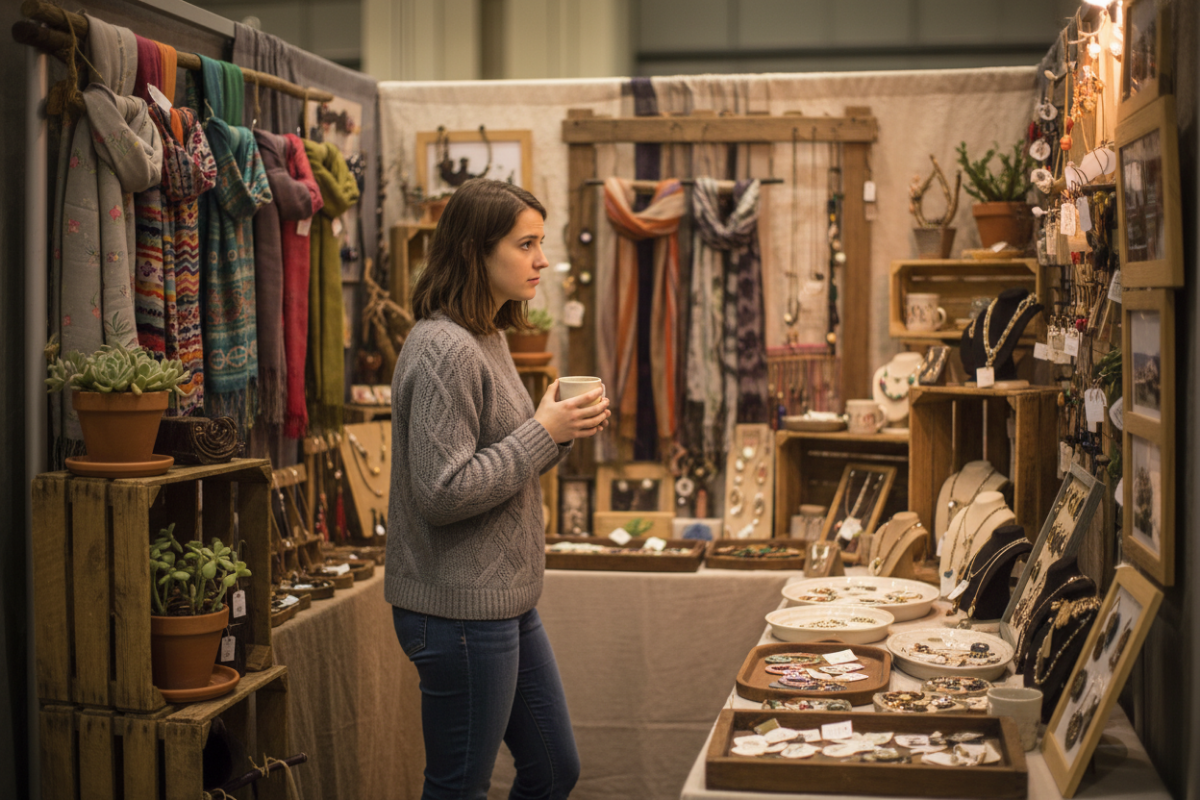
What to Focus On When Shoppers Browse—But Don’t Buy
Shoppers are stopping. They’re looking. And then they’re leaving.
That’s not a traffic problem.
This shows you exactly what to focus on when interest never turns into buying.
They Step In
That part worked.
They noticed your booth.
They crossed the edge.
They slowed down enough to look.
And then—
nothing continues.
They don’t move deeper into the booth.
They stay near the front table.
Near the aisle.
They glance around.
Pick something up.
Then put it back down.
And leave.
The Interaction Stalls
That’s the moment to watch.
Not whether people enter.
What happens after they do.
Because right now, shoppers are entering your booth—
but the interaction never builds.
They browse briefly.
Scan the display.
Look across the tables.
But nothing pulls them forward.
Nothing creates momentum.
They Don’t Know Where to Go Next
Most booths accidentally ask shoppers to make too many decisions at once.
Where should they stand?
What should they look at first?
What matters most here?
What should they pick up?
So people default to the easiest option.
They leave.
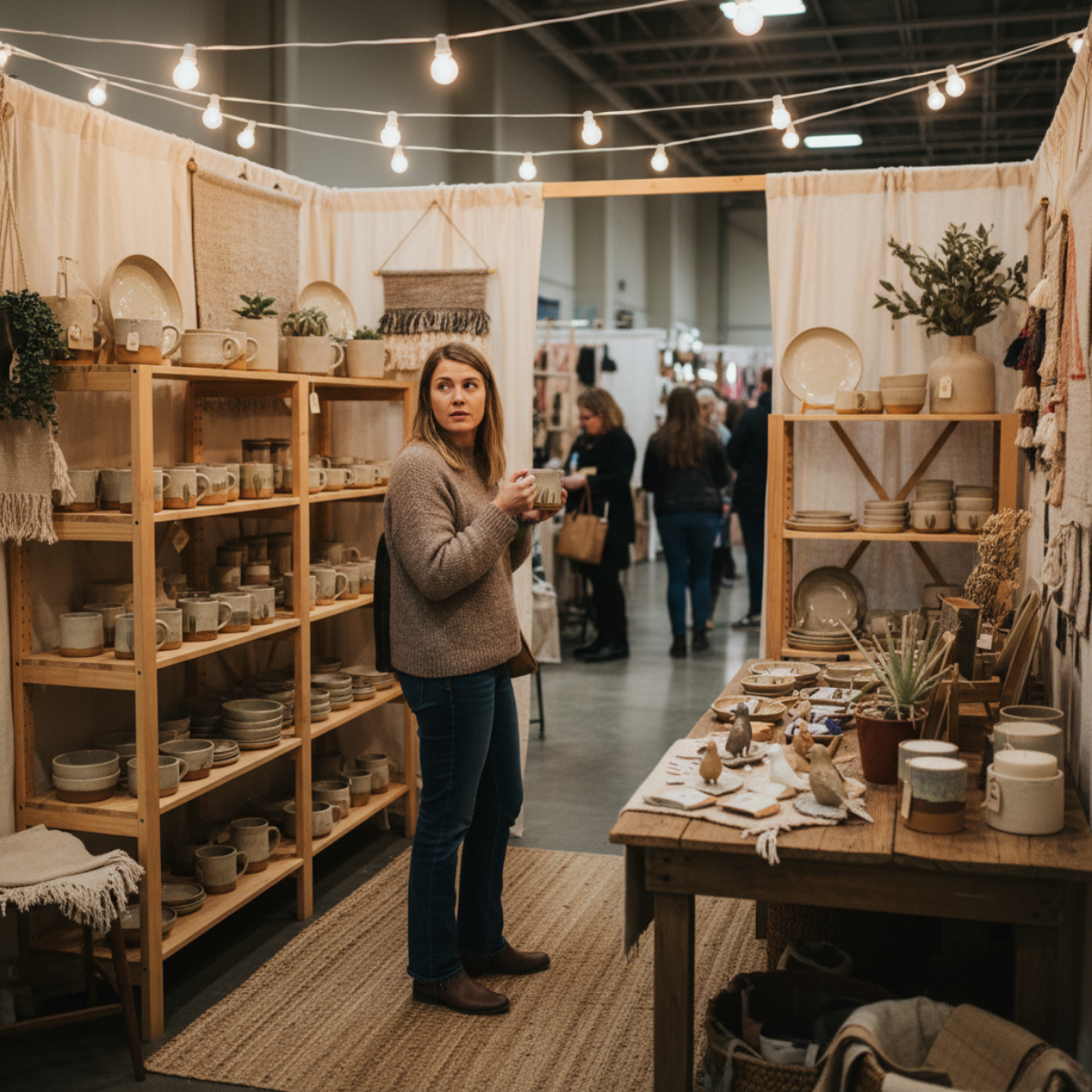
A shopper stands inside a handmade pottery booth holding a product—but without a clear path deeper into the display, the browsing moment stalls instead of turning into a purchase.
Why This Matters
If this stays broken, you don’t just lose sales.
You lose every opportunity after that moment.
They won’t:
pick something up
ask a question
discover your best items
They exit before any of that begins.
So the problem repeats.
All day.
And it looks like “interest”—
but it’s not.
It’s failure to continue.
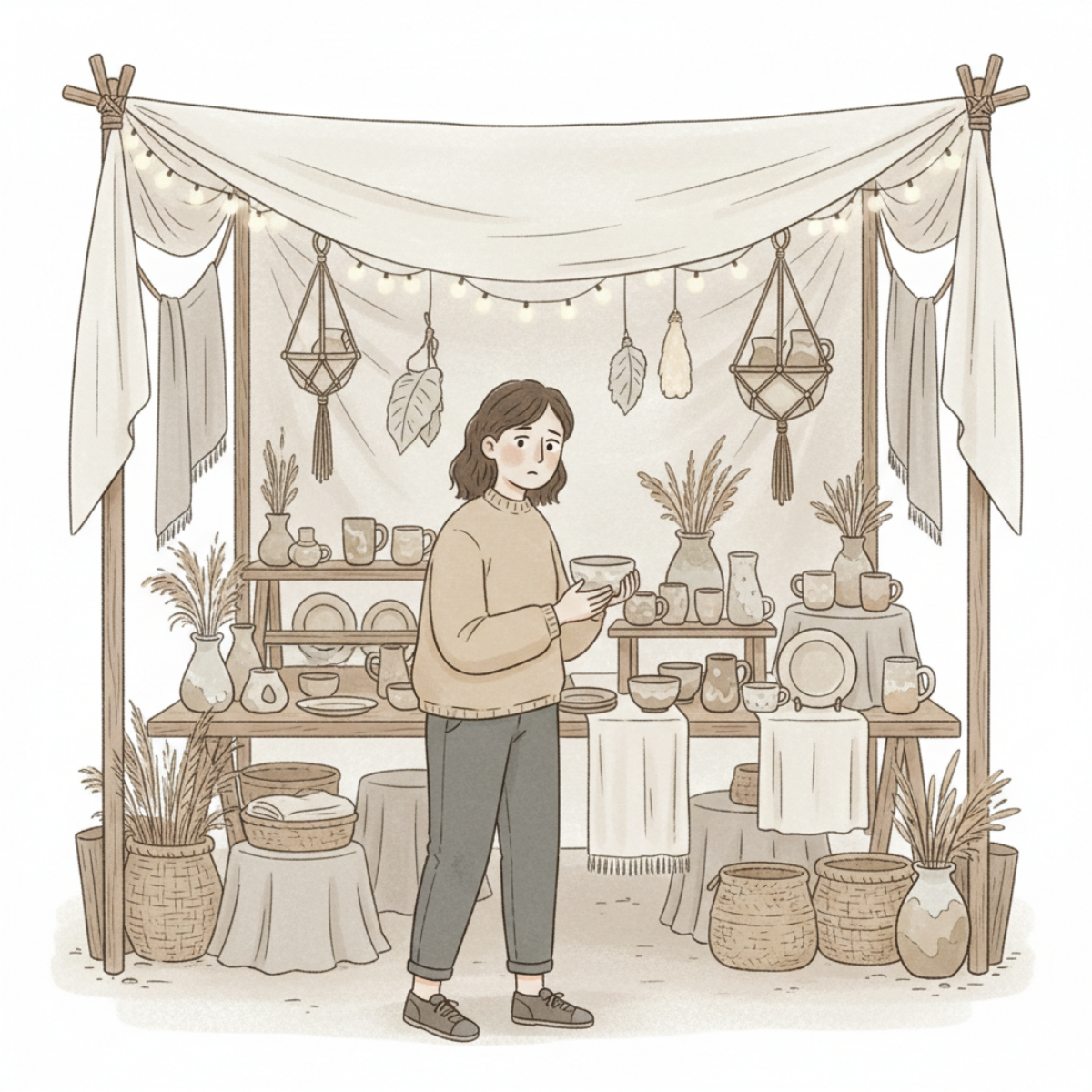
A shopper inside a handmade craft booth pauses with interest—but without a clear next step, the moment never turns into buying.
This Is Where It Breaks
The problem usually isn’t attention anymore.
They already gave you attention.
The problem is continuation.
The booth never creates a clear next step.
So the shopper stays at surface level—
and the interaction ends before anything meaningful happens.
Before they:
pause long enough to connect
discover your strongest products
feel comfortable exploring
or build buying momentum
What to Focus On
Focus on the moment immediately after they stop.
Not the entire booth.
Not redesigning everything.
Just this:
What naturally pulls someone deeper into the space?
Because if nothing guides movement forward,
the shopper stays near the edge—
and leaves from there too.
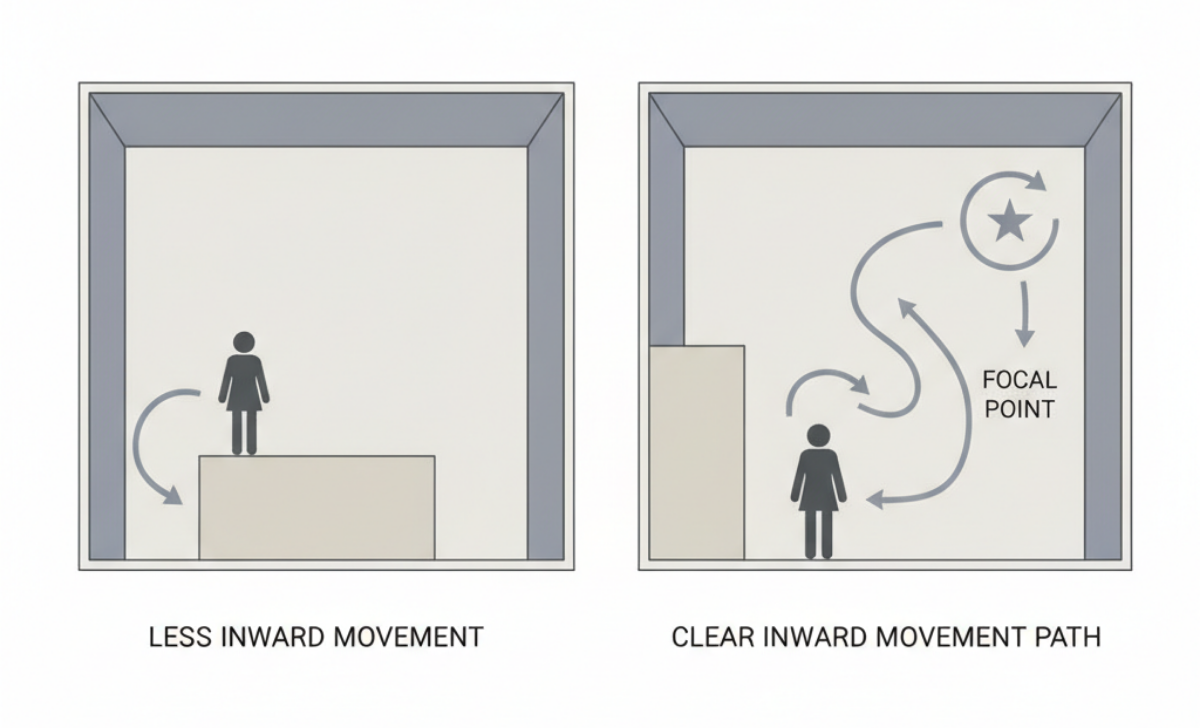
A simple booth layout comparison showing how clear inward movement paths and focal points help shoppers move deeper into a craft booth instead of stopping near the entrance.
What Usually Causes This
Sometimes it’s:
too many equal focal points
front tables blocking visual movement
products compressed together
no visual destination deeper inside the booth
or displays that all compete equally for attention
The shopper keeps scanning—
but never settles anywhere long enough to continue.
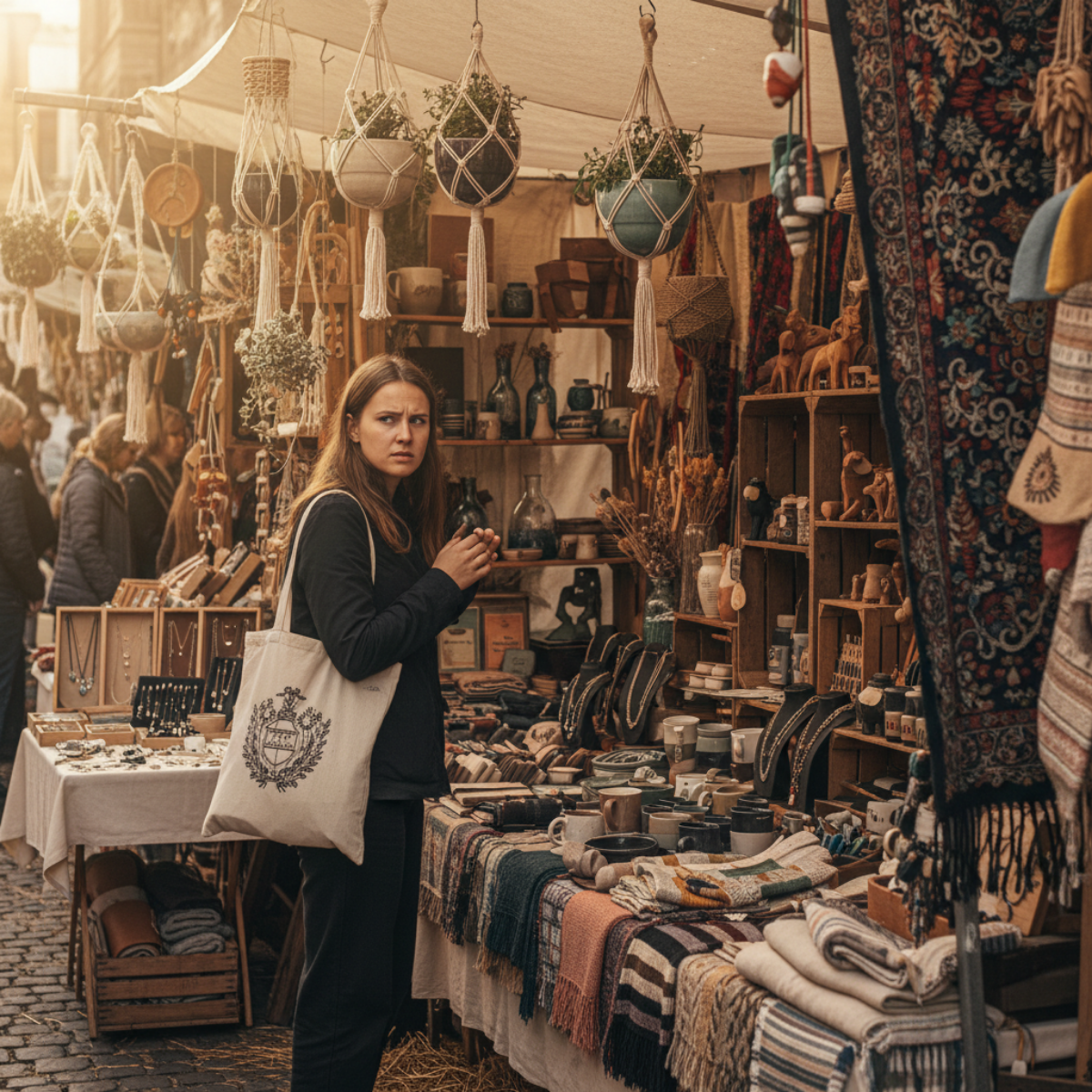
A shopper pauses inside a crowded handmade market booth filled with competing products, layered textures, and visual noise—showing how overwhelm can stop browsing momentum before buying begins.
What This Fix Changes
When the booth creates clear movement,
people naturally continue.
They move farther inside.
They slow down longer.
They notice more.
The interaction has room to build.
And once that happens,
everything else finally has a chance to work.
Start With What You’re Seeing
If shoppers slow down at the edge of your booth but don’t step in,
start with the Craft Booth Check.
If The Whole Booth Feels Off
If your booth feels crowded, confusing, or difficult to shop,
the Fix Your Booth Planning Guide helps you identify where the breakdown is happening.
Explore Related Booth Problems
Booth issues usually connect.
What feels like:
a product problem
a traffic problem
or a sales problem
is often:
flow
focus
spacing
or signal.
Explore more booth patterns and solutions.
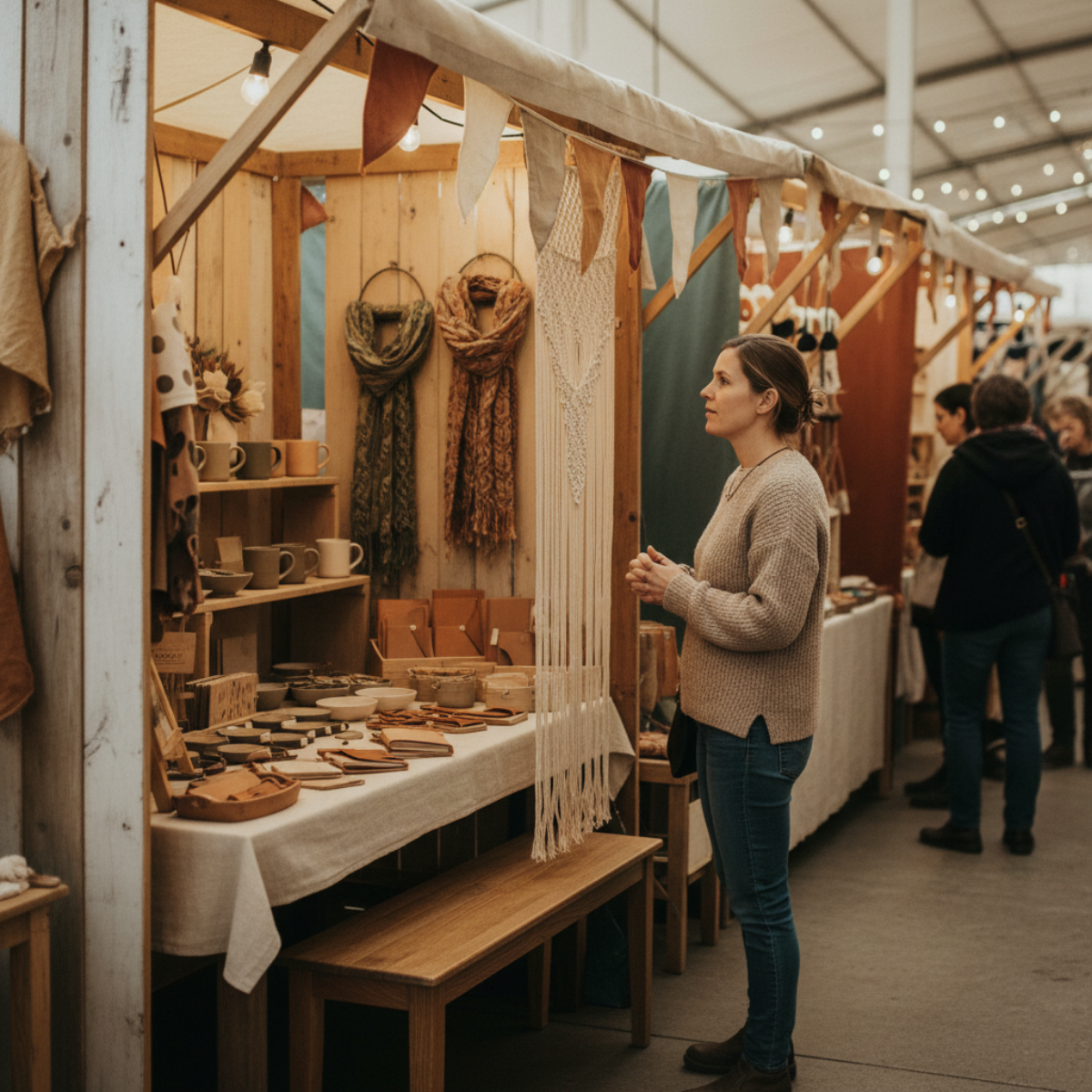
Why Shoppers Browse Your Booth But Don’t Buy
Shoppers are stopping at your booth.
They’re noticing things.
Sometimes they even pause long enough to look more closely.
And then they leave.
If that pattern keeps repeating, it’s not just about interest—it’s about what happens after that first moment.
Because browsing doesn’t always mean someone has started shopping.
Sometimes it means they noticed something…
but didn’t have a clear way to move forward.
This is where a lot of booths quietly break down.
Not because they look wrong—
but because they don’t carry attention into a buying path.
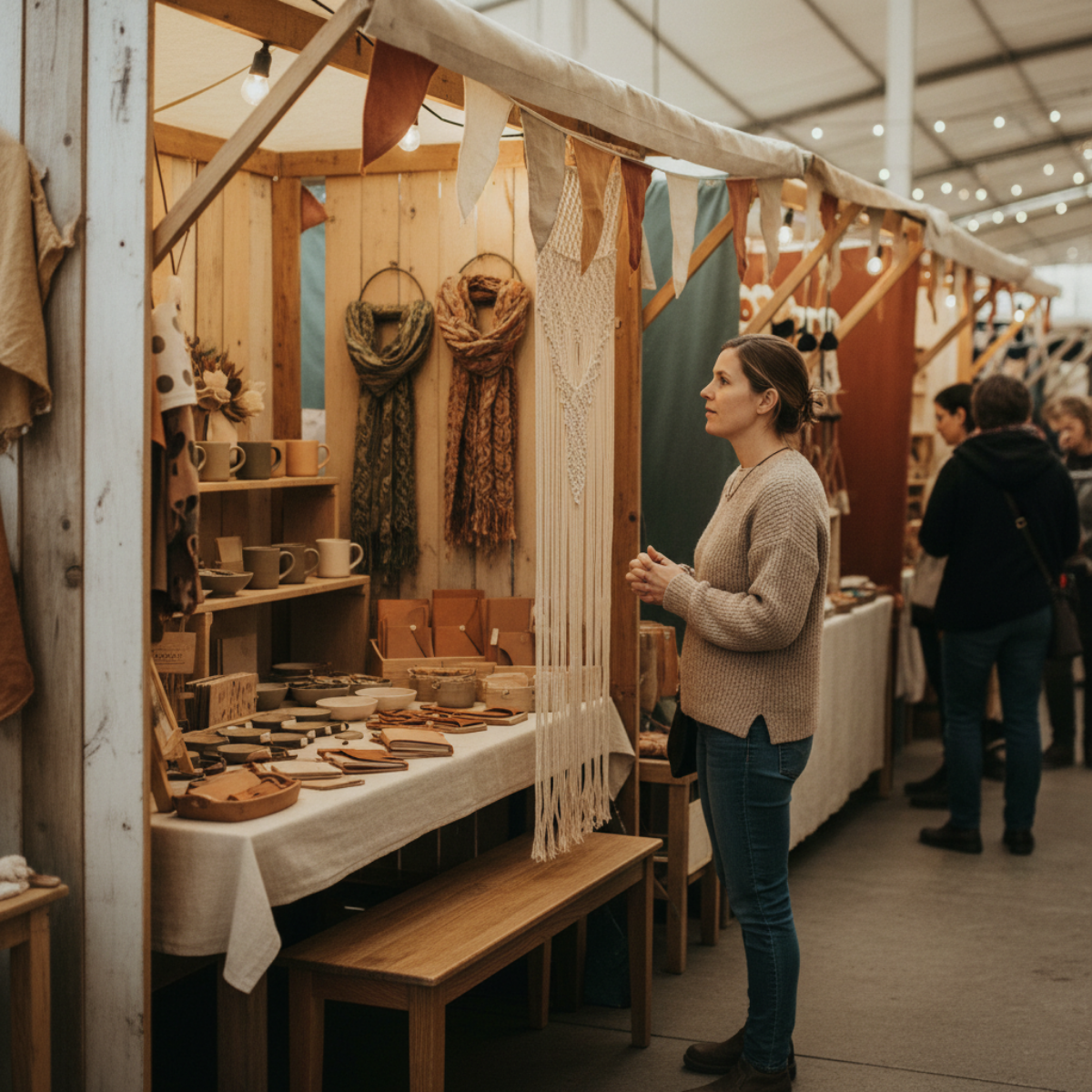
Shoppers may spend time browsing your booth without buying—not because they're uninterested, but because they lose momentum before reaching a purchase decision.
If shoppers spend time in your booth but rarely make a purchase, it's easy to assume the problem is your products.
But often, that's not what's happening.
Many shoppers are interested.
They simply lose momentum before reaching a buying decision.
Why This Happens
People don't shop randomly.
They need:
a starting point
visual direction
clear priorities
confidence about what to look at next
When everything competes equally, shoppers browse without progressing.
Interest exists.
Momentum disappears.
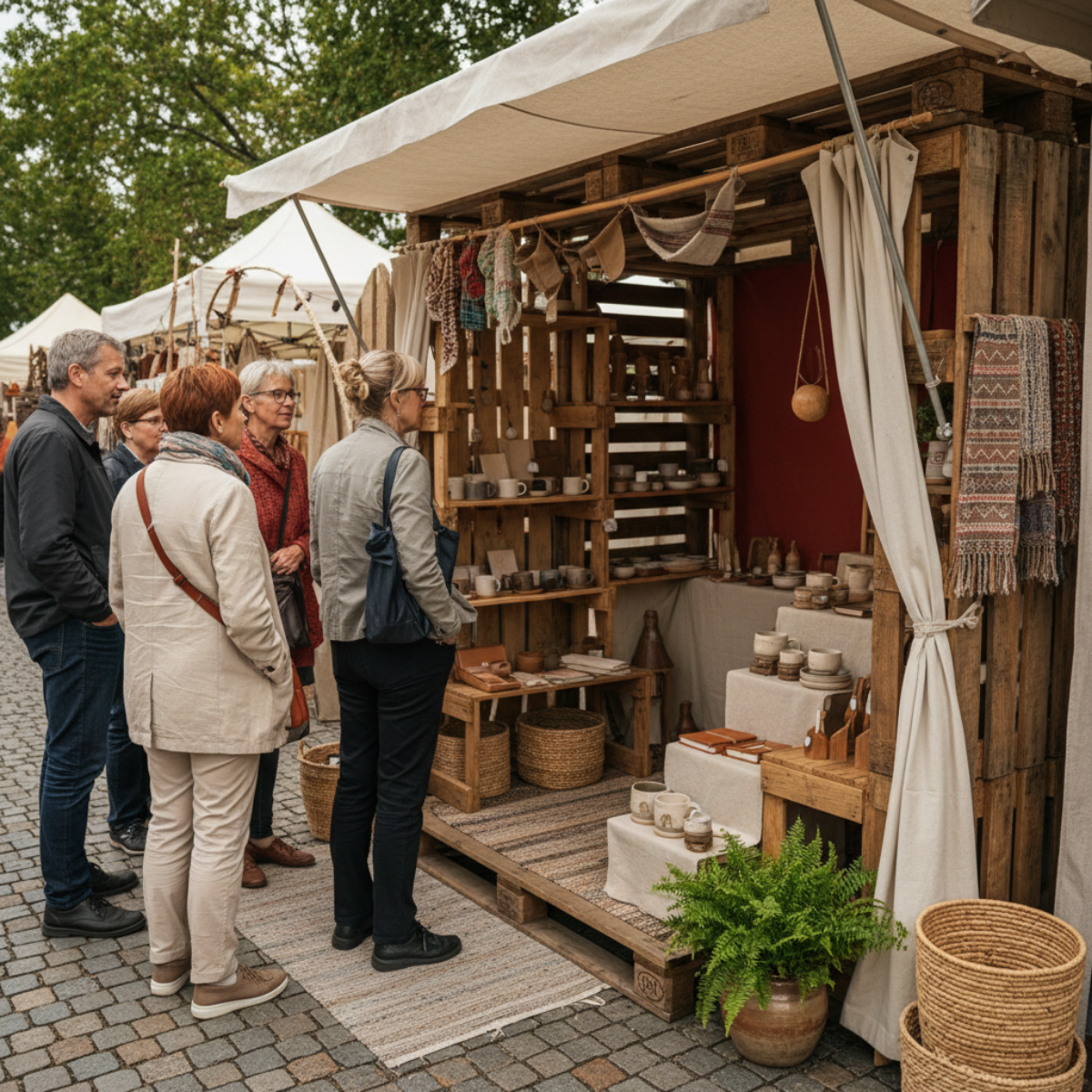
Interest isn't always the problem. Shoppers may stop and browse your booth, but without enough direction or momentum, they can leave before reaching a buying decision.
Signs This Might Be Happening
You may notice:
people entering and leaving without touching products
visitors picking up items but putting them back quickly
shoppers scanning everything but focusing on nothing
customers asking broad questions instead of specific ones
conversations ending without purchases
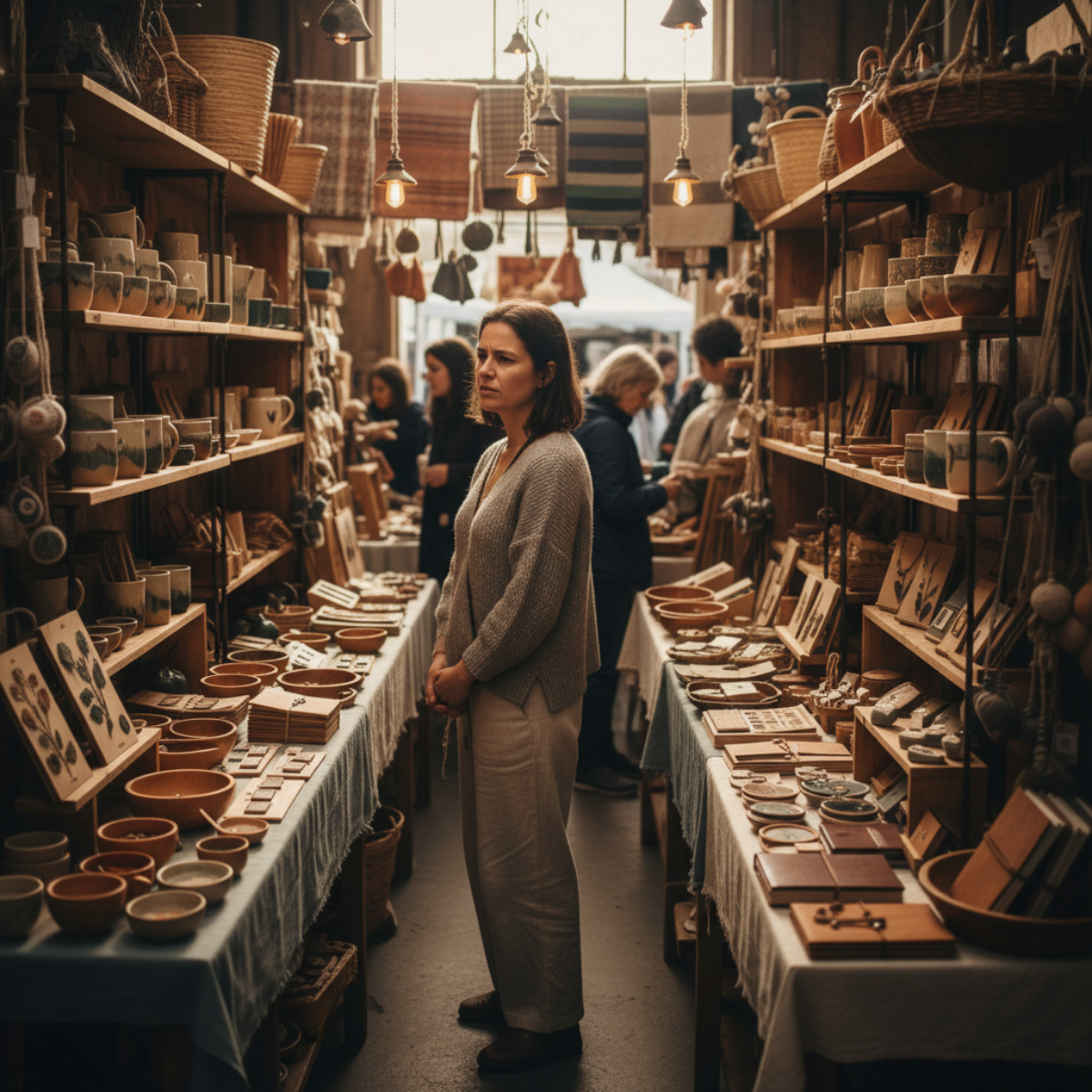
When everything competes for attention, shoppers may browse for a while but struggle to decide what to focus on—causing interest to fade before a purchase happens.
What's Really Happening
The problem usually isn't lack of interest.
It's lack of directional clarity.
Shoppers don't always know:
where to begin
what matters most
which products belong together
what you want them to notice first
When those questions remain unanswered, browsing becomes wandering.
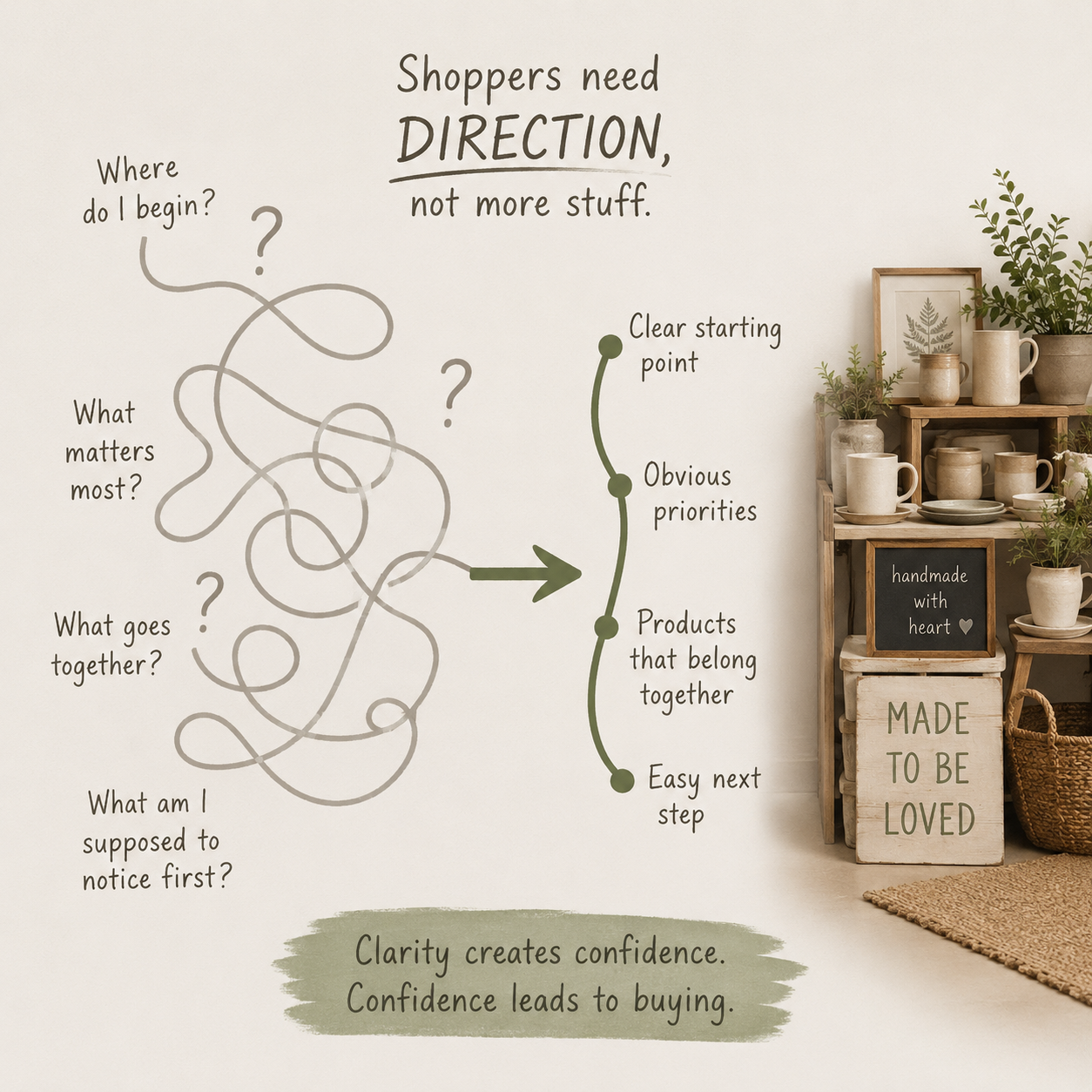
When shoppers don't know where to begin or what to notice first, browsing can turn into wandering. Clear priorities and connected displays help create the confidence that leads to buying.
What To Focus On First
Don't add more products.
Reduce decisions.
Help shoppers move naturally from:
notice → browse → engage → buy
You don't need more attention.
You need more guidance.
Four Shifts That Help
1. Give the booth a clear starting point
One strong focal area.
2. Connect products together
Create stories instead of isolated displays.
3. Make staying easier than leaving
Encourage engagement.
4. Answer one question clearly
"What should I notice first?"
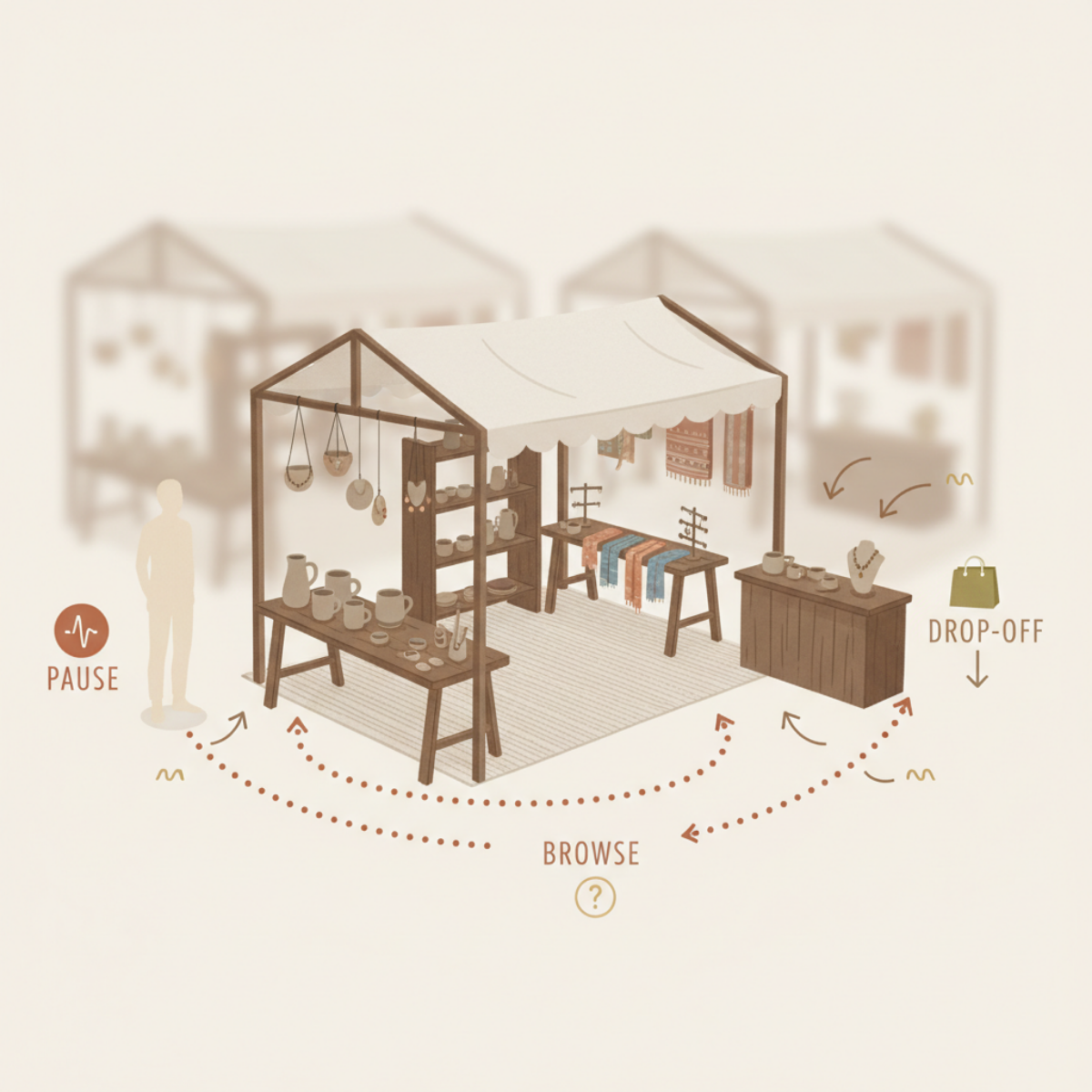
Without a clear answer to "What should I notice first?", shoppers may pause and browse, but eventually lose momentum and leave without making a purchase.
Ask Yourself
Can shoppers tell where to begin?
What product receives the most attention?
Is everything competing equally?
Does the booth encourage exploration?
What happens after someone picks up an item?
What This Doesn't Mean
This doesn't mean:
your products are bad
shoppers dislike your work
you need a complete redesign
Small changes in clarity often create big improvements.
Remember
Shoppers aren't rejecting your booth.
Most of the time, they're simply losing momentum before they reach a buying decision.
When buying feels easier, sales usually follow.
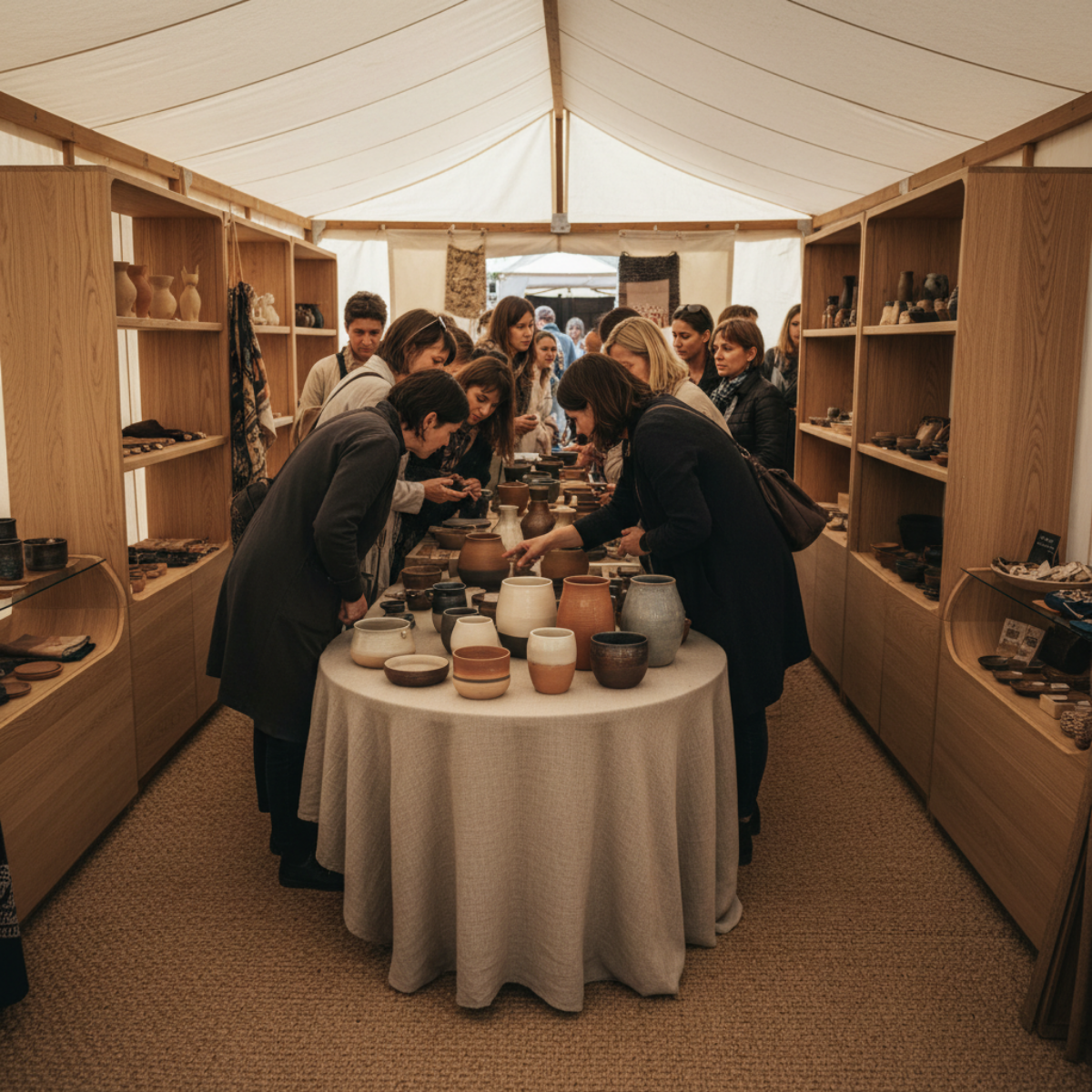
When shoppers know where to begin and feel comfortable exploring, interest turns into engagement—and engagement often leads to sales.
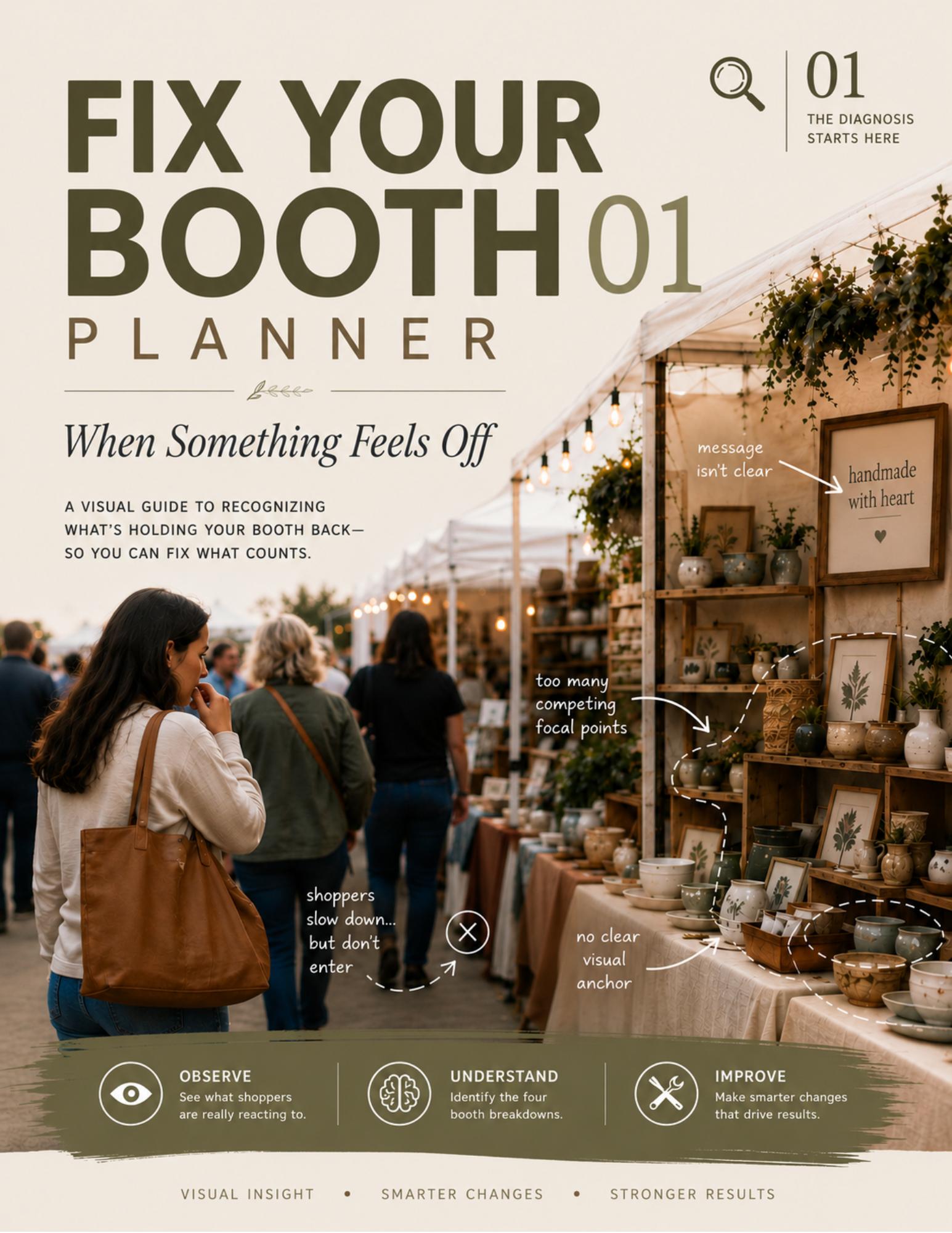
If something feels off but you can't tell why, this planner helps you recognize what's holding your booth back and focus on what matters most.
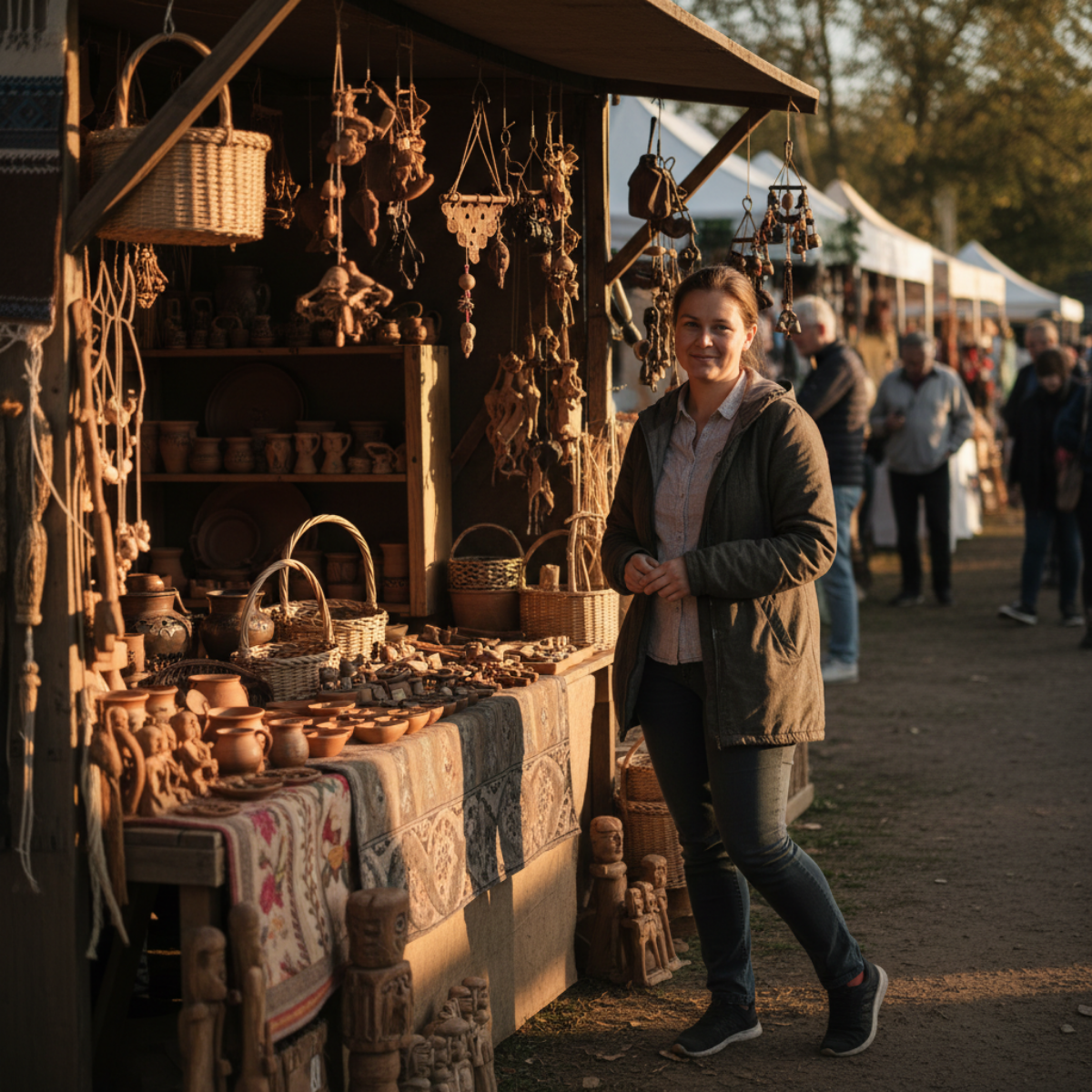
When People Stop, Smile… and Then Walk Away
Shoppers stop, smile, and walk away—and it keeps happening the same way. The moment starts, but something in the booth isn’t carrying it forward.
You see it happen all day.
Someone slows down as they pass your booth.
They glance over.
They stop.
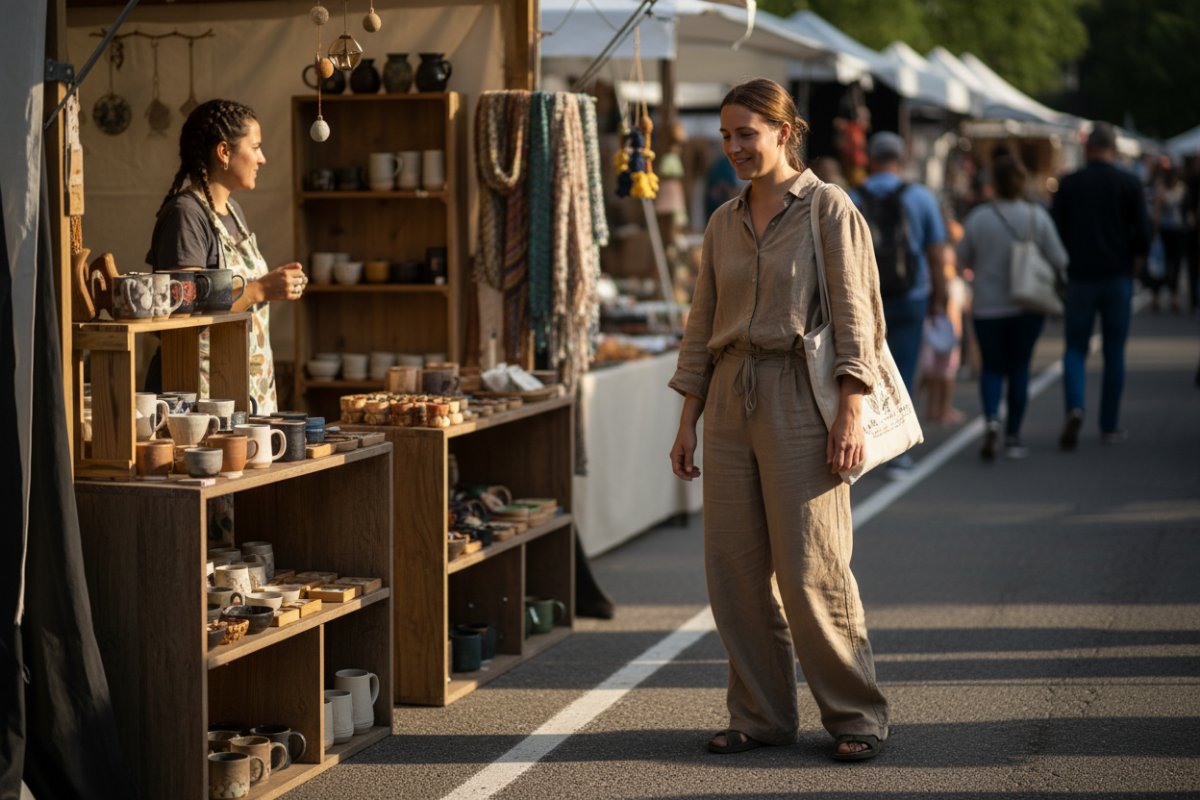
They stop.
They smile.
But they never really step in.
They step in—just enough.
Lean in a little.
Almost pick something up.
They smile.
And then they leave.
No question.
No pause.
No shift into anything more.
At first, it feels like a good sign.
At least they stopped.
At least they noticed.
But then it happens again.
Stop.
Smile.
Walk away.
And again.
They don’t really enter your booth.
They hover at the edge of it.
Just far enough to react—
not far enough to stay.
You start to see the same moment play out.
Over and over.
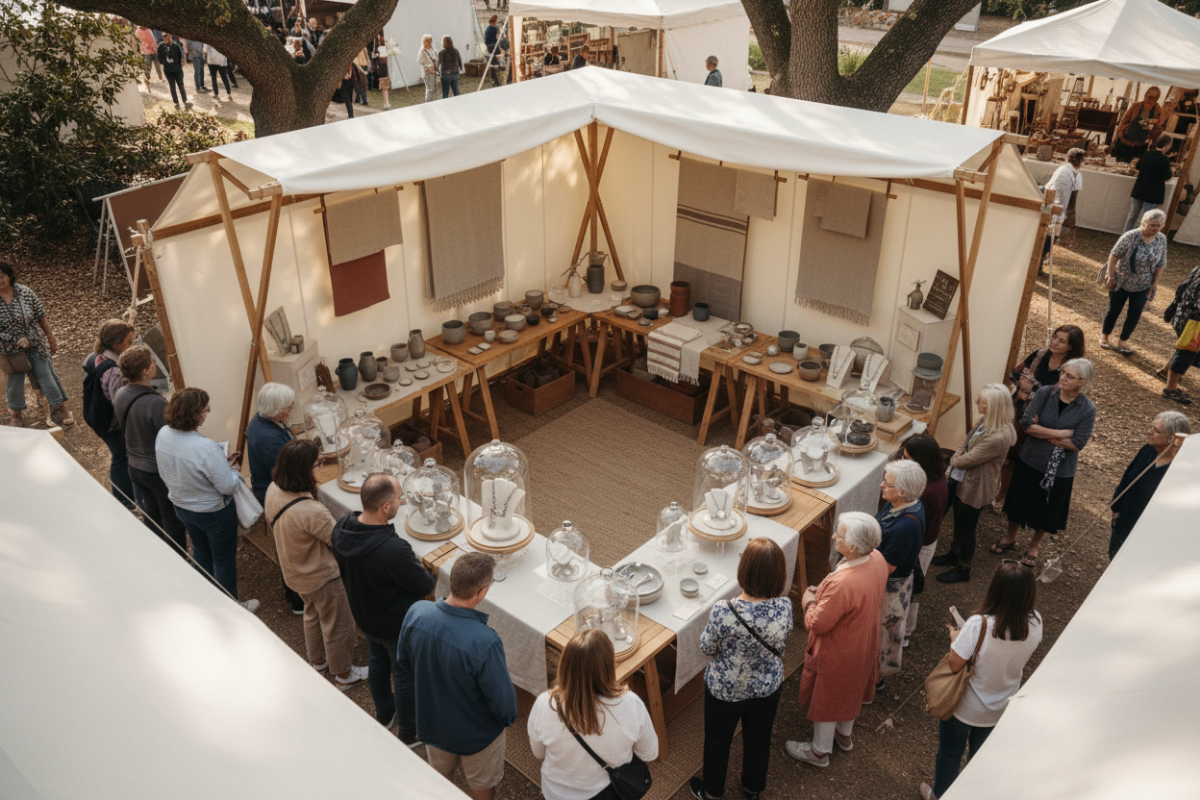
Everything is being seen—
nothing is being engaged.
It starts.
And then it stops.
Right there.
This is what’s happening.
The moment begins—
but it doesn’t continue.
And once you see that,
you can’t unsee it.
Because now you’re not just watching people leave—
You’re watching the exact point where it breaks.
That’s the part that matters.
And it’s coming from the booth itself.
If this keeps happening,
it’s not random.
It’s coming from the booth.
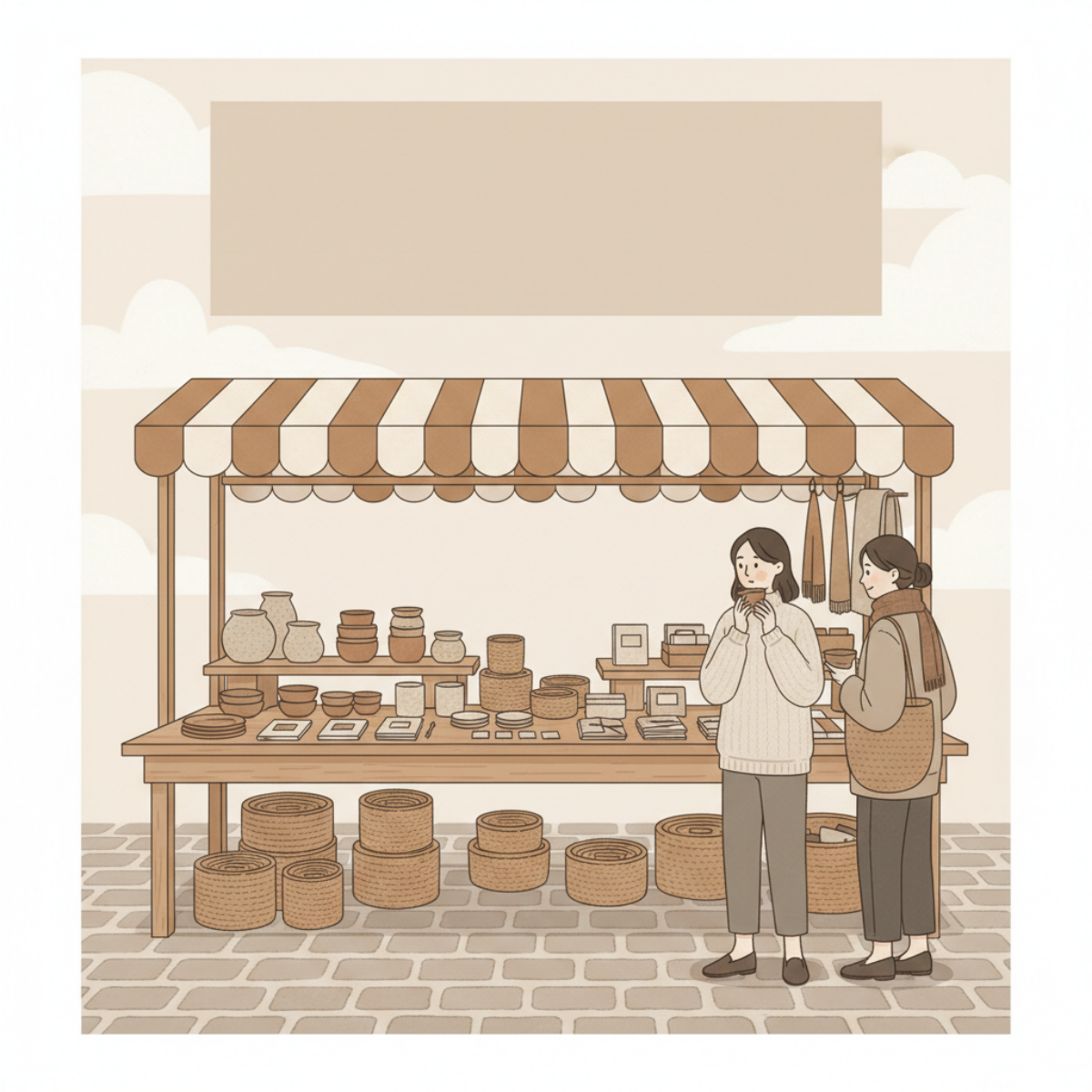
Why Your Booth Can Look Right—but Still Not Work
Your booth can look put together and still feel off to customers. When nothing appears obviously wrong, it’s often harder to see what’s actually holding your setup back.
Sometimes the booth looks fine.
The table is covered.
The display pieces are in place.
Nothing seems obviously wrong.
And yet something still feels off.
You step back and think, Why does this look better in my head than it works in real life?
Then the day starts, people glance in, and somehow the booth still doesn’t feel easy to enter, or easy to understand.
It can be frustrating when the booth appears “put together” but still doesn’t create the response you expected.
Because when nothing looks clearly broken, it becomes harder to see what actually needs to change.
If your booth looks good but still isn’t working, you don’t need to redo everything—you need to adjust how it functions.
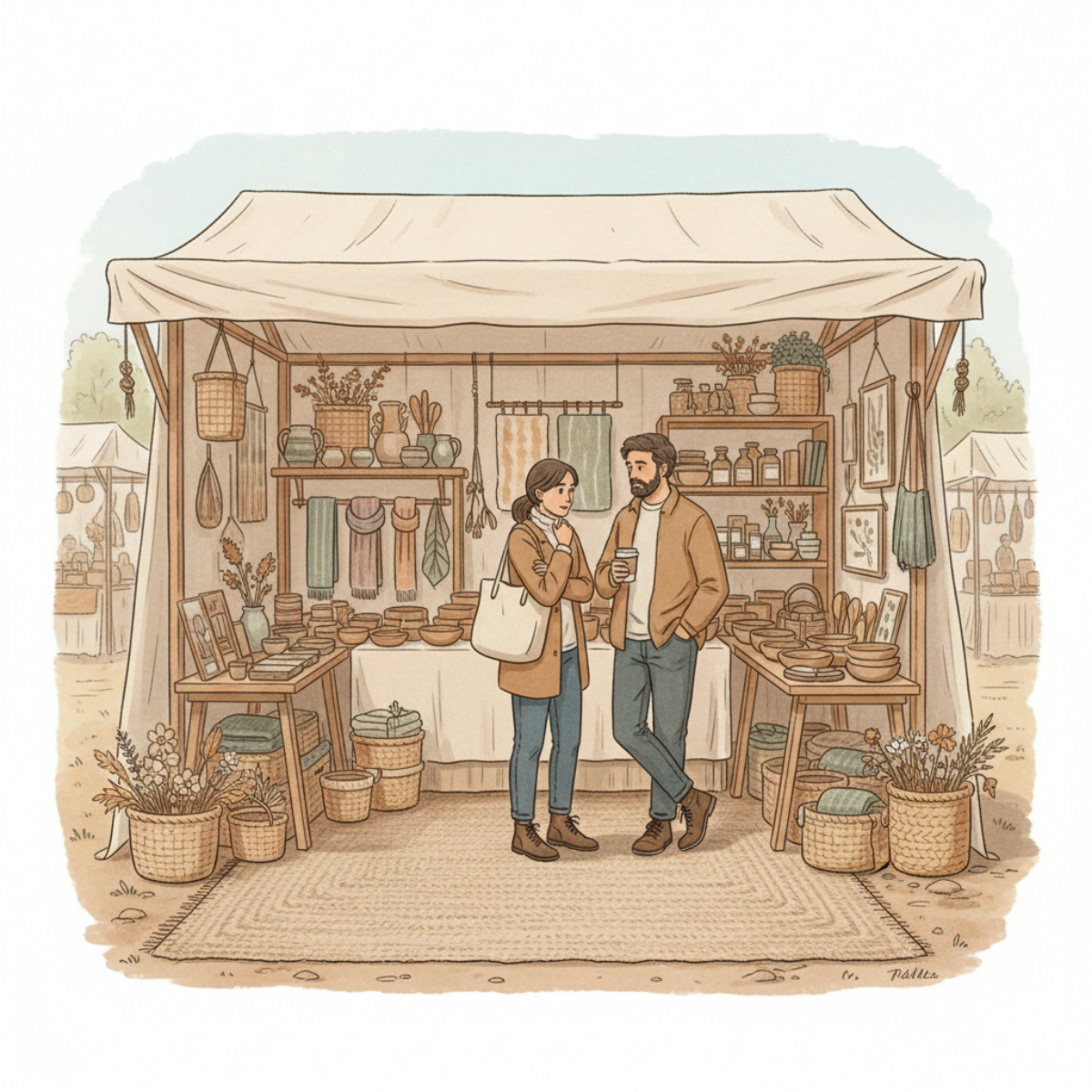
Craft booth with an open layout where customers can step in and browse comfortably.
The Pattern
A booth can look finished… and still not work.
You don’t want to tear it all down… but you don’t trust it either.
Why This Happens
That usually happens when the maker is judging the booth by appearance alone:
everything fits
the table looks full
the colors feel cohesive
the display pieces match
the setup seems finished
But customers do not experience the booth as a still image.
What looks complete to you doesn’t always translate into something usable for the customer.
They experience it as movement—moment by moment.
They walk by.
They scan quickly.
They decide whether it feels approachable.
They try to understand what you sell.
They look for a place to pause—
without feeling crowded or trapped.
So a booth can “look right” to the maker because it appears complete, while still not working for the customer because the booth experience itself is unclear.
The Cause
What usually breaks here is not effort.
It’s structure.
Here are the patterns that usually show up when a booth looks right—but doesn’t work:
A visually pleasing booth can still struggle when one or more of these problems are present:
1. The booth has no clear entry point
(customers don’t know where to begin)
If customers cannot tell where to begin looking, they keep moving.
A setup that feels balanced to you may still read as closed, flat, or uncertain from the aisle.
2. The eye lands everywhere at once
When every area asks for equal attention, nothing stands out.
The booth may look full and thoughtfully arranged, but the customer never receives a clear first impression.
3. Product grouping is decorative instead of directional
Items may be arranged attractively, but not in a way that helps people understand categories, price relationships, or what kind of work you actually sell.
4. The setup protects symmetry more than shopping flow
Sometimes makers keep things visually even because it feels safer or more polished.
But symmetry does not always create movement.
In some booths, it actually flattens the experience and removes natural points of curiosity.
5. The booth is readable only after effort
If a customer has to work to understand what they are seeing, many simply won’t.
A booth does not need to be loud, but it does need to become clear quickly.
The Constraint
This is what makes booth problems hard to solve.
Most makers adjust based on what feels visibly wrong:
too empty
too cluttered
too plain
too busy
But when the booth looks “basically good,” the real issue often hides underneath those more obvious categories.
That is why you can keep tweaking small details without fixing the actual problem.
You change riser height.
You move a sign.
You add another crate.
You remove a basket.
You shift products around.
And still, the booth behaves the same way.
Because the issue was never just how it looked.
It was how it worked.

Working on a Booth Layout That Doesn’t Feel Settled Yet
The Shift
The question to ask isn’t:
Does my booth look right?
The better question is:
Does my booth help people know:
where to look,
where to move,
and why to stop?
That shift matters because a working booth is not just a styled space.
It’s a readable environment—one that makes sense without effort.
A strong booth usually does three things well:
it gives the eye somewhere to land first
it gives the customer a clear way to enter and browse
it makes the products easy to understand without effort
When those things are missing, the booth can still look attractive while quietly underperforming.
And that underperformance often gets misread as a sales problem, a product problem, or even a confidence issue.
Sometimes, it’s simply a structure problem.
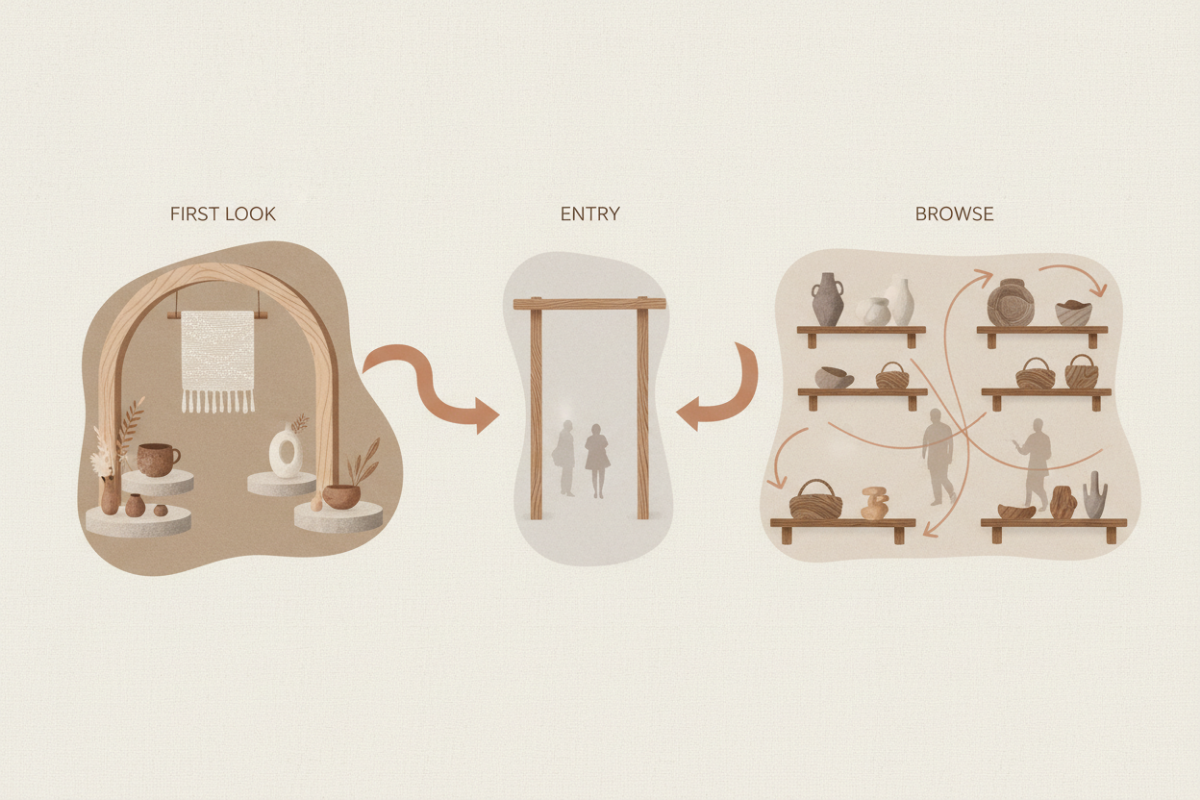
How Customers Move Through a Craft Booth
Structured Change
Here are four ways to check whether your booth is only looking right—or actually working.
These aren’t design tweaks—they’re structure checks.
1. Check the first three seconds
Stand outside the booth and look at it the way a passing customer would.
Ask:
What do I notice first?
Is there one clear focal point?
Do I immediately understand what kind of products are here?
Does this feel open enough to approach?
If the booth isn’t clear within a few seconds, it may be visually fine—but functionally weak.
2. Check whether the layout creates entry
Look at the front edge and center of the booth.
Ask:
Is there a visible opening?
Does anything feel like a barrier?
Are display pieces creating hesitation instead of invitation?
Does the booth feel easy to step into with the body, not just the eyes?
Many booths look organized—but unintentionally block entry—through tight spacing, hard front lines, or overfilled front tables.
3. Check whether products are grouped for understanding
A customer should be able to make sense of the booth in sections.
Ask:
Are similar items grouped together clearly?
Can someone tell the difference between categories quickly?
Does each area help the customer understand something—or just fill space?
Is the arrangement helping the customer make decisions?
Pretty arrangements can still create confusion when the grouping logic is not obvious.
4. Check whether the booth supports movement
A working booth has rhythm.
Ask:
Where does the eye move after the first focal point?
Is there a natural next place to look?
Do height changes create interest or just busyness?
Is the booth guiding browsing, or scattering attention?
If movement feels random, the booth may look complete—but won’t support real browsing.
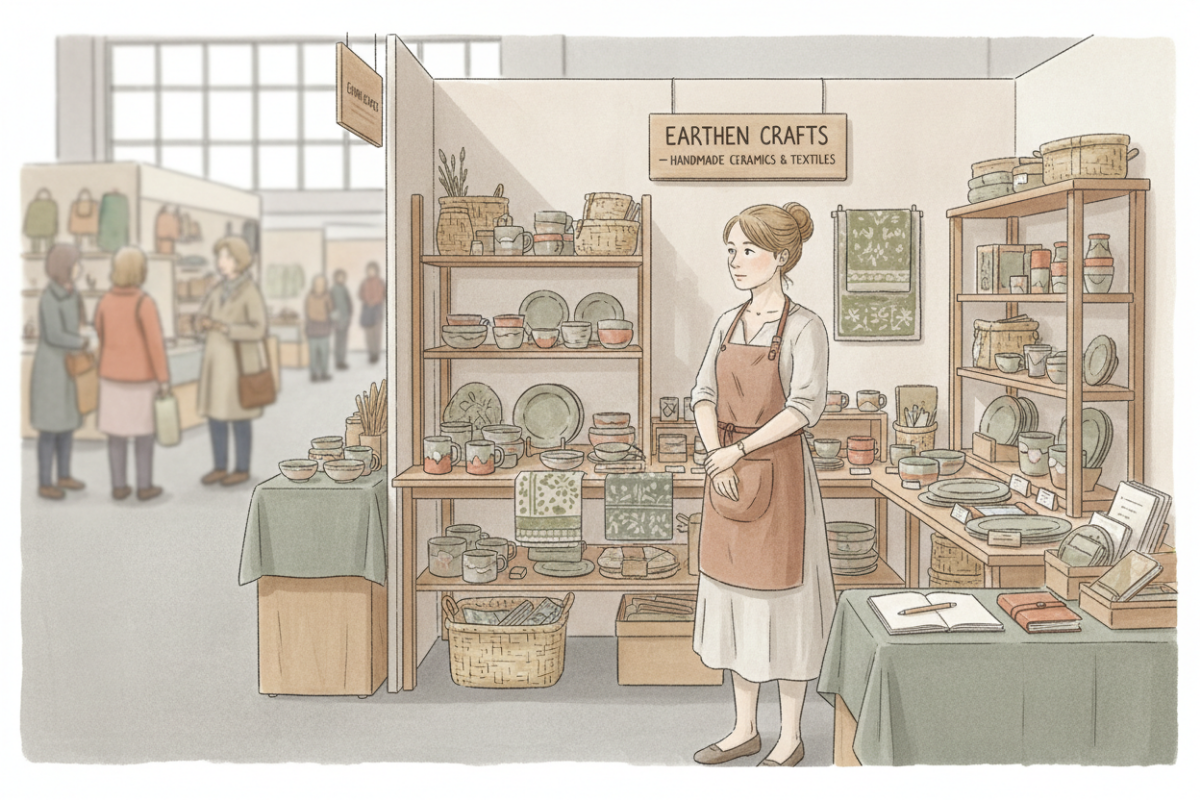
When a Booth Looks Finished but Still Isn’t Working
The Decision
If your booth has been feeling close—but not effective—the problem usually isn’t that it looks bad.
It may be that the booth is asking the customer to do too much work.
That’s a different problem.
And it needs a different kind of fix.
And once you see it that way, the next step becomes much clearer.
If you’re ready to fix what’s actually causing the problem, start here:
How to Make a Craft Booth Easier for Customers to Shop
When customers approach a craft booth, they are usually deciding one simple thing:
Does this look easy to explore?
Shoppers at markets often move quickly from booth to booth, scanning displays and deciding where to pause.
Booths that feel calm and easy to browse tend to hold attention longer. Customers feel comfortable stepping closer, taking their time, and exploring the products on display.
Making a booth easier to shop rarely requires dramatic changes.
Often it simply means arranging displays in a way that allows customers to move naturally through the space.
In This Post
We’ll explore a few simple ways makers often make their booths easier for customers to browse:
• why clear product groupings help shoppers explore
• how display height affects visibility
• why browsing comfort matters more than quantity
• small booth adjustments that improve the shopping experience
1. Group Similar Products Together
When customers approach a booth, they often scan quickly to understand what is being offered.
Displays that group similar products together help shoppers understand the booth more easily.
For example:
• jewelry grouped in one area
• candles arranged on a single display
• wood products displayed together
Clear groupings allow customers to explore naturally rather than feeling unsure where to begin.
2. Vary Display Heights
Flat displays can sometimes make products blend together visually.
Varying heights — through shelves, risers, or small stands — helps certain items become more visible.
This doesn’t require dramatic displays.
Even small height differences can guide the customer’s eye across the booth in a comfortable way.
3. Leave Space for Browsing
Customers often need a little physical and visual space to browse comfortably.
When displays are spaced slightly apart, shoppers can pause, lean closer, and look more carefully at products.
Open space also helps booths feel calmer and more inviting.
4. Let Your Best Pieces Stand Out
Not every product needs equal attention in a booth.
Allowing a few standout items to become natural focal points helps customers decide where to look first.
This can happen through:
• a slightly elevated display
• a centered table arrangement
• a small featured grouping
Focal pieces help guide browsing without overwhelming the booth.
If you're experimenting with booth layouts or product placement for the upcoming market season, the Craft Booth Layout Planner can help you sketch display ideas and test arrangements before setting up at a show.
Closing Reflection
A Small Clarity Before You Go
A craft booth doesn’t need to be elaborate to be inviting.
Often the booths that customers enjoy browsing most are simply the ones that feel easy to explore.
When displays are arranged with the shopper’s experience in mind, browsing tends to happen naturally — and the products have more room to be noticed.
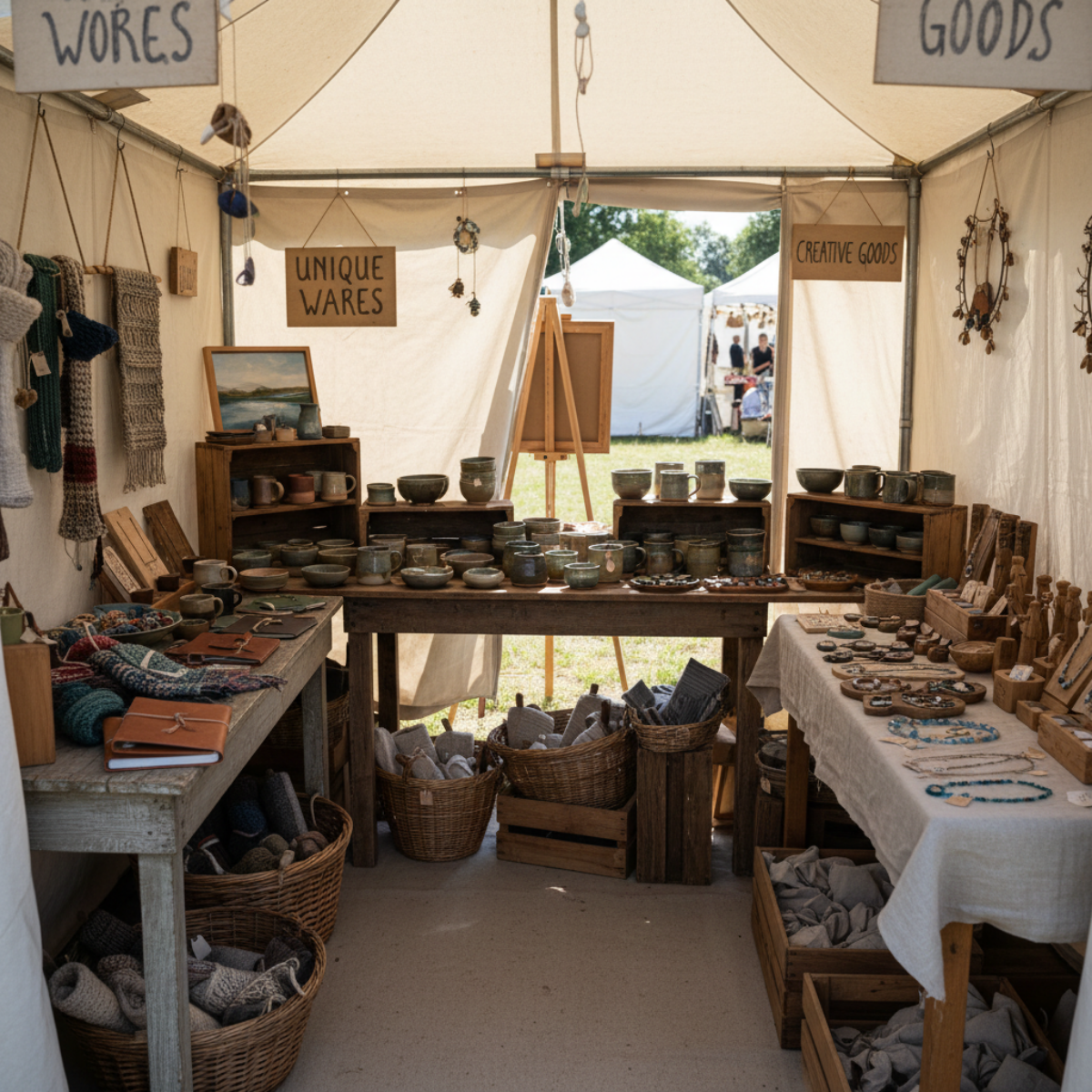
How to Plan a Craft Booth Layout (Without Overthinking It)
Planning your craft booth layout doesn’t have to feel rushed or overwhelming. This guide helps you understand how booth flow works, avoid common layout mistakes, and create a setup that feels clear, organized, and easy for shoppers to browse.
Your booth layout probably isn’t the problem you think it is.
Most of the time, it’s not about creativity, effort, or having the “right” displays.
It’s about trying to make layout decisions at the wrong time.
If setup day has ever felt rushed…
if you’ve rearranged things more than once…
or if your booth looked fine but didn’t quite work…
you’re not doing anything wrong.
You’re just making decisions under pressure.
Why Booth Layout Feels Harder Than It Should
Booth layout feels complicated because everything is happening at once.
space is limited
inventory varies
displays take up more room than expected
and there’s pressure for everything to look “right”
On top of that, it’s easy to compare your booth to polished photos online—which can make simple, functional setups feel inadequate.
Then you arrive at the event, other vendors are already unloading, and suddenly every decision feels urgent.
That’s where most of the stress comes from.
Not a lack of ability—
just a lack of structure before you arrive.
The Real Problem: Planning During Setup
One of the most common patterns is trying to design your booth while setting it up.
But setup time is:
noisy
rushed
physically demanding
It’s the worst possible moment to decide:
where tables should go
how customers will move
what deserves priority placement
So what happens?
You adjust things on the fly.
You second-guess decisions.
You end up with a booth that feels a little crowded or unclear.
Not because your ideas were wrong—
but because the timing was.
Setup time is for assembling.
Not for designing.
Start With Booth Size (Not Product Placement)
A strong booth layout always begins with the space itself.
Most events give you standard sizes like:
6×6
8×8
10×10
Once you know your dimensions, everything else becomes easier.
Your space determines:
how much walking room you have
how many tables actually fit
where displays can realistically go
If you start with products instead, it often leads to overcrowding.
When you start with space, you make clearer decisions about what belongs—and what doesn’t.
Space is the framework.
Product comes second.
Design for Flow, Not Perfection
A good booth isn’t about filling every inch.
It’s about how people move through it.
Flow is:
how shoppers enter
how they move
how they exit
When flow is clear:
people step in more easily
they stay longer
they engage more naturally
When flow is blocked:
people hesitate
they glance and move on
they don’t fully browse
Booths that feel open and navigable almost always perform better than booths packed with inventory.
Perfection isn’t the goal.
Clarity is.
Common Booth Layout Traps
Even experienced vendors run into the same patterns:
blocking the entrance with tables or tall displays
placing too much inventory at the front
using displays that visually close in the space
having no clear focal point
forgetting to plan where you will stand and move
None of these are obvious while you’re setting up.
But once you know to look for them, they’re much easier to avoid.
Why Repeatable Layouts Work Better
It’s easy to feel like you need a new layout for every show.
But repeatable layouts are what actually reduce stress.
When you use a similar structure each time:
setup becomes faster
decisions feel easier
you know what works (and what doesn’t)
Instead of starting over, you refine.
Instead of guessing, you adjust.
You don’t need a new layout.
You need a better version of the same one.
A Simple Way to Plan Ahead
One of the easiest ways to reduce decision fatigue is to sketch your booth layout before show day.
It doesn’t have to be perfect.
It just needs to exist.
Planning ahead lets you:
test arrangements without pressure
visualize spacing
make decisions while you’re calm
If you prefer something more structured, simple planning tools can make this even easier.
Turn Your Plan Into a Real Setup
Once you have a basic layout, the next step is applying it in a real booth.
Inside Artisan Kraftwerks, you’ll find tools designed specifically for this:
Craft Booth Layout & Planning Guide
Map your space and create a layout you can reuseCraft Booth Display Planning Worksheet
Decide what goes where so your booth feels balancedCraft Booth Setup & Flow Checklist
Set up faster and check flow before the show begins
👉 Explore Craft Show Booth Tools
These are designed to help you move from:
guessing → planning → repeatable setup
Keep It Simple and Refine Over Time
You don’t need a perfect booth layout.
You need a clear one.
Start with your space.
Create a simple structure.
Refine it a little each time.
That’s where confidence comes from.
Not from getting it right all at once—
but from making it easier each time you set up.
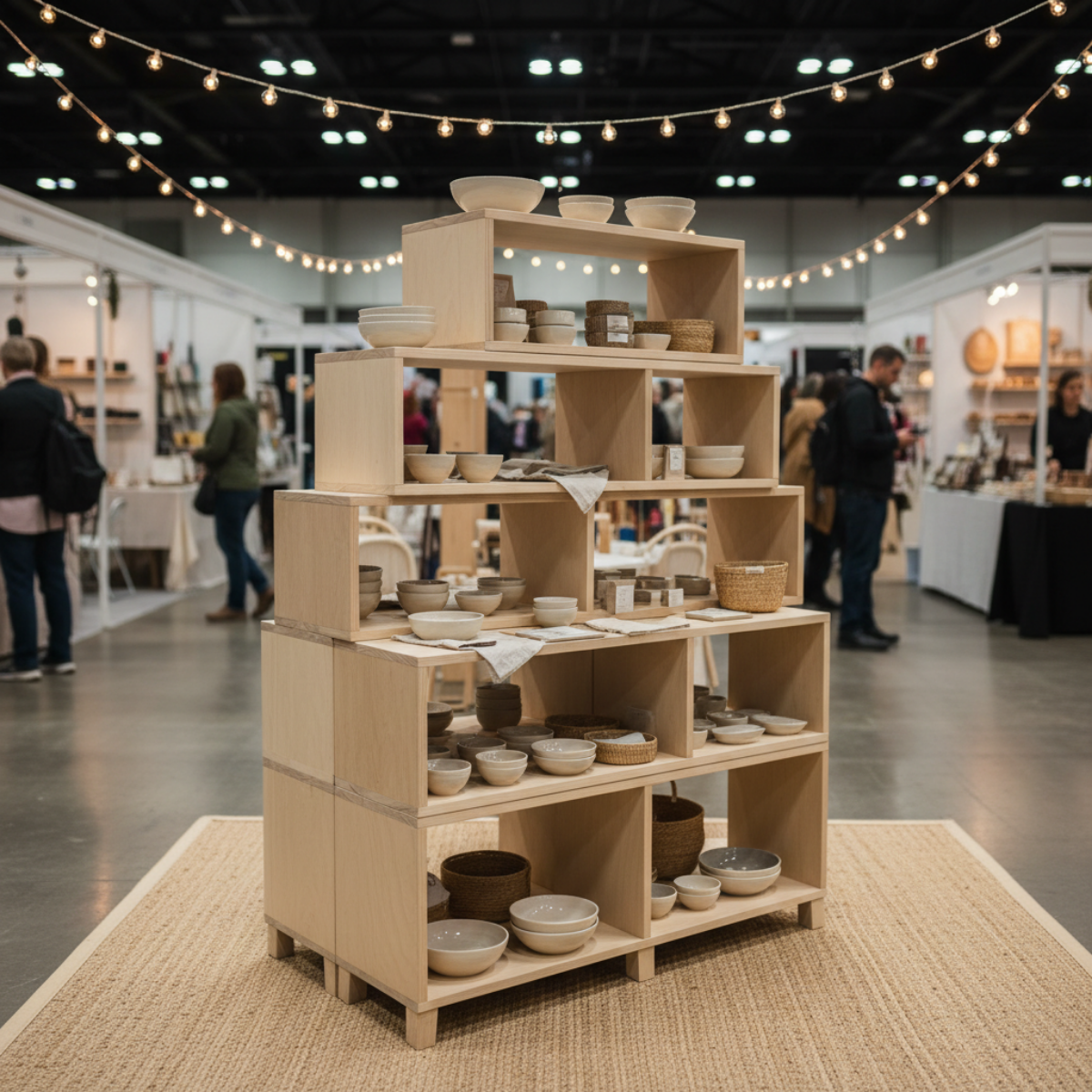
When Shoppers Glance and Walk Away
Smart display ideas that help small craft booths feel bigger, clearer, and easier for customers to browse.
You step back from your booth and try to see it the way customers do.
There’s product on every table.
Shelves are full.
You’ve brought everything you thought might sell.
And still… people glance, hesitate… and keep walking.
It doesn’t feel empty.
It feels… crowded.
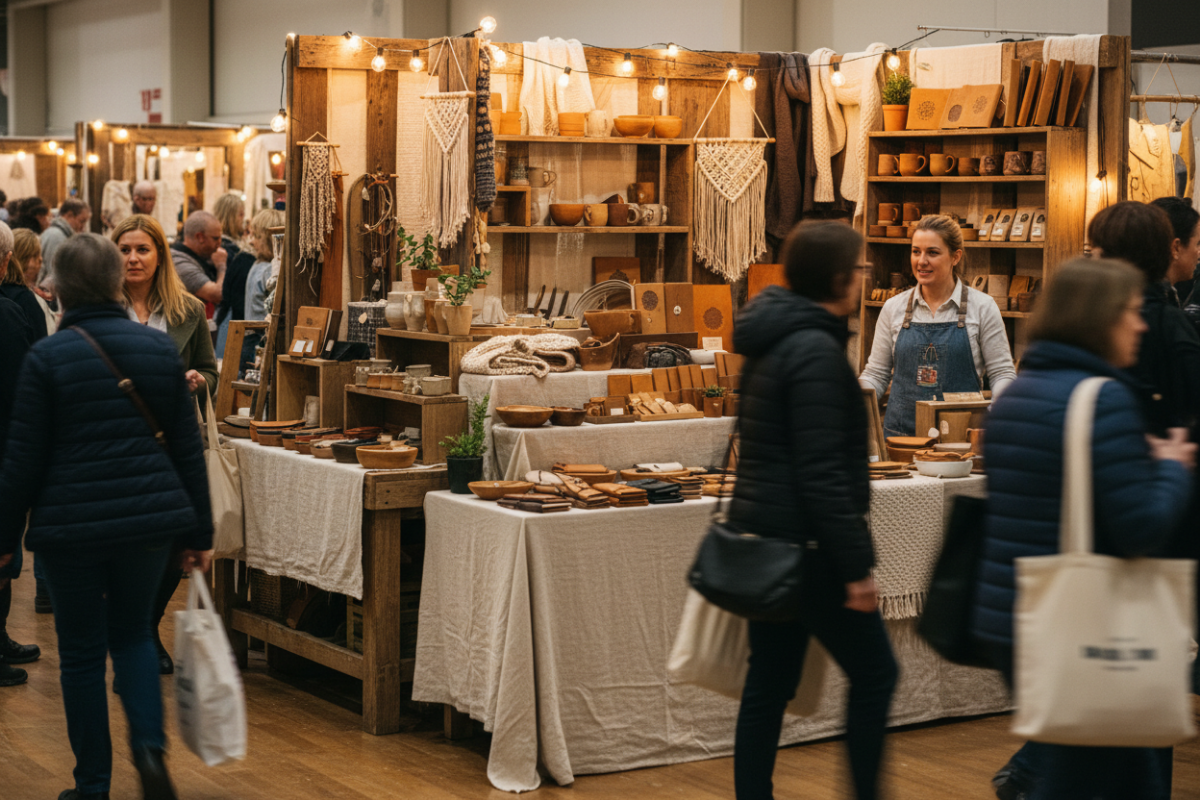
Most makers don’t struggle with having enough product.
They struggle with how that product is experienced.
When everything is visible at once…
nothing stands out.
You’re trying to show everything equally
It feels logical:
More products = more chances to sell
More visibility = better results
But your booth doesn’t behave like inventory.
It behaves like a decision environment.
And too many equal choices create hesitation.
Why adding “better displays” doesn’t fix it
Most advice leads here:
Add more shelves
Stack vertically
Fill empty space
So the booth becomes:
👉 Taller
👉 Fuller
👉 Busier
But not clearer.
The problem isn’t space.
It’s lack of structure inside the space.
This isn’t a space problem—it’s a structure problem
Small booths don’t fail because they’re small.
They fail because:
👉 Everything competes at the same level
👉 Nothing guides the customer’s eye
👉 There’s no clear place to start
When structure is missing, space feels smaller than it actually is.
If this feels familiar, you’re not the only one noticing it.
→ When Your Booth Feels Crowded No Matter What You Do
4 ways to make a small booth feel bigger (without adding space)
1. Create a single starting point
Your booth needs an entry anchor.
Not everything at once—just one clear place to begin.
Examples:
One featured table
One product category front and center
One visual focal point
👉 This reduces hesitation immediately
2. Group by decision, not by product type
Instead of:
“All earrings here”
“All signs there”
Try:
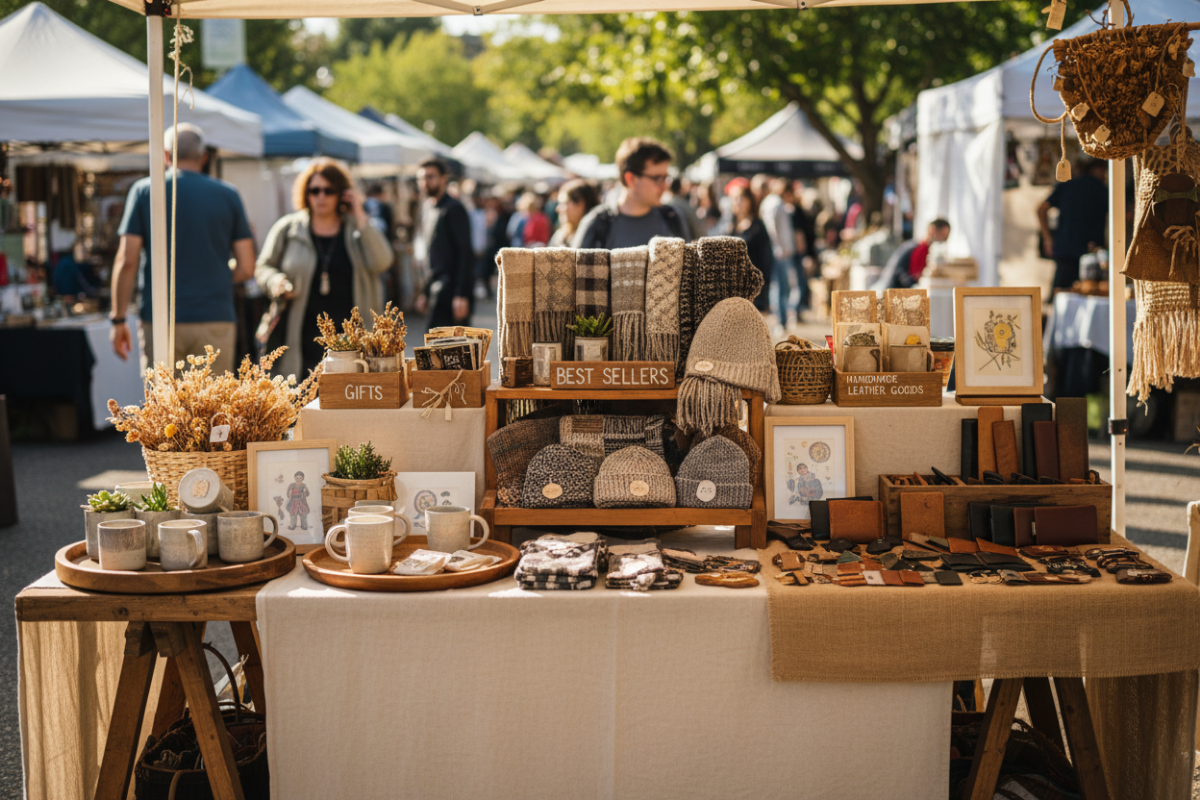
“Quick gifts”
“Best sellers”
“Seasonal items”
👉 You’re helping customers decide faster, not sort inventory
3. Build visual levels—but limit them
Levels create clarity… until they don’t.
Use:
2–3 height layers max
Clear spacing between groups
Avoid:
Stacking everything upward
Filling every vertical inch
👉 Space between items is what creates visibility
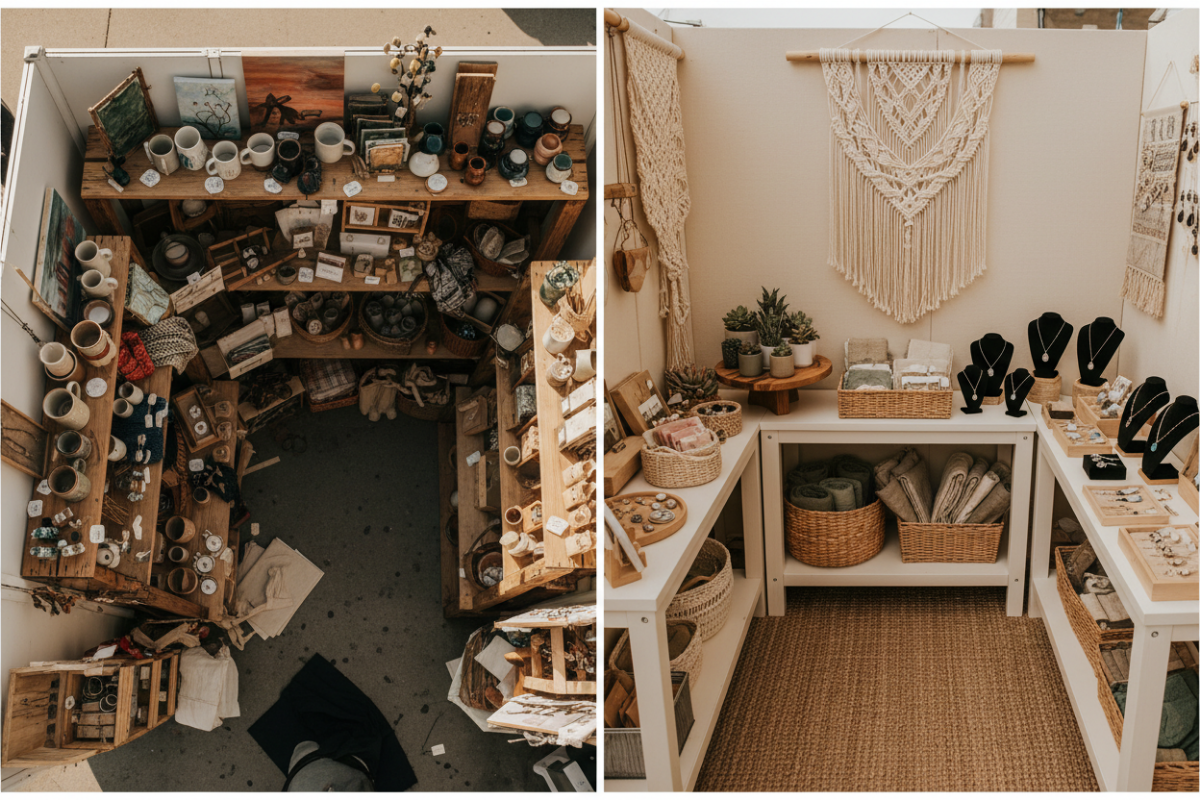
4. Leave intentional empty space
This feels wrong—but it’s critical.
Empty space:
Gives products breathing room
Creates contrast
Signals where to look
👉 Without space, nothing feels important
This is a structure problem, not a space problem.
Until the structure changes:
More products won’t help
More displays won’t help
More effort won’t help
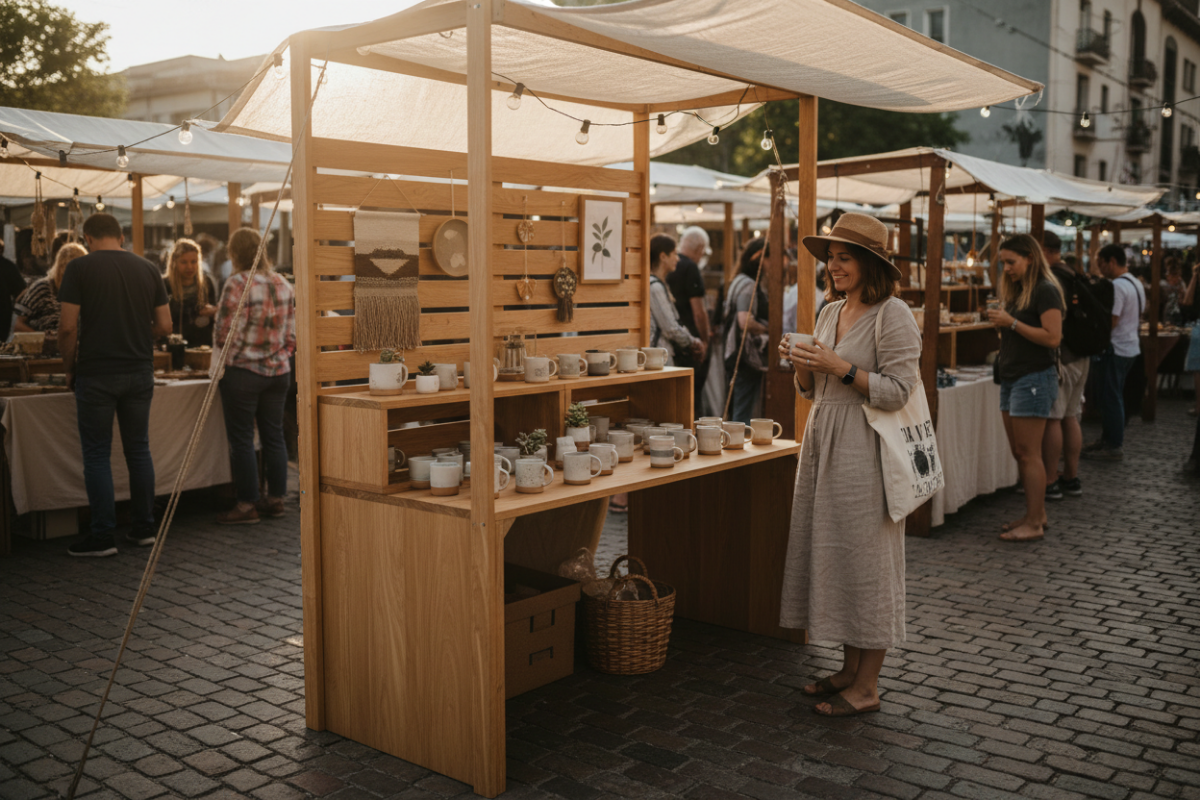
But once structure is clear…
Even a small booth can feel easy to browse.
If something feels off…
If your booth looks good but isn’t working…
👉 Craft Booth Check: Why It Looks Good But Isn’t Working
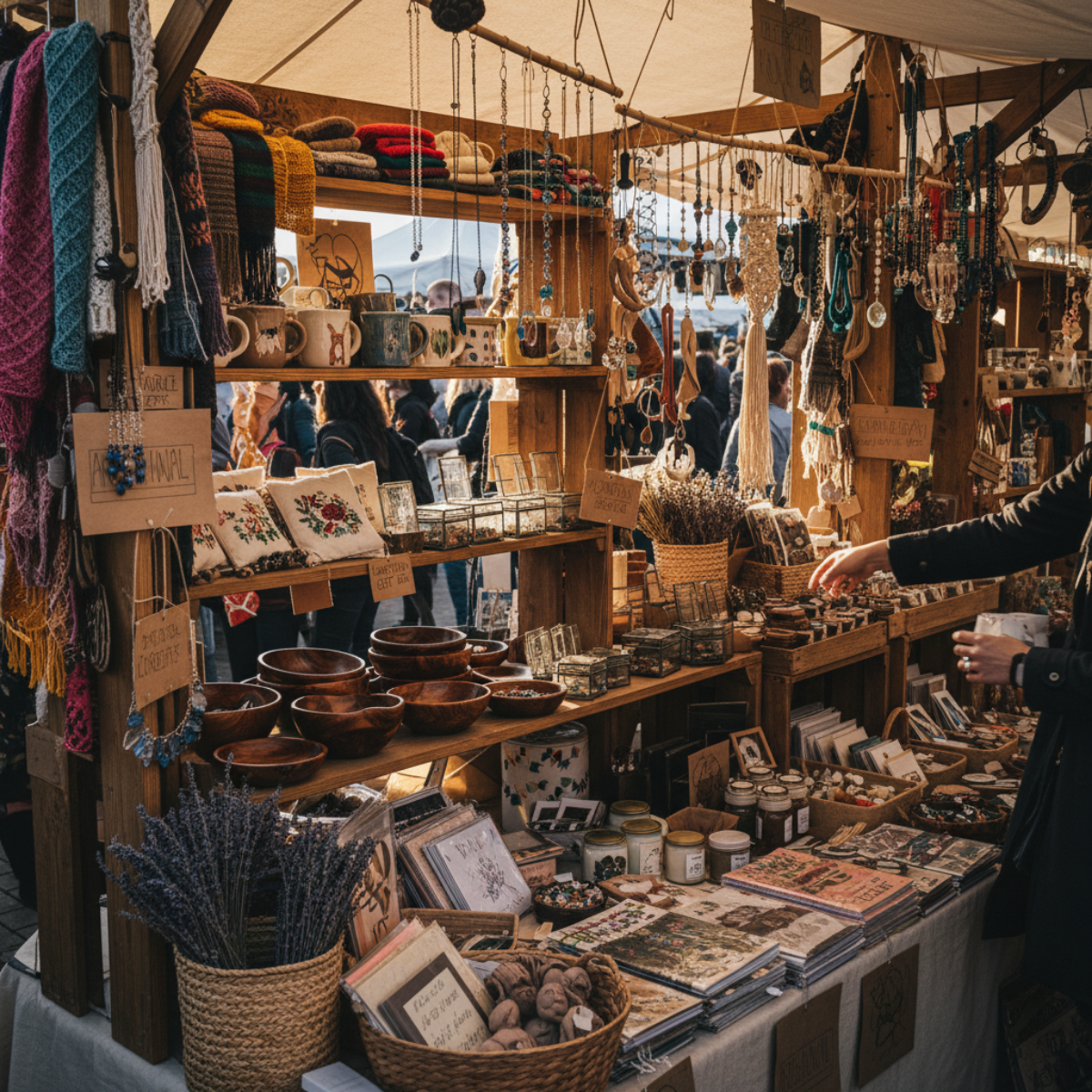
Small space doesn’t have to mean limited potential.
With a few intentional shifts, your booth can feel clear, open, and easy to explore —
which is exactly what makes people stop and stay.
When Your Booth Feels Too Crowded No Matter What You Do
A booth can look organized and still feel overwhelming to shoppers. Learn how visual compression affects browsing behavior, focal clarity, and shopper movement—and what to adjust first.
Sometimes the problem isn't the amount of space you have.
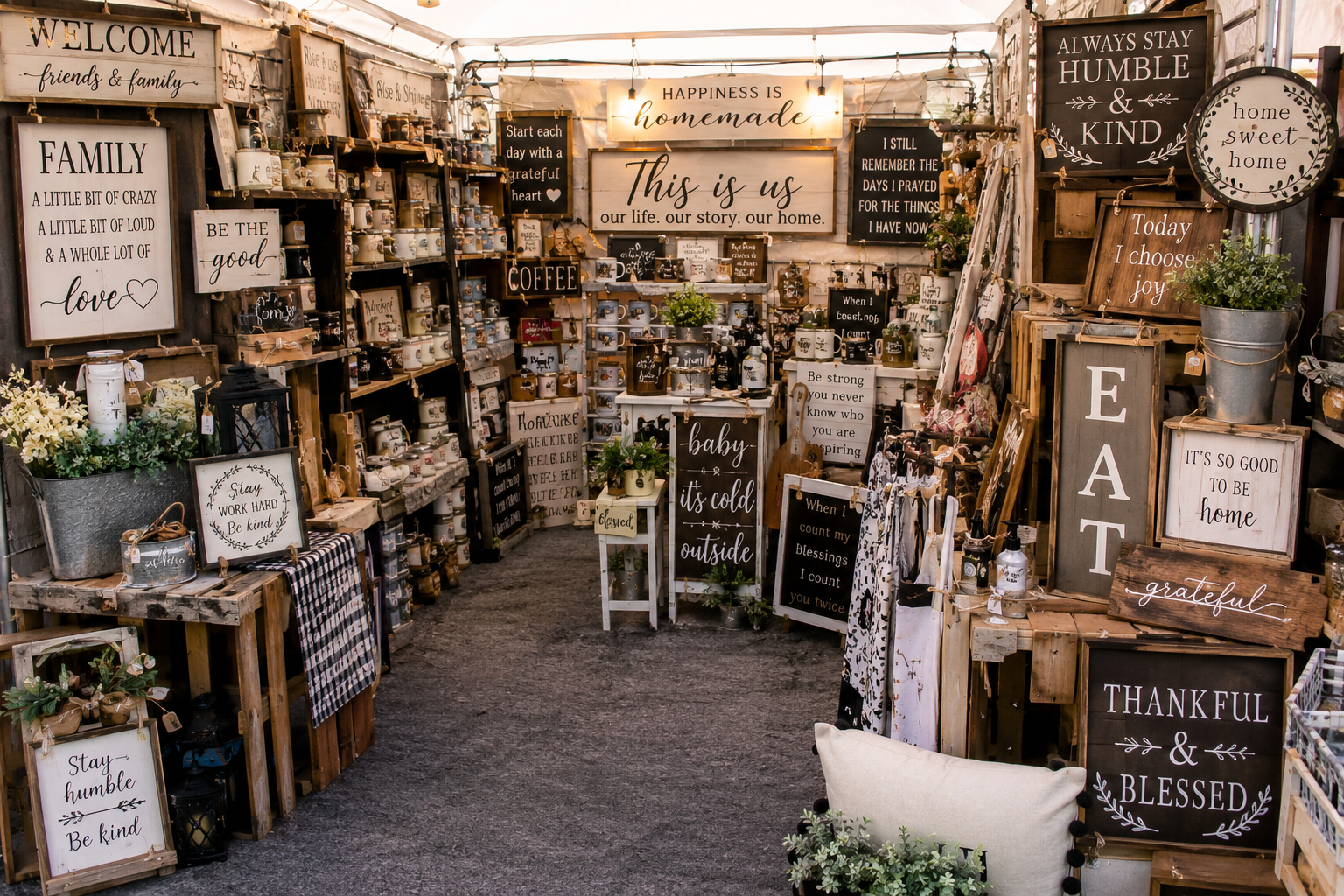
A booth can feel crowded even when inventory isn't the real problem.
If your booth always feels crowded—even after removing products, rearranging tables, or trying different layouts—it can become frustrating.
You may feel like you're constantly moving things around but never quite finding the right balance.
The good news is that crowded booths are rarely caused by having too much inventory. More often, they're caused by how shoppers experience the space.
Small adjustments can often make a booth feel easier to browse without requiring a complete redesign.
Why This Happens
Many booth problems aren't really about space.
They're about visual friction.
When shoppers approach a display, their brains are quickly trying to answer several questions:
What do they sell?
Where should I look first?
Where do I walk?
What matters most?
When too many displays compete for attention, shoppers experience uncertainty. Even beautiful booths can feel overwhelming if there are too many focal points, signs, heights, or products fighting for attention.
Common causes include:
Competing focal points
Too much visual information
Displays packed too closely together
Products blending together
Unclear shopper flow
Lack of open space
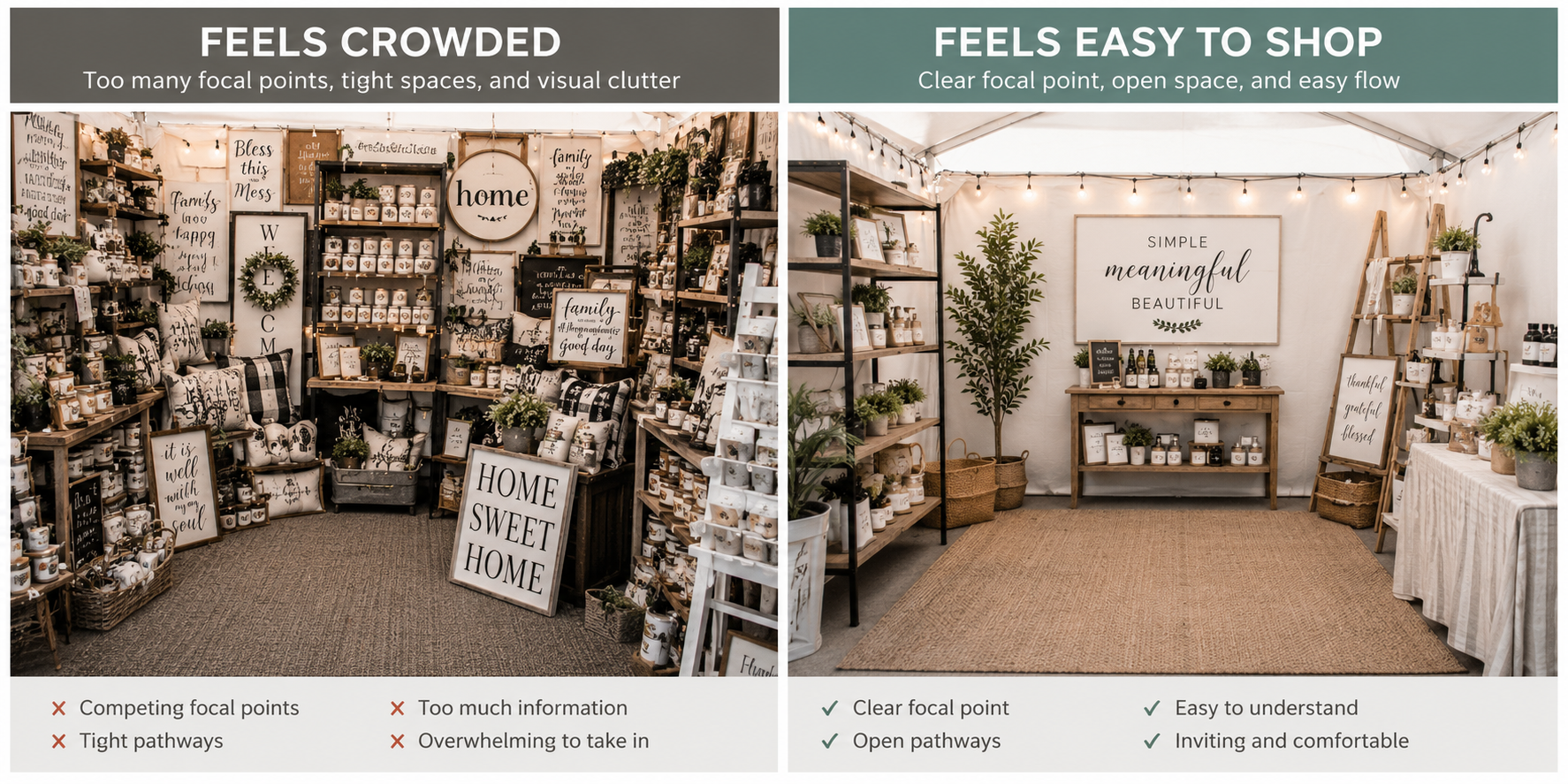
Small layout changes can make a booth easier to shop.
Signs This Might Be Happening
You may notice that:
Shoppers slow down but keep walking.
Visitors stay near the aisle instead of stepping inside.
Customers glance around without picking anything up.
People seem unsure where to begin.
Your booth looks full, but sales don't reflect the amount of merchandise.
You frequently rearrange displays but still feel dissatisfied.
These signs don't necessarily mean your products are the problem.
Often, shoppers simply need more visual clarity.
What To Focus On First
Don't try to redesign everything.
Instead, focus on one priority:
Reduce Visual Clutter
This doesn't necessarily mean removing products.
It means creating breathing room.
Start by:
Choosing one strong focal point.
Giving important products more space.
Grouping similar items together.
Removing duplicate signs.
Creating clearer walking paths.
The goal isn't emptiness.
The goal is making the booth feel easier to understand.
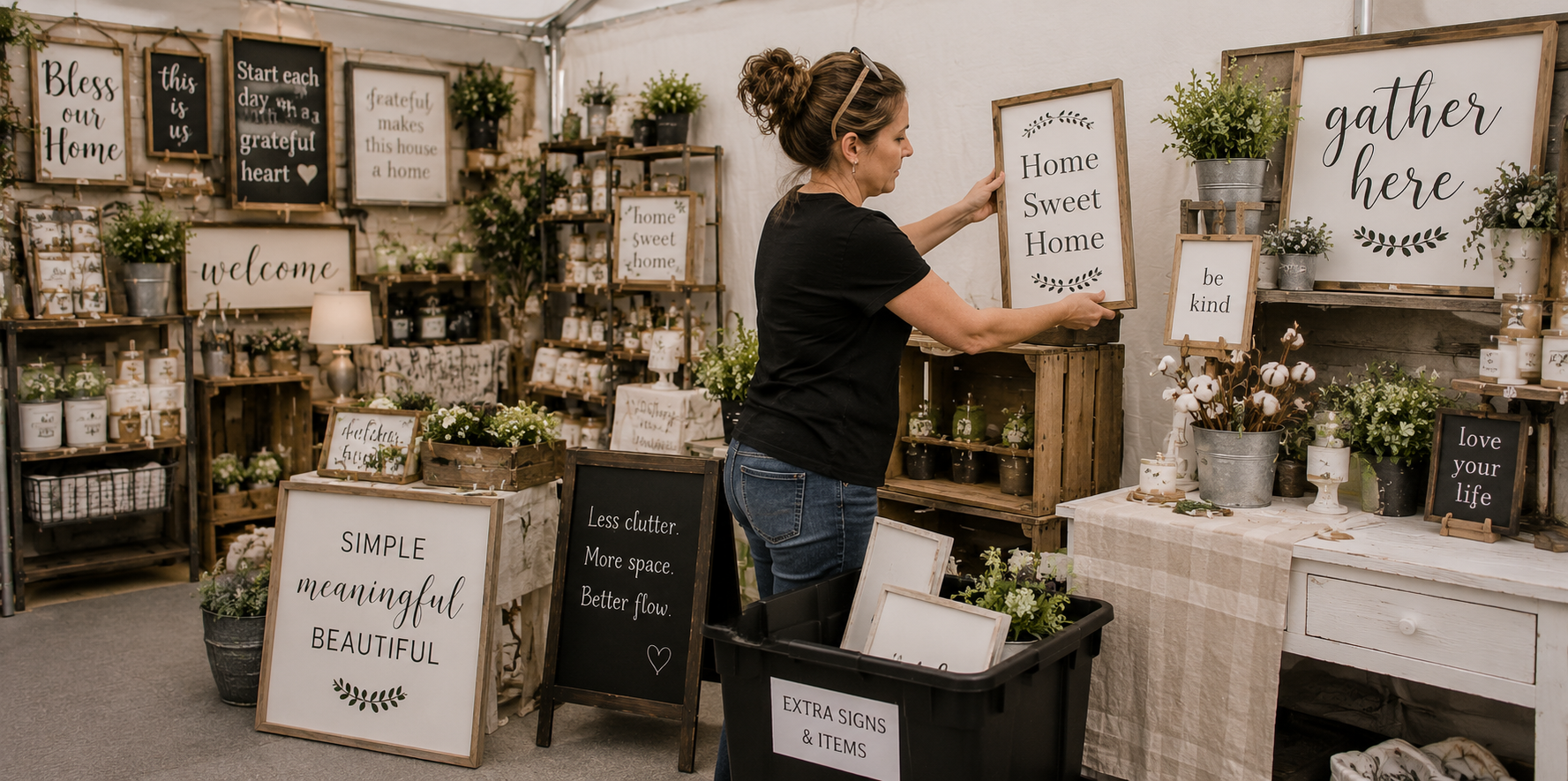
Creating space often matters more than removing inventory.
Ask Yourself
Before your next show, consider:
Can shoppers immediately tell what I sell?
Do I have multiple areas competing for attention?
Does the booth feel crowded from the aisle?
Is there a clear place for shoppers to enter?
Am I trying to show everything at once?
Sometimes showing less actually helps customers see more.
Remember
You don't have to solve everything at once.
Many successful booths evolve gradually over time.
A few thoughtful changes often create bigger improvements than a complete overhaul.
Your booth doesn't need to be perfect.
It simply needs to feel comfortable and easy to shop.
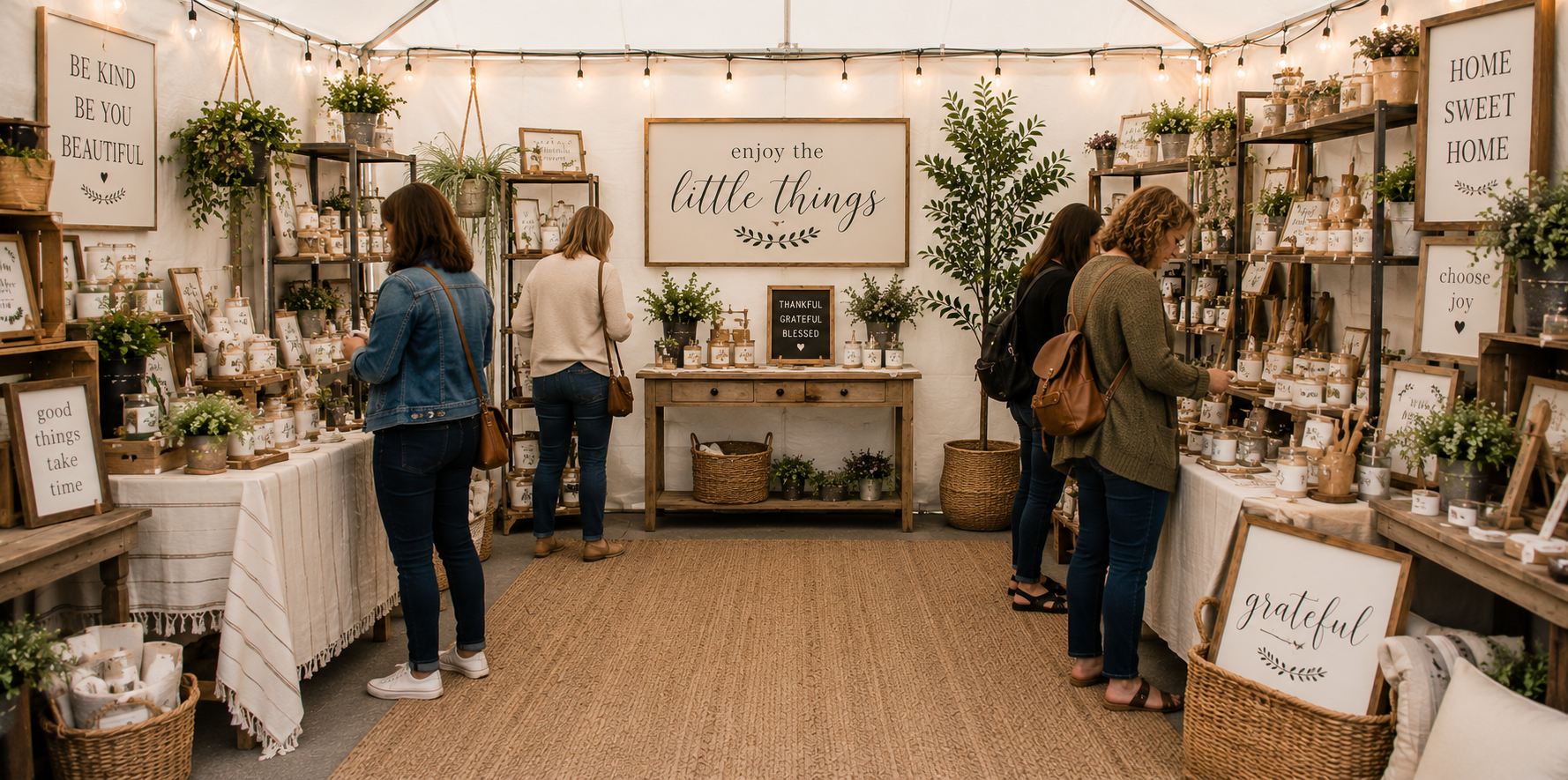
A booth that feels easy to shop encourages people to stay longer.
Helpful Resource
If you're trying to create a booth that feels easier to shop, the Craft Booth Layout Planner can help you evaluate traffic flow, focal points, display zones, and shopper movement before setup day.
Instead of guessing at your next show, you can make changes intentionally and test ideas before you unload a single table.
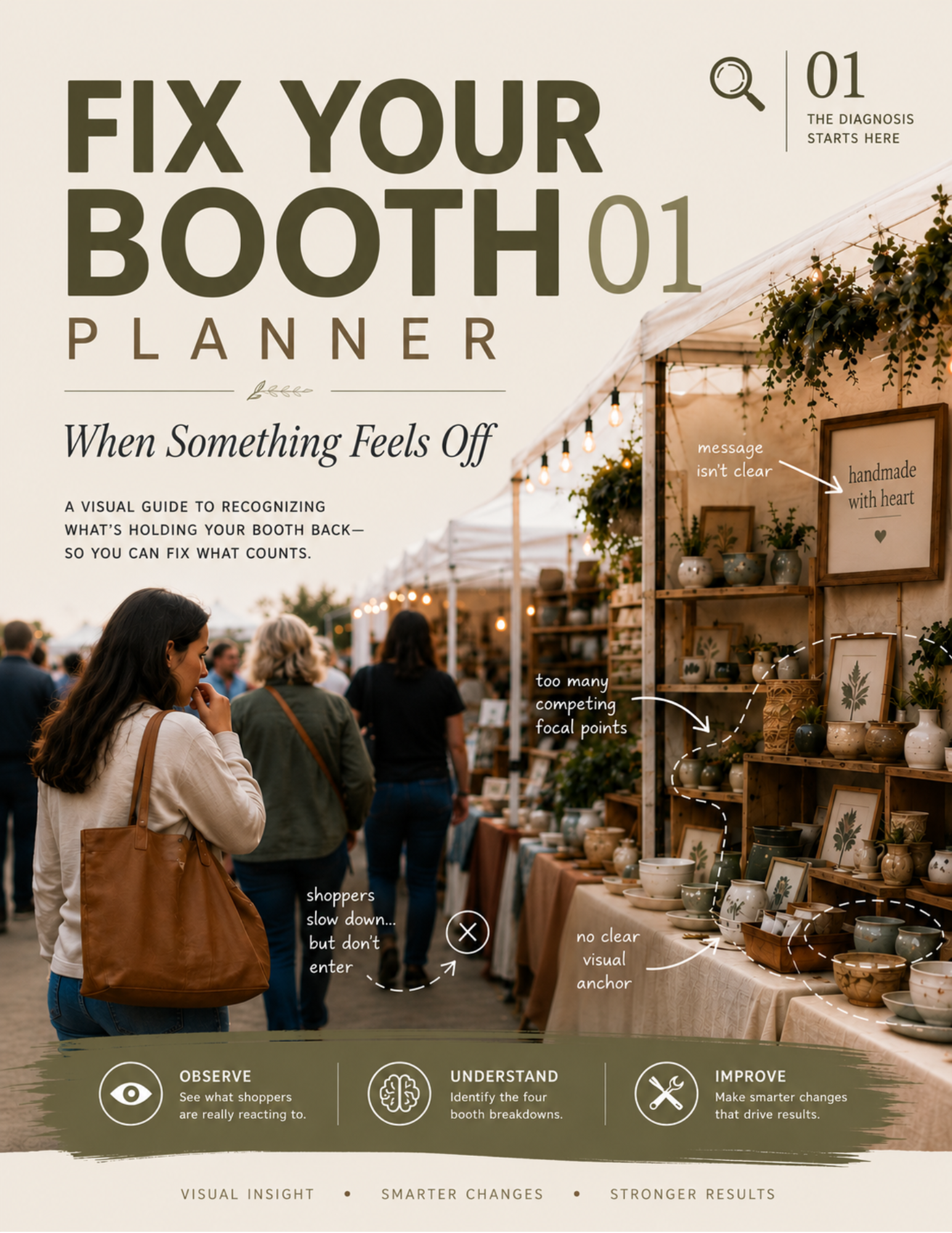
Instead of guessing at your next show, you can make changes intentionally and test ideas before you unload a single table.
Related Articles
If this sounds familiar, you may also find these helpful:
Why Some Booths Feel Easy to Shop (and Others Don't)
Learn what creates a booth that naturally guides shoppers through the space.
Why Your Booth Looks Good—But Still Feels Off
Explore why attractive displays can still feel difficult to browse.
Why Shoppers Browse Your Booth But Don't Buy
Understand what happens after shoppers step inside and why purchases sometimes stall.
Continue Your Booth Journey
Not every booth problem requires a complete reset.
Small improvements build confidence.
You can continue exploring:
The Fix Your Booth hub
Additional booth layout and shopper behavior articles
Every show teaches you something.
And every adjustment gives shoppers one more reason to stay.
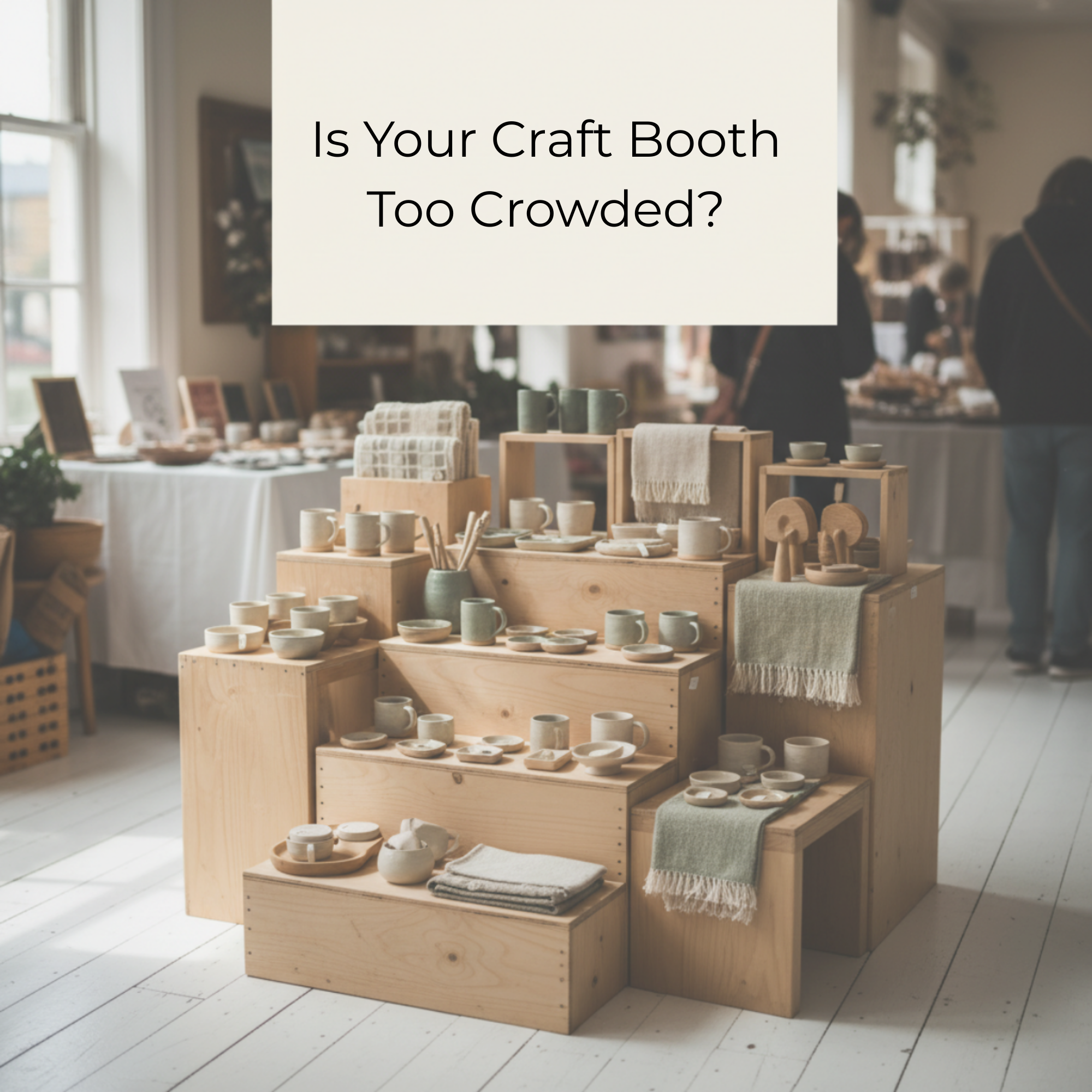
Signs Your Craft Booth Display Might Be Too Crowded
A crowded craft booth display can make it harder for shoppers to browse your products. Learn the common signs of an overcrowded booth and simple layout changes that can improve shopper flow.
Introduction
A busy craft booth can look exciting at first glance. Tables filled with handmade products often signal creativity, effort, and a wide selection for shoppers.
But there is a quiet downside many craft show vendors discover over time.
When a craft booth display becomes too crowded, shoppers often stop browsing.
Not because the products aren’t good — but because the booth becomes mentally difficult to navigate.
Instead of feeling curious, visitors feel overwhelmed.
The goal of a strong craft booth layout is not to show everything at once.
It is to create a space that feels easy to explore.
Below are a few common signs that your booth display might be working harder than it needs to.
In This Post
We’ll explore a few common signs that a booth display may be feeling a bit crowded to customers:
• when every display surface is filled
• when shoppers hesitate instead of stepping closer
• when products compete equally for attention
• how small spacing changes can make displays easier to explore
1. Shoppers Look Quickly — Then Walk Away
One of the clearest signals of an overcrowded booth is fast scanning behavior.
Visitors glance across the table but don’t step in.
Why this happens:
When products are packed tightly together, the eye has trouble finding a starting point. Instead of curiosity, the shopper feels visual noise.
Strong booths create clear entry points:
• a focal display
• a featured product
• an open browsing area
This small change can dramatically increase how long shoppers stay.
2. Every Inch of Table Space Is Filled
Many vendors feel pressure to fill every available inch of their booth.
After all, more products should mean more sales, right?
In practice, the opposite is often true.
A well-designed craft show vendor booth uses intentional spacing.
Spacing allows:
• individual products to stand out
• shoppers to visually separate categories
• the display to feel organized and calm
Think of empty space as breathing room for your products.
3. Products Blend Together
When a display becomes crowded, different items start to visually merge together.
This makes it difficult for shoppers to notice individual pieces.
For example:
A table with 30 items tightly packed together may appear like one large collection rather than many unique products.
A table with 10–15 well-spaced items often sells better because each piece can be seen clearly.
Simple changes that help:
• small risers
• tiered displays
• grouped product zones
These adjustments give each item its own visual moment.
4. Shoppers Don’t Know Where to Look First
Good craft booth displays guide the eye.
Crowded displays remove that guidance.
If everything is equally dense, the shopper has to decide where to start — and many simply choose not to.
Instead, aim to create a visual hierarchy:
Top Level
Featured product
Middle Level
Primary items
Lower Level
Supporting items
This layered approach makes browsing feel natural.
5. Your Best Products Get Lost
Ironically, the products you are most proud of are often the ones that disappear in a crowded booth.
When too many items compete for attention, the strongest pieces lose their spotlight.
Consider creating:
• one hero display
• one secondary display
• supporting product areas
This structure naturally guides shoppers through the booth.
Practical Example
Imagine two vendor tables.
Booth A
• 40 items on one table
• no spacing
• flat layout
• similar product sizes
Shoppers scan quickly and move on.
Booth B
• 18 products displayed
• varied heights
• grouped categories
• open space between items
Shoppers step in, pause, and browse.
The difference isn’t product quality.
It’s display clarity.
Summary Insight
Crowded displays usually come from a good place.
Makers want to show the full range of their work.
But the most effective craft booth displays focus on clarity rather than quantity.
When shoppers can easily see:
• where to start
• what stands out
• how products are organized
They naturally spend more time browsing.
And time spent browsing is often the first step toward a sale.
Next Step
If you're working on improving your booth layout, you may find these helpful:
Craft Booth Layout Planner
A simple planning guide designed to help craft show vendors create balanced displays that are easier for shoppers to explore.
Maker Path
The broader Artisan Kraftwerks framework for building a craft business with intention, clarity, and steady progress.
Both resources are designed to help makers refine the small structural decisions that often make the biggest difference.
Related Craft Booth Display Guides
If you're thinking about improving your booth layout, these articles may help you explore the topic further:
• Small Craft Booth Display Ideas That Maximize Limited Space
• Why Some Craft Booth Displays Feel Easy to Browse
These posts explore how booth layout, product spacing, and display structure influence how shoppers experience your booth.
Happy Maker Monday 🌿
Connie - Artisan Kraftwerks
When Makers Confuse Momentum With Direction
Momentum feels productive.
Direction makes progress meaningful.
Why staying busy doesn’t always mean your handmade business is actually moving forward.
Momentum is often treated as the goal.
For many makers, progress starts to look like activity.
More posts.
More listings.
More products.
More motion.
From the outside, it can look like things are moving forward.
But momentum and direction are not the same thing.
I keep noticing that when makers feel stuck or uncertain about their business, the response is often to increase activity.
Post more.
Make more.
List more.
The assumption is that if the motion continues long enough, the path will eventually become clear.
And sometimes it does.
But often the result is something different.
Momentum without direction tends to feel unstable.
On the surface, it looks energetic.
But underneath there’s often a quiet tension — a sense that all the effort might not actually be building toward anything.
Many handmade sellers and craft show vendors experience this at some point.
They’re working hard.
They’re staying busy.
Yet it’s difficult to say exactly what all of that motion is meant to lead toward.
Direction changes the feeling entirely.
It doesn’t necessarily make things move faster.
But it makes effort cumulative.
Small actions start stacking instead of resetting.
Key observation
Momentum feels productive.
Direction makes progress meaningful.
When makers feel exhausted but can’t quite explain why, it’s often because they’ve been maintaining motion without a clear sense of where that motion is meant to lead.
Momentum is easy to start.
Direction requires a moment of thought.
Not necessarily slowing down —
just pausing long enough to understand what the energy is meant to build toward.
Pause for a moment and ask yourself
• Is the energy I’m spending reinforcing a direction?
• Or is it simply keeping things moving?
• If I stopped today, would the work I’ve done still make sense tomorrow?
Sometimes the difference between progress and exhaustion is simply knowing what the motion is meant to create.
Where this fits in your Maker Path
Moments like this usually appear in the Foundations stage, when makers pause to clarify direction before focusing their energy.
Without that pause, it’s easy to stay busy while still feeling uncertain about where the work is leading.
If you're noticing this moment in your own work:
→ Explore the Foundations Path
More patterns we’ve noticed
• Why Selling Can Feel Harder Than It Should
• Before You Switch Platforms, Read This
• Where You Sell Matters More Than You Think
Maker Notes are short reflections from the Artisan Kraftwerks team about patterns we notice while building and selling handmade work.
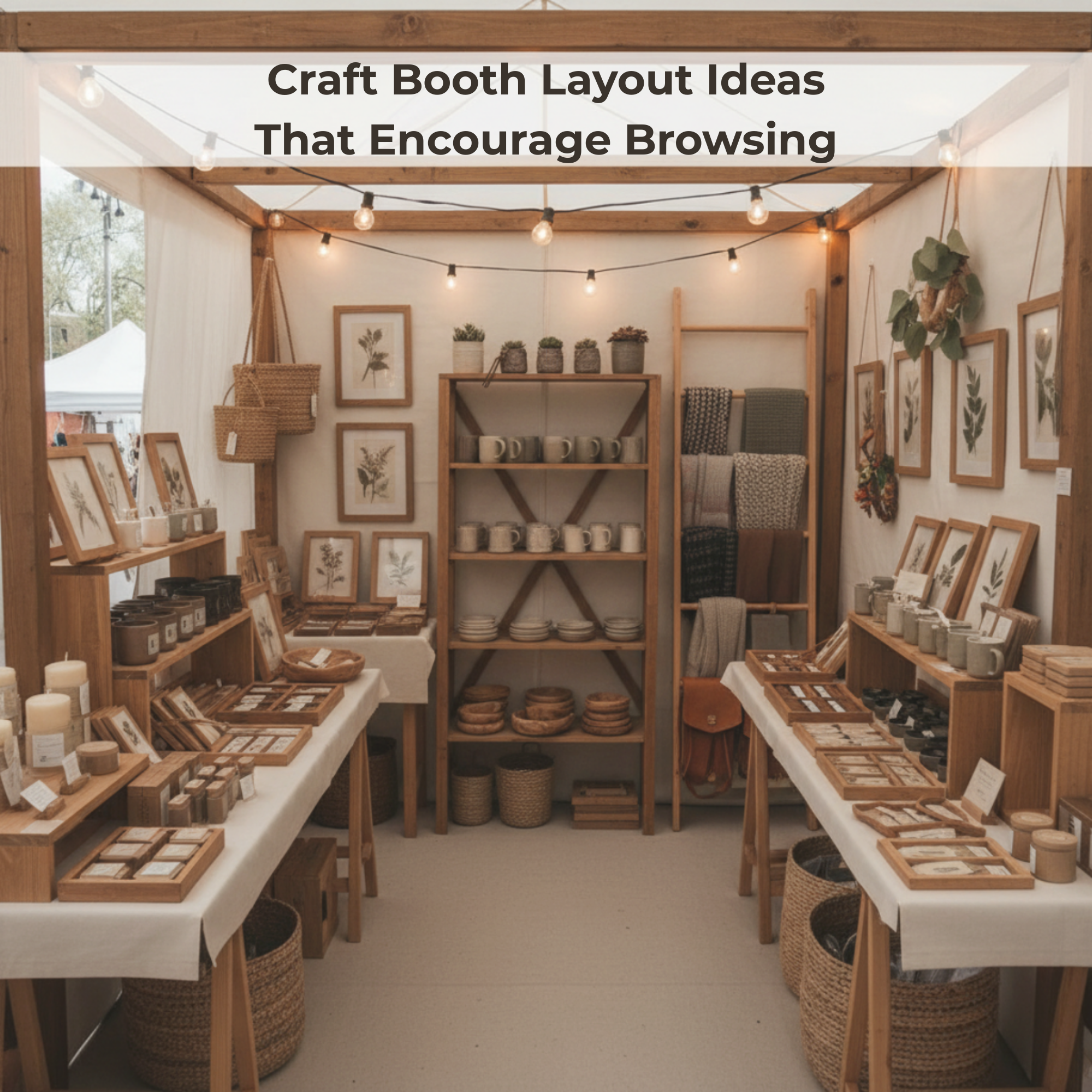
Craft Booth Layout Ideas That Encourage Customers to Stop and Browse
A well-designed craft booth invites shoppers to slow down and explore. These simple booth layout ideas help create displays that naturally encourage browsing.
Once a craft booth catches someone’s attention, the next question is simple:
Will they step closer to browse?
This decision often happens before a customer ever looks closely at a product.
Booth layout plays a big role in this moment.
When a layout feels open and easy to explore, shoppers tend to step forward naturally. When the arrangement feels tight or unclear, customers sometimes keep walking — even if the products themselves are beautiful.
Fortunately, booth layouts don’t have to be complicated to work well.
Often the most effective layouts are simply the ones that make browsing feel comfortable.
A well-organized booth display doesn't just look better — it quietly invites shoppers to step closer and browse.
In This Post
We’ll explore a few layout observations that many makers discover after working several markets:
• why simple booth layouts often work better than complex ones
• how open space encourages customers to step inside
• where focal displays help guide the shopper’s eye
• small layout adjustments that make booths easier to explore
1. Open Space Invites Curiosity
Many new vendors feel pressure to fill every inch of booth space.
But customers often respond more positively to booths that include breathing room.
Open space allows shoppers to:
• pause comfortably
• look around without feeling crowded
• approach displays without hesitation
A booth that feels open and balanced often attracts browsing more easily than one packed with displays.
2. Clear Entry Points Matter
When customers approach a booth, they instinctively look for a place where they can step closer.
If the layout creates a clear entry point — even a subtle one — shoppers tend to move forward naturally.
Some vendors achieve this with:
• L-shaped table arrangements
• open front displays
• angled tables that guide movement
Layouts that unintentionally block entry points can make browsing feel awkward.
3. Guide the Eye, Not the Customer
A booth layout doesn’t need to control how people move.
Instead, it can gently guide the eye.
This might happen through:
• a central display table
• a featured product grouping
• a slightly elevated focal piece
When the eye knows where to look first, browsing begins to feel effortless.
4. Comfort Encourages Exploration
When customers feel physically comfortable in a booth, they stay longer.
Comfort can come from small details such as:
• space between displays
• clear walking paths
• lower table heights
• uncluttered product groupings
These simple adjustments can transform how long someone spends browsing.
If you're experimenting with booth layouts for the upcoming market season, the Craft Booth Layout Planner can help you sketch and test display arrangements before setting up at a show.
Closing Reflection
A Small Clarity Before You Go
Many makers assume a booth needs to feel impressive to attract attention.
But the booths customers linger in are often the ones that simply feel easy to explore.
When a layout invites curiosity rather than directing it, browsing tends to happen naturally.
And sometimes the smallest layout adjustments make the biggest difference.
Related Booth Setup Tips
Happy Maker Monday 🌿
Connie - Artisan Kraftwerks
What Customers Notice First in a Craft Booth (And Why It Matters for Sales)
Customers don’t notice your products first.
They notice how your booth feels.
Customers often decide whether to stop within seconds. Your booth's first impression influences whether shoppers walk by or step inside to explore.
When shoppers walk through a craft market, they make dozens of tiny decisions in just a few seconds.
Which booths to approach.
Which displays to look at.
Which tables to skip entirely.
Many makers assume customers notice the products first, but that isn’t always the case.
More often, shoppers respond to something much simpler — the overall feeling of the booth. The layout, the spacing, and the way the display invites them to step closer.
Understanding what customers notice first can make booth planning feel much clearer.
In This Post
We’ll look at a few simple observations that many makers notice once they begin paying attention to booth behavior:
• what shoppers tend to notice first when approaching a booth
• why booth layout often matters more than the products themselves
• how display simplicity helps customers feel comfortable browsing
• a few small booth adjustments that make displays easier to explore
1. The Overall Booth Shape
Before customers see individual products, they notice the shape and structure of the booth.
From several steps away, shoppers quickly sense whether a booth feels:
• open
• crowded
• easy to step into
• or difficult to navigate
Booths that feel open and balanced tend to invite browsing. Booths that feel packed with displays can unintentionally signal that stepping closer might feel overwhelming.
Even small changes — spacing tables differently or lowering one display — can change the entire impression of a booth.
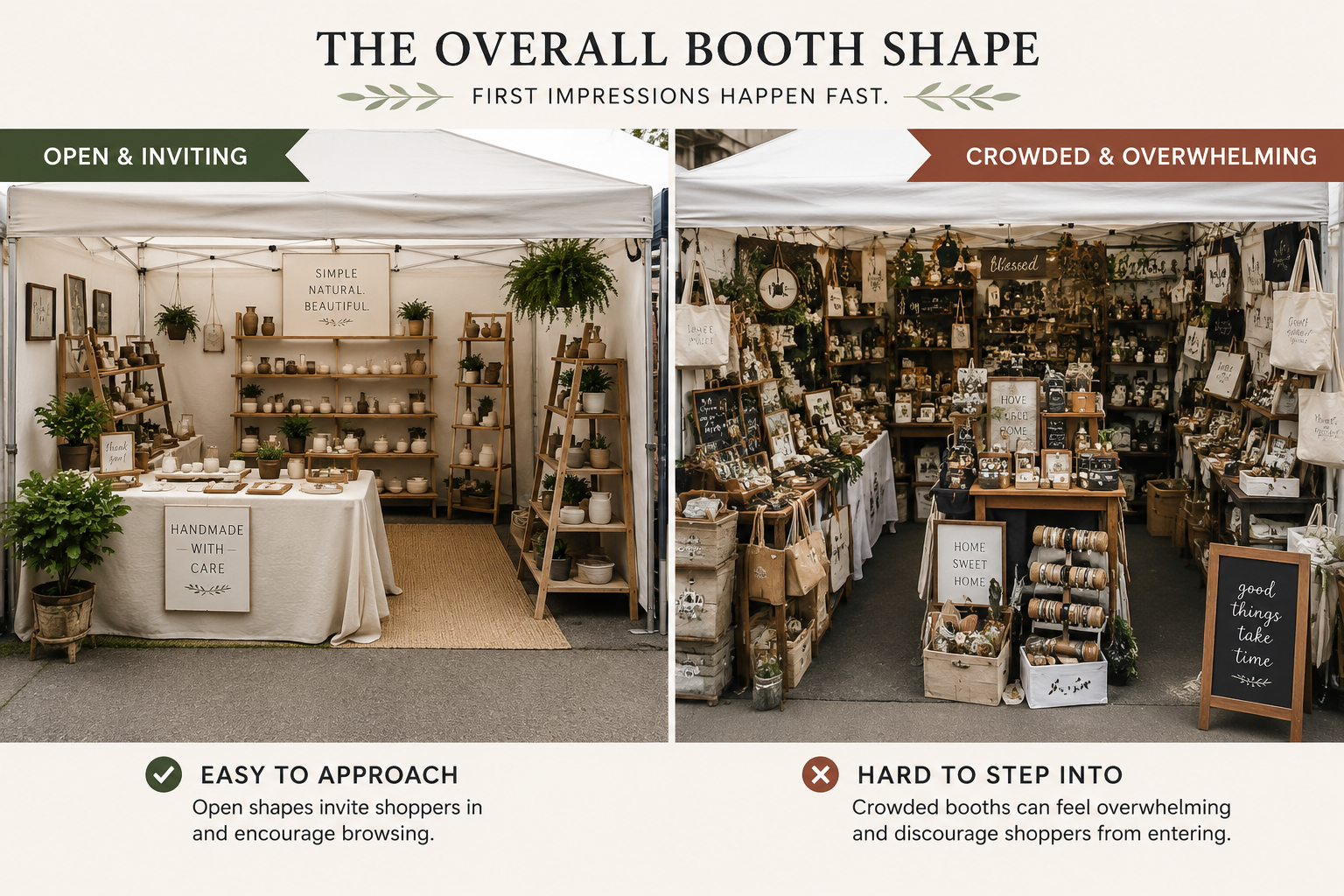
Shoppers often judge a booth before they look at individual products. Open layouts feel welcoming, while crowded spaces can discourage people from stepping inside.
2. The First Focal Point
Once a booth catches someone’s attention, their eyes look for a single focal point.
This might be:
• a standout product
• a well-lit display
• a central table arrangement
• or a visually distinct item
If everything in the booth competes equally for attention, customers often feel unsure where to look first.
When a booth naturally guides the eye toward one area, browsing becomes easier and more enjoyable.
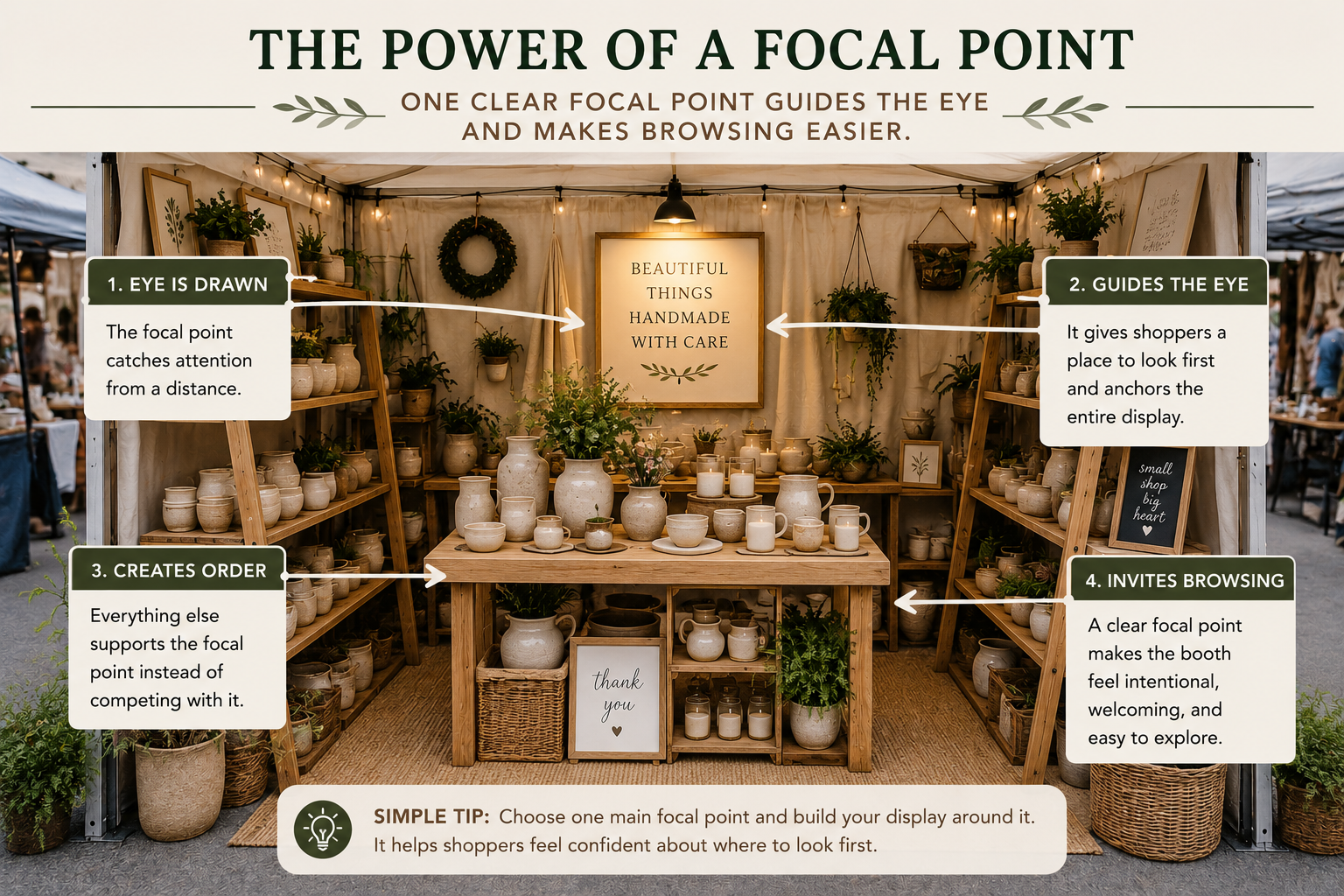
A strong focal point gives shoppers an easy place to look first, making the booth feel organized, inviting, and easier to explore.
3. The Ease of Browsing
Customers rarely decide to stop at a booth because they want to buy something immediately.
More often they stop because it feels comfortable to browse.
Shoppers subconsciously ask:
Can I step closer without bumping something?
Can I see what’s on the table easily?
Is there space to pause for a moment?
Booths that allow for simple, relaxed browsing often hold attention longer.
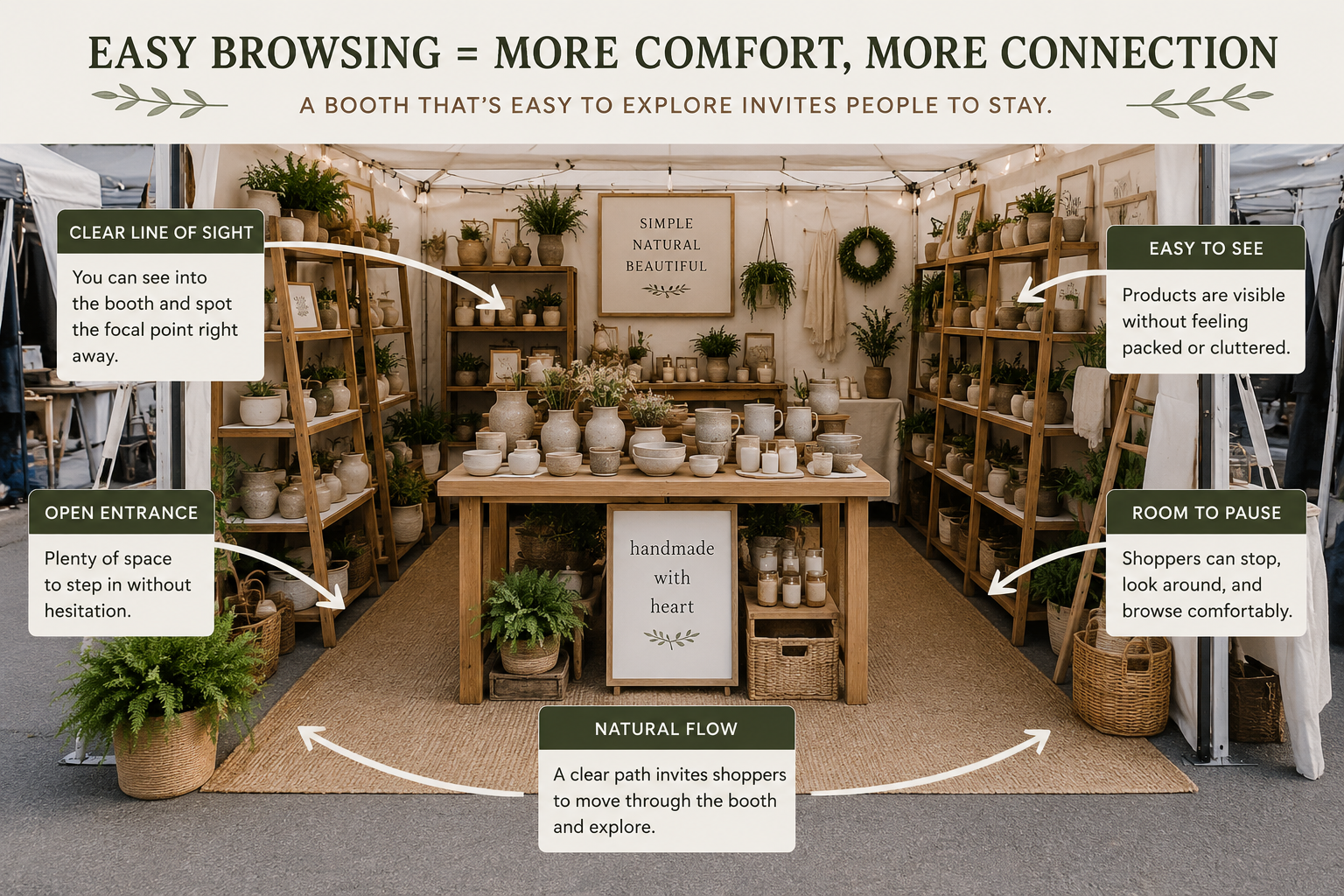
When shoppers can easily see products and move through a booth comfortably, they're more likely to slow down, browse, and make a connection.
4. The Overall Feeling
Long before a customer considers price or product details, they absorb the overall feeling of the booth.
Does it feel calm?
Balanced?
Welcoming?
Or busy and slightly chaotic?
This emotional impression forms quickly and often determines whether someone chooses to explore further.
If you're preparing for markets this season, the Craft Booth Layout Plannercan help you map your booth layout and displays before show day so you can experiment with spacing, focal points, and product placement.
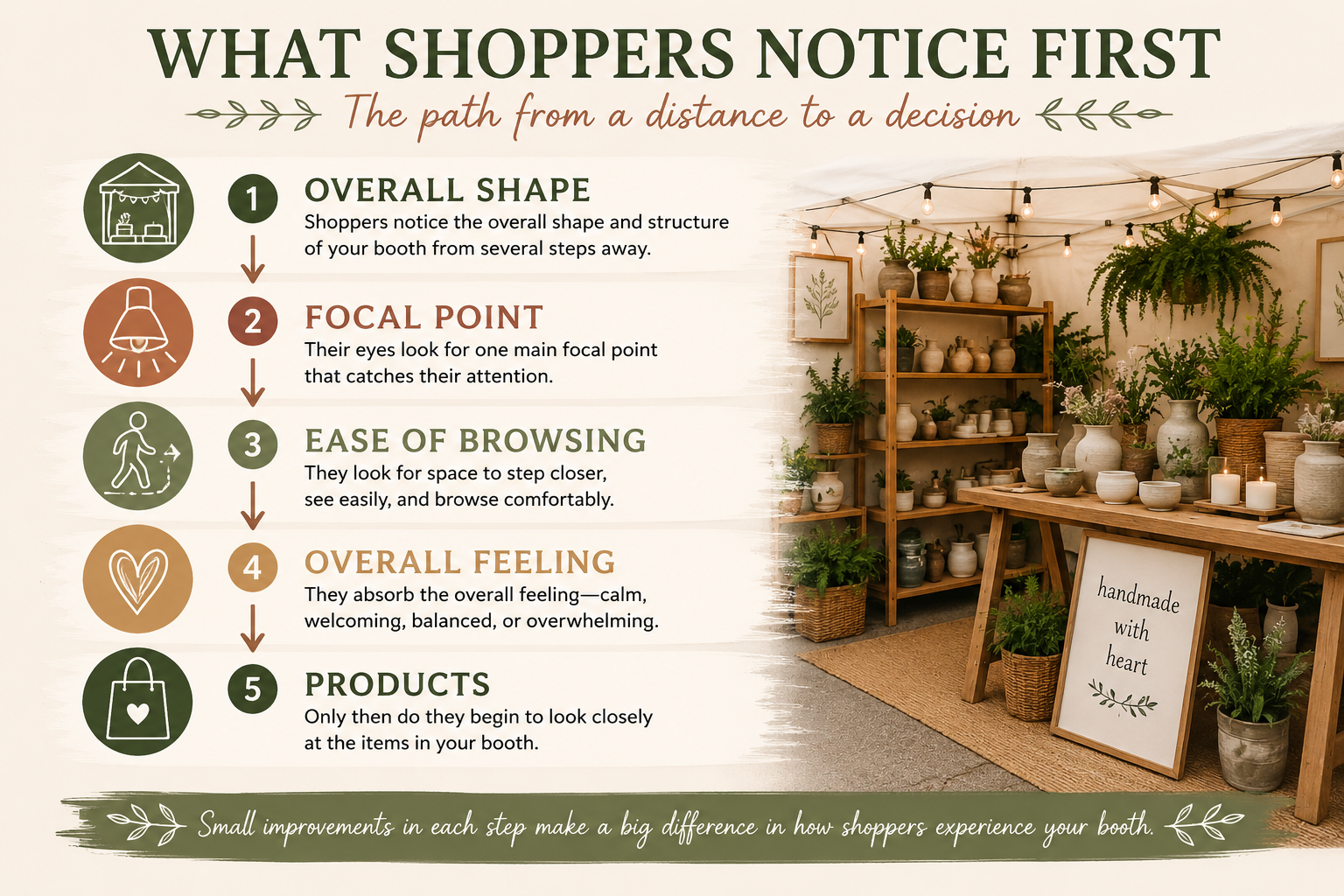
Shoppers don't notice individual products first. They experience your booth in stages, beginning with the overall shape and ending with the items themselves.
What Shoppers Tend to Notice First
Most shoppers don't examine individual products immediately.
Their experience often looks something like this:
OVERALL SHAPE
↓

FOCAL POINT

↓

EASE OF BROWSING

↓

OVERALL FEELING

↓

PRODUCTS
Customers often decide whether a booth feels inviting long before they study individual items.
Small improvements in layout and display can make browsing feel easier and more enjoyable.
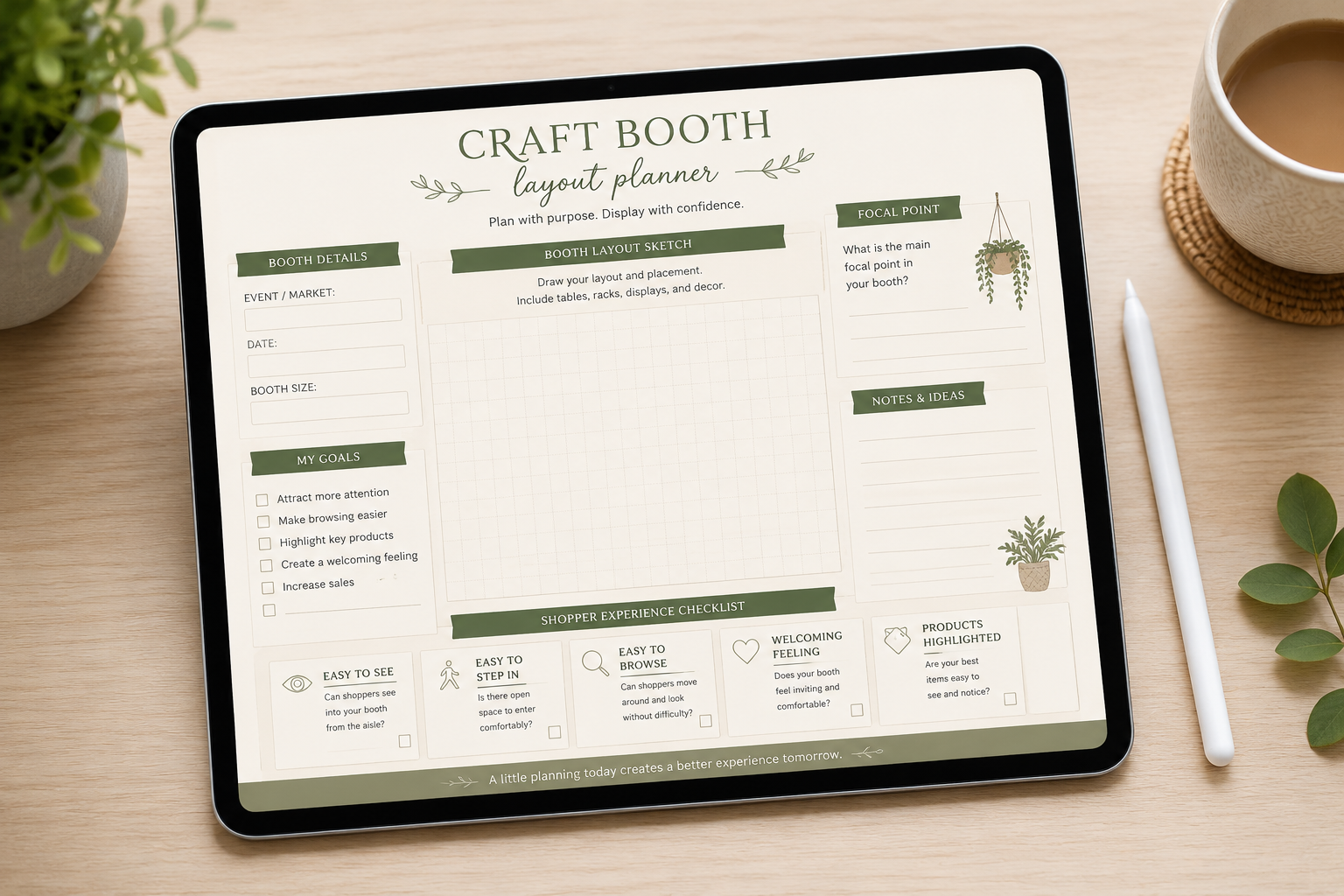
Thoughtful booth design starts before setup day. A layout planner helps makers create displays that are easier for shoppers to approach, browse, and enjoy.
Ask Yourself
Can shoppers quickly understand what my booth sells?
Is there one area that naturally draws attention?
Does the booth feel open and inviting?
Can customers comfortably step closer?
Would I know where to look first if I approached from the aisle?
What This Doesn't Mean
If customers don't immediately notice your products, it doesn't mean:
your products are poor quality
you need to redesign everything
your display is failing
Often small adjustments in layout, spacing, and focal points create noticeable improvements.
Continue Exploring
Why Shoppers Walk Past Your Booth
Sometimes shoppers notice a booth but never slow down.
Why Shoppers Slow Down—but Never Step Into Your Booth
Learn why hesitation happens and what creates comfortable entry points.
Why Some Booths Feel Easy to Shop
Discover why some displays naturally encourage browsing.
Remember
You don't have to solve everything at once.
Many successful booths evolve gradually over time.
A few thoughtful changes often create bigger improvements than a complete overhaul.
Your booth doesn't need to be perfect.
It simply needs to feel comfortable and easy to shop.
Helpful Resource
If you're trying to create a booth that feels easier to shop, the Craft Booth Layout Planner can help you evaluate traffic flow, focal points, display zones, and shopper movement before setup day.
Instead of guessing at your next show, you can make changes intentionally and test ideas before you unload a single table.
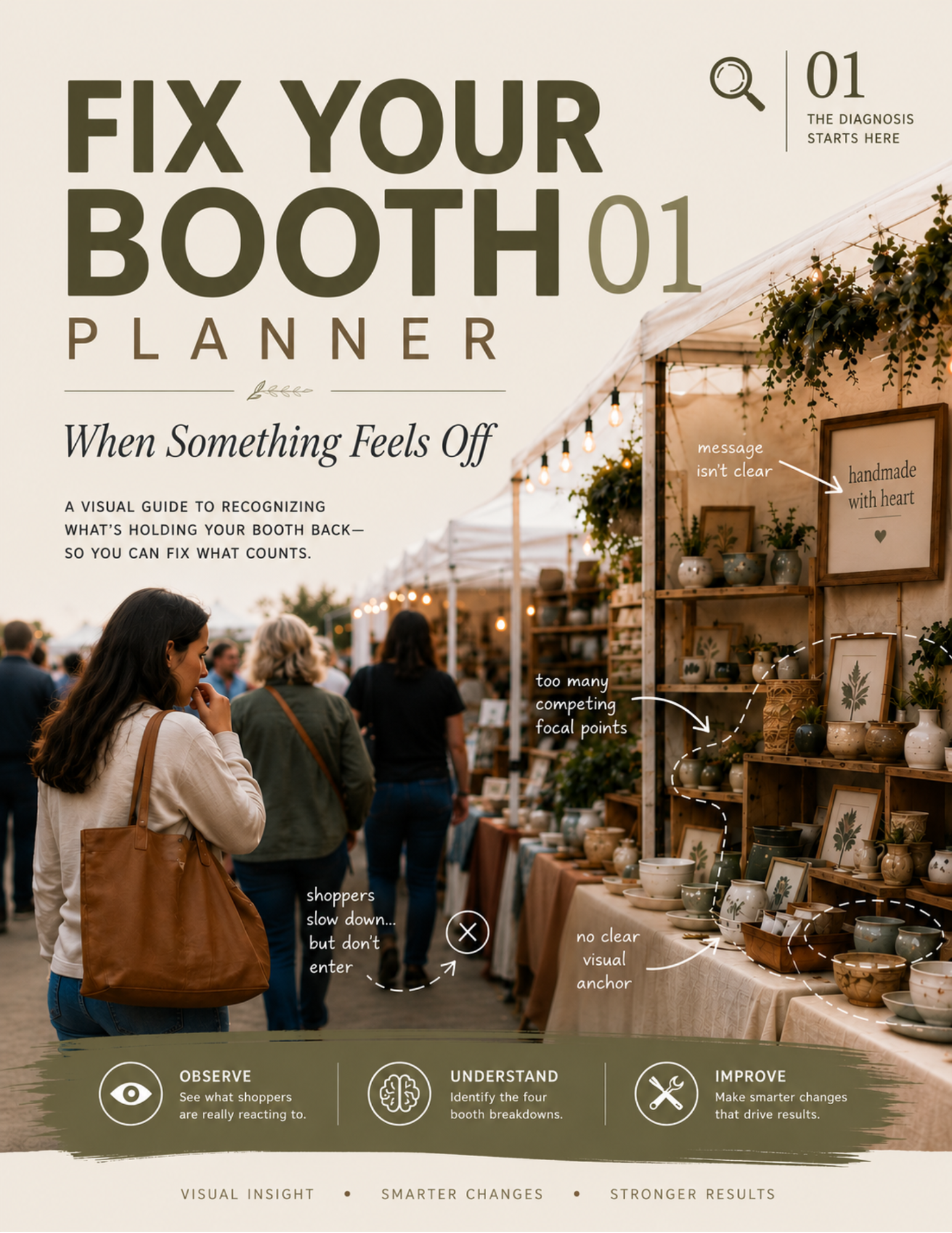
Instead of guessing at your next show, you can make changes intentionally and test ideas before you unload a single table.
Continue Your Booth Journey
Not every booth problem requires a complete reset.
Small improvements build confidence.
You can continue exploring:
The Fix Your Booth hub
Additional booth layout and shopper behavior articles
Every show teaches you something.
And every adjustment gives shoppers one more reason to stay.
Something I keep noticing when makers say they’re “behind” . . .
Feeling “behind” isn’t usually about timing.
It’s what happens when progress has no clear anchor.
I’ve seen this come up a few times recently, in different places, from different makers.
It shows up in comments, in DMs, in passing sentences that aren’t really the point of what they’re saying — except they kind of are.
“I feel like I’m behind.”
“I’m late to this.”
“I should have figured this out by now.”
It’s usually said quickly, almost as a disclaimer, before they move on to the real question they’re asking.
What’s interesting is that the makers saying this are rarely inactive. They’re usually doing a lot. Posting. Tweaking listings. Redesigning. Joining groups. Researching tools. Watching what everyone else seems to be doing.
The feeling of being “behind” doesn’t come from not moving.
It comes from moving without a clear anchor.
I’ve noticed that when someone feels behind, it’s often because they’re measuring themselves against a version of progress that was never clearly defined in the first place. The comparison point is fuzzy. The finish line keeps shifting. The rules feel implied, not chosen.
So everything feels late — even the things that are actually on time.
What makes this tricky is that activity can mask uncertainty. Motion creates the illusion of direction. You can be busy and still not feel oriented. You can be productive and still feel like you missed something important.
I’m starting to think that “behind” is rarely a timing problem.
It’s more often a sequencing problem.
Doing things out of order — even good, smart things — creates friction that feels like delay. Planning while executing. Deciding while promoting. Refining while still unsure what you’re refining for.
None of that means something is wrong. It just means the system is asking for a pause that hasn’t happened yet.
Not a stop.
A pause.
There’s a difference.
A pause gives context to movement. It turns activity into intention. It gives you something solid to measure against that isn’t someone else’s timeline.
I don’t think the answer to feeling behind is to speed up.
I think it’s to decide what “on time” actually means for you — and then notice how much of the pressure falls away once that’s clear.
This isn’t something to fix quickly.
It’s something worth noticing.
Observation Month Edition
Not every week needs a new strategy.
Sometimes the most productive thing is paying attention.
Maker Monday 🤍
Not every week needs a new strategy.
Sometimes the most productive thing a maker can do is pause long enough to notice what’s actually working — and what isn’t.
This month, we’re observing before we build.
If you’re in a season of slowing down, recalibrating, or choosing clarity over hustle… you’re not behind. You’re paying attention.
Happy Maker Monday 🌿
Connie - Artisan Kraftwerks