

Something I notice when makers keep “tweaking”
Endless tweaking usually isn’t about polish.
It’s what happens when a decision never fully settled.
I’ve noticed that when makers say they’re “just tweaking things a bit,” it’s rarely about polish.
It usually shows up after a decision that didn’t quite settle. A shop update that didn’t feel finished. A direction that was chosen quickly, maybe under pressure, and never fully landed.
Tweaking becomes a way to stay close to a decision without committing to it.
What’s tricky is that tweaking looks productive. Fonts get adjusted. Photos get swapped. Descriptions get rewritten. From the outside, it looks like forward motion.
But underneath, it often signals uncertainty — not about how to do the thing, but about whether this is the right thing to be doing at all.
I’m starting to think that endless tweaking isn’t a refinement problem.
It’s a clarity problem.
When a decision is solid, refinement feels contained. There’s an edge to it. A sense of “this is good enough to move on.” When a decision is shaky, refinement becomes open-ended.
Nothing ever quite resolves.
Not every tweak is avoidance. Sometimes things genuinely need adjusting. But when the same area keeps pulling attention over and over, it’s usually worth pausing to ask what hasn’t been decided yet.
Tweaking isn’t wrong.
But it’s often trying to solve the wrong problem.
Where You Sell Matters More Than You Think
When selling feels harder than it should,
it’s often not your strategy—it’s where you’re selling.
When selling starts to feel heavier than it should, most makers assume they need a new strategy.
Better marketing.
Better photos.
More social media.
A different pricing model.
Sometimes those things help.
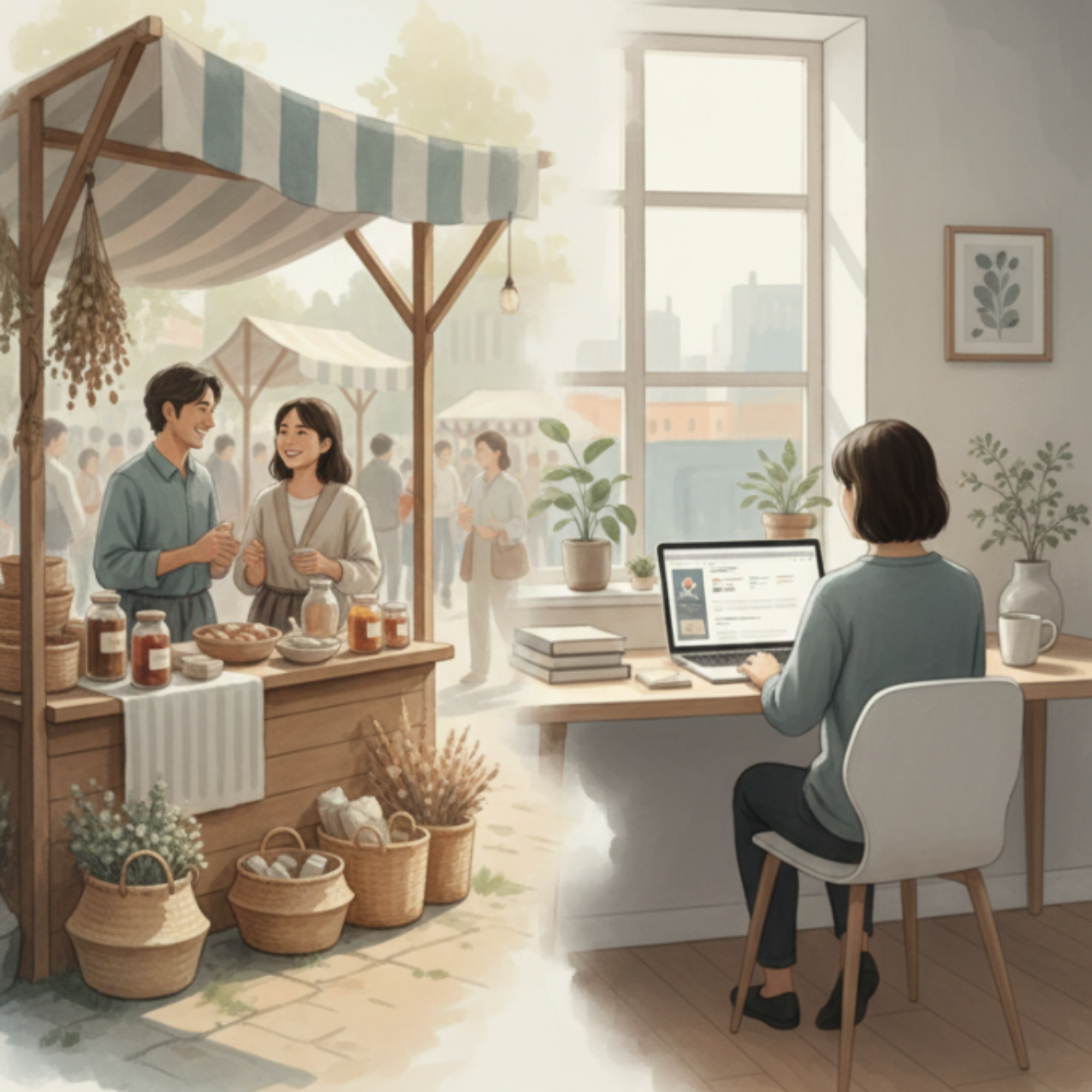
But often, the real issue isn’t how you’re selling — it’s where you’re selling.
Your selling environment shapes your energy, your workload, your expectations, and even how successful your business feels. If that environment doesn’t fit your current season, everything can feel harder than it needs to.
This guide is here to help you pause and look at your selling environment before you start changing everything else.
Your Selling Platform Is Not Just a Tool
We often treat platforms like neutral containers — just places to put our products.
But each selling environment comes with its own built-in rhythm, demands, and pressure points.
Selling at craft shows is different from selling online.
Selling on a marketplace is different from selling on your own website.
Selling locally is different from selling nationally or globally.
Each one quietly shapes:
How you spend your time
What kind of preparation is required
How customers discover you
How often you interact with buyers
How much uncertainty you carry day to day
If you’re trying to use strategies designed for one environment while working inside another, things can feel confusing and discouraging very quickly.
Why Things Might Feel Hard Right Now
If you’ve been thinking:
“I should be doing better than this.”
“Other makers make this look easy.”
“Maybe I’m just not cut out for this.”
…it may not be a skill issue.
It may be a fit issue.
For example:
A maker who thrives on face-to-face interaction may feel drained trying to grow through constant online content.
A maker who needs flexibility at home may feel overwhelmed by the physical demands and scheduling of in-person shows.
A maker who prefers slow, steady production may struggle in high-volume online environments.
None of these are personal failures. They are signs that your current selling environment might not match your current capacity, energy, or goals.
There Is No “Best” Place to Sell
One of the most unhelpful questions in the maker world is:
“Where’s the best place to sell handmade products?”
There isn’t one answer.
The “best” place depends on:
Your available time
Your energy level
Your personality
Your life season
Your product type
Your comfort with visibility, travel, or technology
A platform that’s perfect for someone else might be completely wrong for you right now — and that’s okay.
Clarity comes from fit, not trends.
Before You Change Strategies, Check Your Environment
When sales slow down or growth feels stuck, the instinct is to add more:
More posts.
More listings.
More platforms.
More effort.
But adding more inside a misaligned environment usually leads to burnout, not progress.
Instead, try asking:
Does my current selling method match the amount of time I realistically have?
Does it match the kind of interaction I enjoy (in-person vs online)?
Does it support my energy, or drain it?
Am I trying to force a strategy that belongs to a different kind of selling environment?
These questions often bring more clarity than any new marketing tactic.
You’re Allowed to Choose What Fits
You are allowed to:
Sell in fewer places
Focus on one environment for a season
Shift from in-person to online (or the other way around)
Pause growth to regain stability
Change your mind as your life changes
Choosing a selling environment that fits your current reality is not “playing small.”
It’s building a business that can actually be sustained.
Start With Clarity, Not Urgency
If you’ve been feeling pressure to change platforms, add new ones, or completely overhaul your business, this is your reminder:
Pause first.
Look at where you’re selling now.
Notice how it affects your time, energy, and stress.
Let that information guide your next decision.
Clarity leads to better decisions than urgency ever will.
Want help thinking this through?
If you’re second-guessing where you sell, the free Foundations guide may be a helpful place to pause:
It will walk you through how different selling environments shape your experience — so your next decision comes from clarity, not pressure.
Happy Maker Monday 🌿
Connie - Artisan Kraftwerks
Why You Can’t See What’s Working in Your Business (Yet)
You can’t see what’s working
if nothing stays the same long enough to learn from it.
You’re showing up.
You’re trying things.
You’re putting in the effort.
So why does it still feel unclear?
Why do you finish a week (or a craft show, or a launch) and still not know what actually worked?
For many makers, the issue isn’t lack of action.
It’s that nothing stays the same long enough to learn from it.
The Pattern Most Creative Sellers Don’t Notice
When sales feel inconsistent, the natural reaction is to change something:
New products
New displays
New platforms
New strategies
New promotions
And each change feels hopeful at first.
But when everything keeps shifting, there’s no stable ground to observe from.
You can’t see patterns if the conditions never stay consistent.
So instead of clarity, you get:
Busy weeks with no real insight
Shows where you sell but don’t know why
Online traffic without understanding what’s actually converting
It starts to feel like you’re always working — but never learning.
Clarity Comes From Staying, Not Switching
Real selling clarity doesn’t come from doing more.
It comes from staying with one direction long enough to notice what happens.
When you hold your direction steady, you can finally see:
Which products consistently get attention
Which displays actually pull people in
Which listings are getting saved, clicked, or purchased
What customers ask about again and again
What sells even when you’re not constantly pushing it
Those are patterns.
And patterns are what allow you to make calm, confident adjustments — instead of reactive ones.
The Hardest Part Isn’t Strategy — It’s Follow-Through
Most makers don’t struggle with ideas.
They struggle with staying with one long enough to learn from it.
That’s not a motivation issue.
It’s a clarity and support issue.
You need a way to:
Choose a direction
Stay with it
Observe what’s happening
Adjust slowly, based on evidence — not pressure
Start Here: Choose Your Selling Direction
Before you track anything, you need to feel settled about what you’re actually trying to grow.
That’s what the free Selling Direction Guide is for.
It helps you step back, look at your current selling environment, and choose a direction you’re willing to stay with — instead of constantly re-deciding.
👉 Start with the free Selling Direction Guide here
When You’re Ready to Follow Through
Once you’ve chosen your direction, the next step is staying with it long enough to see what works.
That’s where the Selling Direction Planner comes in.
It’s a calm, structured way to track what you’re featuring, what customers respond to, and what patterns are starting to form — without constantly changing course.
But first, choose your direction.
Clarity grows when decisions are given time to work.
Happy Maker Monday 🌿
Connie - Artisan Kraftwerks
Why clarity comes before momentum
Momentum doesn’t create direction.
It follows clarity.
Momentum is usually treated as the goal.
Move faster.
Post more.
Make progress.
When things feel stuck, the instinct is often to add motion — to do something so it feels like forward movement is happening again.
But I keep noticing that when makers feel overwhelmed, behind, or unsettled, the problem usually isn’t a lack of momentum.
It’s a lack of clarity.
Momentum without clarity doesn’t resolve anything
It just amplifies whatever uncertainty is already there.
You can be busy and still feel lost.
You can be productive and still feel unsure.
You can move quickly and still feel like nothing is landing.
That’s because momentum doesn’t create direction.
It follows it.
When direction is unclear, momentum turns into:
constant tweaking
endless planning
starting things that never quite finish
motion that feels necessary but unsatisfying
From the outside, it looks like effort.
From the inside, it feels like friction.
Clarity is not certainty
This is where things often get confused.
Clarity does not mean:
knowing the perfect answer
eliminating risk
feeling confident all the time
Clarity means something simpler and more practical:
You know what you’re working on, you know why you chose it,
and you know what you’re not focusing on right now.
That’s it.
Clarity creates a boundary.
Momentum needs boundaries to be useful.
Why activity often shows up before clarity
Activity feels safer.
Moving gives the illusion of progress without asking for commitment. It postpones the moment where a decision has to be made and lived with. It allows options to stay open “just in case.”
But open-ended motion rarely settles anything.
When clarity hasn’t been established, momentum becomes a way to search for it — instead of something that flows from it.
That’s when effort starts to feel heavy.
The sequencing matters
In a healthy system, the order looks like this:
Clarify the direction
Commit to it long enough to learn
Apply momentum in service of that decision
When the order gets flipped — when momentum comes first — friction follows.
More action doesn’t fix mis-sequenced effort.
It just makes it louder.
What clarity actually does for you
When clarity is present:
Tweaking becomes contained
Planning moves toward decisions
Momentum feels reinforcing instead of draining
Progress becomes easier to recognize
You’re no longer asking activity to figure things out for you.
You’re asking it to support something already chosen.
That’s a very different experience.
A quiet reframe
If you’re feeling behind, overwhelmed, or unsure why nothing feels settled, it’s worth asking:
“Am I trying to use momentum to solve a clarity problem?”
If the answer is yes, slowing down briefly isn’t a step backward.
It’s the step that allows momentum to matter again.
Clarity doesn’t rush.
It sets the conditions.
And once those conditions exist, momentum can finally do its job.
Closing thought
You don’t need more movement to get unstuck.
You need something solid enough to move from.
That’s what clarity provides.
Where to Go Next
If you sell mostly at craft shows or markets:
→ Start with booth planning and in-person selling tools
If you sell mostly online:
→ Start with visibility and online selling foundations
When “more options” creates more pressure
More options are supposed to feel like freedom.
But for many makers, they feel like pressure.
Each option asks for evaluation.
Each one suggests there’s a “better” choice.
Sometimes clarity doesn’t come from more options—
it comes from choosing fewer.
More options are usually framed as a good thing.
More platforms.
More products.
More tools.
More ideas.
But I keep noticing that for many makers, more options don’t feel expansive — they feel heavy.
Each option quietly asks for evaluation. Each one introduces comparison. Each one suggests there’s a “better” choice that hasn’t been found yet.
The pressure doesn’t come from having choices.
It comes from feeling like you’re supposed to choose correctly.
When everything remains possible, nothing feels settled. Decisions stay provisional. Movement feels tentative. It’s hard to commit when there’s always another path you could be missing.
Sometimes reducing options isn’t limiting — it’s stabilizing.
Choosing fewer things to consider can create a sense of ground. It allows effort to accumulate instead of restarting. It turns motion into momentum.
I’m starting to think that clarity often comes after options are reduced, not before.
Not because the choice was perfect — but because it was chosen.
Observation Counts - Why January Isn’t About Finishing
January isn’t about speed—it’s about attention.
What feels like hesitation is often observation, and that’s where better decisions begin.
Observation Counts
January has a strange reputation.
It’s treated like a reset button — a time to plan, launch, overhaul, and finally get everything together. And for a lot of makers, that pressure quietly turns into friction.
Because instead of moving forward, you find yourself hesitating.
Watching.
Revisiting the same ideas.
Putting things down and picking them back up again.
That can feel like failure.
But it isn’t.
January Isn’t About Speed
January doesn’t reward speed.
It rewards attention.
If this month looked quieter than you expected — fewer launches, fewer decisions, fewer “done” boxes checked — that doesn’t mean you stalled.
It often means you were paying attention.
You noticed:
What drained you faster than expected
Which ideas kept resurfacing (and which didn’t)
Where friction showed up again and again
What felt heavy, forced, or prematurely rushed
That kind of noticing doesn’t show up in metrics.
But it shows up in better decisions later.
Observation Is Work (Even If It Doesn’t Look Like It)
In creative businesses — especially handmade and maker-led ones — we’re taught to value visible effort.
Posting.
Producing.
Listing.
Launching.
Observation feels passive by comparison.
But observation is how patterns emerge.
It’s how you start to see:
Why certain tasks keep getting postponed
Why one sales channel feels lighter than another
Why an idea looks good on paper but resists execution
Those aren’t motivation problems.
They’re information.
Clarity Comes After You Stop Reacting
Most misaligned decisions don’t come from lack of planning.
They come from reacting too quickly:
copying what worked for someone else
launching because “it’s time”
adding another product without removing anything
Clarity usually shows up after you slow the loop.
This is the role of creative business foundations — giving your observations structure before you move into execution.
After you stop reacting and start noticing what’s actually happening in your business, your energy, and your capacity.
That’s why January matters — even when it feels uneventful.
Ending the Month Intentionally
You don’t need a full plan for what comes next.
You don’t need everything mapped, named, or scheduled.
You only need one thing:
One clearer decision than last time.
And that decision is almost always easier to make when it’s grounded in observation instead of pressure.
So if January felt slower, quieter, or less productive than expected — let it stand.
That wasn’t lost time.
That was foundation work.
A Note for Makers Moving Forward
Before you rush into the next phase, pause long enough to ask:
What did I notice this month that I shouldn’t ignore?
The answer to that question tends to shape everything that follows.
At Artisan Kraftwerks, we believe clarity comes before execution — and January is where that clarity starts to take shape.
Something I keep noticing when makers say they’re “behind” . . .
Feeling “behind” isn’t usually about timing.
It’s what happens when progress has no clear anchor.
I’ve seen this come up a few times recently, in different places, from different makers.
It shows up in comments, in DMs, in passing sentences that aren’t really the point of what they’re saying — except they kind of are.
“I feel like I’m behind.”
“I’m late to this.”
“I should have figured this out by now.”
It’s usually said quickly, almost as a disclaimer, before they move on to the real question they’re asking.
What’s interesting is that the makers saying this are rarely inactive. They’re usually doing a lot. Posting. Tweaking listings. Redesigning. Joining groups. Researching tools. Watching what everyone else seems to be doing.
The feeling of being “behind” doesn’t come from not moving.
It comes from moving without a clear anchor.
I’ve noticed that when someone feels behind, it’s often because they’re measuring themselves against a version of progress that was never clearly defined in the first place. The comparison point is fuzzy. The finish line keeps shifting. The rules feel implied, not chosen.
So everything feels late — even the things that are actually on time.
What makes this tricky is that activity can mask uncertainty. Motion creates the illusion of direction. You can be busy and still not feel oriented. You can be productive and still feel like you missed something important.
I’m starting to think that “behind” is rarely a timing problem.
It’s more often a sequencing problem.
Doing things out of order — even good, smart things — creates friction that feels like delay. Planning while executing. Deciding while promoting. Refining while still unsure what you’re refining for.
None of that means something is wrong. It just means the system is asking for a pause that hasn’t happened yet.
Not a stop.
A pause.
There’s a difference.
A pause gives context to movement. It turns activity into intention. It gives you something solid to measure against that isn’t someone else’s timeline.
I don’t think the answer to feeling behind is to speed up.
I think it’s to decide what “on time” actually means for you — and then notice how much of the pressure falls away once that’s clear.
This isn’t something to fix quickly.
It’s something worth noticing.
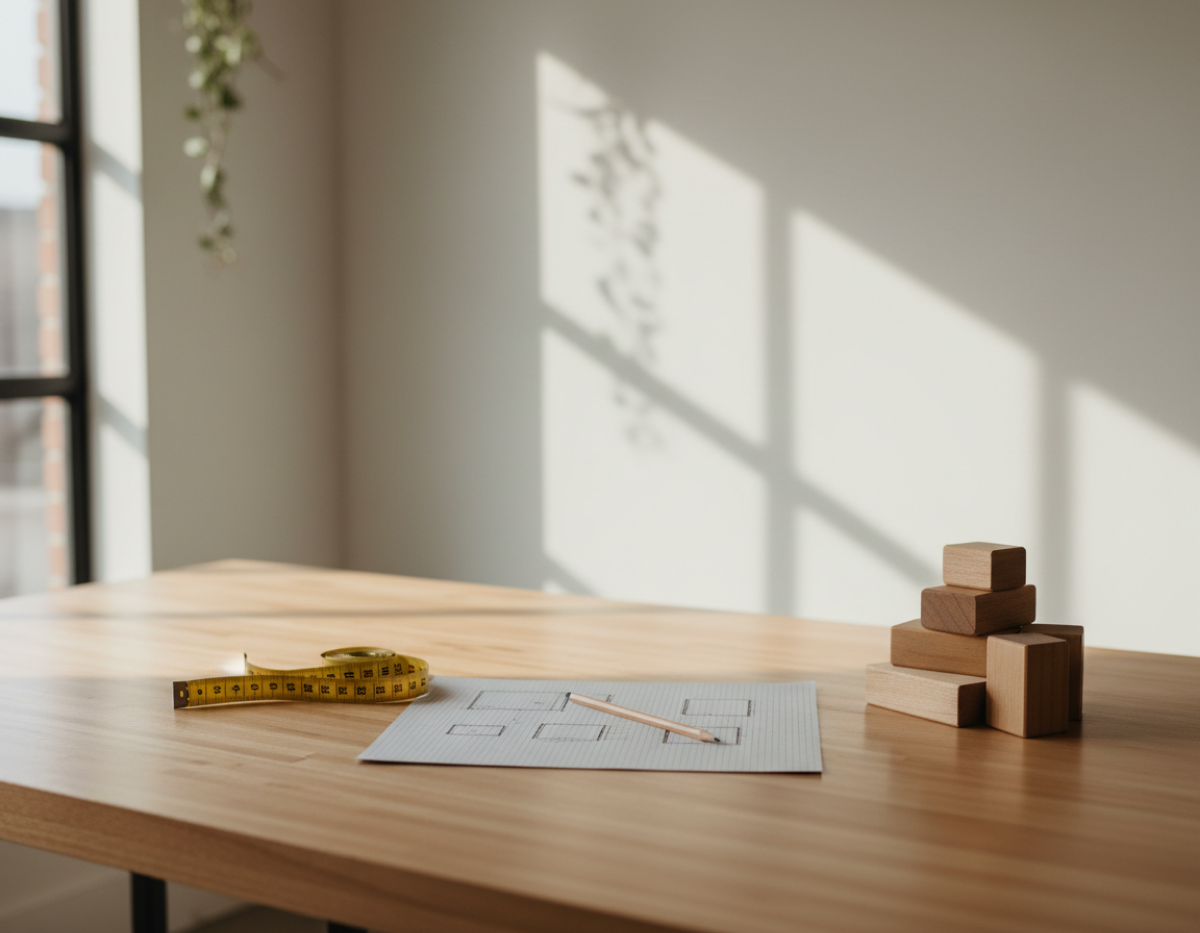
Observation Month Edition
Not every week needs a new strategy.
Sometimes the most productive thing is paying attention.
Maker Monday 🤍
Not every week needs a new strategy.
Sometimes the most productive thing a maker can do is pause long enough to notice what’s actually working — and what isn’t.
This month, we’re observing before we build.
If you’re in a season of slowing down, recalibrating, or choosing clarity over hustle… you’re not behind. You’re paying attention.
Happy Maker Monday 🌿
Connie - Artisan Kraftwerks
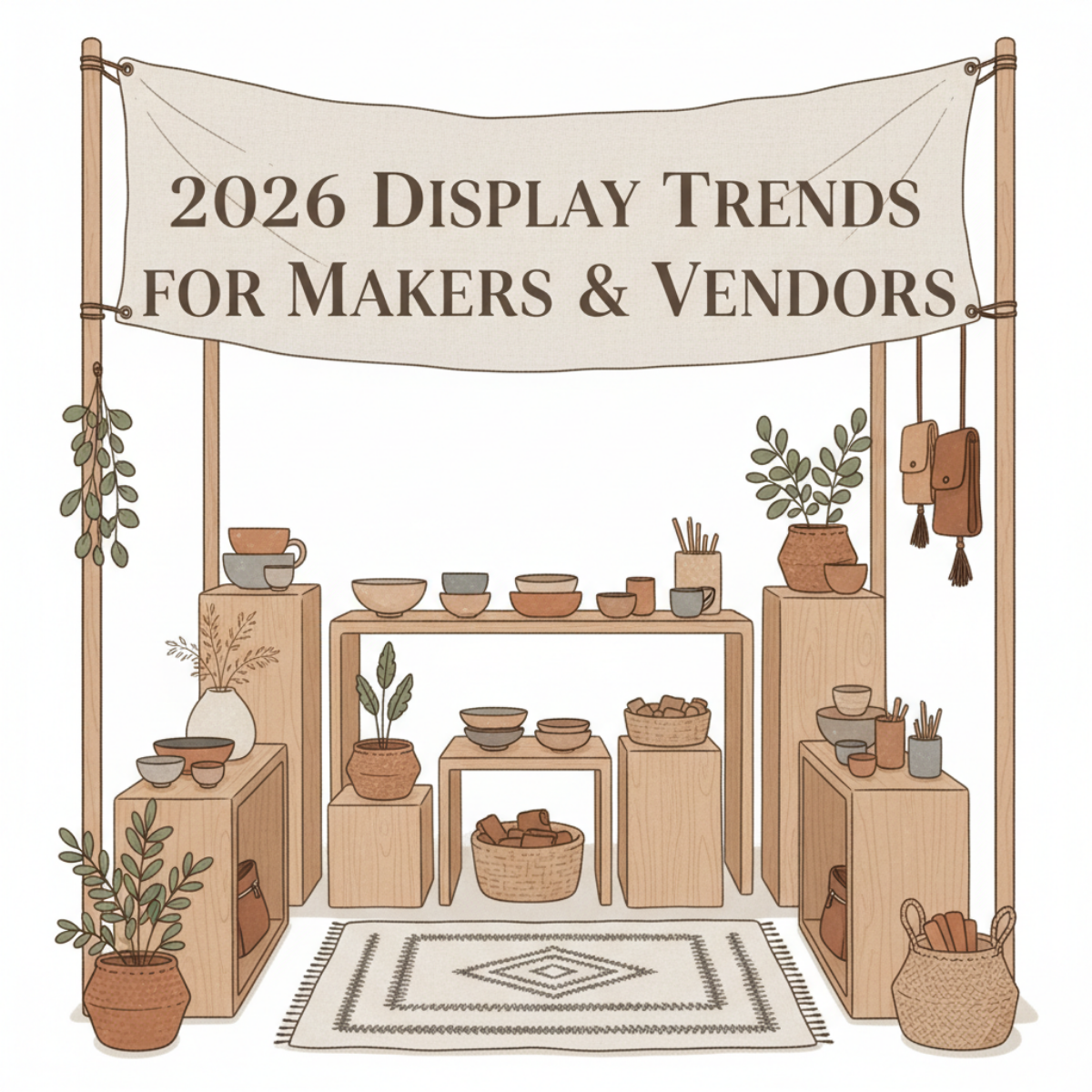
Maker Monday: Top Display Trends for 2026 — What Makers & Vendors Should Embrace Next Year
Most booths don’t feel off by accident.
They’re just not aligned with how customers shop anymore.
Craft booth displays are changing—and most setups haven’t caught up.
If your booth has ever felt:
full but not working
overlooked
or like shoppers just pass by
…it’s usually not random.
More often, it’s because your setup doesn’t match how customers actually shop anymore.
👉 Before you go further (quick reset)
If your booth currently feels:
hard to shop
unclear
or “fine… but not working”
1. Sustainability & Natural Materials
Let Your Booth Reinforce Your Work
Shoppers are drawn to things that feel real.
Not perfect—real.
Displays using:
wood
linen
cotton
neutral textures
don’t just look good—they signal craftsmanship.
When your display materials match your product style, your booth stops feeling like a table…
…and starts feeling like a brand.
2. Curated, Boutique-Style Displays
(This is where most booths break)
2026 is not about showing more.
It’s about showing better.
That means:
editing what you bring
grouping intentionally
giving products space
removing visual noise
Most “crowded booths” aren’t small.
They’re just unedited.
If your booth feels full but unclear:
3. Modular & Flexible Display Systems
Build Once—Adapt Everywhere
Booth sizes change. Layouts change. Conditions change.
Your setup needs to flex without falling apart.
Think:
stackable risers
collapsible shelving
adjustable height pieces
This allows you to:
stay consistent across shows
adapt quickly
avoid rebuilding every time
If you’re constantly reworking your booth from scratch:
4. Your Booth Is an Experience (Not a Table)
People don’t just browse.
They feel your booth first.
Strong booths have:
a clear entry point
natural movement
a cohesive look
a sense of “this makes sense”
This can be simple:
consistent colors
clean structure
intentional spacing
If people look—but don’t step in:
5. The “Modern Artisan” Look
Clean + Warm Wins Right Now
What’s working right now is a blend of:
simple structure
natural materials
minimal distraction
Clean—but not cold.
Natural—but not cluttered.
This style attracts buyers who value:
craftsmanship
quality
intentional design
It also makes your products easier to see.
6. Refresh & Rotate (Without Rebuilding Everything)
You don’t need a brand-new booth every show.
You need a booth that can evolve.
Small changes matter:
rotating products
shifting layout
adjusting focal points
This keeps your booth feeling:
fresh to customers
easier for you to manage
less overwhelming over time
👉 What These Trends Actually Mean
All of this points to a few real shifts:
Shoppers want clarity, not clutter
They follow flow, not randomness
They remember how a booth felt—not just what it sold
That’s why so many booths struggle.
Not because the products aren’t good…
…but because the setup isn’t supporting how people naturally shop.
👉 What To Do Next
Don’t try to fix everything at once.
Start with where your booth is right now:
If your booth feels cluttered or overwhelming
If people look but don’t step in
If you’re preparing for an upcoming show
If you’re not sure what’s wrong yet
→ Fix Your Booth Setup (start with clarity)
Final Thought
Most booth problems aren’t about effort.
They’re about alignment.
When your booth matches how customers actually browse:
movement feels easier
conversations happen more naturally
sales start to follow
If you’re changing anything this season…
don’t start with more products.
Start with how your booth works.
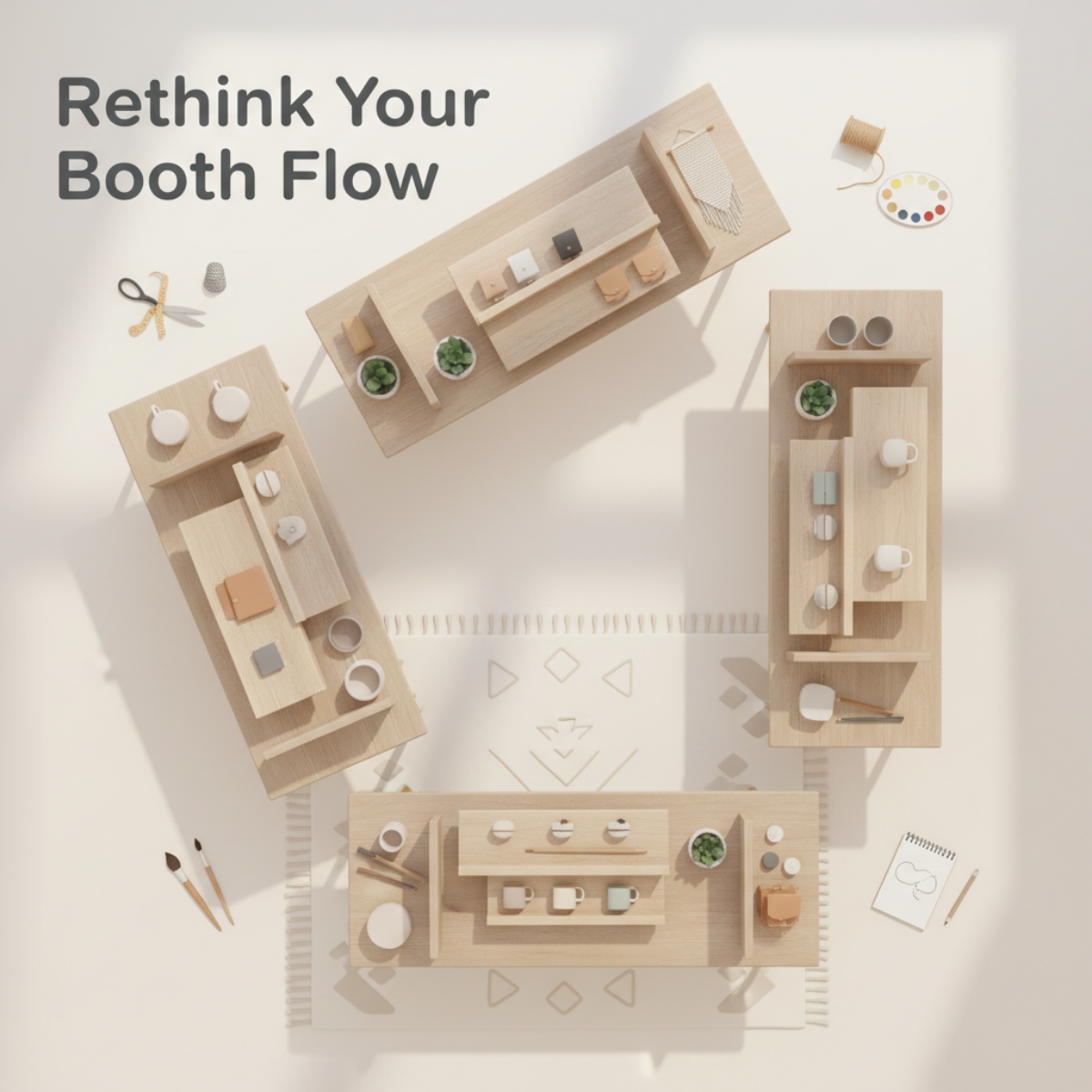
Rethink Your Booth Flow for the New Year — Layout Tweaks That Boost Browsing & Buying
Better booth flow helps shoppers stay longer, explore more, and feel comfortable enough to buy.
A new year means a fresh chance to look at your booth with new eyes. Whether you’re gearing up for early-spring markets, planning a full season of vendor events, or simply refreshing your brand presence, one of the easiest ways to increase sales is to improve your booth flow.
Booth flow is the path people take when they enter, browse, and exit your space. When the flow feels natural, shoppers stay longer, explore more, and feel comfortable enough to buy. When the flow is cramped or confusing, they move on fast.
Today’s Maker Monday is all about simple tweaks that give your display a smooth, intuitive, and shopper-friendly feel—no major overhaul required.
1. Create a Clear Entrance (Even in Small Spaces)
If shoppers can’t tell where to enter, they often won’t.
A defined entry point, even a subtle one, reduces hesitation. Try:
A slight opening between tables or racks
A small sign inviting shoppers in
A visual “pathway” created with crates, risers, or flooring mats
Angling your first display pieces inward instead of straight across
Clarity makes shoppers feel welcomed instead of unsure.
2. Avoid the “Great Wall” Display
Many vendors unintentionally place a long, straight table across the entire front of the booth. This creates a physical and psychological barrier that says, Look from afar, but don’t come in.
Instead:
Angle one or both table ends inward
Break the line with a crate stack, riser, or vertical element
Create a small curve or L-shape
Your booth should feel open—not like a counter where people must talk before they browse.
3. Use Zones to Guide Customer Movement
Zoning helps shoppers naturally move from one part of your booth to another.
You might create zones such as:
Front zone: small impulse items
Middle zone: hero products, best sellers, display stands
Back zone: premium, larger, or higher-margin items
Checkout area: located after browsing, not blocking entry
Zones should flow left to right or right to left depending on how traffic naturally moves at your typical events.
4. Add Vertical Interest (But Not Overwhelm)
Vertical displays lift products into the shopper’s line of sight and increase perceived value—but too much height can make the booth feel tight.
Aim for a balanced mix of:
Eye-level shelving
Mid-height risers
Subtle tall elements placed in corners or back areas
Hanging signage that doesn’t block sightlines
If shoppers can see deeper into the booth, they’re more likely to enter it.
5. Simplify Your Checkout Area
Your checkout should not be the first thing people see.
Instead, your checkout should:
Be placed toward the side or back
Stay clean and uncluttered
Have easy access to bags, tissue, and business cards
Be positioned so you can greet people without blocking flow
A clean checkout signals professionalism and makes transactions smoother.
6. Remove at Least 10% of Your Display Items
Every vendor adds “just one more thing”… until the booth feels crowded.
Challenge yourself to subtract instead of add. Remove:
Duplicate product styles
Props that don’t support your brand
Any display piece that takes visual space without helping sales
Your best products stand out more when there’s breathing room.
7. Test Your New Layout Before Show Day
Set up your booth at home or in your garage. Then:
Walk into it as if you’re a shopper
Ask a friend or family member to walk through it
Notice where your eye goes first
Identify crowded or confusing areas
Time how long it takes to browse everything
If it feels easy, even relaxing, your shoppers will feel the same way.
Plan Your Next Step
If you want to apply these layout tweaks to your own booth, the Craft Booth Display Planning Worksheet walks you through planning product zones, traffic flow, and display placement step by step — before you ever load the truck.
Final Thoughts
A great booth flow doesn’t happen by accident—it’s intentional. With a few thoughtful tweaks, you can make your space feel bigger, more inviting, and more profitable.
Here’s to a fresh new year of confident selling, better layouts, and more customers who walk into your booth and feel at home.
Happy Maker Monday 🌿
Connie - Artisan Kraftwerks
Turn Shoppers Into Repeat Customers — Follow-Up Systems That Keep Them Coming Back
The real value of a sale isn’t just the purchase.
It’s the customer who comes back.
You’ve built an amazing product display or craft show booth. Your products are incredible. Shoppers stopped, browsed, and maybe even bought. But here’s the truth:
The real power of a craft show or product display isn’t just the sales you make that day — it’s the customers you bring with you into the future.
Makers who consistently grow their business don’t rely only on the next event…
They build ongoing relationships with customers who already said yes once.
Today’s Maker Monday will show you how to confidently capture and nurture those leads — without feeling salesy.
Step 1: Make It Easy for Shoppers to Stay Connected
During winter markets especially, shoppers buy for others. They don’t always remember the booth or store they intended to visit later.
To stay top-of-mind, give them:
A clear QR code sign near checkout linking to:
Your website
Your email signup page
Your most active social platform
Bag inserts with a quick “Connect with us” message
Thank-you stickers including your handle
Pro Tip:
Place a QR code where they wait to check out. People love something to do in line.
Step 2: Collect Emails Like Your Business Depends on It
Because it does. 😄
Your email list:
✔ isn’t controlled by an algorithm
✔ isn’t limited to local shoppers
✔ works year-round — even between events
Try an email sign-up incentive like:
10% off their next purchase
Entry into a monthly product giveaway
Exclusive access to seasonal launches
Make it feel like a VIP club — not spam.
Step 3: Follow Up — Quickly & Personally
You want to follow up while the memory of your brand is still warm and cozy.
Use a simple 3-part post-show follow-up:
📅 24–48 hours → “Thank you for supporting handmade!”
📅 1 week later → “Here’s a perk just for you…”
📅 1 month later → “New products, next shows, behind the scenes”
Short. Friendly. Valuable.
Not a single “Hey buy from me!” required.
Step 4: Track Leads Like a Real Business Owner
A mini-CRM (Customer Relationship Manager) doesn’t have to be complicated.
Recommended maker-friendly systems:
Flodesk - Best for Email newcomers
Why? Beautiful visuals + easy automations
MailerLite - Best for Startups
Why? Robust features + inexpensive
HubSpot Free - Best for Customer tracking
Why? CRM database + great notes system
Google Sheets - Best for Simplicity lovers
Why? Quick tracking + customizable
Track key notes:
What they bought
What they loved
Any personalization preferences
Whether they subscribed or followed
Those insights guide future product decisions.
Step 5: Support Their Experience Beyond the Purchase
Follow-up success is rooted in connection, not constant selling.
Types of nurture content that convert well:
✨ Care tips for your product
✨ Styling or display ideas
✨ Seasonal craft booth sneak peeks
✨ Restock alerts and preorders
✨ Storytelling about your process
Every message says: “I see you… and I made this for you.”
That’s what builds loyalty — and repeat buyers.
Putting This Into Practice
Strong follow-up systems start with a booth layout that naturally guides shoppers where you want them to go. If you want to plan a booth that supports browsing, conversation, and easy next steps, the Craft Booth Display Planning Worksheet helps you think it through in advance.
Final Thoughts
You Earned That Customer — Keep Them
Shoppers are real humans who saw your work, felt drawn to it, and decided to bring it home.
Follow-up lets that relationship continue long after the market bags are packed away.
You create connection.
Connection brings them back.
And returning customers build sustainable maker businesses.
Happy Maker Monday 🌿
Connie - Artisan Kraftwerks
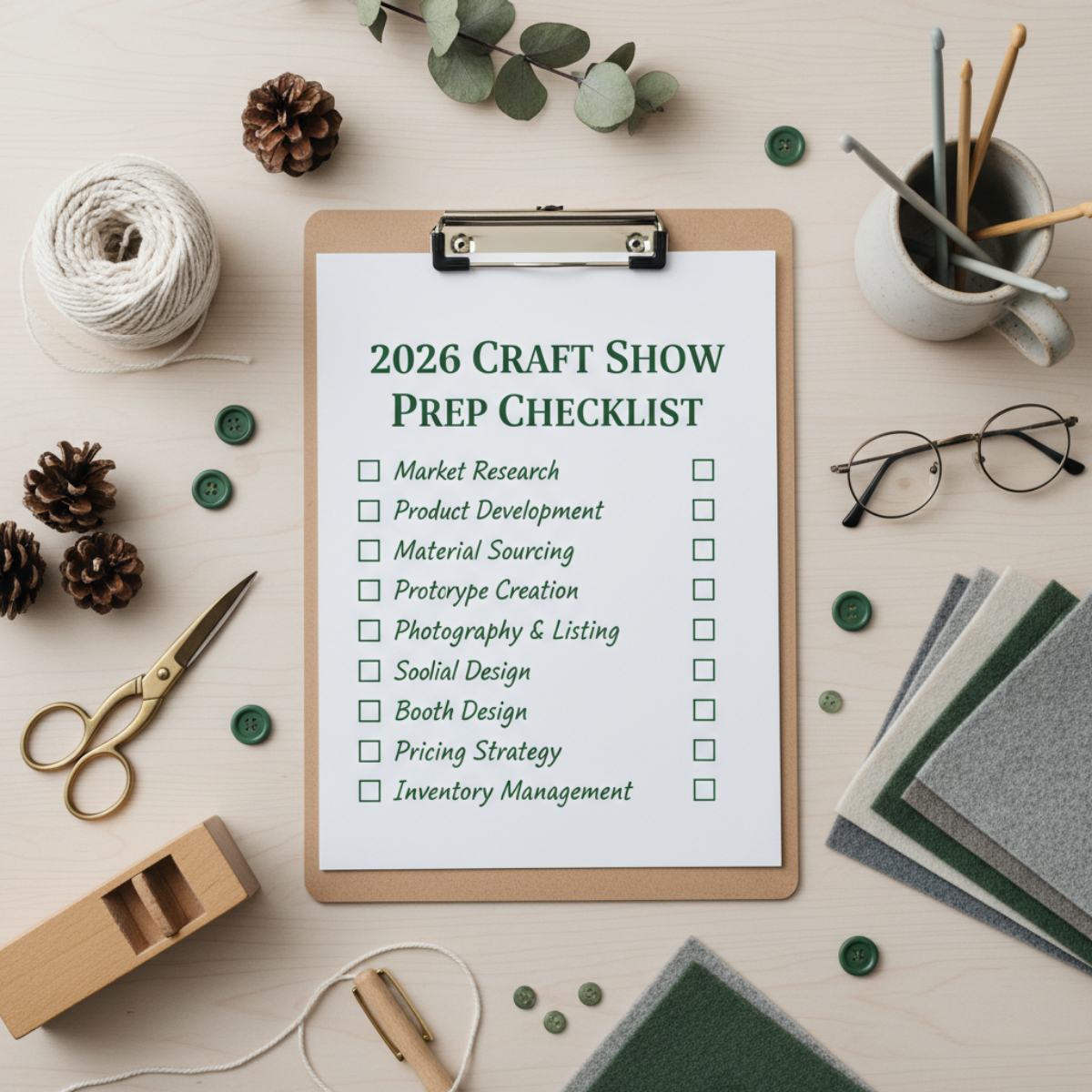
The Ultimate 2026 Craft Show Prep Checklist for Makers & Small Shop Owners
A strong craft show year starts before the first event.
Winter is where planning turns into momentum.
Your 2026 Craft Show Prep Checklist: A Maker’s Guide to Getting Ahead
A new year brings new opportunities — and the winter season is the perfect time to set up your maker business for a strong 2026 craft show lineup. While markets may slow down after the holiday rush, this is your moment to reset, refine, and plan for the year ahead.
This Maker Monday, we’re breaking down the ultimate 2026 Craft Show Prep Checklist for makers, small shop owners, and vendor booth pros.
1. Review Your 2025 Sales Data
Before planning anything new, look at last year's numbers:
What sold consistently?
What became surprise bestsellers?
What didn’t move at all?
This data tells you where to invest and where to scale back.
2. Map Out Your 2026 Event Calendar
Winter is the ideal season to:
Research new shows
Apply for spring + summer events
Join vendor Facebook groups
Mark early-bird deadlines
Budget for booth fees early
A mapped calendar removes decision fatigue later in the year.
3. Refresh Your Display for the New Year
Your booth is your storefront. Winter is the perfect time to rebuild or improve:
Vertical shelving
Lighting upgrades
Signage (especially photo-friendly signage)
New table coverings
Modular packing systems
Start fresh before the first show hits.
4. Create Your 2026 Inventory Plan
Think in categories:
Everyday sellers
Seasonal sellers
High-margin items
Small impulse buys
Custom or personalized offerings
Assign rough quantities for each and adjust as seasons change.
5. Revisit Your Pricing Strategy
Costs increased for many makers in 2025. Review:
Material costs
Packaging
Labor
Booth fees
Shipping supplies
This ensures your 2026 pricing is profitable — not guesswork.
6. Update Your Branding Pieces
Winter is a powerful reset point for small shops.
Update or refine:
Business cards
Thank-you cards
Logo stickers
Booth banner
Social templates
Product tags
Your brand should feel consistent across events, online listings, and packaging.
7. Set Up a Customer Follow-Up System
Capture leads all year, not just during shows:
QR code to an email list
Mini coupon cards
Social-follow incentives
Cross-promotion with other makers
2026 growth hinges on connection — not just sales.
8. Prep Your “Market Survival Kit”
Every seasoned vendor needs:
Extra tags
Batteries
Tape, twine, zip ties
Pens, markers
Mini toolkit
Spare point-of-sale charger
Extra tablecloth
Snacks + water
Pack it once, keep it stocked all year.
9. Set Three Big Goals for 2026
Choose goals that matter:
Revenue target
Number of events
A new product line
A booth redesign
Launching a wholesale catalog
Write them down. Review quarterly.
Next Step for Makers
Once you know what needs to be done, the next step is figuring out how your booth actually comes together on the floor. If booth layout and product placement feel overwhelming, the Craft Booth Display Planning Worksheet helps you map it out visually before setup day.
Final Thoughts
Winter is more than a slow season — it’s your foundation-building season. With intentional planning and fresh energy, your 2026 craft show year can be your strongest yet.
Happy Maker Monday 🌿
Connie - Artisan Kraftwerks
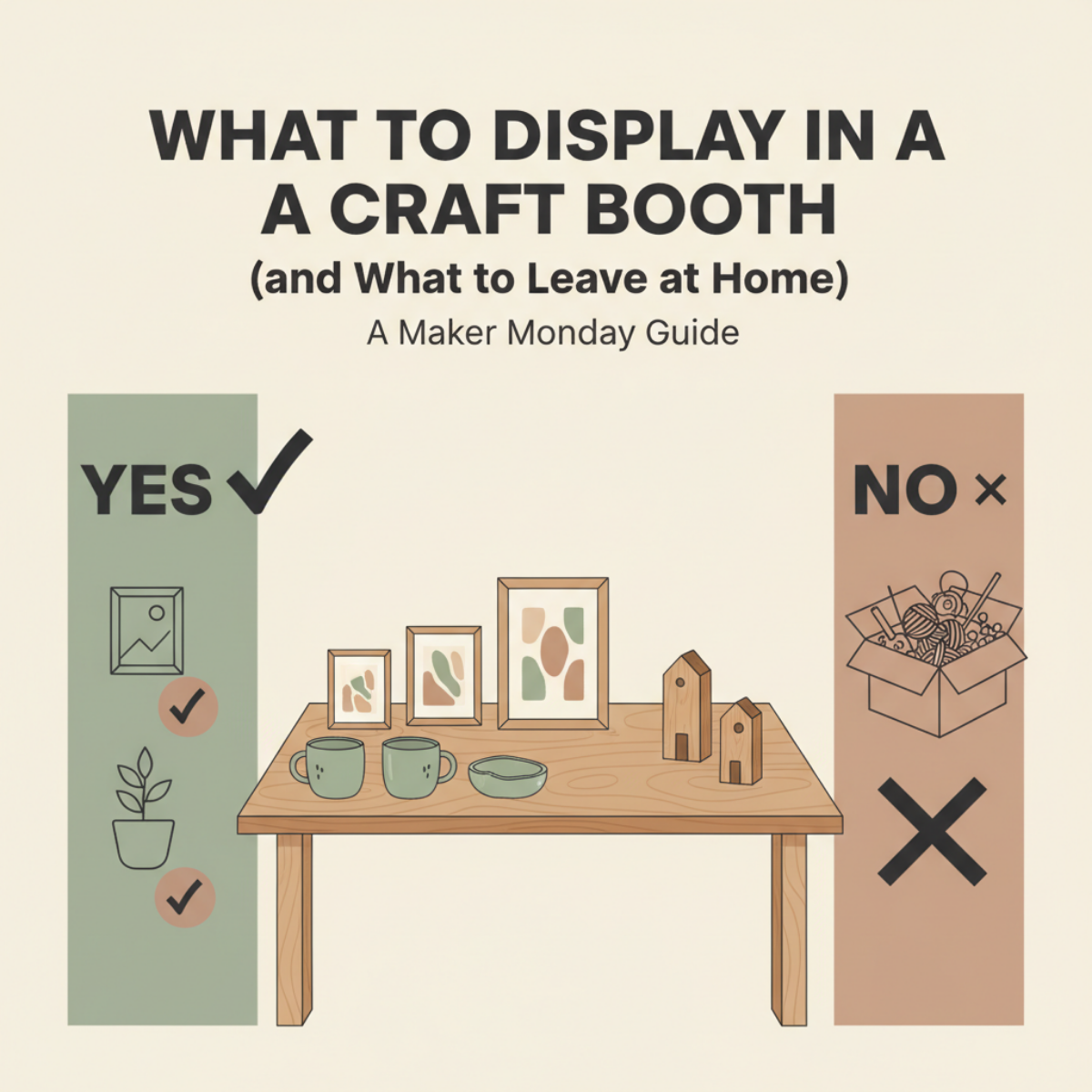
What to Display in a Craft Booth (and What to Leave at Home)
A successful booth isn’t built by showing more.
It’s built by choosing what actually earns space.
When makers think about improving craft show sales, they often jump straight to booth layout — tables, shelves, grids, signage. But long before layout comes into play, there’s a more important decision to make:
What actually deserves space in your booth?
You can have a beautifully arranged booth and still struggle to sell if what’s on display overwhelms shoppers, confuses your message, or hides your best work. Thoughtful display decisions simplify setup, improve flow, and make it easier for customers to say yes.
This guide focuses specifically on what to display in a craft booth, how to choose products that earn space, and how to avoid common display mistakes that hurt sales.
Why Display Decisions Matter More Than You Think
Craft shows are fast-moving environments. Shoppers are making decisions in seconds, often while navigating crowds, noise, and visual overload.
When a booth displays:
too many products
too many variations
or too many ideas at once
customers hesitate, browse longer without buying, or walk away entirely.
A strong craft booth display isn’t about showing everything you make. It’s about editing intentionally so your best work is easy to see, understand, and purchase.
How Shoppers Read a Craft Booth
Most shoppers scan booths quickly before deciding whether to stop. Clear focal points, visual breathing room, and an easy-to-understand product mix help shoppers process what you sell without effort. When your display is clear, shoppers feel more confident — and confidence leads to purchases.
The Four Categories Every Craft Booth Needs
When deciding what to display in a craft booth, most successful sellers rely on a small number of intentional display categories rather than bringing everything they make.
1. Hero Products
Hero products are the stars of your booth.
They are:
your best sellers
visually strong from a distance
easy to understand without explanation
These items should be the first thing a shopper notices when approaching your booth. If someone only looks at one product, it should be one of these.
Ask yourself:
Which products consistently sell well?
Which items photograph clearly and catch attention?
Which pieces best represent my brand?
Those products earn the most visible space.
2. Supporting Products
Supporting products complement your hero products.
They often include:
variations in size, color, or style
coordinating or related items
slightly lower-priced alternatives
Supporting products give shoppers options without overwhelming them. Their job is to make hero products easier to buy — not harder to choose.
3. Anchor Pieces
Anchor pieces act as visual magnets.
They may not be your top sellers, but they:
draw people into your booth
create visual interest
help establish your style or scale
Anchor pieces are often larger, bolder, or more visually distinct. Their primary role is to stop foot traffic and invite browsing.
4. Utility and Add-On Items
These are your easy “yes” items.
Utility and add-on items are often:
smaller
lower-priced
quick decisions
Placed near checkout or alongside hero products, they increase average order value without requiring extra explanation. A small, well-curated selection works far better than a cluttered display.
How to Choose What Earns Booth Space
Once you understand the display categories, choosing what to sell at craft shows becomes much easier.
Criteria for Choosing What to Sell at Craft Shows
When evaluating products, consider:
Sales history: Has it sold consistently in the past?
Visual clarity: Can someone understand it in under five seconds?
Price balance: Does it fit your overall price range?
Setup effort: Does it require explanation or demonstration?
Restock ease: Can you replenish it during the show if needed?
If a product struggles in several of these areas, it may not deserve prime booth space — even if you love it.
What to Leave at Home (Common Craft Booth Display Mistakes)
Editing your display is often the hardest part of booth planning — but it’s also where sales improve fastest.
Consider leaving behind:
products that rarely sell but “feel important”
items that require long explanations
too many color or style variations
pieces that disrupt visual flow
untested experiments
Craft shows are not the place to showcase everything you’ve ever made. They reward clarity, focus, and confident selection.
You can always rotate products between shows. Leaving something out isn’t failure — it’s strategy.
How Display Decisions Connect to Booth Layout
Once you’ve decided what to display, booth layout planning becomes much easier.
A strong layout:
highlights hero products
creates space for anchor pieces
guides shoppers naturally through supporting items
That’s why display decisions should happen before you start setting up tables and shelves.
If you haven’t yet, you may want to read:
→ How to Plan a Craft Booth Layout (Without Overthinking It)
Display planning and layout planning work best together — each supports the other.
Frequently Asked Questions About Craft Booth Displays
How many products should I display in a craft booth?
Most booths perform better with a curated selection rather than a full inventory. The ideal number depends on booth size and product type, but fewer well-displayed items usually lead to clearer buying decisions and stronger sales.
Should I bring all my products to a craft show?
Not necessarily. Craft shows reward focus and clarity. Bringing only products that sell well, display cleanly, and support your booth layout often leads to better results than trying to show everything you make.
Final Thoughts
Successful craft booths aren’t built by bringing more — they’re built by choosing better.
When you’re intentional about what earns space in your booth, you:
reduce setup stress
improve shopper confidence
make sales easier
enjoy shows more
Planning your display ahead of time allows you to show up calm, prepared, and focused on what matters most: connecting with customers and selling your work.
Optional next steps
Happy Maker Monday 🌿
Connie - Artisan Kraftwerks
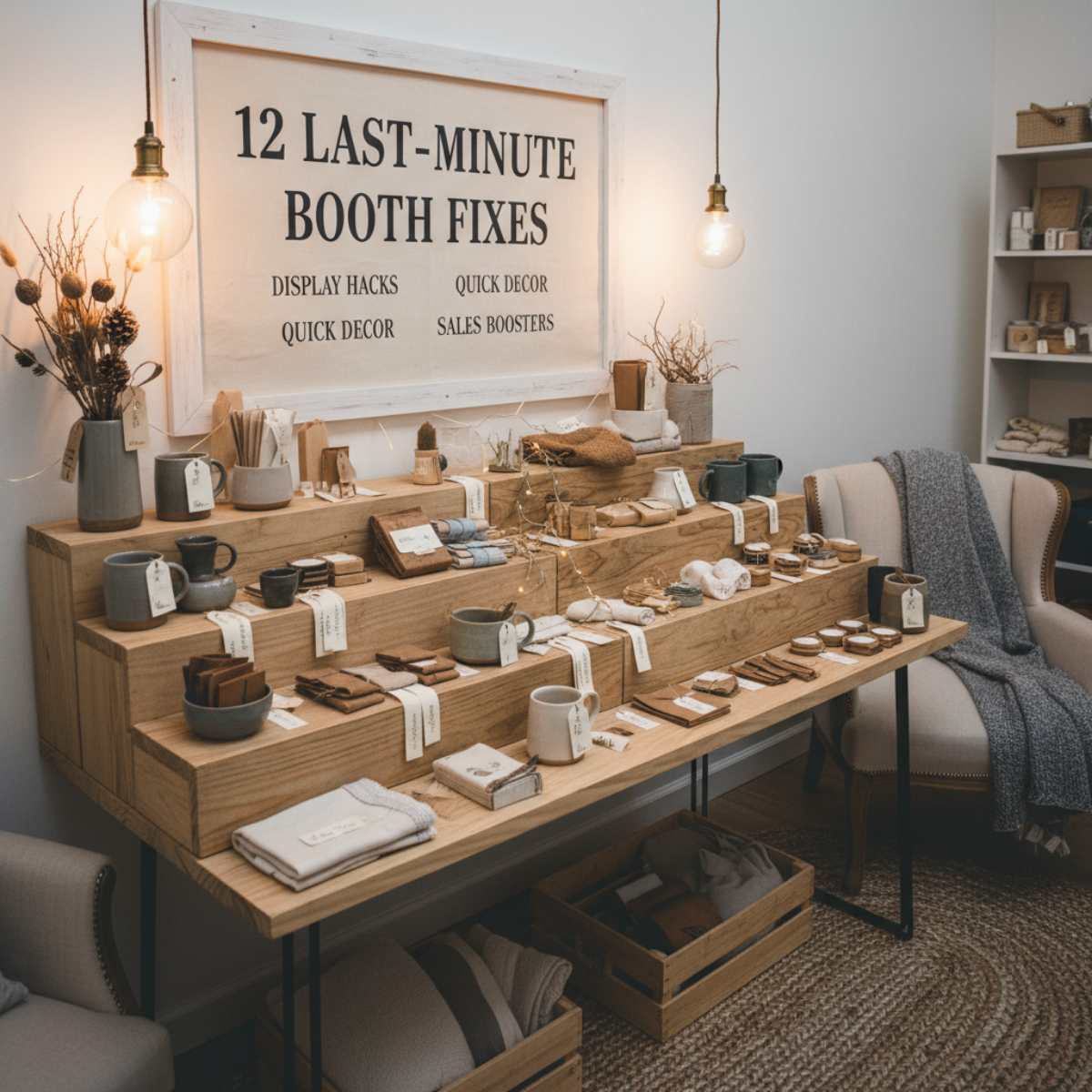
12 Last-Minute Craft Booth Fixes Every Winter Market Vendor Should Know
Small booth issues can snowball fast during busy markets.
Quick fixes can keep your setup clear, polished, and selling.
When you’re in the middle of the winter market rush, tiny problems can snowball—display gaps, low lighting, missing signage, or products that need a little extra polish.
This Maker Monday guide shares quick and effective craft booth fixes you can apply same-day to keep your setup looking sharp, intentional, and customer-ready.
Perfect for busy makers who need solutions that work fast.
The winter craft market season is busy, fast-paced, and full of surprises. Displays shift, signage falls, crowds move differently than expected, and suddenly you’re adjusting your entire booth in the middle of a live show. Every experienced maker has lived through those moments — and learned to improvise like a pro.
Today’s Maker Monday guide is all about quick, effective last-minute craft booth fixes that help you stay polished and profitable during the final stretch of the year.
1. Turn a Slow Table Into a Sales Magnet
If one of your tables isn’t getting attention, rearrange your display vertically. Shoppers are drawn to height — especially in a crowded winter market where visibility matters. A crate flipped upright or a riser added under a tablecloth can instantly transform eye level and draw foot traffic.
Quick Fix: Group bestsellers in odd-number clusters (3, 5, 7) and elevate the center item.
2. Replace Missing or Damaged Tags With a Single “All Prices Listed Here” Sign
When you’re too busy to reprint individual tags, use one clean, clear price sign per category. It saves time, reduces clutter, and makes checkout faster.
Fast Sign Formula:
Product Name → Price → Short Feature
Example:
Handcrafted Cedar Trees — $18 ea — Solid rustic cedar, perfect for winter displays.
3. Fix Low Lighting With Everyday Items
Winter markets often have dim lighting. If your booth looks shadowy, elevate battery-powered puck lights, fairy lights, or clip-on LEDs using a crate or even your tote bin (hidden under a cloth). The moment your products are well-lit, your booth feels warmer and more inviting.
4. Use a “Bundle & Save” Sign to Increase Your AOV
Bundles sell especially well in winter when customers shop for multiple recipients at once. If sales feel slow, introduce a simple bundle like:
Buy 2, Get 10% Off
Any 3 for $25
Build-Your-Own Gift Set
This is one of the fastest ways to increase sales without adding new inventory.
5. Re-Engage Shoppers With a Quick “Story Prop”
If your booth feels flat, add one prop that tells your brand’s story — a tool you use, a raw material sample, a sketch, or a behind-the-scenes photo. Winter shoppers connect emotionally with authenticity and craftsmanship.
6. Use Your Bags as Walking Advertisements
If your bags are plain, quickly attach a thank-you sticker with your social handle or website. When shoppers walk around the market, they become moving billboards.
7. If Crowds Move the Wrong Way, Flip Your Layout
Winter events often pack visitors in tight lines. If your booth experiences bottlenecks, simply rotate one table or open one side to improve flow. This one-minute change can double the number of people entering your booth.
Final Thoughts
Your booth doesn’t have to be perfect. It just needs to be clear, inviting, and optimized for the unique energy of winter shoppers. With these quick fixes, you’ll be ready for anything the season throws at you.
Happy Maker Monday 🌿
Connie - Artisan Kraftwerks

How to Tell a Brand Story That Sells: A Maker & Shop Owner Guide (with Free Worksheet)
Your brand story isn’t just about what you sell.
It’s what helps customers connect—and choose you.
Welcome back to Maker Monday, where we share resources that help makers, small shop owners, and craft booth vendors grow stronger, more confident creative businesses.
Today’s topic is one every successful brand—big or small—masters early:
your brand story.
A strong brand story does more than describe what you sell.
It shows your customers who you are, why your work matters, and why buying from a real maker feels different.
This guide breaks down how to write a brand story that resonates, inspires, and sells—and you’ll get a free fill-in-the-blank worksheet to make the process simple, actionable, and fun.
If you want to attract more customers, increase sales, and build a memorable brand, your brand story is one of the most powerful marketing tools you have. Whether you’re a DIY maker, craft seller, or boutique shop owner, sharing the heart behind your business helps shoppers connect, trust, and buy from you.
In a world full of mass-produced products, your story is what sets you apart. And when you tell it well, it doesn’t just inspire — it sells.
✅ Why a Strong Brand Story Helps You Sell More
A great brand story helps:
Build emotional connection with customers
Increase brand loyalty and repeat buyers
Communicate your values and what makes your products unique
Boost conversions online, at craft fairs, and in retail shops
People don’t just buy a product — they buy the meaning behind it.
Your brand story turns shoppers into supporters and customers into superfans.
✨ The 5 Key Elements of a Story That Sells
You don’t need a dramatic “origin story” to stand out — just authenticity and clarity. Use these 5 elements to shape a story that resonates and supports your marketing strategy.
1. Your “Why” (Foundational Purpose)
Why did you start making, curating, or selling your products?
This is the heart of what makes your brand human and relatable.
Examples:
“I wanted to create meaningful, handcrafted gifts with a personal touch.”
“I opened my shop to support local makers and offer customers high-quality artisan goods.”
2. Your Inspiration (Creative Spark)
What influences your product designs, collections, or shop curation?
Think: nature, heritage, sustainability, storytelling, cozy living, tradition, etc.
3. Your Process or Values (Proof of Quality)
This builds trust and gives customers a reason to choose you.
Highlight things like:
Handmade or small-batch craftsmanship
Eco-friendly sourcing or packaging
Artisanal or fair-trade partnerships
Specialty tools or skilled techniques
Customers love knowing what makes your products special.
4. The Transformation (Customer Benefit)
Explain how your products improve the customer’s life, mood, or experience.
Examples:
“My designs help you create a cozy, collected home that tells your story.”
“Shopping small means your gifts come with meaning, intention, and heart.”
5. Their Role in Your Mission (Inclusive Connection)
Invite customers to be part of something bigger.
Try phrases like:
“Thank you for supporting handmade.”
“When you shop small, you help preserve creativity, craftsmanship, and community.”
📍 Where to Use Your Brand Story for Maximum Impact
Your brand story shouldn’t live only on your “About” page — use it everywhere customers interact with your brand:
Where to Use It | Why It Works
Website About Page Builds trust + connection
Craft Booth Signage Engages browsers instantly
Product Tags & Packaging Adds perceived value
Social Media Bio & Posts humanizes your brand
Welcome Email / Newsletter Creates loyal followers
Shop Displays or Windows Enhances retail experience
Staff Talking Points Keeps brand voice consistent
Pro Tip: Create a full version (3–5 paragraphs) and a mini version (2–3 sentences) so you can plug it into different marketing touchpoints.
🧩 Plug-and-Play Brand Story Template for Makers & Shop Owners
Use this template to quickly draft your brand story:
I started [business name] because ____________.
I’m inspired by ____________.
I create/curate ____________ using/with ____________.
My mission is ____________.
When you support [business name], you’re ____________.
Want help writing this? I’m happy to review your draft and polish it to perfection.
✍️ Free Download: Brand Story Worksheet for Makers & Shop Owners
To make this even easier, I created a fill-in-the-blank worksheet you can print and use to build your brand story step-by-step.
Download your worksheet here:
Download the Brand Story Worksheet (Printable pdf)
🌱 Your Brand Story Will Grow With You
Don’t overthink it or wait until you “feel ready.” Your story is allowed to evolve as your business grows. The magic happens when you share it — not when you perfect it.
The more customers know about your mission, values, inspiration, and heart, the more they’ll want to support you.
Happy Maker Monday 🌿
Connie - Artisan Kraftwerks
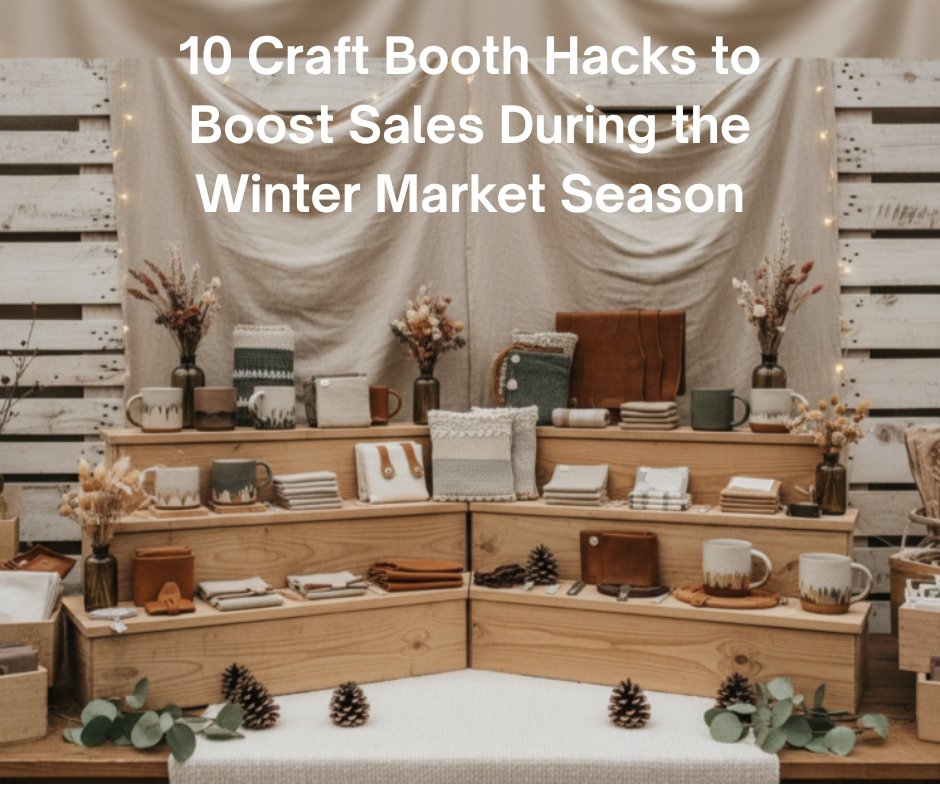
10 Craft Booth Hacks to Boost Sales During the Winter Market Season
A few smart booth tweaks can improve flow, visibility, and sales—especially during busy winter markets.
Indoor markets and cozy community events make winter one of the most exciting seasons for craft vendors. But tight spaces, fluctuating foot traffic, and fast-paced restocking can make booth setup challenging.
Here are ten clever hacks to help you maximize visibility, improve customer flow, and keep your setup stress-free all season long.
1. Create Height With Natural Wood Display Risers
Elevated displays instantly make products feel more premium. Rustic cedar blocks, wooden risers, and tiered stands are lightweight, durable, and perfect for winter merchandising.
2. Pack a “Warm Weather Emergency Kit”
Include tape, zip ties, scissors, mini screwdriver, extra price tags, batteries, lint roller, and a microfiber cloth. Winter booths need frequent touch-ups—temperature changes affect everything from signage to adhesives.
3. Use Soft, Neutral Textiles
Creams, greys, and natural textures make your products pop without feeling seasonal. Soft backdrops also absorb sound and help create a welcoming atmosphere.
4. Add One High-Impact Anchor Piece
Whether it's a tall wooden tree display, a large sign, or a signature product wall, one eye-catching feature draws customers in—especially when vendor aisles feel crowded.
5. Keep Checkout Quick & Cozy
Create a warm “finish zone” with a clean bagging space, ready-to-go tissue, and low-profile packaging. Customers appreciate fast, smooth checkout during busy winter markets.
6. Use Clip Lights or Warm LEDs
Winter markets can have dim lighting. Bring your own warm-toned lights to highlight details without creating glare.
7. Offer an On-the-Spot Bundle Deal
Bundles boost sales and help move inventory. Keep signage simple:
“Build Your Own Set” or “Any 3 for 20% Off.”
8. Bring Quiet Entertainment for Kids
A simple wooden puzzle or coloring card lets parents browse longer—and that often means more sales.
9. Stage Your Booth Like a Mini Shop
Display in small vignettes:
• entry display
• featured product table
• small impulse-buy zone
This guides customers naturally and increases engagement.
10. Pre-Pack Restock Bags
Before the event, load small bags labeled by item category. When you sell out, you can restock in seconds—no digging in bins.
A great booth doesn’t have to be complicated. A few smart hacks turn your winter craft market setup into a welcoming, polished, and profitable experience.

7 Winter-Ready Tips for Small Shop Success This Season
Winter isn’t just busy—it’s where preparation meets opportunity.
A few focused adjustments can make the season run smoother.
As temperatures drop, makers and small shop owners know one thing for sure—this is the season when preparation meets opportunity. Whether you’re setting up at indoor markets, fulfilling online orders, or organizing backstock for the busiest craft months, winter brings unique challenges and incredible revenue potential.
Here are seven maker-approved strategies to help your small shop thrive—while keeping your workflow warm and organized all season long.
1. Simplify Your Bestsellers
Your top sellers should be easy to grab, pack, and restock. Create a dedicated “bestseller assembly zone” in your workspace to streamline production and reduce last-minute stress.
2. Focus on Cozy, Natural Textures
Customers naturally gravitate toward warm woods, textured materials, and practical, giftable goods this time of year. Consider elevating your product photos or booth styling using seasonal natural materials—think cedar, pine, kraft paper, or soft neutrals.
3. Prepare Winter-Friendly Packaging
Cold weather can be rough on adhesives, finishes, and fragile items. Use sturdy boxes, padded envelopes, and crinkle paper—not only for protection but for a warm, handcrafted unboxing experience.
4. Offer “Small But Mighty” Add-On Items
Low-cost, quick-to-buy accessories can increase your average order value. Think ornaments, tags, small wooden blanks, mini display risers, or craft-ready embellishments.
5. Optimize Your Online Listings
Freshen up listing images, update titles and tags, and highlight any “fast ship” or “ready to deliver” products. Clear photos and accurate processing times go a long way during the busy season.
6. Lean Into Storytelling
Shoppers love knowing who made their purchase. Share behind-the-scenes snippets—your workspace, tools, maker process, or your inspiration for certain designs.
7. Track What’s Working… and What Isn’t
Keep a seasonal notebook or digital tracker. Jot down booth layouts that sold well, products customers asked for, or restocking gaps. This becomes gold for next year’s planning.
A productive winter is all about preparation, smart selling, and creating an inviting experience for your customers—online and in person. With the right steps, your small shop can shine brighter than ever.
Happy Maker Monday 🌿
Connie - Artisan Kraftwerks

How to Display Products Like a Pro: 6 Common Mistakes (and Easy Fixes) for Craft Shows, Pop-Ups & Retail Shops
Your display isn’t just setup.
It’s your silent salesperson—and small changes can make a big difference.
Why Display Matters for Small Businesses
Whether you’re a craft show vendor, boutique owner, or handmade maker, the way you present your products can make or break a sale. Your display is more than just a setup — it’s your silent salesperson. A well-arranged booth or shelf draws people in, tells your brand story, and encourages customers to linger (and buy!).
Mistake #1: The “Flat Table” Layout
Problem: Everything’s lying flat, forcing customers to lean in and scan through a sea of items.
Fix: Use tiered shelves, wooden crates, or risers to add height and dimension. Your goal is to bring products to eye level and create visual interest.
Mistake #2: Overcrowding Your Space
Problem: Too much stuff crammed together overwhelms the eye.
Fix: Give products breathing room. Space communicates quality and makes it easier for shoppers to focus on each item.
Mistake #3: No Clear Signage
Problem: No prices or product details leaves customers unsure (and less likely to ask).
Fix: Add attractive, branded signage with prices, short descriptions, and your logo. Chalkboards, acrylic stands, and printed tags all work beautifully.
Mistake #4: Poor Lighting
Problem: Dim lighting hides product details and colors.
Fix: Use portable LED spotlights or clip-on lights with a warm glow. Proper lighting can instantly make your booth or shop display look more professional.
Mistake #5: No Brand Personality
Problem: A generic display blends in with everyone else.
Fix: Add brand colors, textures, and props that reflect your business. If your brand is rustic, use reclaimed wood and natural fabrics. If it’s modern, go with clean lines and sleek signage.
Mistake #6: Forgetting Customer Flow
Problem: Customers can’t easily navigate your space.
Fix: Arrange products so there’s a clear path to browse. Place best sellers at eye level and near the front, with smaller or add-on items toward checkout.
Final Tip for Makers & Small Shop Owners
Your display is part of your marketing. Treat it like a visual invitation to connect with your products and your story. Invest a little time in presentation, and you’ll see it pay off in more sales and happier customers.
Happy Maker Monday 🌿
Connie - Artisan Kraftwerks