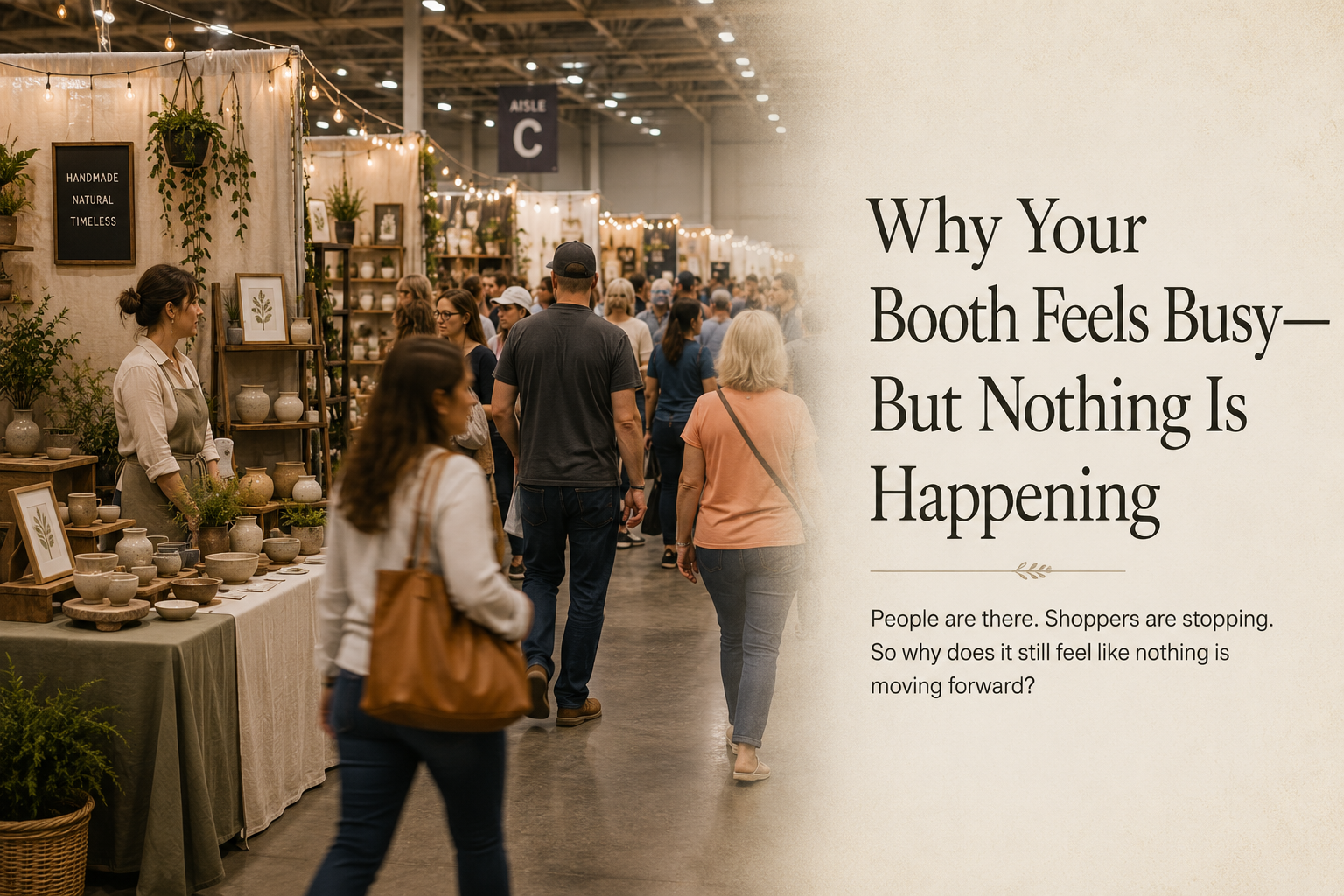
Why Your Booth Feels Busy—But Nothing Is Happening

At first, it feels encouraging.

People are slowing down.

Some are stepping inside.

A few smile.

Some compliment your work.

And for a moment, it feels like something is about to happen.

But then...

they leave.

No conversations.

No excitement.

No momentum.

No obvious reason why.

And after a while, you start wondering:

"What am I missing?"

Because if nobody noticed your booth, at least you'd know where to start.

But this?

This is harder.

People are there.

And yet it feels like nothing is actually happening.

The good news?

That doesn't necessarily mean your products are the problem.

Warm craft show booth with shoppers moving through the display while little interaction or momentum develops.

People are around. But sometimes activity and momentum aren't the same thing.

Why This Happens

Most booth problems don't happen all at once.

People are usually lost one small step at a time.

Some notice your booth but keep walking.

Some slow down but never step inside.

Some enter but never settle.

Some browse without connecting.

And some become overwhelmed before they ever make a decision.

From the outside, all of those experiences can look exactly the same.

People come.

People go.

And nothing seems to happen.

But somewhere in the experience, momentum is being lost.

Craft show vendor quietly watching shoppers browse and pass through a busy booth without much engagement.

Most booth problems happen one small moment at a time.

Signs This Might Be Happening

You might notice things like:

  • People slowing down but continuing to walk.

  • Visitors staying near the aisle.

  • Shoppers browsing quickly without touching anything.

  • Compliments that don't lead to conversations.

  • Steady traffic without much energy.

  • Activity without momentum.

Nothing feels broken.

But nothing feels connected, either.

Visitors moving through a craft booth while the vendor observes, illustrating how momentum can be lost during the shopper journey.

People are there. But something in the experience isn't moving forward.

What To Focus On First

Don't try to fix everything.

Start by watching how people move.

Not what they buy.

How they move.

Do they notice?

Do they enter?

Do they browse?

Do they stay?

Understanding where the experience changes is usually more valuable than redesigning the whole booth.

Visual framework showing the four stages of the shopper journey where booth momentum is gained or lost.

Most booth problems happen somewhere along the shopper journey.

Ask Yourself

  • Are people noticing the booth?

  • Are they stepping inside?

  • Are they staying near the entrance?

  • Are they picking things up?

  • Do shoppers seem comfortable—or uncertain?

Peaceful evening market scene with softly lit booths and open walkways encouraging reflection on the shopper experience.

Sometimes the best clues come from watching the experience through a shopper's eyes.

What This Doesn't Mean

This doesn't mean your products are bad.

And it doesn't mean all your effort has been wasted.

In fact, many successful booths go through periods like this.

Sometimes the answer isn't doing more.

Sometimes it's understanding the experience people are already having.

Remember

Booth problems rarely happen all at once.

And improvements rarely happen all at once, either.

People are usually lost in small moments.

And better results often come from improving one of those moments—

not reinventing everything.

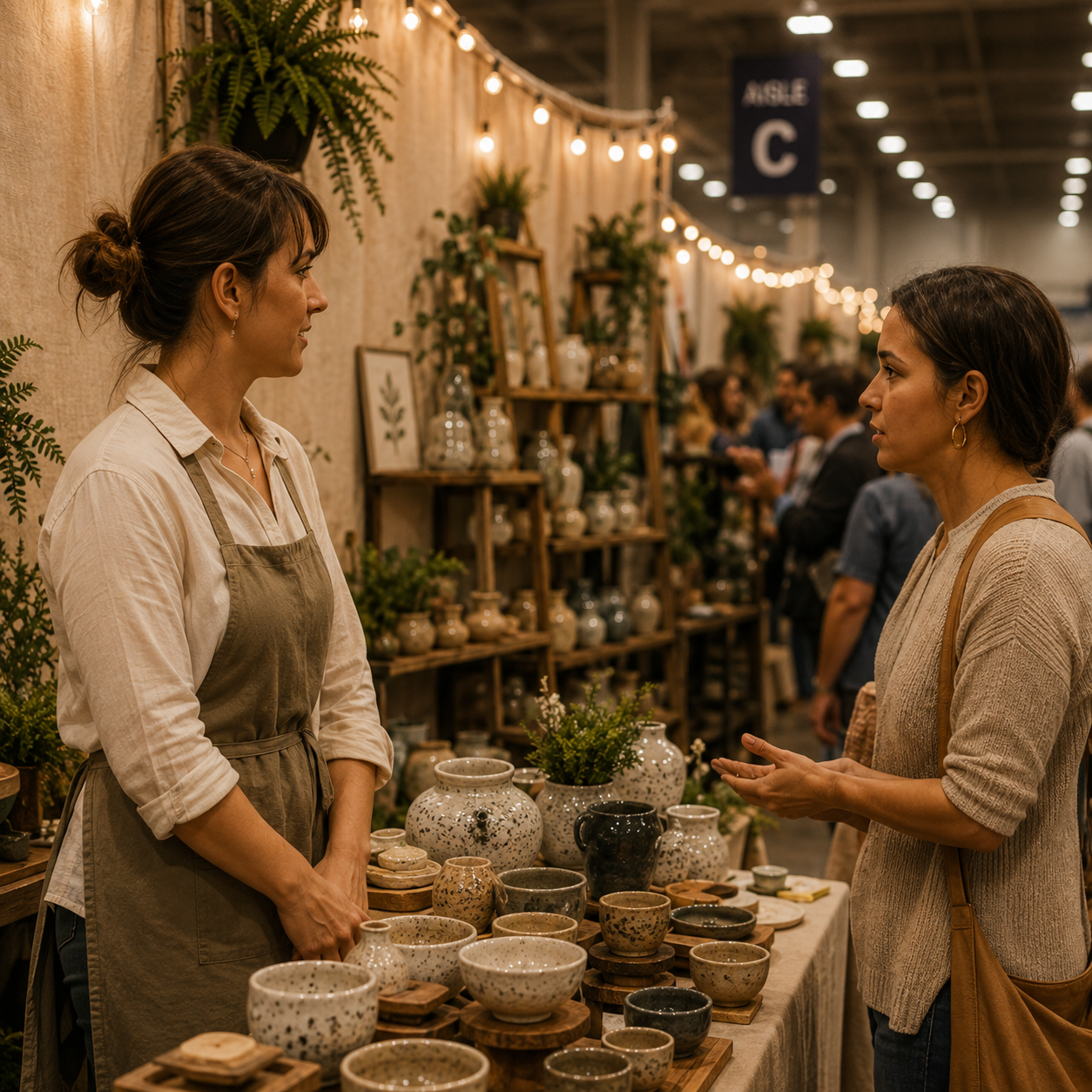
Friendly interactions and relaxed shoppers inside a warm craft booth, showing how small improvements create momentum.

Small improvements often create noticeable changes.

Related Articles

What Customers Notice First in a Craft Booth

Why Shoppers Slow Down—but Never Step Into Your Booth

Why Shoppers Browse Your Booth But Don't Buy


Helpful Resource

If something feels off but you can't tell where shoppers are getting stuck, the Fix Your Booth Planner helps you recognize what's holding your booth back and focus on what matters most.

Where This Leads

Sometimes the problem starts before shoppers ever step inside.

And that's often where the journey begins.

👉 Why Shoppers Slow Down—but Never Step Into Your Booth

Next
Next

What to Focus On When Shoppers Slow Down—but Never Step Into Your Booth