What Customers Notice First in a Craft Booth (And Why It Matters for Sales)
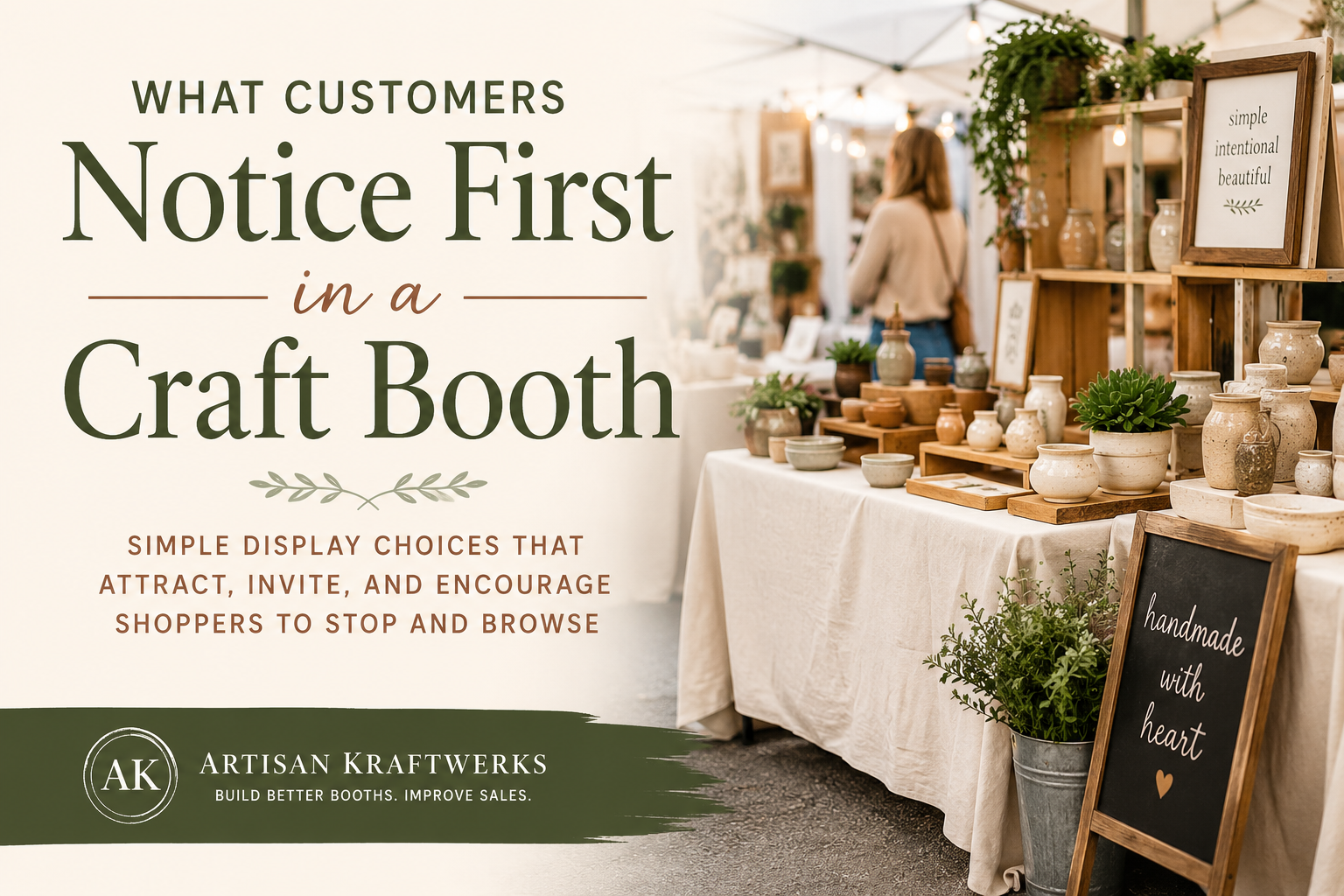
Customers often decide whether to stop within seconds. Your booth's first impression influences whether shoppers walk by or step inside to explore.
When shoppers walk through a craft market, they make dozens of tiny decisions in just a few seconds.
Which booths to approach.
Which displays to look at.
Which tables to skip entirely.
Many makers assume customers notice the products first, but that isn’t always the case.
More often, shoppers respond to something much simpler — the overall feeling of the booth. The layout, the spacing, and the way the display invites them to step closer.
Understanding what customers notice first can make booth planning feel much clearer.
In This Post
We’ll look at a few simple observations that many makers notice once they begin paying attention to booth behavior:
• what shoppers tend to notice first when approaching a booth
• why booth layout often matters more than the products themselves
• how display simplicity helps customers feel comfortable browsing
• a few small booth adjustments that make displays easier to explore
1. The Overall Booth Shape
Before customers see individual products, they notice the shape and structure of the booth.
From several steps away, shoppers quickly sense whether a booth feels:
• open
• crowded
• easy to step into
• or difficult to navigate
Booths that feel open and balanced tend to invite browsing. Booths that feel packed with displays can unintentionally signal that stepping closer might feel overwhelming.
Even small changes — spacing tables differently or lowering one display — can change the entire impression of a booth.
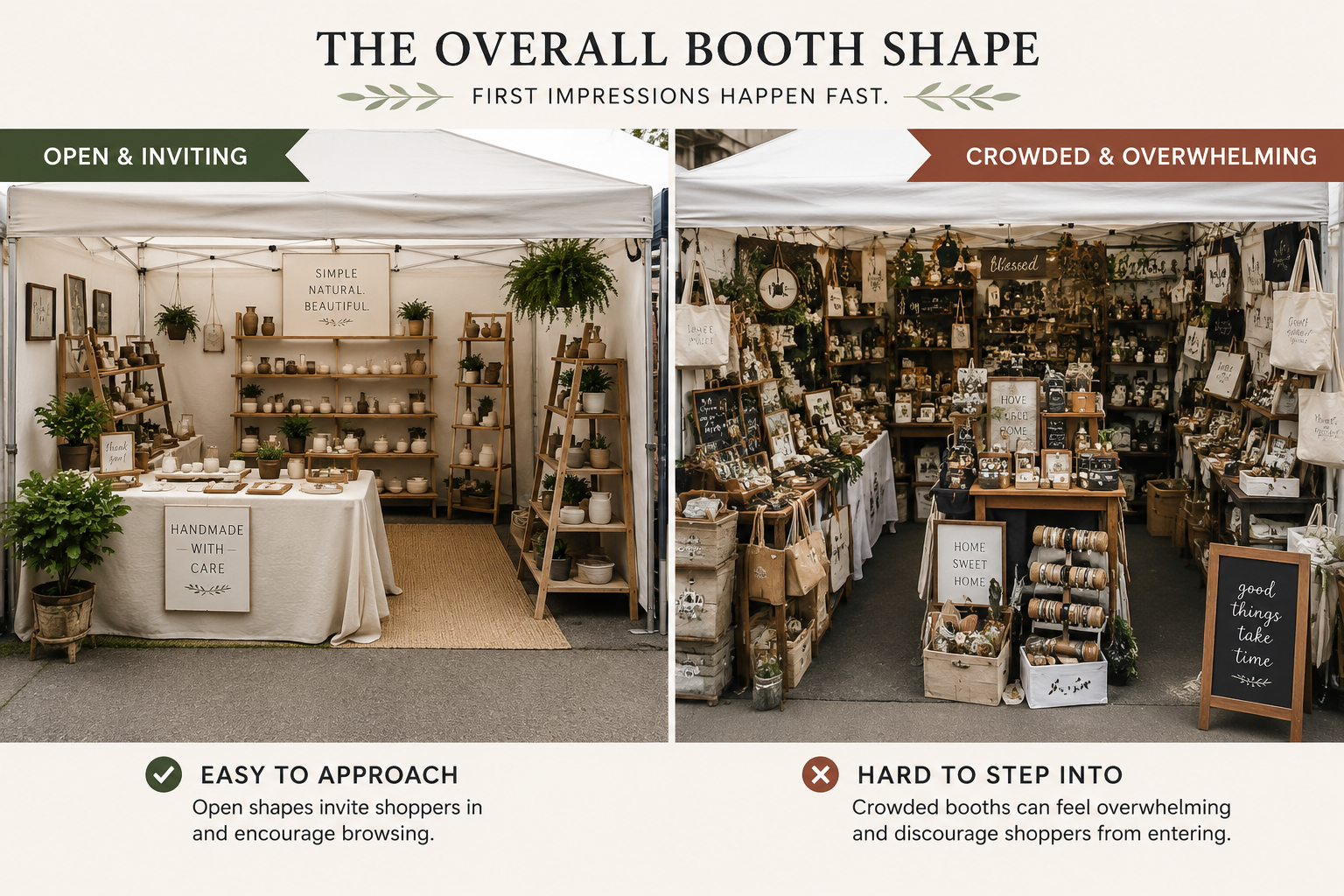
Shoppers often judge a booth before they look at individual products. Open layouts feel welcoming, while crowded spaces can discourage people from stepping inside.
2. The First Focal Point
Once a booth catches someone’s attention, their eyes look for a single focal point.
This might be:
• a standout product
• a well-lit display
• a central table arrangement
• or a visually distinct item
If everything in the booth competes equally for attention, customers often feel unsure where to look first.
When a booth naturally guides the eye toward one area, browsing becomes easier and more enjoyable.
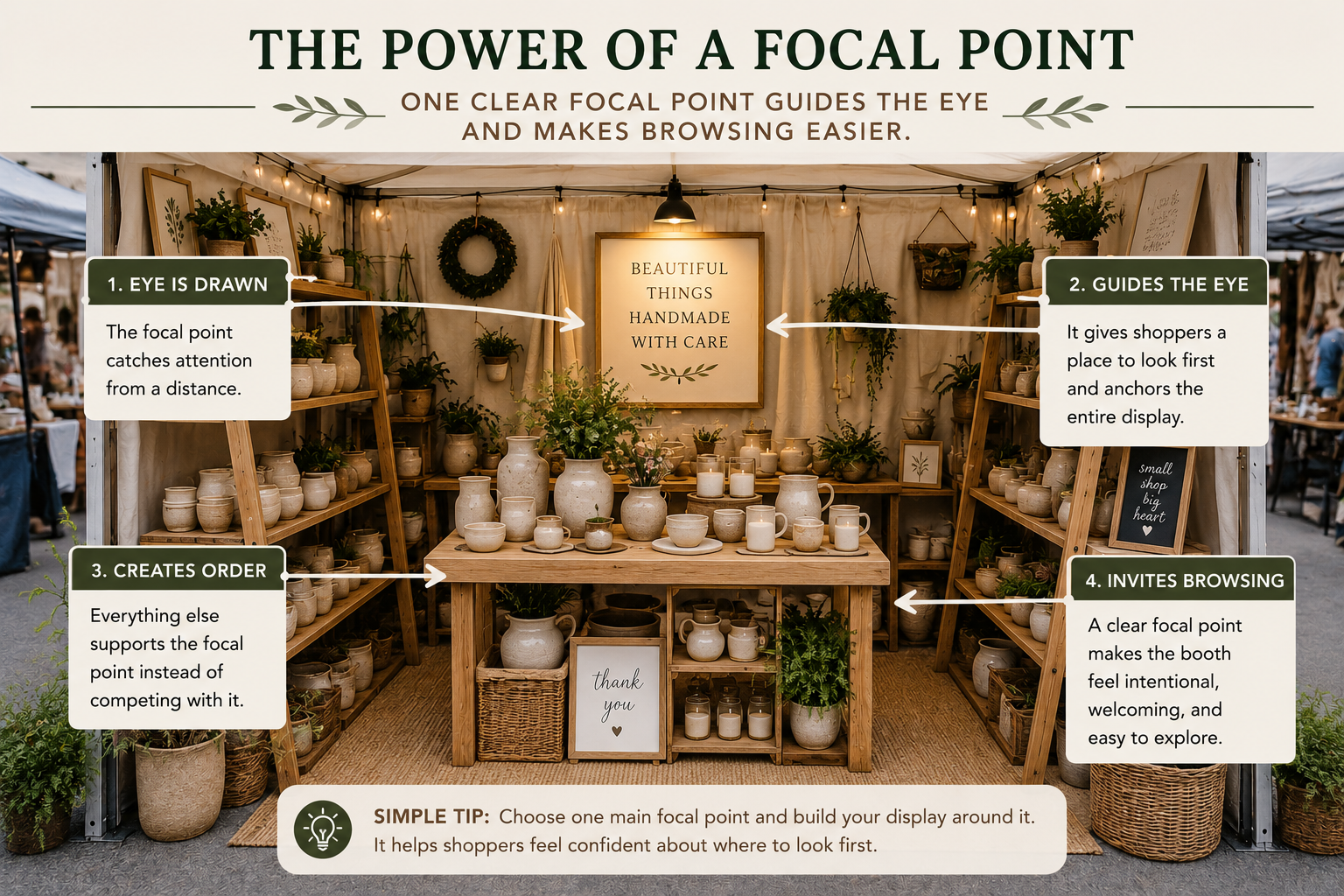
A strong focal point gives shoppers an easy place to look first, making the booth feel organized, inviting, and easier to explore.
3. The Ease of Browsing
Customers rarely decide to stop at a booth because they want to buy something immediately.
More often they stop because it feels comfortable to browse.
Shoppers subconsciously ask:
Can I step closer without bumping something?
Can I see what’s on the table easily?
Is there space to pause for a moment?
Booths that allow for simple, relaxed browsing often hold attention longer.
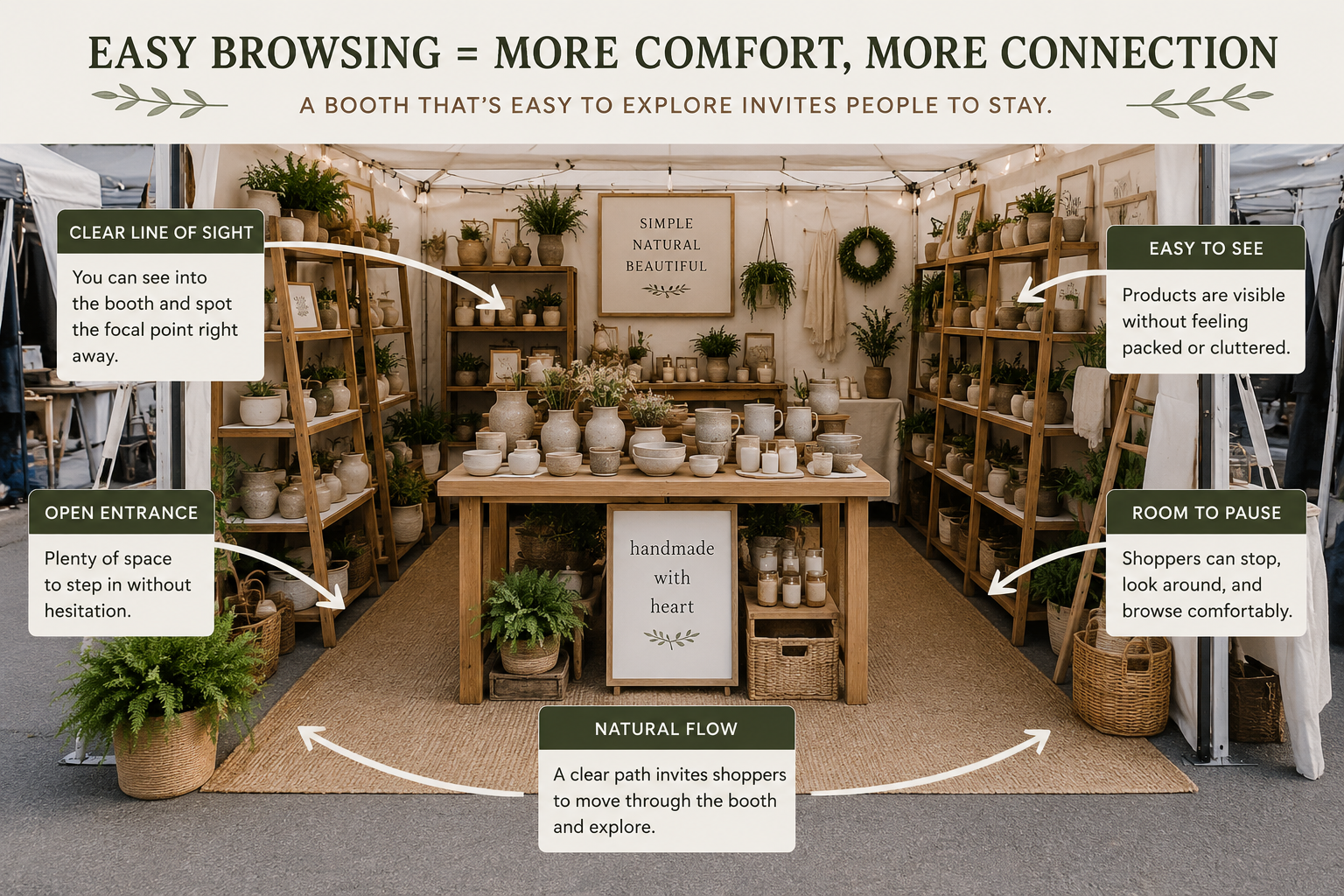
When shoppers can easily see products and move through a booth comfortably, they're more likely to slow down, browse, and make a connection.
4. The Overall Feeling
Long before a customer considers price or product details, they absorb the overall feeling of the booth.
Does it feel calm?
Balanced?
Welcoming?
Or busy and slightly chaotic?
This emotional impression forms quickly and often determines whether someone chooses to explore further.
If you're preparing for markets this season, the Craft Booth Layout Plannercan help you map your booth layout and displays before show day so you can experiment with spacing, focal points, and product placement.
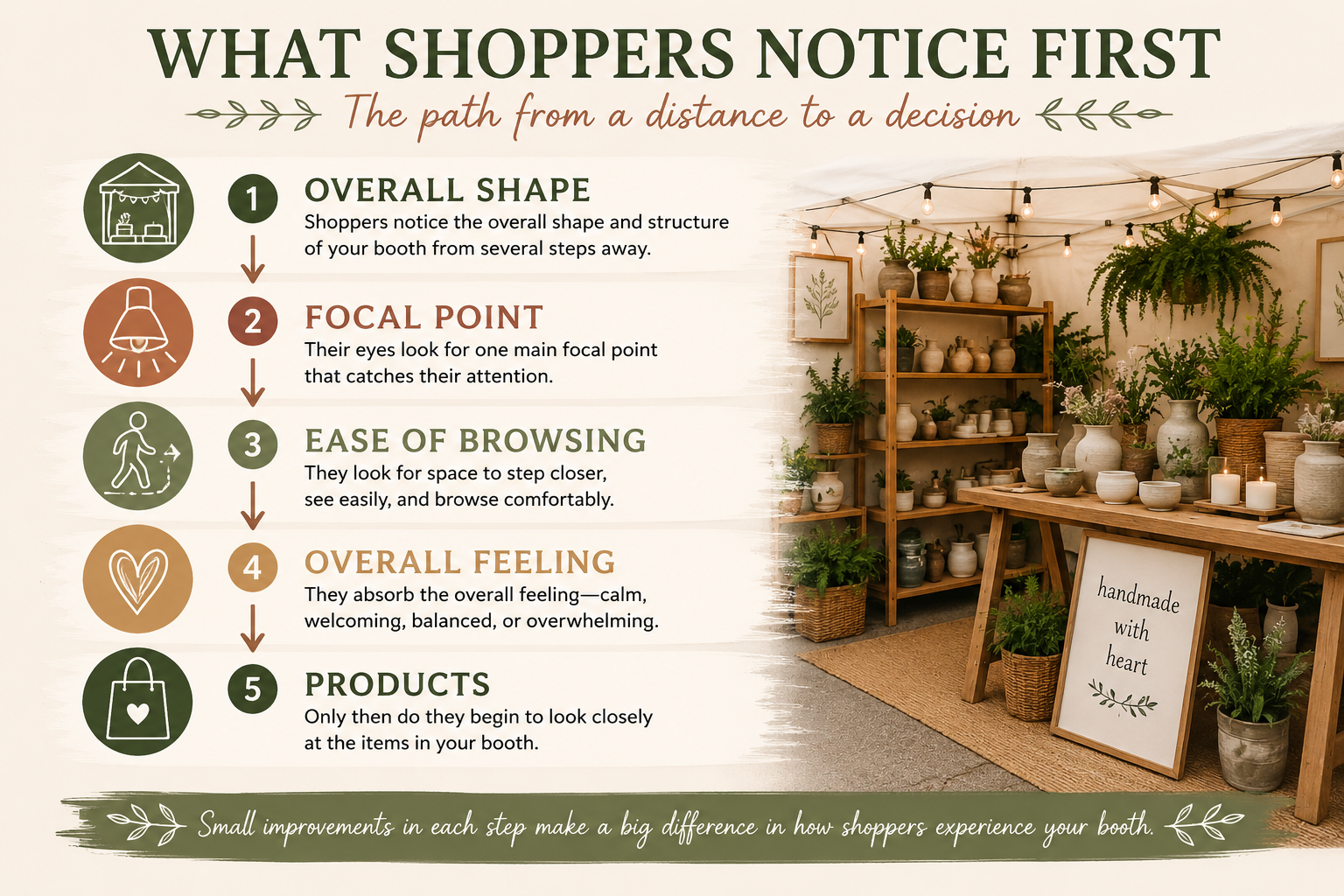
Shoppers don't notice individual products first. They experience your booth in stages, beginning with the overall shape and ending with the items themselves.
What Shoppers Tend to Notice First
Most shoppers don't examine individual products immediately.
Their experience often looks something like this:
OVERALL SHAPE
↓

FOCAL POINT

↓

EASE OF BROWSING

↓

OVERALL FEELING

↓

PRODUCTS
Customers often decide whether a booth feels inviting long before they study individual items.
Small improvements in layout and display can make browsing feel easier and more enjoyable.
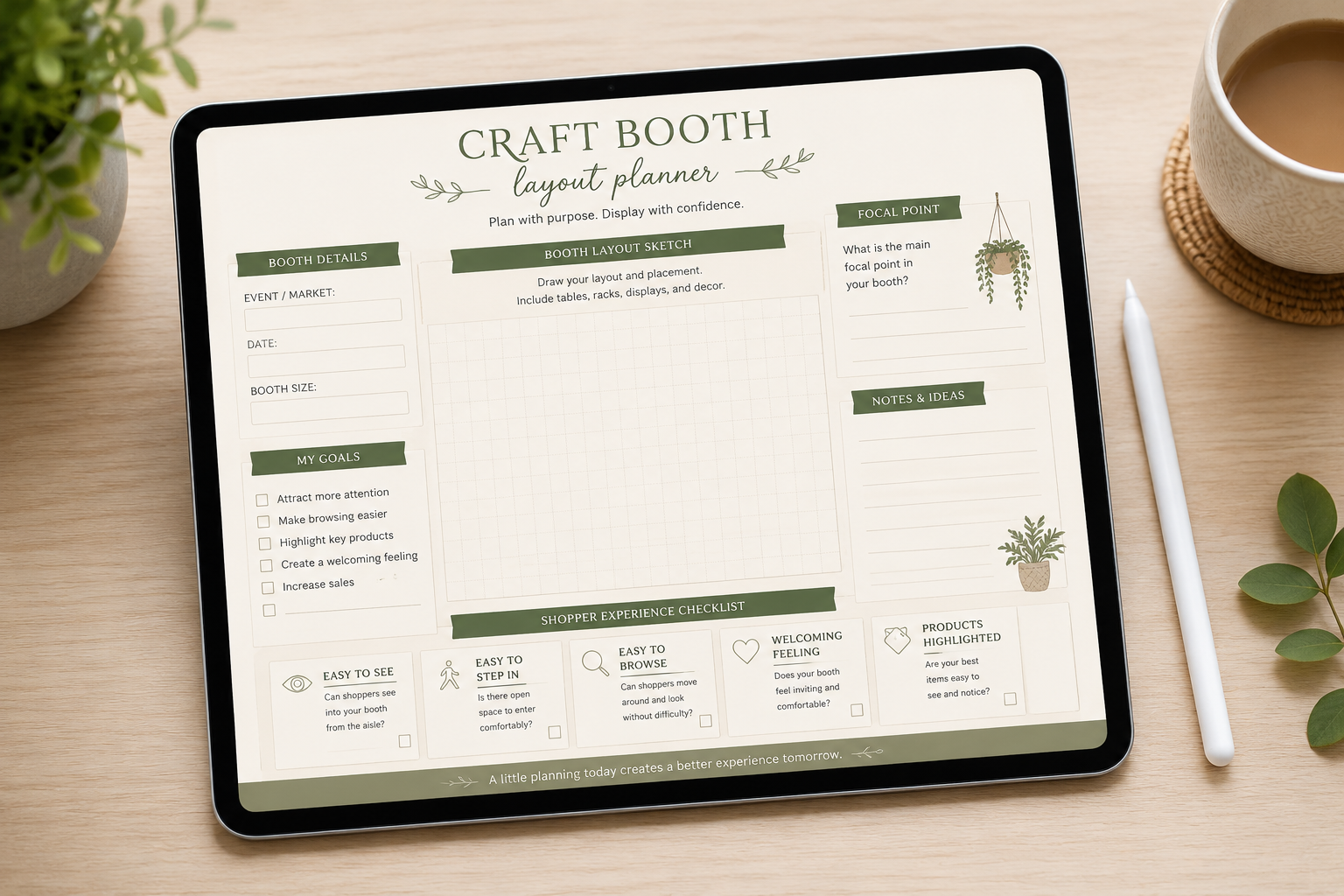
Thoughtful booth design starts before setup day. A layout planner helps makers create displays that are easier for shoppers to approach, browse, and enjoy.
Ask Yourself
Can shoppers quickly understand what my booth sells?
Is there one area that naturally draws attention?
Does the booth feel open and inviting?
Can customers comfortably step closer?
Would I know where to look first if I approached from the aisle?
What This Doesn't Mean
If customers don't immediately notice your products, it doesn't mean:
your products are poor quality
you need to redesign everything
your display is failing
Often small adjustments in layout, spacing, and focal points create noticeable improvements.
Continue Exploring
Why Shoppers Walk Past Your Booth
Sometimes shoppers notice a booth but never slow down.
Why Shoppers Slow Down—but Never Step Into Your Booth
Learn why hesitation happens and what creates comfortable entry points.
Why Some Booths Feel Easy to Shop
Discover why some displays naturally encourage browsing.
Remember
You don't have to solve everything at once.
Many successful booths evolve gradually over time.
A few thoughtful changes often create bigger improvements than a complete overhaul.
Your booth doesn't need to be perfect.
It simply needs to feel comfortable and easy to shop.
Helpful Resource
If you're trying to create a booth that feels easier to shop, the Craft Booth Layout Planner can help you evaluate traffic flow, focal points, display zones, and shopper movement before setup day.
Instead of guessing at your next show, you can make changes intentionally and test ideas before you unload a single table.
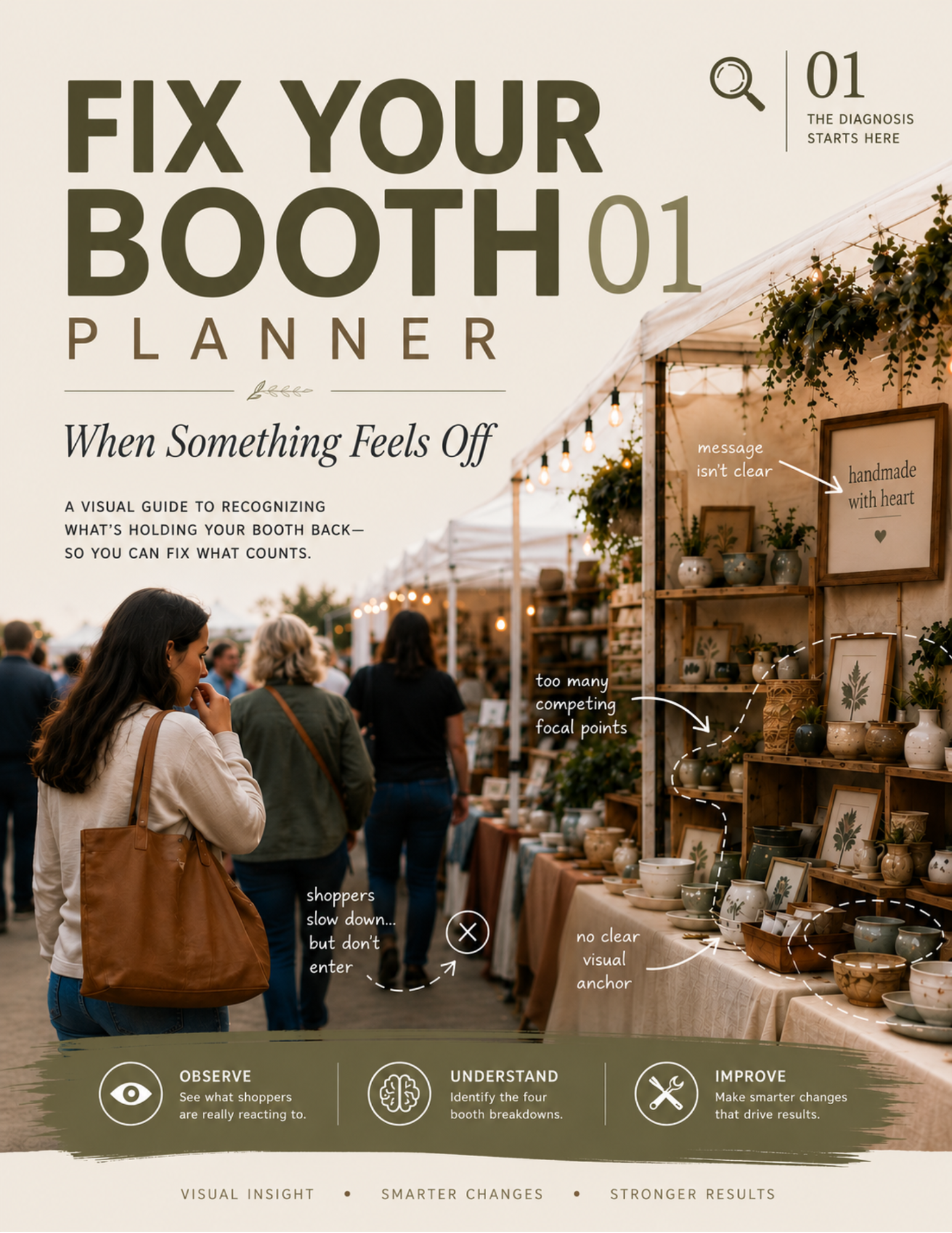
Instead of guessing at your next show, you can make changes intentionally and test ideas before you unload a single table.
Continue Your Booth Journey
Not every booth problem requires a complete reset.
Small improvements build confidence.
You can continue exploring:
The Fix Your Booth hub
Additional booth layout and shopper behavior articles
Every show teaches you something.
And every adjustment gives shoppers one more reason to stay.