

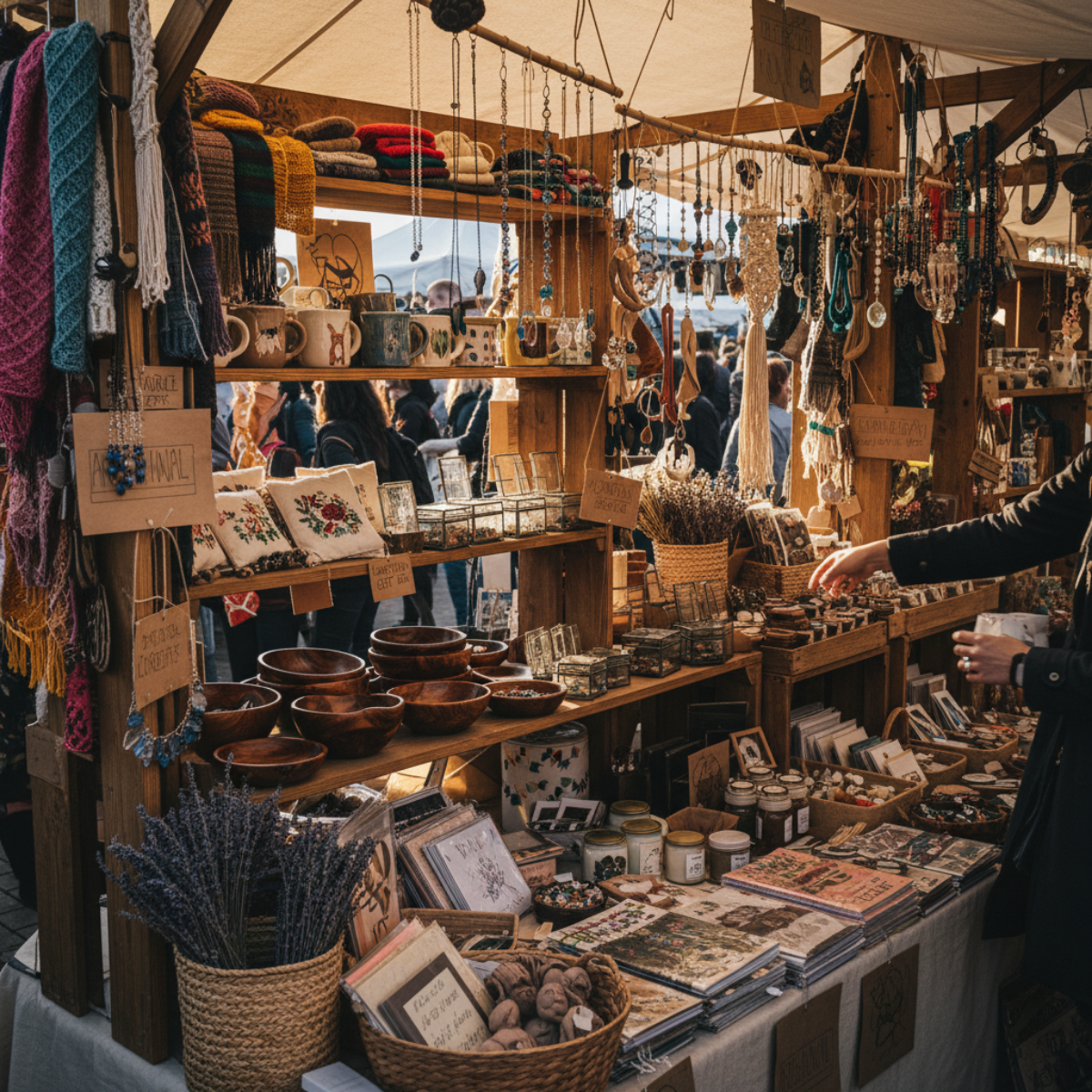
When Your Booth Feels Too Crowded No Matter What You Do
A booth can look organized and still feel overwhelming to shoppers. Learn how visual compression affects browsing behavior, focal clarity, and shopper movement—and what to adjust first.
Sometimes the problem isn't the amount of space you have.
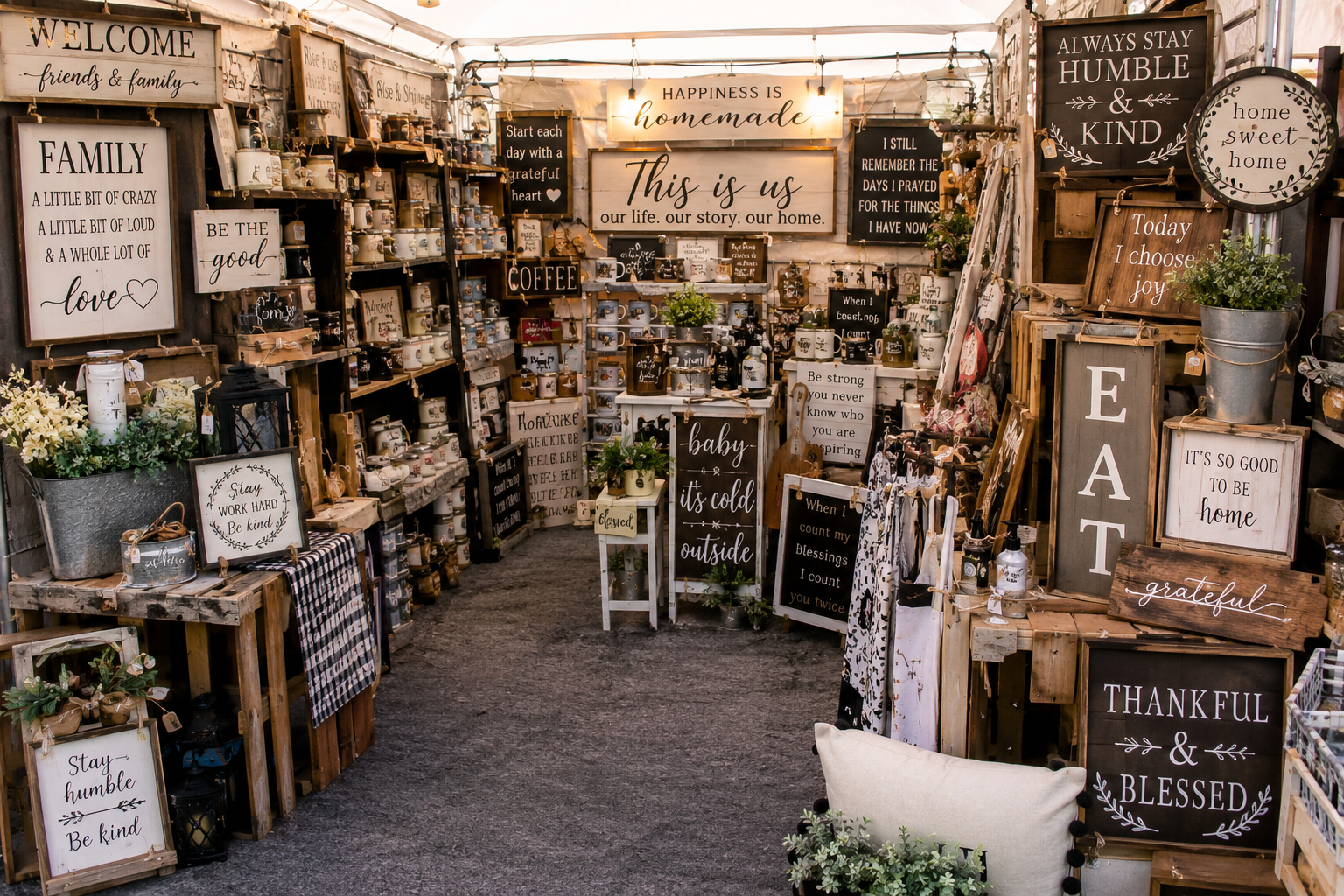
A booth can feel crowded even when inventory isn't the real problem.
If your booth always feels crowded—even after removing products, rearranging tables, or trying different layouts—it can become frustrating.
You may feel like you're constantly moving things around but never quite finding the right balance.
The good news is that crowded booths are rarely caused by having too much inventory. More often, they're caused by how shoppers experience the space.
Small adjustments can often make a booth feel easier to browse without requiring a complete redesign.
Why This Happens
Many booth problems aren't really about space.
They're about visual friction.
When shoppers approach a display, their brains are quickly trying to answer several questions:
What do they sell?
Where should I look first?
Where do I walk?
What matters most?
When too many displays compete for attention, shoppers experience uncertainty. Even beautiful booths can feel overwhelming if there are too many focal points, signs, heights, or products fighting for attention.
Common causes include:
Competing focal points
Too much visual information
Displays packed too closely together
Products blending together
Unclear shopper flow
Lack of open space
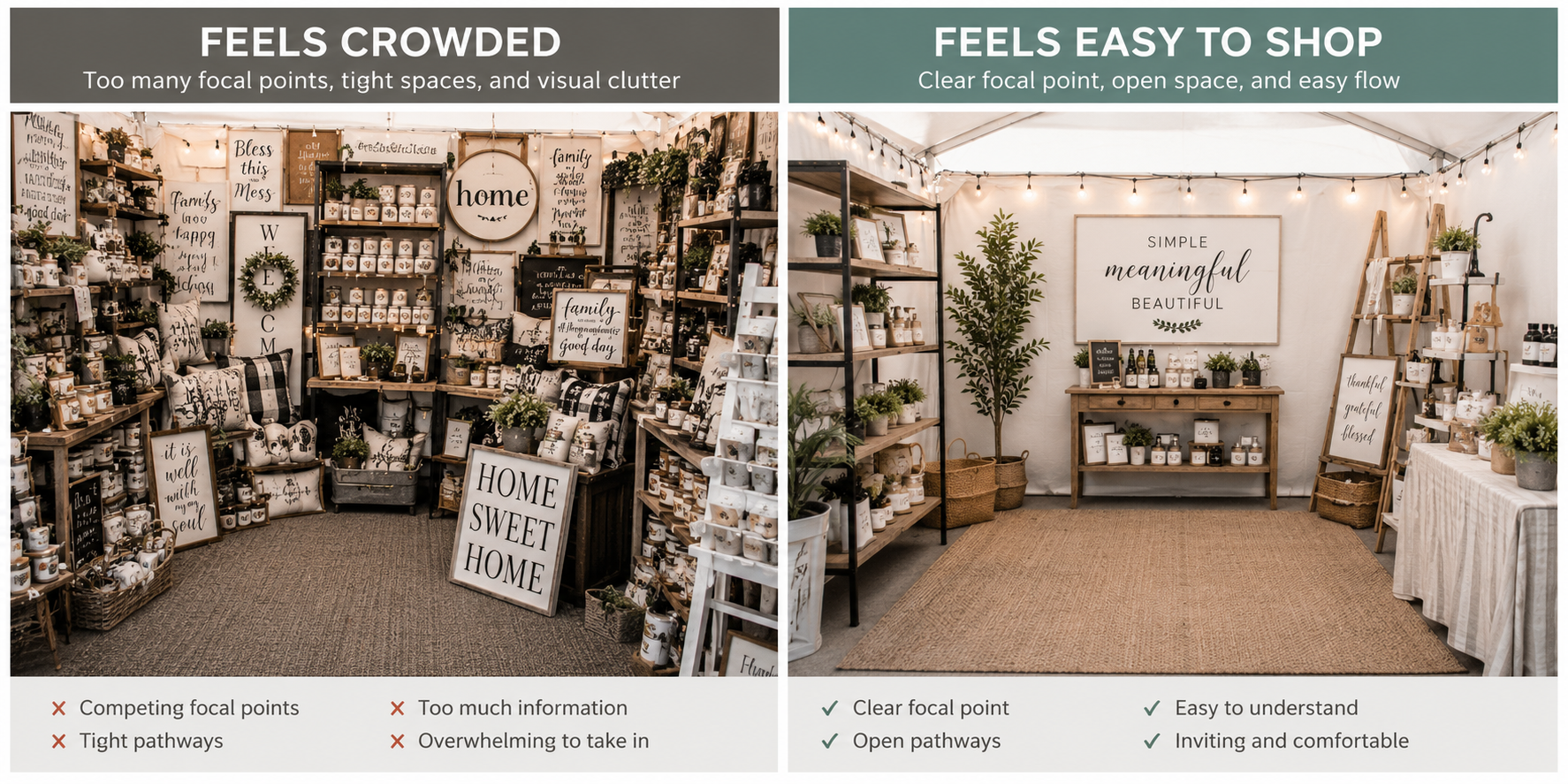
Small layout changes can make a booth easier to shop.
Signs This Might Be Happening
You may notice that:
Shoppers slow down but keep walking.
Visitors stay near the aisle instead of stepping inside.
Customers glance around without picking anything up.
People seem unsure where to begin.
Your booth looks full, but sales don't reflect the amount of merchandise.
You frequently rearrange displays but still feel dissatisfied.
These signs don't necessarily mean your products are the problem.
Often, shoppers simply need more visual clarity.
What To Focus On First
Don't try to redesign everything.
Instead, focus on one priority:
Reduce Visual Clutter
This doesn't necessarily mean removing products.
It means creating breathing room.
Start by:
Choosing one strong focal point.
Giving important products more space.
Grouping similar items together.
Removing duplicate signs.
Creating clearer walking paths.
The goal isn't emptiness.
The goal is making the booth feel easier to understand.
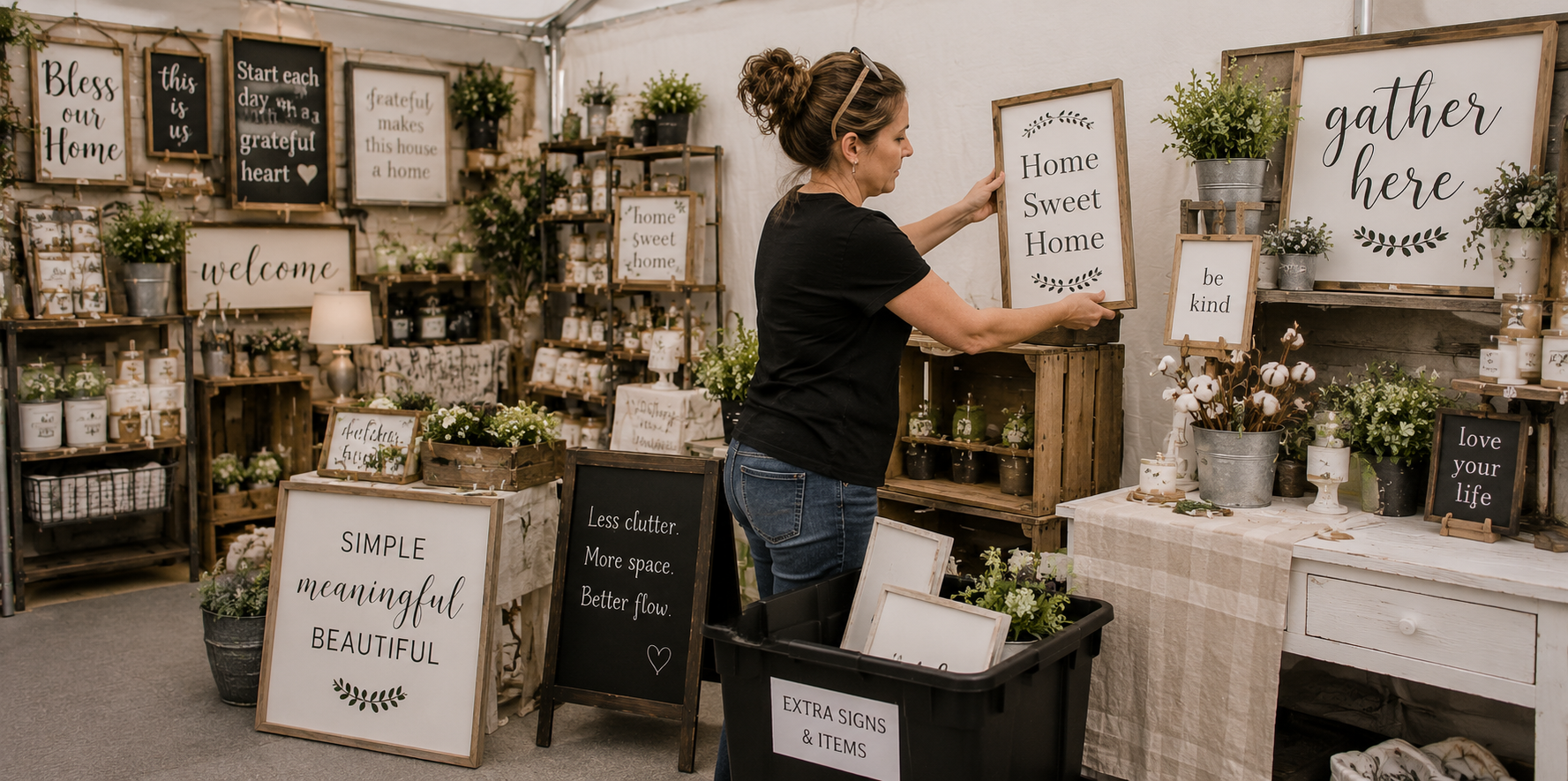
Creating space often matters more than removing inventory.
Ask Yourself
Before your next show, consider:
Can shoppers immediately tell what I sell?
Do I have multiple areas competing for attention?
Does the booth feel crowded from the aisle?
Is there a clear place for shoppers to enter?
Am I trying to show everything at once?
Sometimes showing less actually helps customers see more.
Remember
You don't have to solve everything at once.
Many successful booths evolve gradually over time.
A few thoughtful changes often create bigger improvements than a complete overhaul.
Your booth doesn't need to be perfect.
It simply needs to feel comfortable and easy to shop.
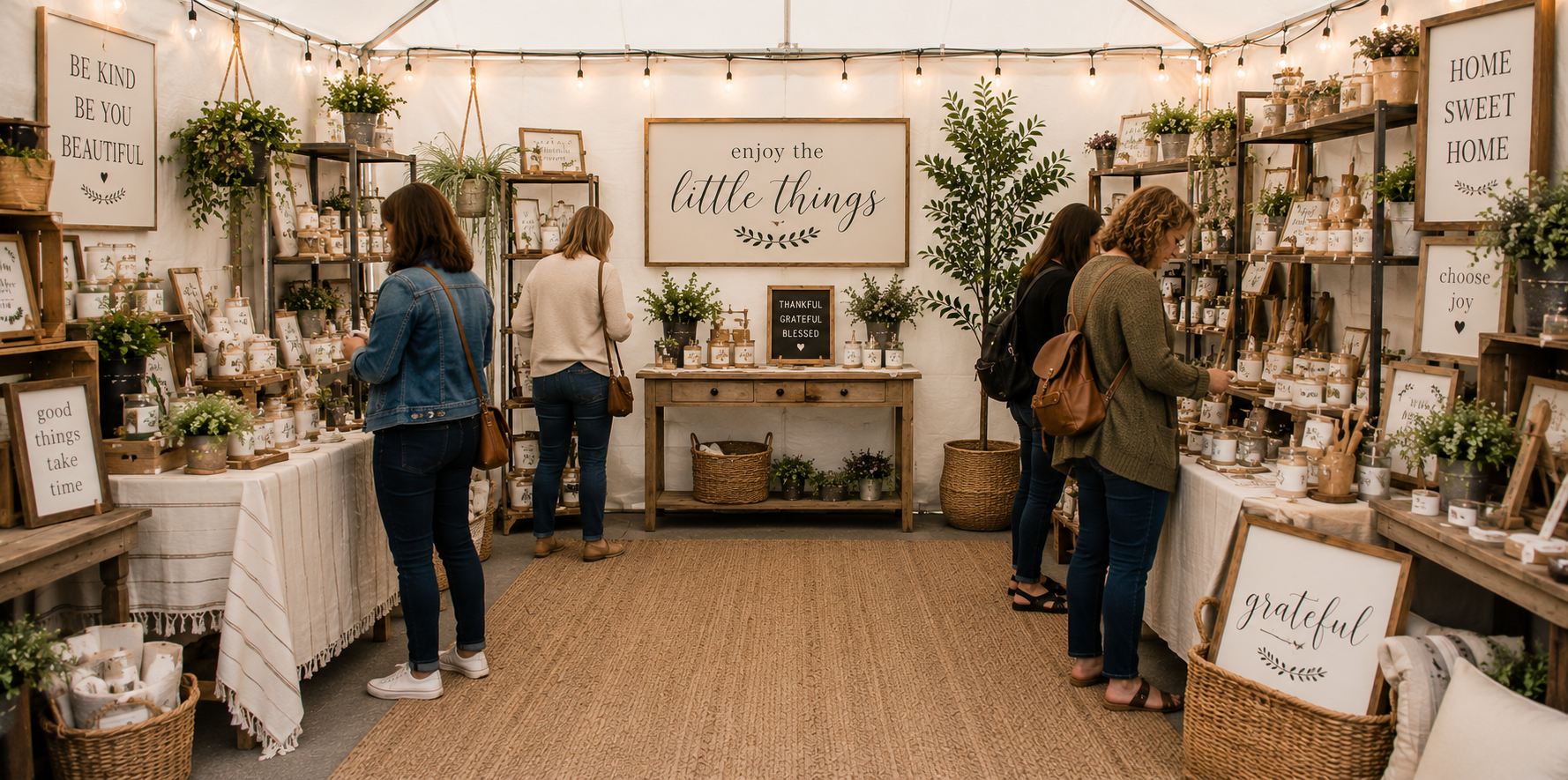
A booth that feels easy to shop encourages people to stay longer.
Helpful Resource
If you're trying to create a booth that feels easier to shop, the Craft Booth Layout Planner can help you evaluate traffic flow, focal points, display zones, and shopper movement before setup day.
Instead of guessing at your next show, you can make changes intentionally and test ideas before you unload a single table.
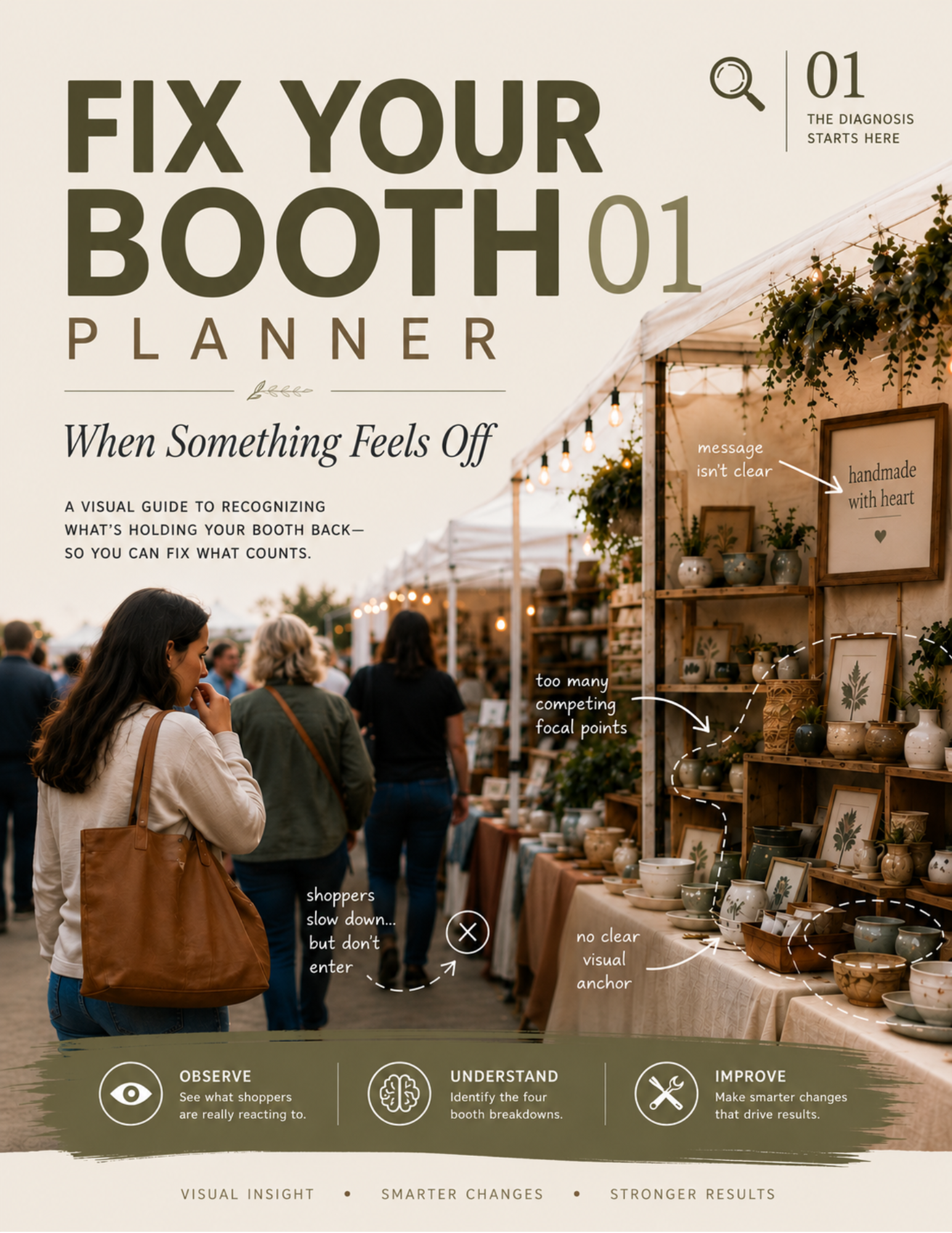
Instead of guessing at your next show, you can make changes intentionally and test ideas before you unload a single table.
Related Articles
If this sounds familiar, you may also find these helpful:
Why Some Booths Feel Easy to Shop (and Others Don't)
Learn what creates a booth that naturally guides shoppers through the space.
Why Your Booth Looks Good—But Still Feels Off
Explore why attractive displays can still feel difficult to browse.
Why Shoppers Browse Your Booth But Don't Buy
Understand what happens after shoppers step inside and why purchases sometimes stall.
Continue Your Booth Journey
Not every booth problem requires a complete reset.
Small improvements build confidence.
You can continue exploring:
The Fix Your Booth hub
Additional booth layout and shopper behavior articles
Every show teaches you something.
And every adjustment gives shoppers one more reason to stay.