What makes shoppers stop—but not step in
Craft booth displays don’t fail at the table.
They fail at the edge.
—
You’ve seen it.
Someone slows down as they approach your booth.
They don’t walk straight past.
They hesitate.
They lean slightly.
They look across your display—
but their feet stay in the aisle.
And then…
they keep moving.

A shopper pauses at the edge—interested, but not stepping in. The moment where attention starts… and then drops.
That moment matters more than anything happening inside your booth.
Because if they don’t step in,
nothing else has a chance to work.
The Pattern
Shoppers are reacting to your booth—
but not committing to it.
They’re noticing something.
Enough to slow down.
Enough to look.
But not enough to enter.
—
So the interaction never actually begins.
It starts—
right at the edge—
and then drops.
The Cause
Stepping into a booth isn’t just about interest.
It’s about clarity.
—
When a booth works,
the next step is obvious.
There’s a clear place to look first.
A clear place to move next.
A clear sense of where they belong.
—
When that’s missing,
the shopper stays where they are—
in the aisle—
trying to figure it out from a distance.
—
And if they have to figure it out,
they don’t step in.

From the aisle, everything competes for attention—so nothing pulls the shopper in. This is where scanning replaces shopping.
What’s Actually Happening at the Edge
From the shopper’s perspective, this is happening fast:
They approach
→ Something catches their eye
→ They slow down
Then immediately:
Where do I start?
Where do I stand?
What am I supposed to look at first?
—
If those answers aren’t clear within seconds,
their attention spreads out across everything.
Nothing stands out enough to pull them forward.
—
So instead of stepping in,
they stay at the edge—
and scan.
—
And scanning is not shopping.
The Structural Break
Most booths are built to be seen—
not entered.
—
Everything is presented at once:
Multiple products
Multiple display heights
Decor layered throughout
—
But nothing is doing one specific job:
👉 pulling the shopper into the space
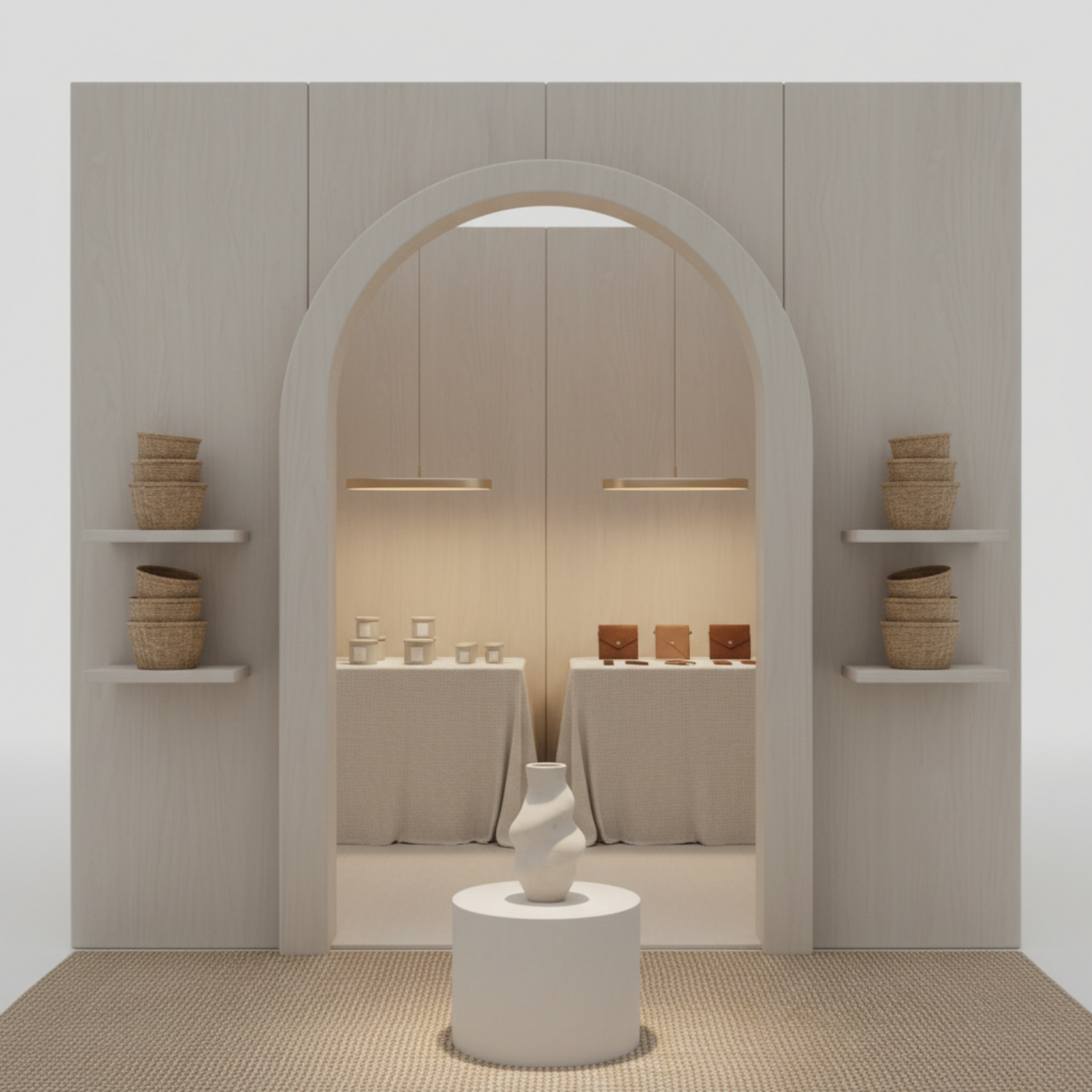
A defined entry changes everything—one clear focal point pulls attention in, and the space shows exactly where to go next.
So the booth works visually—
but not physically.
It doesn’t guide movement.
It doesn’t create an entry.
It doesn’t give permission to step in.
The Constraint (Why This Keeps Happening)
This is where most makers get stuck.
Because the booth looks good.
—
It feels styled.
It matches what they’ve seen online.
It looks like it should work.
—
So the instinct is to:
Add more
Adjust small details
Refine the look
—
But none of that changes the actual problem.
Because the issue isn’t how the booth looks.
It’s how it functions at the edge.
—
And if that doesn’t change,
the same moment repeats—
all day.
The Shift
What matters isn’t whether your booth gets attention.
It’s whether that attention turns into movement.
—
And that only happens when the entry is clear.
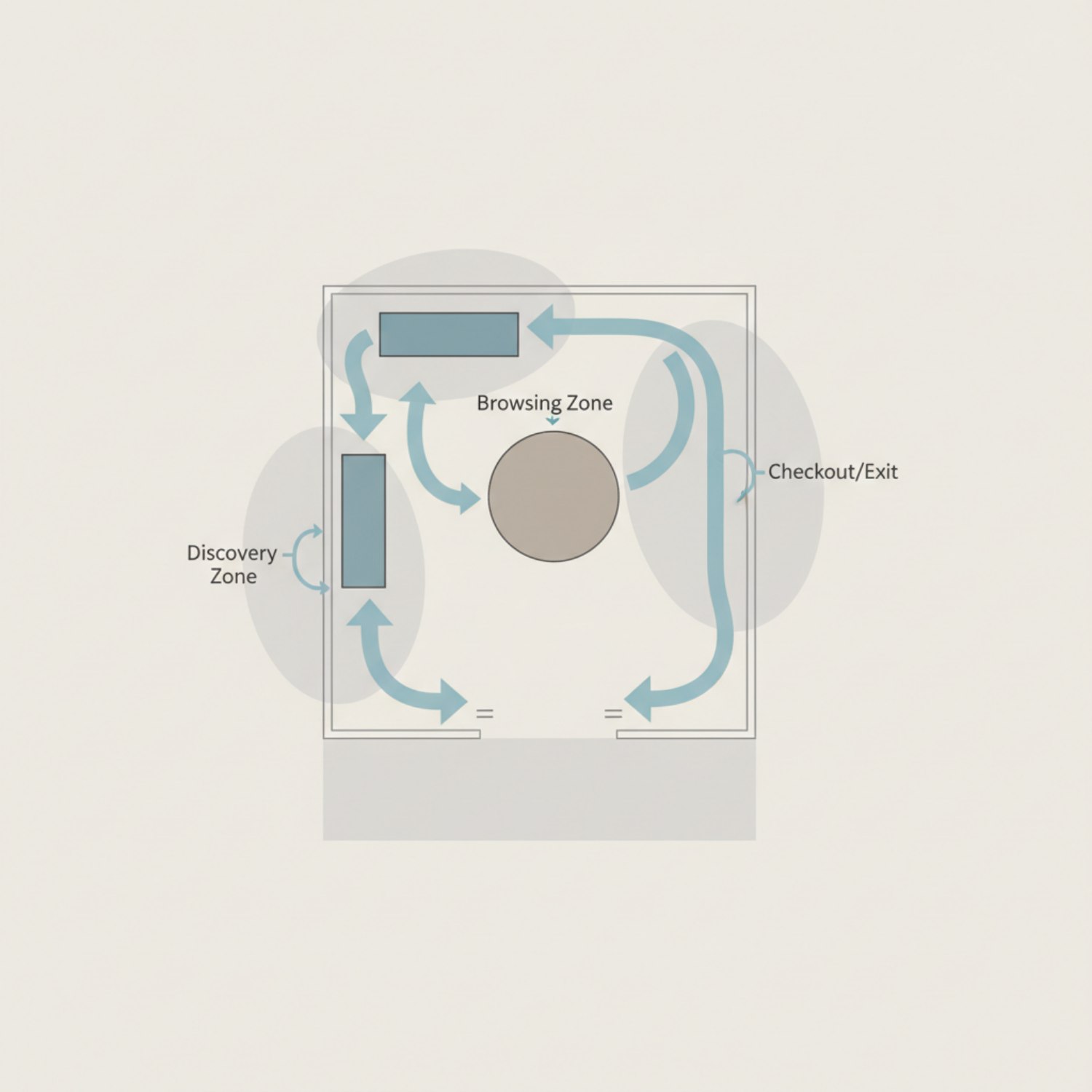
When the path is clear, movement follows—discovery leads to browsing, and browsing leads naturally to checkout.
A booth that works creates a sequence:
Something stands out first
→ That pulls attention in
Something holds attention next
→ That keeps them from moving on
Something invites movement
→ That brings them into the space
—
Without that sequence,
everything stays at the surface.
Diagnostic Checks
If this is happening in your booth, you’ll see it clearly:
If shoppers slow down—but don’t step in
→ your entry point isn’t defined
If they look across the display instead of into it
→ your focal point isn’t clear
If they hesitate at the aisle without changing direction
→ nothing is pulling them forward
If they scan quickly and move on
→ attention isn’t landing anywhere
—
These are all signs of the same issue:
👉 the booth isn’t guiding the first step
What This Means
Right now, your booth is creating attention—
but not direction.
—
And without direction,
attention doesn’t turn into action.
—
So the shopper never crosses the line from:
looking
to
entering.
—
And if they don’t enter—
nothing else matters.
Where This Leads
If this keeps happening,
you’re not dealing with a product problem.
You’re not dealing with pricing.
You’re not even dealing with interest.
—
You’re dealing with structure.
—
And until the entry is clear,
every other improvement stays invisible.
—
What’s Next:
👉 What to Focus On When Shoppers Slow Down—but Don’t Step Into Your Booth