

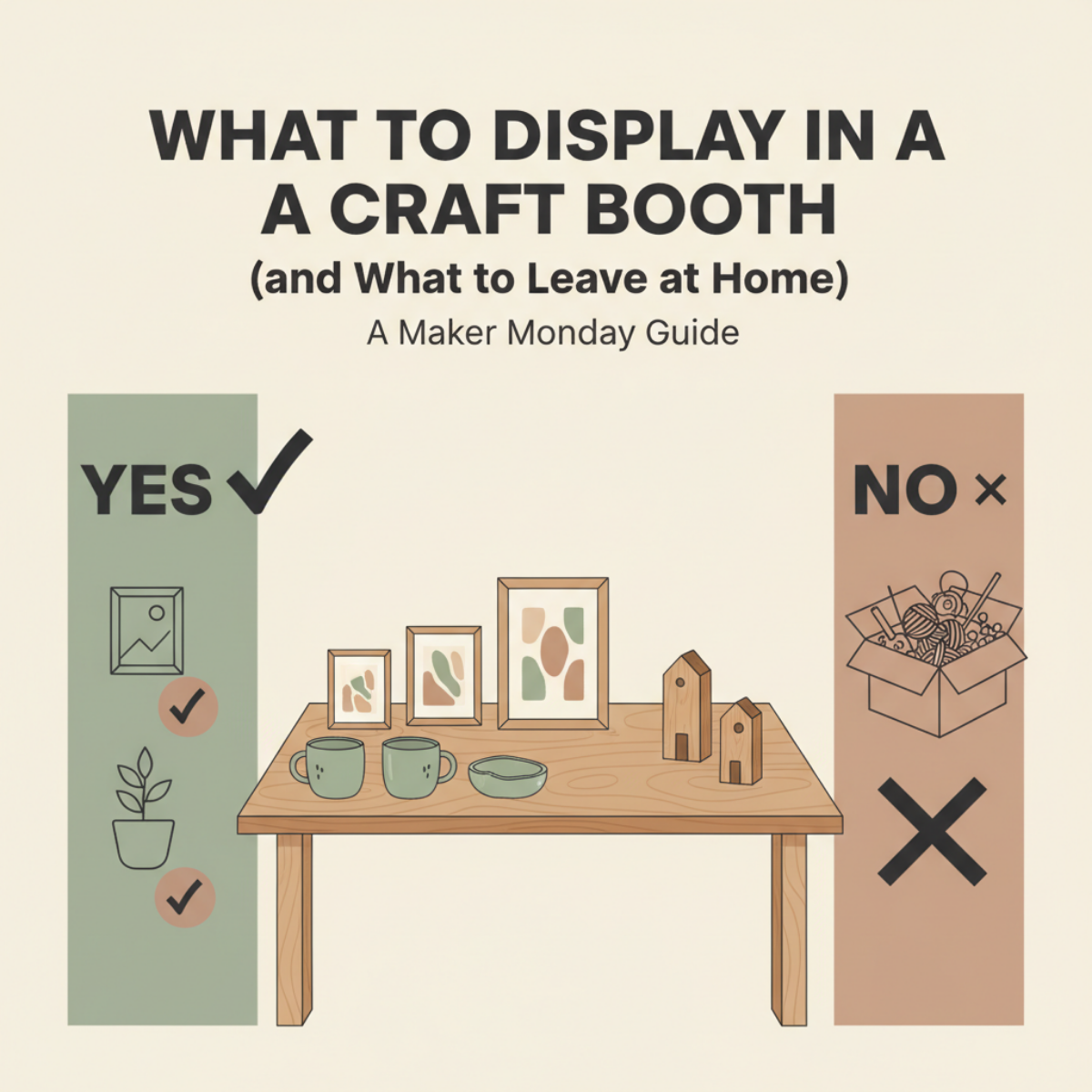
What to Display in a Craft Booth (and What to Leave at Home)
A successful booth isn’t built by showing more.
It’s built by choosing what actually earns space.
When makers think about improving craft show sales, they often jump straight to booth layout — tables, shelves, grids, signage. But long before layout comes into play, there’s a more important decision to make:
What actually deserves space in your booth?
You can have a beautifully arranged booth and still struggle to sell if what’s on display overwhelms shoppers, confuses your message, or hides your best work. Thoughtful display decisions simplify setup, improve flow, and make it easier for customers to say yes.
This guide focuses specifically on what to display in a craft booth, how to choose products that earn space, and how to avoid common display mistakes that hurt sales.
Why Display Decisions Matter More Than You Think
Craft shows are fast-moving environments. Shoppers are making decisions in seconds, often while navigating crowds, noise, and visual overload.
When a booth displays:
too many products
too many variations
or too many ideas at once
customers hesitate, browse longer without buying, or walk away entirely.
A strong craft booth display isn’t about showing everything you make. It’s about editing intentionally so your best work is easy to see, understand, and purchase.
How Shoppers Read a Craft Booth
Most shoppers scan booths quickly before deciding whether to stop. Clear focal points, visual breathing room, and an easy-to-understand product mix help shoppers process what you sell without effort. When your display is clear, shoppers feel more confident — and confidence leads to purchases.
The Four Categories Every Craft Booth Needs
When deciding what to display in a craft booth, most successful sellers rely on a small number of intentional display categories rather than bringing everything they make.
1. Hero Products
Hero products are the stars of your booth.
They are:
your best sellers
visually strong from a distance
easy to understand without explanation
These items should be the first thing a shopper notices when approaching your booth. If someone only looks at one product, it should be one of these.
Ask yourself:
Which products consistently sell well?
Which items photograph clearly and catch attention?
Which pieces best represent my brand?
Those products earn the most visible space.
2. Supporting Products
Supporting products complement your hero products.
They often include:
variations in size, color, or style
coordinating or related items
slightly lower-priced alternatives
Supporting products give shoppers options without overwhelming them. Their job is to make hero products easier to buy — not harder to choose.
3. Anchor Pieces
Anchor pieces act as visual magnets.
They may not be your top sellers, but they:
draw people into your booth
create visual interest
help establish your style or scale
Anchor pieces are often larger, bolder, or more visually distinct. Their primary role is to stop foot traffic and invite browsing.
4. Utility and Add-On Items
These are your easy “yes” items.
Utility and add-on items are often:
smaller
lower-priced
quick decisions
Placed near checkout or alongside hero products, they increase average order value without requiring extra explanation. A small, well-curated selection works far better than a cluttered display.
How to Choose What Earns Booth Space
Once you understand the display categories, choosing what to sell at craft shows becomes much easier.
Criteria for Choosing What to Sell at Craft Shows
When evaluating products, consider:
Sales history: Has it sold consistently in the past?
Visual clarity: Can someone understand it in under five seconds?
Price balance: Does it fit your overall price range?
Setup effort: Does it require explanation or demonstration?
Restock ease: Can you replenish it during the show if needed?
If a product struggles in several of these areas, it may not deserve prime booth space — even if you love it.
What to Leave at Home (Common Craft Booth Display Mistakes)
Editing your display is often the hardest part of booth planning — but it’s also where sales improve fastest.
Consider leaving behind:
products that rarely sell but “feel important”
items that require long explanations
too many color or style variations
pieces that disrupt visual flow
untested experiments
Craft shows are not the place to showcase everything you’ve ever made. They reward clarity, focus, and confident selection.
You can always rotate products between shows. Leaving something out isn’t failure — it’s strategy.
How Display Decisions Connect to Booth Layout
Once you’ve decided what to display, booth layout planning becomes much easier.
A strong layout:
highlights hero products
creates space for anchor pieces
guides shoppers naturally through supporting items
That’s why display decisions should happen before you start setting up tables and shelves.
If you haven’t yet, you may want to read:
→ How to Plan a Craft Booth Layout (Without Overthinking It)
Display planning and layout planning work best together — each supports the other.
Frequently Asked Questions About Craft Booth Displays
How many products should I display in a craft booth?
Most booths perform better with a curated selection rather than a full inventory. The ideal number depends on booth size and product type, but fewer well-displayed items usually lead to clearer buying decisions and stronger sales.
Should I bring all my products to a craft show?
Not necessarily. Craft shows reward focus and clarity. Bringing only products that sell well, display cleanly, and support your booth layout often leads to better results than trying to show everything you make.
Final Thoughts
Successful craft booths aren’t built by bringing more — they’re built by choosing better.
When you’re intentional about what earns space in your booth, you:
reduce setup stress
improve shopper confidence
make sales easier
enjoy shows more
Planning your display ahead of time allows you to show up calm, prepared, and focused on what matters most: connecting with customers and selling your work.
Optional next steps
Happy Maker Monday 🌿
Connie - Artisan Kraftwerks