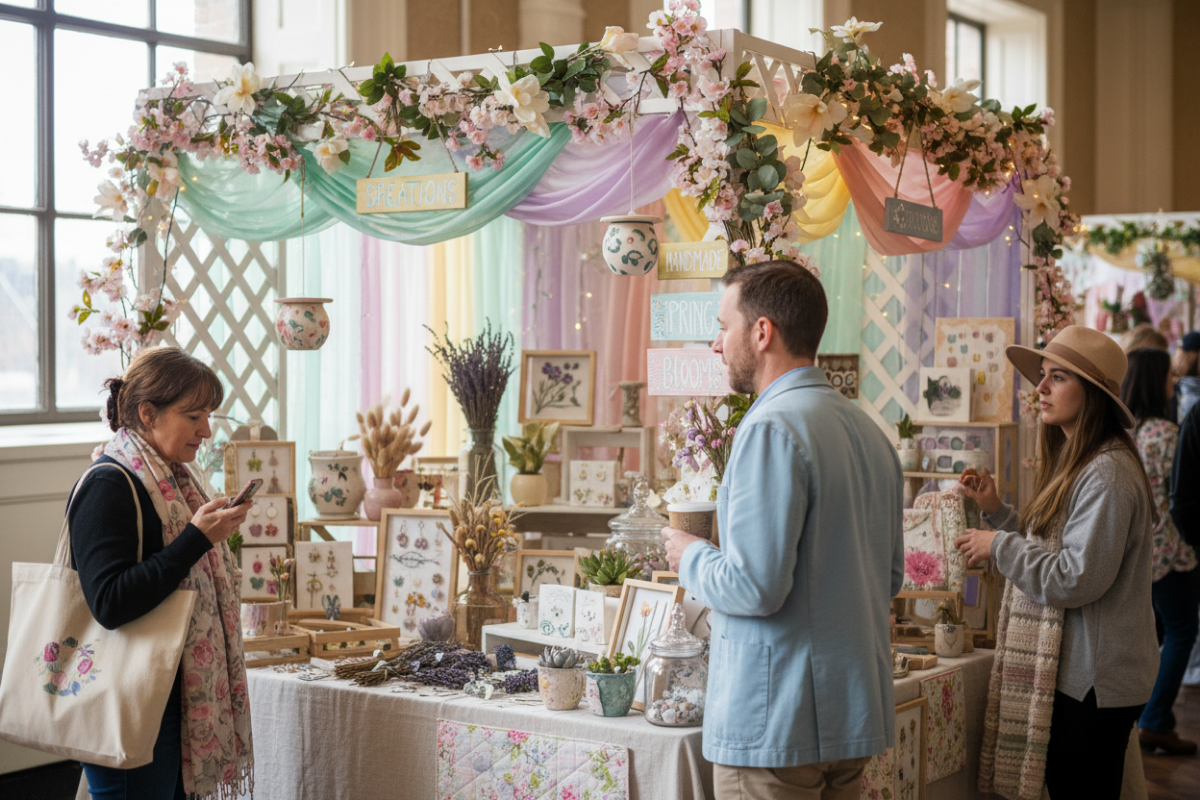
Spring Craft Booth Trends That Actually Get Customers to Stop (And What They Mean)
These booth trends are showing up everywhere right now—
and they’re getting people to stop.
But stopping isn’t the same as staying.
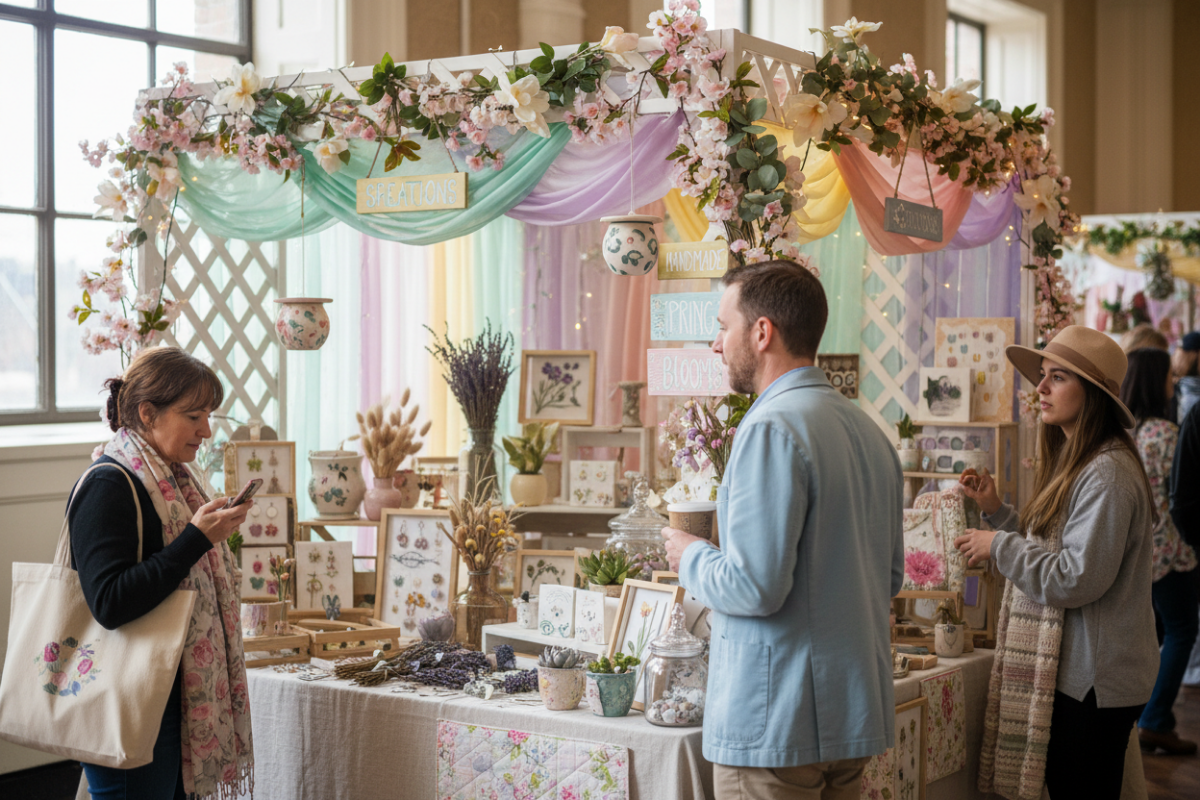
These are the booth trends showing up everywhere right now—
soft color, styled displays, and a calm, curated feel.
They’re getting people to stop.
But attention is only the first step.
What’s Getting People to Stop Right Now
Booths are getting attention right now.
You can see it.
People slow down.
They glance over.
They step in just enough to look.
And then—
they move on.
The Patterns Showing Up Across Spring Booths
A few things are showing up again and again this season:
1. Softer, styled displays
Neutral tones. Light woods. Clean layouts that feel calm and curated.
2. Small, easy-to-browse products
Jewelry trays. mini items. grouped pieces that invite a quick look.
3. “Giftable” presentation
Items that feel ready to pick up and give—simple, approachable, low-pressure.
4. Visual cohesion across the booth
Everything matches. Everything feels intentional.
None of this is random.
These are the booths pulling people in.
You’re seeing this across markets.
Booths that feel lighter.
More styled.
Easier to step into.
And they’re working—at least at first.
What These Trends Are Actually Showing
These setups are doing one thing really well:
They make people stop.
They lower resistance.
They feel easy to approach.
They invite a quick look without pressure.
That part is working.
But there’s a gap.
Because stopping isn’t the same as staying.
What This Points To
When attention improves—but buying doesn’t follow—
it starts to point somewhere specific.
Not toward traffic.
Not toward trends.
But toward what happens inside the booth.
These trends are exposing a pattern:
People are entering the moment…
but not continuing through it.
Where This Starts to Feel Familiar
You might be seeing it already.
People pause at the edge of your booth.
They look at a few things.
They react—maybe even smile.
But they don’t go further.
They don’t ask.
They don’t pick anything up.
They don’t shift into shopping.
It feels like interest.
But it doesn’t hold.
If your booth is getting more attention—but not more buying,
this is the pattern to look at next.
A Pattern I Notice When Makers Are Waiting for Confidence
What I’ve noticed, though, is that confidence rarely arrives in advance.
It usually shows up after a decision has been made and lived with for a while. After tradeoffs are experienced. After uncertainty has been survived.
Why confidence usually appears after action — not before it.
Confidence is often treated like a prerequisite.
“I just want to feel more confident before I move forward.”
“I’ll know when it feels right.”
“I’m waiting until I’m sure.”
These are common phrases among makers who are trying to decide what step to take next.
What I’ve noticed, though, is that confidence rarely arrives in advance.
It usually appears after a decision has been made and lived with for a while. After tradeoffs are experienced. After uncertainty has been survived.
Waiting for confidence can quietly delay movement — not because someone isn’t capable, but because they’re expecting a feeling that tends to follow action rather than precede it.
Sometimes the hesitation isn’t really about confidence at all.
It’s about wanting certainty.
And certainty isn’t something most creative paths offer.
Making products.
Listing items.
Trying a new craft show.
Choosing a direction for a shop.
All of these involve moments where the outcome isn’t fully known yet.
Confidence tends to grow through contact.
Through repetition.
Through seeing what happens when you choose something and stay with it long enough to learn.
Key observation
Confidence rarely appears before a decision.
It usually grows after a direction has been chosen.
Sometimes the next step isn’t to feel more confident.
Sometimes it’s simply to choose a direction gently — and give yourself enough time inside that direction to learn from it.
Confidence often grows quietly once the work begins interacting with the real world.
Pause for a moment and ask yourself
• Am I waiting for confidence — or clarity about the next step?
• What small decision could I make without needing complete certainty?
• If I chose a direction today, what might I learn in the next few weeks?
Sometimes confidence is less about preparation and more about experience accumulating over time.
Where this fits in your Maker Path
Moments like this often appear in the Foundations stage, when makers are deciding where to focus their time and energy.
It’s a place where clarity matters more than confidence.
If you're at this point — wanting direction before certainty — the Foundations Path exists to help makers choose a direction gently and stay with it long enough to learn.
→ Explore the Foundations Path
More patterns we’ve noticed
• When Makers Confuse Momentum With Direction
• Why Selling Can Feel Harder Than It Should
• Before You Switch Platforms, Read This
Maker Notes are short reflections from the Artisan Kraftwerks team about patterns we notice while building and selling handmade work.
A Pattern I Notice When Makers Are “Almost Ready”
“Almost ready” is a fascinating phrase.
It usually means the core work is done — the product exists, the idea is formed, the structure is there. What’s left feels small. Final. Responsible.
And yet, “almost ready” can stretch on for weeks or months.
“Almost ready” is a fascinating phrase.
It usually means the core work is done — the product exists, the idea is formed, the structure is there.
What’s left feels small.
Final.
Responsible.
And yet, “almost ready” can stretch on for weeks or months.
A pattern I notice
Finishing something often requires exposure.
Letting it be seen.
Letting it be used imperfectly.
Letting it leave the private space where it’s still protected.
Perfection isn’t always the barrier.
Sometimes it’s the transition from control to contact.
Once something is finished, it can be reacted to.
Misunderstood.
Ignored.
Appreciated.
Staying “almost ready” quietly delays that moment.
Key observation
Finishing isn't always about quality.
Sometimes it's about visibility.
I don’t think the solution is to rush.
But it can be helpful to notice what finishing would actually require — and whether the hesitation is about improving the work, or letting the work be seen.
For many makers and handmade sellers, that moment happens when:
• listing a product publicly
• setting up a craft booth display
• showing work for the first time
• or letting customers interact with something that used to live only in the workshop
Those moments shift a project from private creation into public contact.
Pause for a moment and ask yourself
• What would “finished” actually require right now?
• Is the hesitation about quality — or about visibility?
• If the work went live today, what would really happen?
Sometimes the difference between almost ready and ready is simply allowing the work to be seen.
Where this fits in your Maker Path
Moments like this usually appear in the Foundations stage — when makers are clarifying direction and deciding how their work will move into the world.
If you're noticing this “almost ready” moment, the Foundations path exists to help you slow down and understand what decision is still open.
→ Explore the Foundations Path
Related reflections for makers
If this pattern resonates, you may also find these helpful:
• When Makers Confuse Momentum With Direction
• Why You Can’t See What’s Working Yet
• Before You Switch Platforms, Read This
These reflections explore common patterns we notice while building and selling handmade work.
Maker Notes are short reflections from the Artisan Kraftwerks team about patterns we notice while building and selling handmade work.
When Makers Confuse Momentum With Direction
Momentum feels productive.
Direction makes progress meaningful.
Why staying busy doesn’t always mean your handmade business is actually moving forward.
Momentum is often treated as the goal.
For many makers, progress starts to look like activity.
More posts.
More listings.
More products.
More motion.
From the outside, it can look like things are moving forward.
But momentum and direction are not the same thing.
I keep noticing that when makers feel stuck or uncertain about their business, the response is often to increase activity.
Post more.
Make more.
List more.
The assumption is that if the motion continues long enough, the path will eventually become clear.
And sometimes it does.
But often the result is something different.
Momentum without direction tends to feel unstable.
On the surface, it looks energetic.
But underneath there’s often a quiet tension — a sense that all the effort might not actually be building toward anything.
Many handmade sellers and craft show vendors experience this at some point.
They’re working hard.
They’re staying busy.
Yet it’s difficult to say exactly what all of that motion is meant to lead toward.
Direction changes the feeling entirely.
It doesn’t necessarily make things move faster.
But it makes effort cumulative.
Small actions start stacking instead of resetting.
Key observation
Momentum feels productive.
Direction makes progress meaningful.
When makers feel exhausted but can’t quite explain why, it’s often because they’ve been maintaining motion without a clear sense of where that motion is meant to lead.
Momentum is easy to start.
Direction requires a moment of thought.
Not necessarily slowing down —
just pausing long enough to understand what the energy is meant to build toward.
Pause for a moment and ask yourself
• Is the energy I’m spending reinforcing a direction?
• Or is it simply keeping things moving?
• If I stopped today, would the work I’ve done still make sense tomorrow?
Sometimes the difference between progress and exhaustion is simply knowing what the motion is meant to create.
Where this fits in your Maker Path
Moments like this usually appear in the Foundations stage, when makers pause to clarify direction before focusing their energy.
Without that pause, it’s easy to stay busy while still feeling uncertain about where the work is leading.
If you're noticing this moment in your own work:
→ Explore the Foundations Path
More patterns we’ve noticed
• Why Selling Can Feel Harder Than It Should
• Before You Switch Platforms, Read This
• Where You Sell Matters More Than You Think
Maker Notes are short reflections from the Artisan Kraftwerks team about patterns we notice while building and selling handmade work.
A quiet difference between planning and postponing
Planning moves toward a decision.
Postponing circles it.
Planning and postponing can look identical from the outside.
Both involve research. Both involve note-taking. Both involve collecting ideas and thinking things through. The difference isn’t in the activity — it’s in the posture.
Planning moves toward a decision.
Postponing circles it.
I’ve noticed that when makers are planning with intention, there’s usually a sense of narrowing. Options get crossed off. Tradeoffs are acknowledged. Something becomes less possible so something else can become more real.
Postponing does the opposite. It keeps options open “just in case.” It avoids closing doors. It delays the moment where something has to be chosen and lived with.
Neither posture is inherently bad. There are seasons where postponing is protective. But when postponing stretches too long, it starts to feel like being stuck — even though a lot of thinking is happening.
That’s often when people say they’re overwhelmed, or behind, or unsure why nothing feels settled.
Planning doesn’t always feel good. It requires deciding without perfect information. Postponing feels safer — until it doesn’t.
I don’t think the goal is to plan faster.
I think it’s to notice when thinking has stopped moving toward a decision — and gently ask why.
If you’re looking for a calmer way to understand where you are before making decisions, the Foundations path begins here.
Questions Makers Ask Before Craft Shows (and Calm Ways to Think About Them)
Not every pre-show question needs a quick answer.
Sometimes it just needs space to settle.
Preparing for a craft show often brings up a familiar mix of excitement and quiet uncertainty.
Not because you don’t care — but because there are many small decisions that affect how the day feels, how customers move through your space, and how much energy you have left at the end.
Below are some of the most common questions makers ask before in-person markets — not answered with checklists or tactics, but with context and perspective that help decisions settle.
This isn’t about doing more.
It’s about making the next choice feel clearer.
What actually helps vendors stay comfortable during long market days?
Comfort at a craft show isn’t about looking polished or on-brand — it’s about reducing friction.
Long days on concrete floors, repeated movement, temperature swings, and constant interaction all add up. What helps most is choosing clothing and footwear that support your body before aesthetics:
Shoes you’ve already worn and trust
Layers that adapt to changing weather or indoor/outdoor shifts
Fabrics that breathe and move with you
Clothing that doesn’t require constant adjusting
When your body feels supported, your attention stays with customers instead of discomfort. Comfort isn’t a bonus — it’s a quiet form of endurance.
How should you think about booth layout before buying displays?
Many makers start by shopping for displays.
A calmer approach starts by observing movement.
Before purchasing anything, it helps to ask:
Where do people naturally pause?
What do they see first from a distance?
Where do conversations tend to happen?
What feels cramped, and what feels open?
Booth layout works best when it supports natural flow rather than forcing attention. When layout decisions come from observation instead of imitation, displays become tools — not pressure points.
What digital tools actually help manage a small craft business?
Most makers don’t need more apps.
They need fewer decisions reopening every week.
Helpful tools tend to:
Reduce mental load
Hold decisions once they’re made
Make planning visible, not reactive
Simple planners, worksheets, or systems that help you choose direction, track inventory, or prepare for shows are often more useful than complex platforms. The best tool is the one that supports follow-through without demanding constant attention.
Where do makers really learn about in-person selling?
Much of what works at craft fairs isn’t learned from trends — it’s learned from experience, reflection, and shared insight.
Makers tend to learn most from:
Other vendors willing to speak honestly
Observing customer behavior across multiple shows
Trying small changes and noting the results
Resources that explain why something works, not just what to do
In-person selling is less about performance and more about familiarity — learning what feels sustainable for you.
Are there supportive maker communities without pressure to perform?
Yes — though they’re often quieter.
Supportive communities tend to:
Value shared experience over visibility
Allow learning without constant posting
Respect different capacities and seasons
Focus on clarity, not comparison
The most helpful spaces aren’t always the loudest. They’re the ones where you can observe, reflect, and participate at your own pace.
A calmer way forward
Most pre-market questions don’t need immediate answers.
They need space.
When decisions are made with clarity instead of urgency, selling feels steadier. Booths feel more supportive. Visibility becomes sustainable.
That’s the foundation this work is built on — not pressure, not performance, but clarity that holds.
If you’re navigating craft shows, markets, or in-person selling and want tools designed to support that kind of clarity, you’re in the right place.
Happy Maker Monday 🌿
Connie - Artisan Kraftwerks
What Feels Heavy About Where I’m Currently Selling?
Before changing strategies, it helps to notice something simpler:
what feels heavy—and whether it’s connected to where you’re selling.
Before changing platforms, strategies, or pricing…
it can help to pause and notice something simpler:
What feels heavy right now — and could that be connected to where I’m selling?
This isn’t about judging your current setup.
It’s about gently observing it.
Take a few quiet minutes and consider:
Does my current selling environment match the amount of time I realistically have?
Do I feel energized or drained by the type of interaction it requires (in-person vs online)?
Does the pace of this platform fit how I naturally work?
What part of selling feels most stressful lately — preparation, visibility, travel, tech, customer communication?
If nothing else changed except where I sell, would things feel lighter?
You don’t have to fix anything today.
You’re just gathering information.
Sometimes “I need a better strategy” is really
“I need a better fit.”
Clarity often begins with noticing what feels heavy — without rushing to solve it.
If this reflection resonates, you might find the Where You Sell Matters guide helpful. It walks through how different selling environments shape your time, energy, and expectations — so your next decision comes from clarity, not pressure.
That guide is part of the broader Foundations path, which exists to help makers understand where they are before deciding what to change.
Why You Can’t See What’s Working When You’re Still Collecting Advice
Sometimes the problem isn’t that nothing is working — it’s that you’re still listening everywhere at once. This is a quiet look at how constant advice can drown out real signals.
If you’ve ever thought, “I’ve tried so many things… why can’t I tell what actually worked?”
You’re not alone — and you’re not doing anything wrong.
For many makers, especially those selling at craft shows or juggling multiple selling environments, progress becomes hard to see not because effort is missing — but because nothing has been allowed to fully settle.
The quiet problem isn’t lack of effort
It’s accumulation.
Screenshots.
Saved pins.
Notes from other sellers.
Booth tweaks.
Pricing ideas.
“Try this next time” reminders.
Each one feels helpful in the moment.
Together, they create a kind of fog.
When everything is in motion, nothing becomes clear
Clarity usually comes after something has had time to work.
But when advice keeps stacking:
decisions stay open
changes overlap
results blur together
You might change your booth layout and your pricing and your signage and your product mix — all within a few shows.
Then you’re left wondering:
Was it the layout that helped?
The location?
The weather?
The crowd?
Or nothing at all?
It’s not that nothing worked.
It’s that nothing was isolated long enough to be seen.
Advice isn’t neutral — it interacts with where you sell
A tip that works beautifully online can feel exhausting at an in-person show.
A booth strategy that thrives at large markets may fall flat at small local events.
Advice always assumes a context — even when it isn’t stated.
That’s why understanding where you sell matters before deciding what advice to keep.
This is something we explore more deeply in [Where You Sell Matters] — not to tell you where you should sell, but to help you recognize how different selling environments shape what advice actually applies.
The cost of open decisions is visibility
When decisions stay open:
effort increases
confidence drops
progress becomes hard to measure
Not because you aren’t capable —
but because your attention is divided across too many “maybes.”
Closing a decision doesn’t mean committing forever.
It just means committing long enough for the signal to appear.
Fewer inputs. Longer tests. Clearer signals.
You don’t need to stop learning.
You don’t need to stop saving ideas.
But you do need a filter.
One that asks:
Does this advice fit how I sell right now?
Does it support my products, my setup, and my energy?
Am I adding this — or replacing something with it?
Often, the most helpful move isn’t adding another idea.
It’s letting one approach run without interruption.
Let something work — or not — before you change it
Progress becomes visible when:
fewer things are adjusted at once
decisions are allowed to settle
results can be clearly attributed
You don’t need better advice.
You need fewer open loops.
Sometimes the clearest insight comes not from trying something new —
but from staying with what you’ve already chosen long enough to see it clearly.
Happy Maker Monday 🌿
Connie - Artisan Kraftwerks
Clarity
Clarity doesn’t come from trying more things.
It comes from letting something work long enough to be seen.
Your Knowledge Bank Should Match the Kind of Maker You Are
There’s a lot of advice out there about “tracking everything” in your business.
Keep notes.
Track metrics.
Save ideas.
Document lessons.
But not every maker needs to collect the same kind of information.
The notes, reminders, checklists, and lessons you keep from one season to the next — your Knowledge Bank — should reflect how you actually sell right now.
If your selling style is different, your stored knowledge should be different too.
That’s where clarity begins.
🧭 Why This Is a Clarity Issue
Clarity isn’t just about choosing a direction.
It’s also about understanding what kind of information actually matters for your business.
When you don’t know what kind of maker you are right now, you try to track everything — and end up overwhelmed, inconsistent, or unsure what’s useful.
When you do know, your Knowledge Bank becomes simpler and more supportive. It helps you notice patterns, make better decisions, and move forward without constantly second-guessing.
Here’s how that shifts depending on how you sell.
🛍 Makers Who Sell at Craft Shows & Markets
Your Knowledge Bank is about logistics, layout, and physical flow.
You’re collecting things like:
Which booth layouts worked best
What displays drew the most attention
Which products sold in different seasons
Setup notes (“Bring extra weights for windy shows”)
What you wish you had brought but didn’t
Your growth comes from refining space, setup, and product mix over time. Each event becomes a learning loop, not just a sales opportunity.
💻 Makers Who Sell Only Online
Your Knowledge Bank is about visibility, content, and customer behavior.
You’re tracking things like:
Which listings get the most views
What keywords bring traffic
What photos or thumbnails perform better
Questions customers ask repeatedly
Seasonal trends in searches or engagement
Your growth comes from refining how people find you and how clearly your products are understood.
🔁 Makers Who Sell Both Online and In Person
Your Knowledge Bank is about translation between worlds.
You’re noticing:
What sells in person but not online (and why)
What works online but needs adapting for a booth
How customers describe products face-to-face
Which items get the most questions in each environment
Your growth comes from connecting real-world feedback to your online presence — and letting each environment inform the other.
🌱 A Knowledge Bank Is Just Better Memory
When your Knowledge Bank matches how you actually sell, the information you keep supports clearer decisions — instead of creating more mental noise.
A Knowledge Bank isn’t meant to be more work.
It’s not another system to maintain perfectly.
It’s simply a way to stop relearning the same lessons every season.
When you know what kind of maker you are right now, you stop trying to save everything — and start keeping the information that actually helps you move forward with more clarity.
That’s clarity in action.
This idea is also part of this month’s Maker Notes, where we look at how a small, intentional Knowledge Bank can reduce mental clutter and support clearer choices.
Where to Go Next
Continue with the path that fits how you sell
Now that you’ve thought about what kind of information actually supports you, the next step is choosing tools that match the way you sell.
Not every maker needs the same systems — and you don’t have to build everything at once. Just start where your real work happens.
If you sell at craft shows, markets, or in-person events
Your next step is creating planning tools that help you prepare, set up smoothly, and sell with confidence in real time.
That usually means focusing on things like booth layout, display decisions, and show-day flow — not just online marketing advice.
👉 Explore Craft Booth Planning & In-Person Selling Tools
If you sell mostly online
Your next step is building a visibility system that supports steady, sustainable growth without constant pressure to post or promote.
That means focusing on where and how you show up — and choosing strategies that fit your energy, time, and stage of business.
A useful knowledge bank starts with knowing where you stand. The free Maker Orientation Guide offers a calm place to begin.
Part of the Artisan Kraftwerks Approach
This Maker Monday post is part of the Clarity lane inside Artisan Kraftwerks LLC — designed to help makers understand their current stage and build systems that support steady, sustainable progress.
Happy Maker Monday 🌿
Connie - Artisan Kraftwerks
Something I notice when makers keep “tweaking”
Endless tweaking usually isn’t about polish.
It’s what happens when a decision never fully settled.
I’ve noticed that when makers say they’re “just tweaking things a bit,” it’s rarely about polish.
It usually shows up after a decision that didn’t quite settle. A shop update that didn’t feel finished. A direction that was chosen quickly, maybe under pressure, and never fully landed.
Tweaking becomes a way to stay close to a decision without committing to it.
What’s tricky is that tweaking looks productive. Fonts get adjusted. Photos get swapped. Descriptions get rewritten. From the outside, it looks like forward motion.
But underneath, it often signals uncertainty — not about how to do the thing, but about whether this is the right thing to be doing at all.
I’m starting to think that endless tweaking isn’t a refinement problem.
It’s a clarity problem.
When a decision is solid, refinement feels contained. There’s an edge to it. A sense of “this is good enough to move on.” When a decision is shaky, refinement becomes open-ended.
Nothing ever quite resolves.
Not every tweak is avoidance. Sometimes things genuinely need adjusting. But when the same area keeps pulling attention over and over, it’s usually worth pausing to ask what hasn’t been decided yet.
Tweaking isn’t wrong.
But it’s often trying to solve the wrong problem.
Why You Can’t See What’s Working in Your Business (Yet)
You can’t see what’s working
if nothing stays the same long enough to learn from it.
You’re showing up.
You’re trying things.
You’re putting in the effort.
So why does it still feel unclear?
Why do you finish a week (or a craft show, or a launch) and still not know what actually worked?
For many makers, the issue isn’t lack of action.
It’s that nothing stays the same long enough to learn from it.
The Pattern Most Creative Sellers Don’t Notice
When sales feel inconsistent, the natural reaction is to change something:
New products
New displays
New platforms
New strategies
New promotions
And each change feels hopeful at first.
But when everything keeps shifting, there’s no stable ground to observe from.
You can’t see patterns if the conditions never stay consistent.
So instead of clarity, you get:
Busy weeks with no real insight
Shows where you sell but don’t know why
Online traffic without understanding what’s actually converting
It starts to feel like you’re always working — but never learning.
Clarity Comes From Staying, Not Switching
Real selling clarity doesn’t come from doing more.
It comes from staying with one direction long enough to notice what happens.
When you hold your direction steady, you can finally see:
Which products consistently get attention
Which displays actually pull people in
Which listings are getting saved, clicked, or purchased
What customers ask about again and again
What sells even when you’re not constantly pushing it
Those are patterns.
And patterns are what allow you to make calm, confident adjustments — instead of reactive ones.
The Hardest Part Isn’t Strategy — It’s Follow-Through
Most makers don’t struggle with ideas.
They struggle with staying with one long enough to learn from it.
That’s not a motivation issue.
It’s a clarity and support issue.
You need a way to:
Choose a direction
Stay with it
Observe what’s happening
Adjust slowly, based on evidence — not pressure
Start Here: Choose Your Selling Direction
Before you track anything, you need to feel settled about what you’re actually trying to grow.
That’s what the free Selling Direction Guide is for.
It helps you step back, look at your current selling environment, and choose a direction you’re willing to stay with — instead of constantly re-deciding.
👉 Start with the free Selling Direction Guide here
When You’re Ready to Follow Through
Once you’ve chosen your direction, the next step is staying with it long enough to see what works.
That’s where the Selling Direction Planner comes in.
It’s a calm, structured way to track what you’re featuring, what customers respond to, and what patterns are starting to form — without constantly changing course.
But first, choose your direction.
Clarity grows when decisions are given time to work.
Happy Maker Monday 🌿
Connie - Artisan Kraftwerks
Why clarity comes before momentum
Momentum doesn’t create direction.
It follows clarity.
Momentum is usually treated as the goal.
Move faster.
Post more.
Make progress.
When things feel stuck, the instinct is often to add motion — to do something so it feels like forward movement is happening again.
But I keep noticing that when makers feel overwhelmed, behind, or unsettled, the problem usually isn’t a lack of momentum.
It’s a lack of clarity.
Momentum without clarity doesn’t resolve anything
It just amplifies whatever uncertainty is already there.
You can be busy and still feel lost.
You can be productive and still feel unsure.
You can move quickly and still feel like nothing is landing.
That’s because momentum doesn’t create direction.
It follows it.
When direction is unclear, momentum turns into:
constant tweaking
endless planning
starting things that never quite finish
motion that feels necessary but unsatisfying
From the outside, it looks like effort.
From the inside, it feels like friction.
Clarity is not certainty
This is where things often get confused.
Clarity does not mean:
knowing the perfect answer
eliminating risk
feeling confident all the time
Clarity means something simpler and more practical:
You know what you’re working on, you know why you chose it,
and you know what you’re not focusing on right now.
That’s it.
Clarity creates a boundary.
Momentum needs boundaries to be useful.
Why activity often shows up before clarity
Activity feels safer.
Moving gives the illusion of progress without asking for commitment. It postpones the moment where a decision has to be made and lived with. It allows options to stay open “just in case.”
But open-ended motion rarely settles anything.
When clarity hasn’t been established, momentum becomes a way to search for it — instead of something that flows from it.
That’s when effort starts to feel heavy.
The sequencing matters
In a healthy system, the order looks like this:
Clarify the direction
Commit to it long enough to learn
Apply momentum in service of that decision
When the order gets flipped — when momentum comes first — friction follows.
More action doesn’t fix mis-sequenced effort.
It just makes it louder.
What clarity actually does for you
When clarity is present:
Tweaking becomes contained
Planning moves toward decisions
Momentum feels reinforcing instead of draining
Progress becomes easier to recognize
You’re no longer asking activity to figure things out for you.
You’re asking it to support something already chosen.
That’s a very different experience.
A quiet reframe
If you’re feeling behind, overwhelmed, or unsure why nothing feels settled, it’s worth asking:
“Am I trying to use momentum to solve a clarity problem?”
If the answer is yes, slowing down briefly isn’t a step backward.
It’s the step that allows momentum to matter again.
Clarity doesn’t rush.
It sets the conditions.
And once those conditions exist, momentum can finally do its job.
Closing thought
You don’t need more movement to get unstuck.
You need something solid enough to move from.
That’s what clarity provides.
Where to Go Next
If you sell mostly at craft shows or markets:
→ Start with booth planning and in-person selling tools
If you sell mostly online:
→ Start with visibility and online selling foundations
When “more options” creates more pressure
More options are supposed to feel like freedom.
But for many makers, they feel like pressure.
Each option asks for evaluation.
Each one suggests there’s a “better” choice.
Sometimes clarity doesn’t come from more options—
it comes from choosing fewer.
More options are usually framed as a good thing.
More platforms.
More products.
More tools.
More ideas.
But I keep noticing that for many makers, more options don’t feel expansive — they feel heavy.
Each option quietly asks for evaluation. Each one introduces comparison. Each one suggests there’s a “better” choice that hasn’t been found yet.
The pressure doesn’t come from having choices.
It comes from feeling like you’re supposed to choose correctly.
When everything remains possible, nothing feels settled. Decisions stay provisional. Movement feels tentative. It’s hard to commit when there’s always another path you could be missing.
Sometimes reducing options isn’t limiting — it’s stabilizing.
Choosing fewer things to consider can create a sense of ground. It allows effort to accumulate instead of restarting. It turns motion into momentum.
I’m starting to think that clarity often comes after options are reduced, not before.
Not because the choice was perfect — but because it was chosen.
Observation Counts - Why January Isn’t About Finishing
January isn’t about speed—it’s about attention.
What feels like hesitation is often observation, and that’s where better decisions begin.
Observation Counts
January has a strange reputation.
It’s treated like a reset button — a time to plan, launch, overhaul, and finally get everything together. And for a lot of makers, that pressure quietly turns into friction.
Because instead of moving forward, you find yourself hesitating.
Watching.
Revisiting the same ideas.
Putting things down and picking them back up again.
That can feel like failure.
But it isn’t.
January Isn’t About Speed
January doesn’t reward speed.
It rewards attention.
If this month looked quieter than you expected — fewer launches, fewer decisions, fewer “done” boxes checked — that doesn’t mean you stalled.
It often means you were paying attention.
You noticed:
What drained you faster than expected
Which ideas kept resurfacing (and which didn’t)
Where friction showed up again and again
What felt heavy, forced, or prematurely rushed
That kind of noticing doesn’t show up in metrics.
But it shows up in better decisions later.
Observation Is Work (Even If It Doesn’t Look Like It)
In creative businesses — especially handmade and maker-led ones — we’re taught to value visible effort.
Posting.
Producing.
Listing.
Launching.
Observation feels passive by comparison.
But observation is how patterns emerge.
It’s how you start to see:
Why certain tasks keep getting postponed
Why one sales channel feels lighter than another
Why an idea looks good on paper but resists execution
Those aren’t motivation problems.
They’re information.
Clarity Comes After You Stop Reacting
Most misaligned decisions don’t come from lack of planning.
They come from reacting too quickly:
copying what worked for someone else
launching because “it’s time”
adding another product without removing anything
Clarity usually shows up after you slow the loop.
This is the role of creative business foundations — giving your observations structure before you move into execution.
After you stop reacting and start noticing what’s actually happening in your business, your energy, and your capacity.
That’s why January matters — even when it feels uneventful.
Ending the Month Intentionally
You don’t need a full plan for what comes next.
You don’t need everything mapped, named, or scheduled.
You only need one thing:
One clearer decision than last time.
And that decision is almost always easier to make when it’s grounded in observation instead of pressure.
So if January felt slower, quieter, or less productive than expected — let it stand.
That wasn’t lost time.
That was foundation work.
A Note for Makers Moving Forward
Before you rush into the next phase, pause long enough to ask:
What did I notice this month that I shouldn’t ignore?
The answer to that question tends to shape everything that follows.
At Artisan Kraftwerks, we believe clarity comes before execution — and January is where that clarity starts to take shape.
Something I keep noticing when makers say they’re “behind” . . .
Feeling “behind” isn’t usually about timing.
It’s what happens when progress has no clear anchor.
I’ve seen this come up a few times recently, in different places, from different makers.
It shows up in comments, in DMs, in passing sentences that aren’t really the point of what they’re saying — except they kind of are.
“I feel like I’m behind.”
“I’m late to this.”
“I should have figured this out by now.”
It’s usually said quickly, almost as a disclaimer, before they move on to the real question they’re asking.
What’s interesting is that the makers saying this are rarely inactive. They’re usually doing a lot. Posting. Tweaking listings. Redesigning. Joining groups. Researching tools. Watching what everyone else seems to be doing.
The feeling of being “behind” doesn’t come from not moving.
It comes from moving without a clear anchor.
I’ve noticed that when someone feels behind, it’s often because they’re measuring themselves against a version of progress that was never clearly defined in the first place. The comparison point is fuzzy. The finish line keeps shifting. The rules feel implied, not chosen.
So everything feels late — even the things that are actually on time.
What makes this tricky is that activity can mask uncertainty. Motion creates the illusion of direction. You can be busy and still not feel oriented. You can be productive and still feel like you missed something important.
I’m starting to think that “behind” is rarely a timing problem.
It’s more often a sequencing problem.
Doing things out of order — even good, smart things — creates friction that feels like delay. Planning while executing. Deciding while promoting. Refining while still unsure what you’re refining for.
None of that means something is wrong. It just means the system is asking for a pause that hasn’t happened yet.
Not a stop.
A pause.
There’s a difference.
A pause gives context to movement. It turns activity into intention. It gives you something solid to measure against that isn’t someone else’s timeline.
I don’t think the answer to feeling behind is to speed up.
I think it’s to decide what “on time” actually means for you — and then notice how much of the pressure falls away once that’s clear.
This isn’t something to fix quickly.
It’s something worth noticing.
Maker Monday: Top Display Trends for 2026 — What Makers & Vendors Should Embrace Next Year
Most booths don’t feel off by accident.
They’re just not aligned with how customers shop anymore.
Craft booth displays are changing.
But here’s what’s actually happening:
Your booth can follow every trend—
look clean, modern, even “on brand”—
…and still not work.
Not because the trends are wrong.
Because the booth underneath them isn’t doing its job.
The Pattern You’re Seeing
You update your booth.
You simplify it.
Clean it up.
Maybe even lean into that modern artisan look.
And it does look better.
But at the show:
People still walk past
Or slow down… but don’t step in
Or browse briefly… and leave
Nothing really changes.
Not in a way that feels consistent.
What’s Actually Causing It
These trends are real.
They reflect how customers respond visually right now.
But they only work when the structure of the booth supports them.
Here’s where that breaks.
1. Trends Improve Appearance—Not Movement
Sustainability, natural materials, clean displays—
These make your booth more appealing.
But they don’t tell a shopper:
where to start
where to move
what matters first
So the shopper pauses…
…but doesn’t enter.
2. “Curated” Often Becomes Unclear
You remove clutter.
You edit products.
But without a clear structure:
nothing stands out
nothing anchors attention
everything feels equally important
So the shopper scans—
…and keeps moving.
3. Flexible Setups Lose Consistency
Modular systems help you adapt.
But they also introduce variation.
If your layout shifts every show:
entry points move
flow changes
focal areas disappear
So each setup feels slightly different—
and never fully works.
4. The Experience Exists—But Isn’t Directed
You’ve created a feeling:
warm
clean
intentional
But feeling alone doesn’t guide behavior.
Without structure:
shoppers don’t know where to step
don’t know where to look
don’t know how to move
So they stay at the edge.
Why Fixes Don’t Stick
This is the part that creates the loop.
You adjust based on what you see:
simplify more
move products
tweak layout
try another trend
But each change is applied to the surface.
Not the system underneath.
So the result stays the same:
The booth looks better…
but still doesn’t guide the shopper.
The Shift Most Booths Miss
Trends are not the problem.
But they’re also not the solution.
They only work when they sit on top of something that already functions.
What matters first is:
how the shopper enters
how they move
where their attention lands
what holds them there
Without that:
Trends don’t fix the booth.
They just make the problem harder to see.
How to Check Your Booth (Real-World Diagnostics)
You can see this clearly at your next show.
Watch for this:
Entry Check
Do shoppers:
step fully into your booth
or stop at the aisle?
If they don’t step in, the structure isn’t guiding them.
Movement Check
Do shoppers:
move through your booth
or stand in one spot and leave?
If they don’t move, the layout isn’t leading them.
Attention Check
Do shoppers:
pause on something specific
or scan quickly across everything?
If they don’t pause, nothing is anchoring attention.
Exit Check
Do shoppers:
continue browsing
or leave after a few seconds?
If they leave quickly, the booth isn’t holding them.
What This Leads To
At this point, most booths do one of two things:
They either:
keep adjusting trends
or keep tweaking layout randomly
Both feel productive.
Neither changes the outcome.
Because the issue isn’t what you’re adding.
It’s what isn’t working underneath.
Where This Starts to Change
Once you see this clearly:
You stop asking:
“What should I add?”
And start asking:
“Why isn’t this working?”
That’s the point where things actually begin to shift.
Next Step
This is where understanding turns into direction.
→ What to Focus On When Your Booth Looks Good—But Still Doesn’t Work
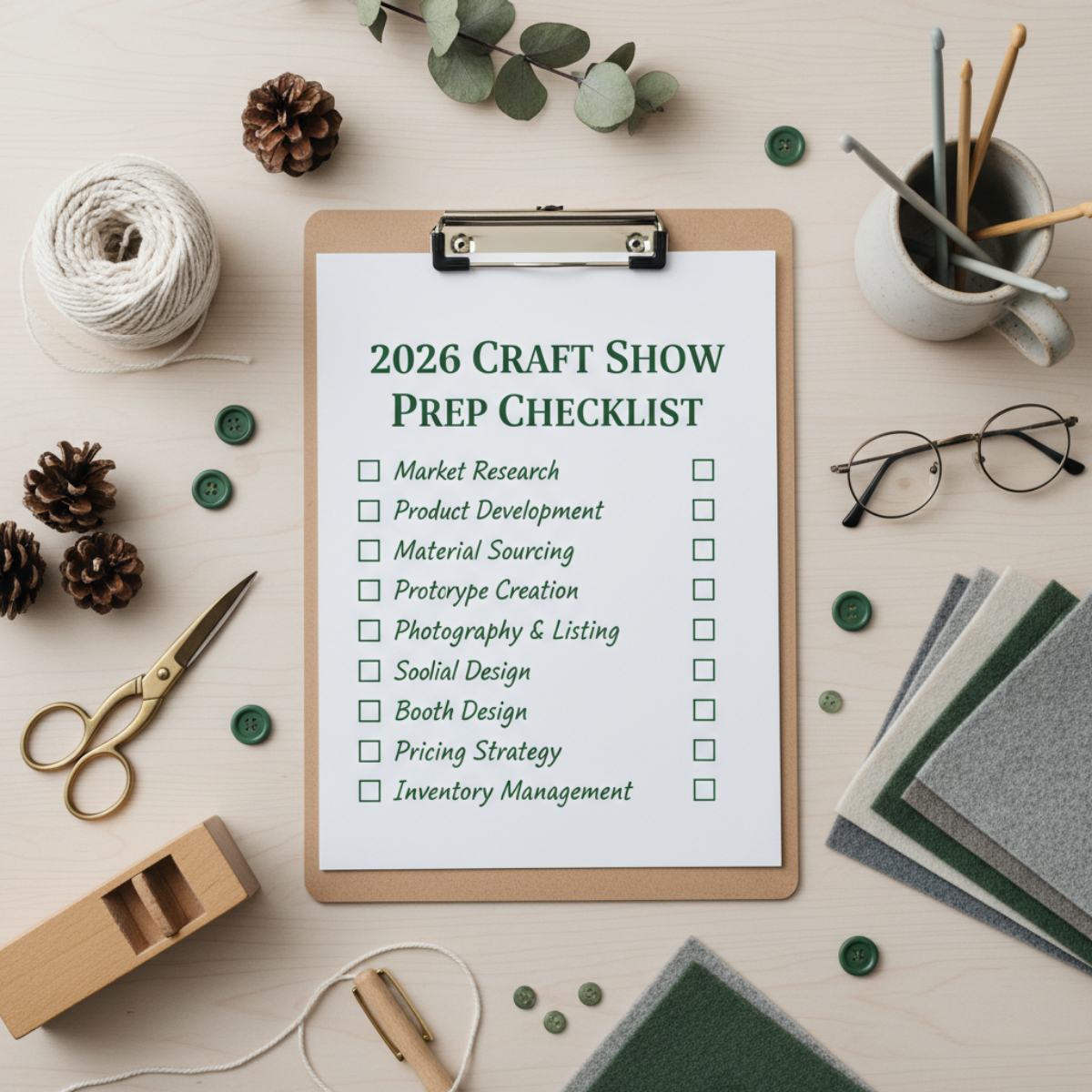
The Ultimate 2026 Craft Show Prep Checklist for Makers & Small Shop Owners
A strong craft show year starts before the first event.
Winter is where planning turns into momentum.
Your 2026 Craft Show Prep Checklist: A Maker’s Guide to Getting Ahead
A new year brings new opportunities — and the winter season is the perfect time to set up your maker business for a strong 2026 craft show lineup. While markets may slow down after the holiday rush, this is your moment to reset, refine, and plan for the year ahead.
This Maker Monday, we’re breaking down the ultimate 2026 Craft Show Prep Checklist for makers, small shop owners, and vendor booth pros.
1. Review Your 2025 Sales Data
Before planning anything new, look at last year's numbers:
What sold consistently?
What became surprise bestsellers?
What didn’t move at all?
This data tells you where to invest and where to scale back.
2. Map Out Your 2026 Event Calendar
Winter is the ideal season to:
Research new shows
Apply for spring + summer events
Join vendor Facebook groups
Mark early-bird deadlines
Budget for booth fees early
A mapped calendar removes decision fatigue later in the year.
3. Refresh Your Display for the New Year
Your booth is your storefront. Winter is the perfect time to rebuild or improve:
Vertical shelving
Lighting upgrades
Signage (especially photo-friendly signage)
New table coverings
Modular packing systems
Start fresh before the first show hits.
4. Create Your 2026 Inventory Plan
Think in categories:
Everyday sellers
Seasonal sellers
High-margin items
Small impulse buys
Custom or personalized offerings
Assign rough quantities for each and adjust as seasons change.
5. Revisit Your Pricing Strategy
Costs increased for many makers in 2025. Review:
Material costs
Packaging
Labor
Booth fees
Shipping supplies
This ensures your 2026 pricing is profitable — not guesswork.
6. Update Your Branding Pieces
Winter is a powerful reset point for small shops.
Update or refine:
Business cards
Thank-you cards
Logo stickers
Booth banner
Social templates
Product tags
Your brand should feel consistent across events, online listings, and packaging.
7. Set Up a Customer Follow-Up System
Capture leads all year, not just during shows:
QR code to an email list
Mini coupon cards
Social-follow incentives
Cross-promotion with other makers
2026 growth hinges on connection — not just sales.
8. Prep Your “Market Survival Kit”
Every seasoned vendor needs:
Extra tags
Batteries
Tape, twine, zip ties
Pens, markers
Mini toolkit
Spare point-of-sale charger
Extra tablecloth
Snacks + water
Pack it once, keep it stocked all year.
9. Set Three Big Goals for 2026
Choose goals that matter:
Revenue target
Number of events
A new product line
A booth redesign
Launching a wholesale catalog
Write them down. Review quarterly.
Next Step for Makers
Once you know what needs to be done, the next step is figuring out how your booth actually comes together on the floor. If booth layout and product placement feel overwhelming, the Craft Booth Display Planning Worksheet helps you map it out visually before setup day.
Final Thoughts
Winter is more than a slow season — it’s your foundation-building season. With intentional planning and fresh energy, your 2026 craft show year can be your strongest yet.
Happy Maker Monday 🌿
Connie - Artisan Kraftwerks
What to Display in a Craft Booth (and What to Leave at Home)
A successful booth isn’t built by showing more.
It’s built by choosing what actually earns space.
When makers think about improving craft show sales, they often jump straight to booth layout — tables, shelves, grids, signage. But long before layout comes into play, there’s a more important decision to make:
What actually deserves space in your booth?
You can have a beautifully arranged booth and still struggle to sell if what’s on display overwhelms shoppers, confuses your message, or hides your best work. Thoughtful display decisions simplify setup, improve flow, and make it easier for customers to say yes.
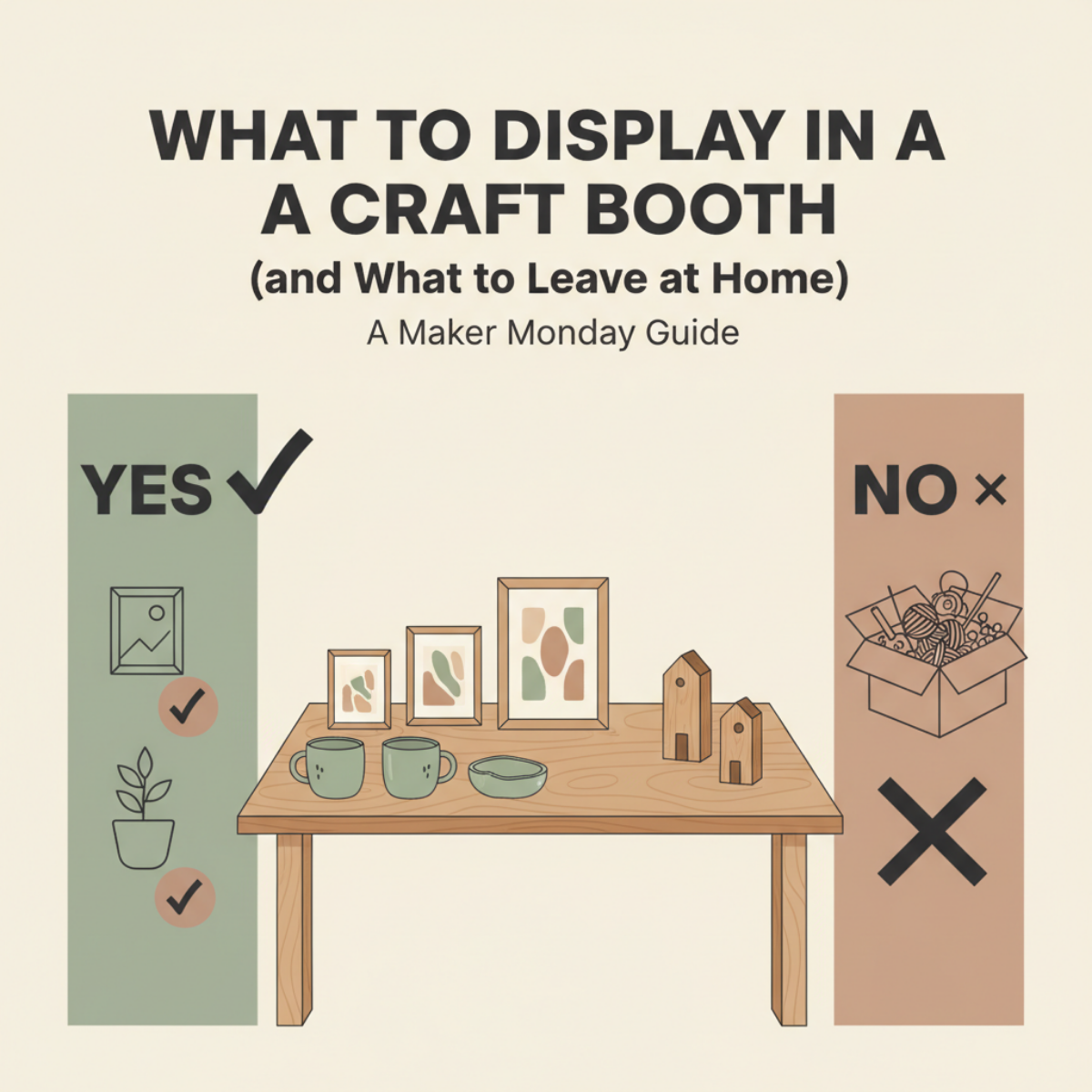
This guide focuses specifically on what to display in a craft booth, how to choose products that earn space, and how to avoid common display mistakes that hurt sales.
Why Display Decisions Matter More Than You Think
Craft shows are fast-moving environments. Shoppers are making decisions in seconds, often while navigating crowds, noise, and visual overload.
When a booth displays:
too many products
too many variations
or too many ideas at once
customers hesitate, browse longer without buying, or walk away entirely.
A strong craft booth display isn’t about showing everything you make. It’s about editing intentionally so your best work is easy to see, understand, and purchase.
How Shoppers Read a Craft Booth
Most shoppers scan booths quickly before deciding whether to stop. Clear focal points, visual breathing room, and an easy-to-understand product mix help shoppers process what you sell without effort. When your display is clear, shoppers feel more confident — and confidence leads to purchases.
The Four Categories Every Craft Booth Needs
When deciding what to display in a craft booth, most successful sellers rely on a small number of intentional display categories rather than bringing everything they make.
1. Hero Products
Hero products are the stars of your booth.
They are:
your best sellers
visually strong from a distance
easy to understand without explanation
These items should be the first thing a shopper notices when approaching your booth. If someone only looks at one product, it should be one of these.
Ask yourself:
Which products consistently sell well?
Which items photograph clearly and catch attention?
Which pieces best represent my brand?
Those products earn the most visible space.
2. Supporting Products
Supporting products complement your hero products.
They often include:
variations in size, color, or style
coordinating or related items
slightly lower-priced alternatives
Supporting products give shoppers options without overwhelming them. Their job is to make hero products easier to buy — not harder to choose.
3. Anchor Pieces
Anchor pieces act as visual magnets.
They may not be your top sellers, but they:
draw people into your booth
create visual interest
help establish your style or scale
Anchor pieces are often larger, bolder, or more visually distinct. Their primary role is to stop foot traffic and invite browsing.
4. Utility and Add-On Items
These are your easy “yes” items.
Utility and add-on items are often:
smaller
lower-priced
quick decisions
Placed near checkout or alongside hero products, they increase average order value without requiring extra explanation. A small, well-curated selection works far better than a cluttered display.
How to Choose What Earns Booth Space
Once you understand the display categories, choosing what to sell at craft shows becomes much easier.
Criteria for Choosing What to Sell at Craft Shows
When evaluating products, consider:
Sales history: Has it sold consistently in the past?
Visual clarity: Can someone understand it in under five seconds?
Price balance: Does it fit your overall price range?
Setup effort: Does it require explanation or demonstration?
Restock ease: Can you replenish it during the show if needed?
If a product struggles in several of these areas, it may not deserve prime booth space — even if you love it.
What to Leave at Home (Common Craft Booth Display Mistakes)
Editing your display is often the hardest part of booth planning — but it’s also where sales improve fastest.
Consider leaving behind:
products that rarely sell but “feel important”
items that require long explanations
too many color or style variations
pieces that disrupt visual flow
untested experiments
Craft shows are not the place to showcase everything you’ve ever made. They reward clarity, focus, and confident selection.
You can always rotate products between shows. Leaving something out isn’t failure — it’s strategy.
How Display Decisions Connect to Booth Layout
Once you’ve decided what to display, booth layout planning becomes much easier.
A strong layout:
highlights hero products
creates space for anchor pieces
guides shoppers naturally through supporting items
That’s why display decisions should happen before you start setting up tables and shelves.
If you haven’t yet, you may want to read:
→ How to Plan a Craft Booth Layout (Without Overthinking It)
Display planning and layout planning work best together — each supports the other.
Frequently Asked Questions About Craft Booth Displays
How many products should I display in a craft booth?
Most booths perform better with a curated selection rather than a full inventory. The ideal number depends on booth size and product type, but fewer well-displayed items usually lead to clearer buying decisions and stronger sales.
Should I bring all my products to a craft show?
Not necessarily. Craft shows reward focus and clarity. Bringing only products that sell well, display cleanly, and support your booth layout often leads to better results than trying to show everything you make.
Final Thoughts
Successful craft booths aren’t built by bringing more — they’re built by choosing better.
When you’re intentional about what earns space in your booth, you:
reduce setup stress
improve shopper confidence
make sales easier
enjoy shows more
Planning your display ahead of time allows you to show up calm, prepared, and focused on what matters most: connecting with customers and selling your work.
Optional next steps
Happy Maker Monday 🌿
Connie - Artisan Kraftwerks
7 Winter-Ready Tips for Small Shop Success This Season
Winter isn’t just busy—it’s where preparation meets opportunity.
A few focused adjustments can make the season run smoother.
As temperatures drop, makers and small shop owners know one thing for sure—this is the season when preparation meets opportunity. Whether you’re setting up at indoor markets, fulfilling online orders, or organizing backstock for the busiest craft months, winter brings unique challenges and incredible revenue potential.
Here are seven maker-approved strategies to help your small shop thrive—while keeping your workflow warm and organized all season long.
1. Simplify Your Bestsellers
Your top sellers should be easy to grab, pack, and restock. Create a dedicated “bestseller assembly zone” in your workspace to streamline production and reduce last-minute stress.
2. Focus on Cozy, Natural Textures
Customers naturally gravitate toward warm woods, textured materials, and practical, giftable goods this time of year. Consider elevating your product photos or booth styling using seasonal natural materials—think cedar, pine, kraft paper, or soft neutrals.
3. Prepare Winter-Friendly Packaging
Cold weather can be rough on adhesives, finishes, and fragile items. Use sturdy boxes, padded envelopes, and crinkle paper—not only for protection but for a warm, handcrafted unboxing experience.
4. Offer “Small But Mighty” Add-On Items
Low-cost, quick-to-buy accessories can increase your average order value. Think ornaments, tags, small wooden blanks, mini display risers, or craft-ready embellishments.
5. Optimize Your Online Listings
Freshen up listing images, update titles and tags, and highlight any “fast ship” or “ready to deliver” products. Clear photos and accurate processing times go a long way during the busy season.
6. Lean Into Storytelling
Shoppers love knowing who made their purchase. Share behind-the-scenes snippets—your workspace, tools, maker process, or your inspiration for certain designs.
7. Track What’s Working… and What Isn’t
Keep a seasonal notebook or digital tracker. Jot down booth layouts that sold well, products customers asked for, or restocking gaps. This becomes gold for next year’s planning.
A productive winter is all about preparation, smart selling, and creating an inviting experience for your customers—online and in person. With the right steps, your small shop can shine brighter than ever.
Happy Maker Monday 🌿
Connie - Artisan Kraftwerks

