What to Focus On When Shoppers Browse—But Don’t Buy
They Step In
That part worked.
They noticed your booth.
They crossed the edge.
They slowed down enough to look.
And then—
nothing continues.
They don’t move deeper into the booth.
They stay near the front table.
Near the aisle.
They glance around.
Pick something up.
Then put it back down.
And leave.
The Interaction Stalls
That’s the moment to watch.
Not whether people enter.
What happens after they do.
Because right now, shoppers are entering your booth—
but the interaction never builds.
They browse briefly.
Scan the display.
Look across the tables.
But nothing pulls them forward.
Nothing creates momentum.
They Don’t Know Where to Go Next
Most booths accidentally ask shoppers to make too many decisions at once.
Where should they stand?
What should they look at first?
What matters most here?
What should they pick up?
So people default to the easiest option.
They leave.
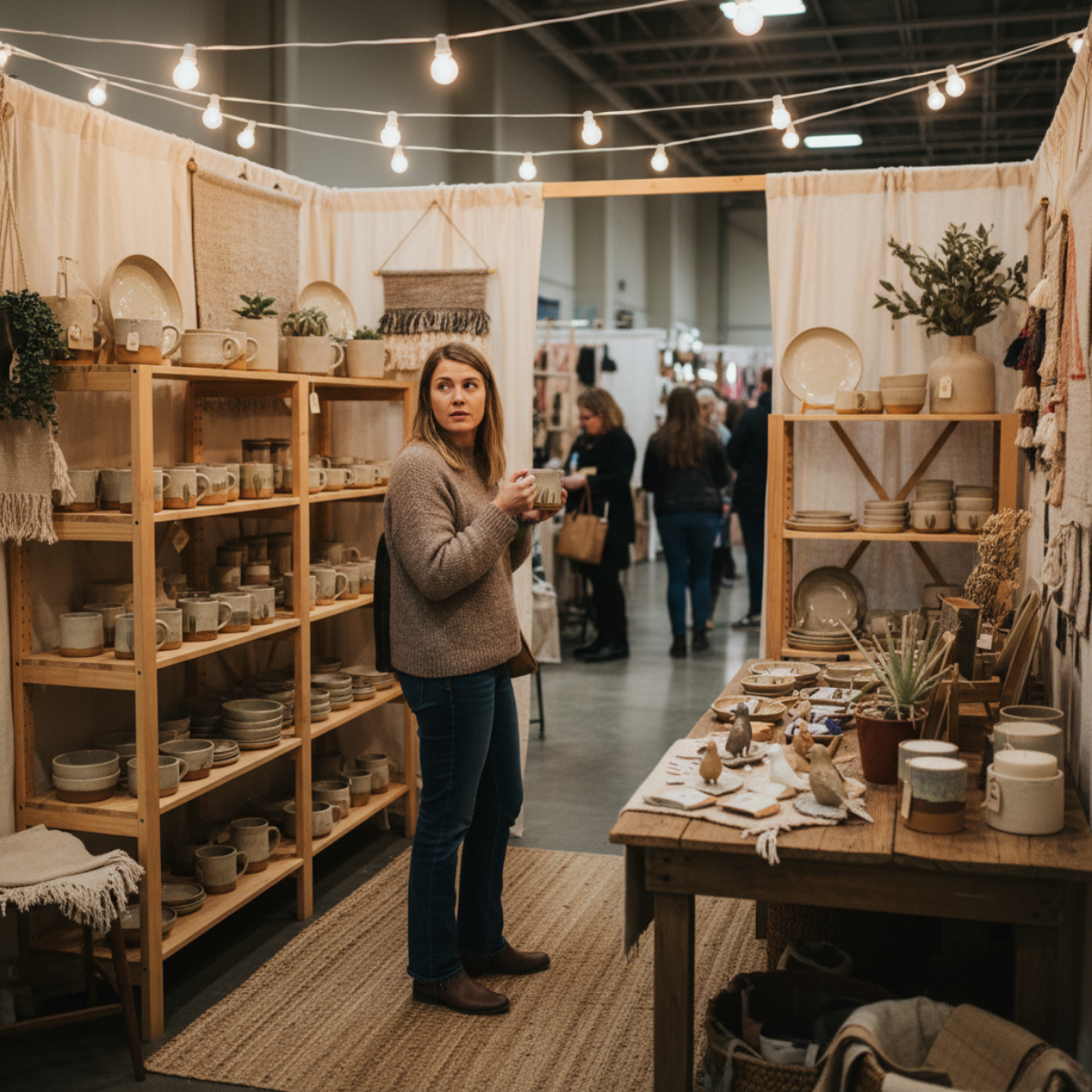
A shopper stands inside a handmade pottery booth holding a product—but without a clear path deeper into the display, the browsing moment stalls instead of turning into a purchase.
Why This Matters
If this stays broken, you don’t just lose sales.
You lose every opportunity after that moment.
They won’t:
pick something up
ask a question
discover your best items
They exit before any of that begins.
So the problem repeats.
All day.
And it looks like “interest”—
but it’s not.
It’s failure to continue.
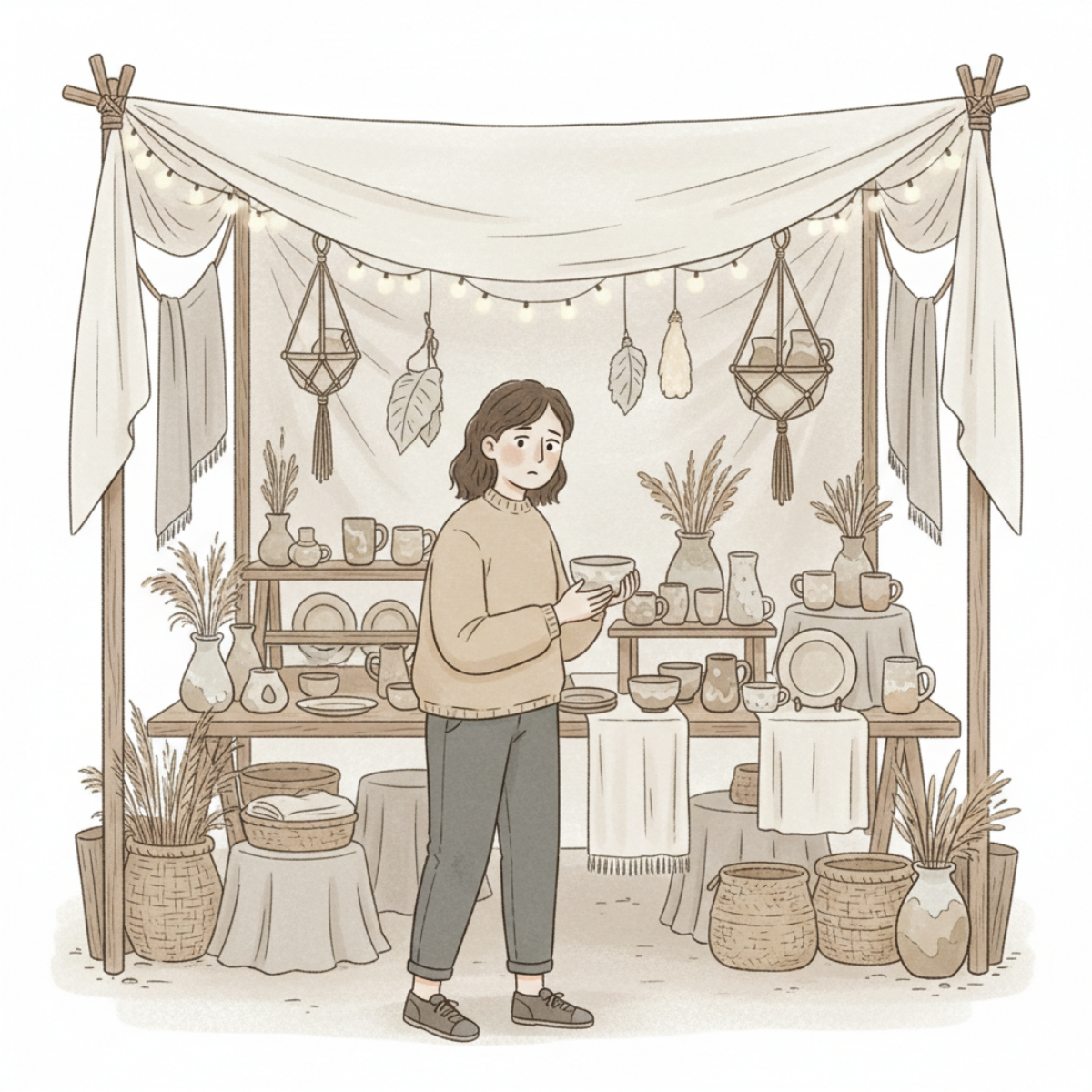
A shopper inside a handmade craft booth pauses with interest—but without a clear next step, the moment never turns into buying.
This Is Where It Breaks
The problem usually isn’t attention anymore.
They already gave you attention.
The problem is continuation.
The booth never creates a clear next step.
So the shopper stays at surface level—
and the interaction ends before anything meaningful happens.
Before they:
pause long enough to connect
discover your strongest products
feel comfortable exploring
or build buying momentum
What to Focus On
Focus on the moment immediately after they stop.
Not the entire booth.
Not redesigning everything.
Just this:
What naturally pulls someone deeper into the space?
Because if nothing guides movement forward,
the shopper stays near the edge—
and leaves from there too.
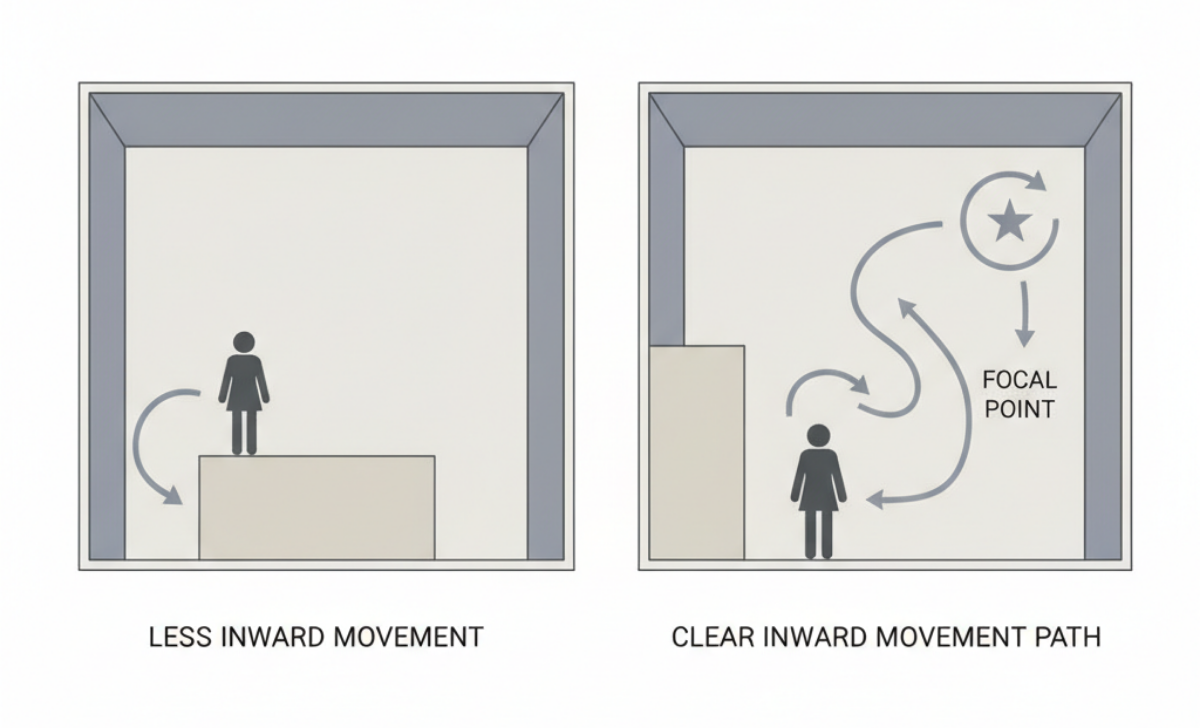
A simple booth layout comparison showing how clear inward movement paths and focal points help shoppers move deeper into a craft booth instead of stopping near the entrance.
What Usually Causes This
Sometimes it’s:
too many equal focal points
front tables blocking visual movement
products compressed together
no visual destination deeper inside the booth
or displays that all compete equally for attention
The shopper keeps scanning—
but never settles anywhere long enough to continue.
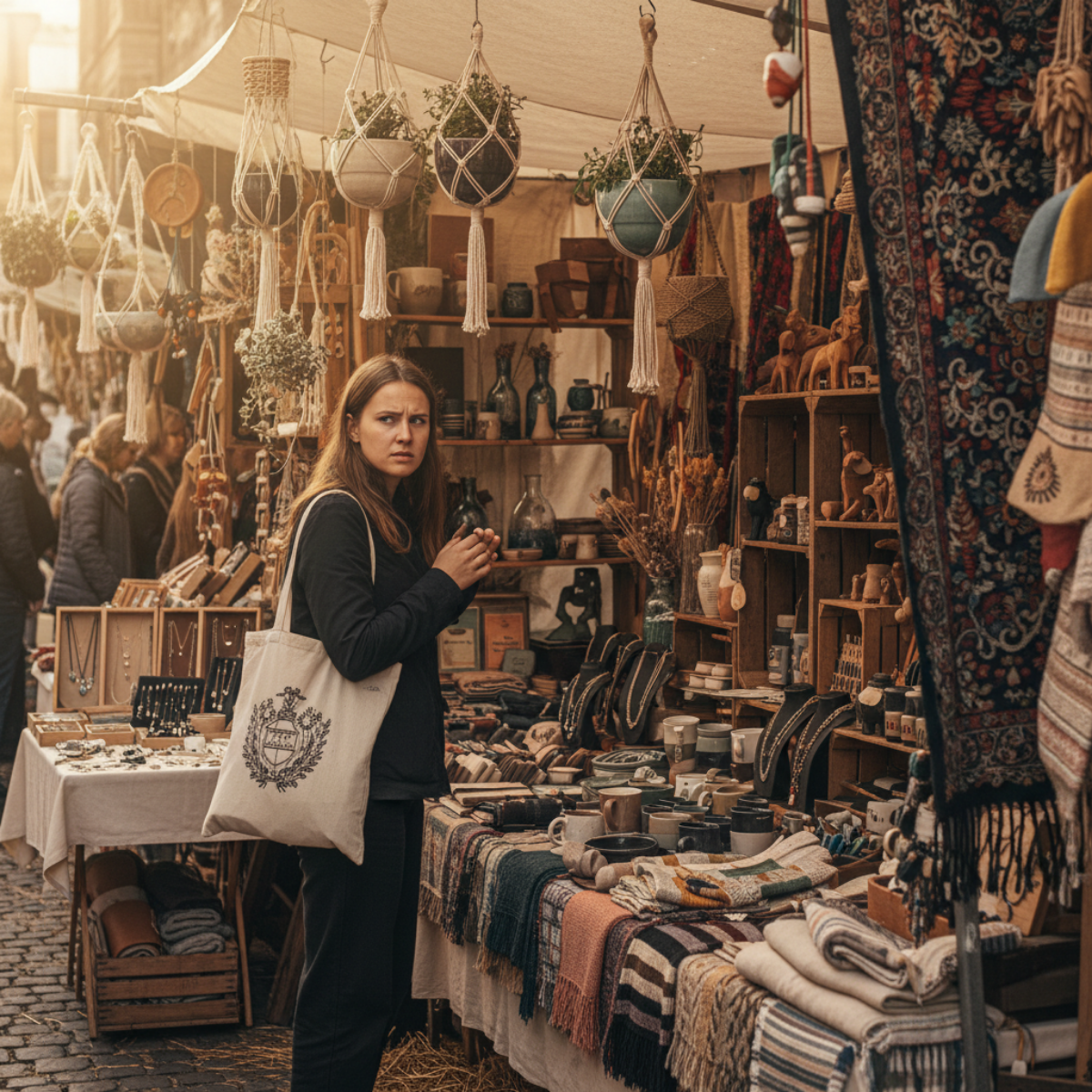
A shopper pauses inside a crowded handmade market booth filled with competing products, layered textures, and visual noise—showing how overwhelm can stop browsing momentum before buying begins.
What This Fix Changes
When the booth creates clear movement,
people naturally continue.
They move farther inside.
They slow down longer.
They notice more.
The interaction has room to build.
And once that happens,
everything else finally has a chance to work.
Start With What You’re Seeing
If shoppers slow down at the edge of your booth but don’t step in,
start with the Craft Booth Check.
If The Whole Booth Feels Off
If your booth feels crowded, confusing, or difficult to shop,
the Fix Your Booth Planning Guide helps you identify where the breakdown is happening.
Explore Related Booth Problems
Booth issues usually connect.
What feels like:
a product problem
a traffic problem
or a sales problem
is often:
flow
focus
spacing
or signal.
Explore more booth patterns and solutions.