When Your Booth Looks Good—But Still Doesn’t Work
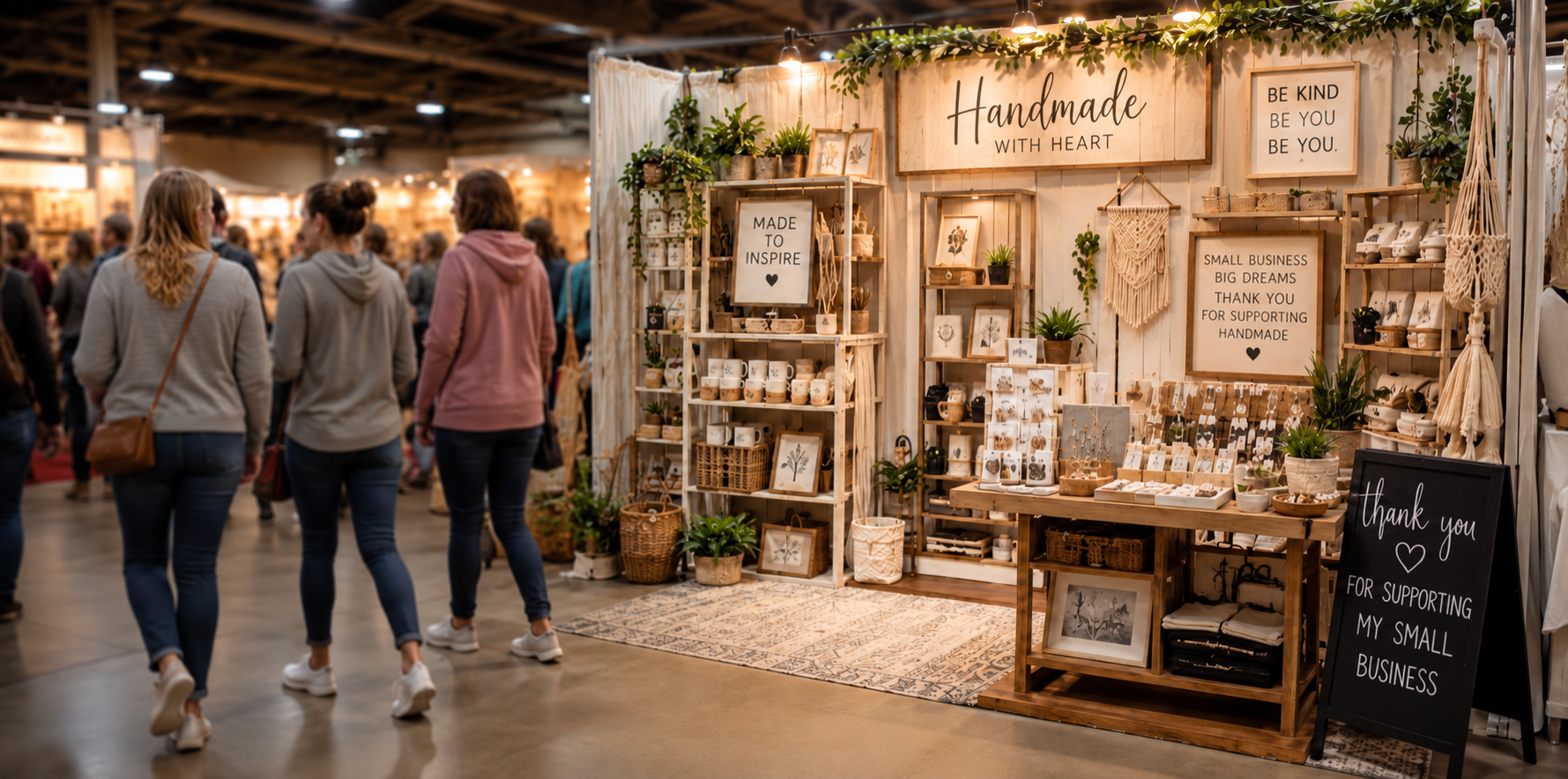
Your booth looks good. Something still isn’t connecting.
You’ve put real work into your booth. You’ve improved the displays, rearranged products, and chosen signs that fit the look. Maybe other vendors have complimented it. You like how it looks, too.
Then, during the show, you notice something: shoppers slow down, glance across the display, and keep moving.
A few people passing by wouldn’t usually catch your attention. But when it happens repeatedly, you start wondering what to change. The front table? The signs? The products you’ve placed at eye level?
Nothing looks obviously wrong, which makes it difficult to know where to begin.
You see the booth with all your knowledge behind it—what you make, how the products fit together, and which details deserve a closer look. A shopper approaching for the first time has to discover those things from the aisle.
Your display may catch their attention without making the next step clear.
Before rearranging it again, look more closely at what happens between that first glance and the moment they move on.

Watch what happens next.
A shopper’s glance tells you the booth caught their attention. What they do afterward gives you something more specific to work with.
Do they move closer? Look toward a particular display? Reach for a product? Or pause at the edge before turning back into the aisle?
You can watch for a few useful moments:
Noticing: They turn their head, slow down, or stop.
Approaching: They move toward the display or step into the booth.
Browsing: They look more closely, pick something up, or compare items.
Considering a purchase: They check a price, ask a question, or return to a product.
These aren’t steps every shopper must complete in order. Someone might buy directly from an aisle-facing table. Another person might browse, leave, and return later.
What matters is whether the same stopping point keeps appearing.
In our example, shoppers are already slowing down and looking. The question becomes more specific: what happens during that pause, before they walk away?
Watch where their attention goes and whether they make any move toward the products. That gives you a place to investigate—but it doesn’t yet tell you what needs changing.
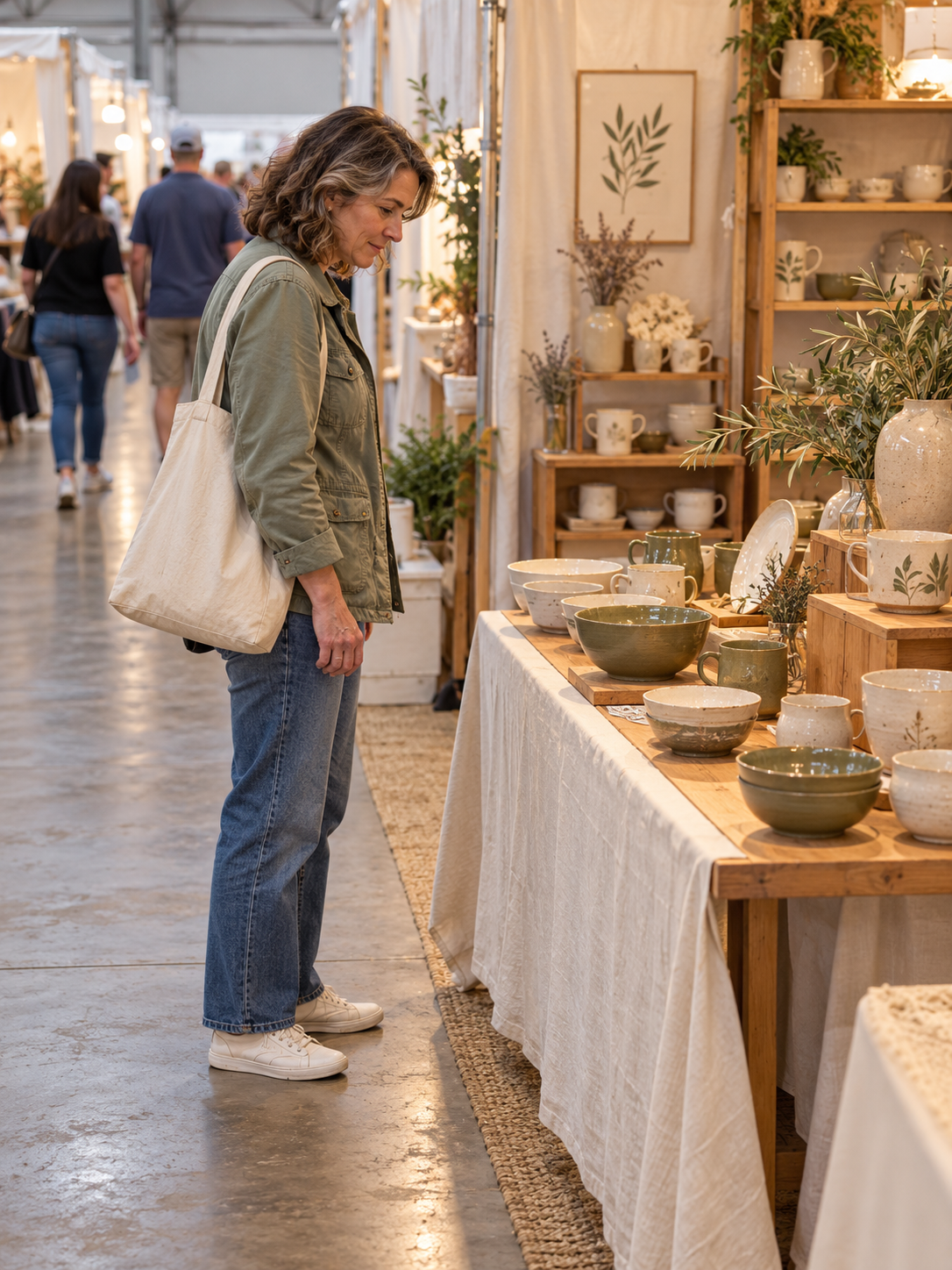
A pause tells you something—but it doesn’t tell you why.
Shoppers slow down, look at your booth, and keep moving. It’s tempting to decide the layout must be wrong.
But that same behavior can have several explanations.
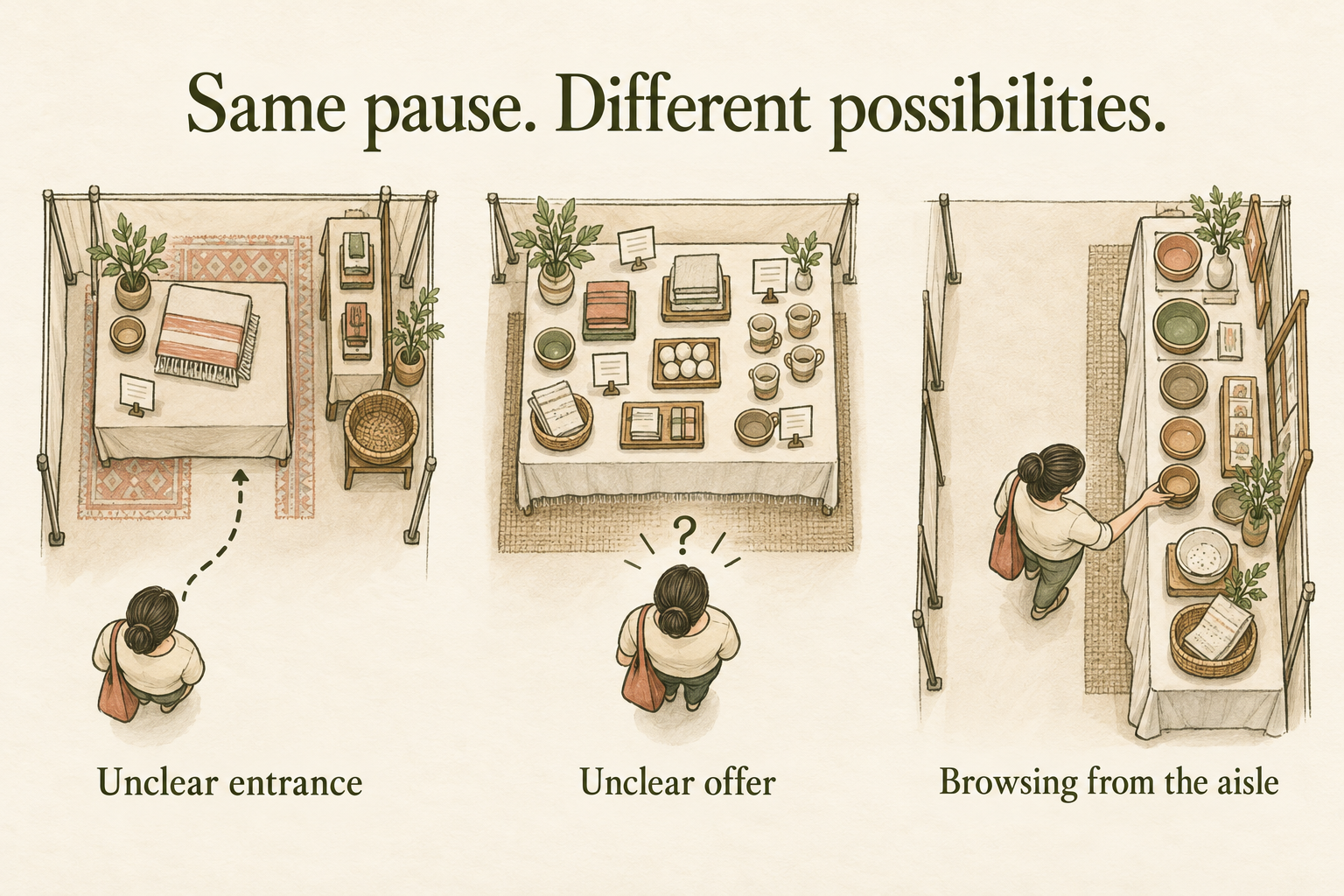
The entrance may be unclear. A table, rack, or sign could make the opening look narrower than it is. Shoppers can see something interesting without seeing a comfortable way to reach it.
They may be unsure what’s for sale. You know which pieces are products and which are display props. From the aisle, shoppers may see a beautifully styled space without immediately understanding what you make.
They may already be browsing from the aisle. If the products they want to see are within reach, they may have no reason to step inside. Someone who checks a price or picks up a mug at the front table is engaging with your booth, even if their feet never cross its edge.
The show matters, too. Is traffic moving quickly through this part of the aisle? Are people stopping at nearby booths? Are this event’s shoppers interested in the kind of work you sell? Those details help put your observations in context.
The useful question is what shoppers appear to be responding to during that pause.
Moving the front table might help if it blocks access. It may do little if shoppers can’t distinguish your products from your decorations. And if they’re comfortably browsing from the aisle, encouraging them to enter may not be the priority.
Before choosing a change, separate what you’ve seen from what you think it means.
Turn an impression into something you can investigate.
“People aren’t interested” is an understandable reaction when shoppers keep walking. But it’s a conclusion about what they’re thinking, and it leaves you with very little direction.
Start by describing what you could actually see.
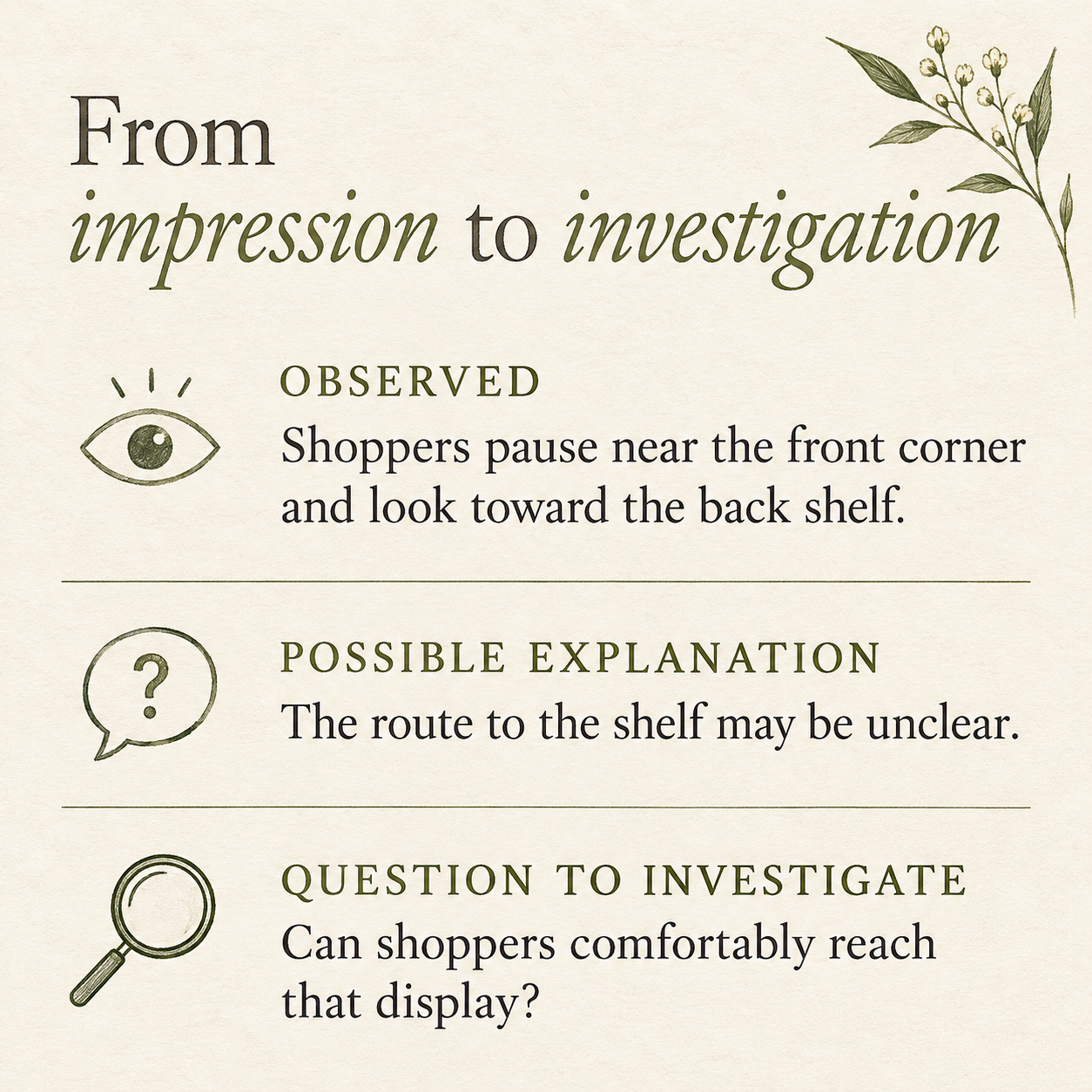
For example: “Several shoppers paused near the front corner, looked toward the mugs on the back shelf, and left without moving closer.”
Now you have something specific to investigate: where they stopped, what caught their attention, and what happened next.
You still have more than one possible explanation. Perhaps the route to that shelf wasn’t obvious. Perhaps they were looking at the framed print above it rather than the mugs. Perhaps they simply decided those products weren’t for them.
Choose one question to look into:
Can shoppers easily approach the back shelf when something there catches their attention?
During another stretch of the show, watch that area when you can do so without interrupting customers. Notice whether people approach it, where they hesitate, and whether someone already browsing changes how others move. Jot down what happened while it’s fresh, including whether the aisle was busy or quiet.
You can use this same process elsewhere in your booth:
Describe the behavior. What did shoppers actually do, and where?
Keep explanations open. What might account for it?
Choose one question. What would help you distinguish between those possibilities?
Look for repetition. Does it happen again under similar conditions?
If shoppers repeatedly move toward the shelf and stop at the same narrow passage, you have a reason to test clearer access. If they reach it comfortably but leave after checking prices, access may deserve less attention than you first thought.
The aim is to give your next change a reason behind it. A specific observation helps you choose what to test—and what to watch afterward to judge whether it helped.
From noticing the problem to planning a change.
Watching shoppers while greeting customers, answering questions, and handling purchases can leave you with scattered impressions afterward. The steps above give you a way to begin.
When Something Feels Off adds illustrated examples to compare with your booth, observation pages to organize what you notice, and a First Fix Plan to help you choose and review one change.
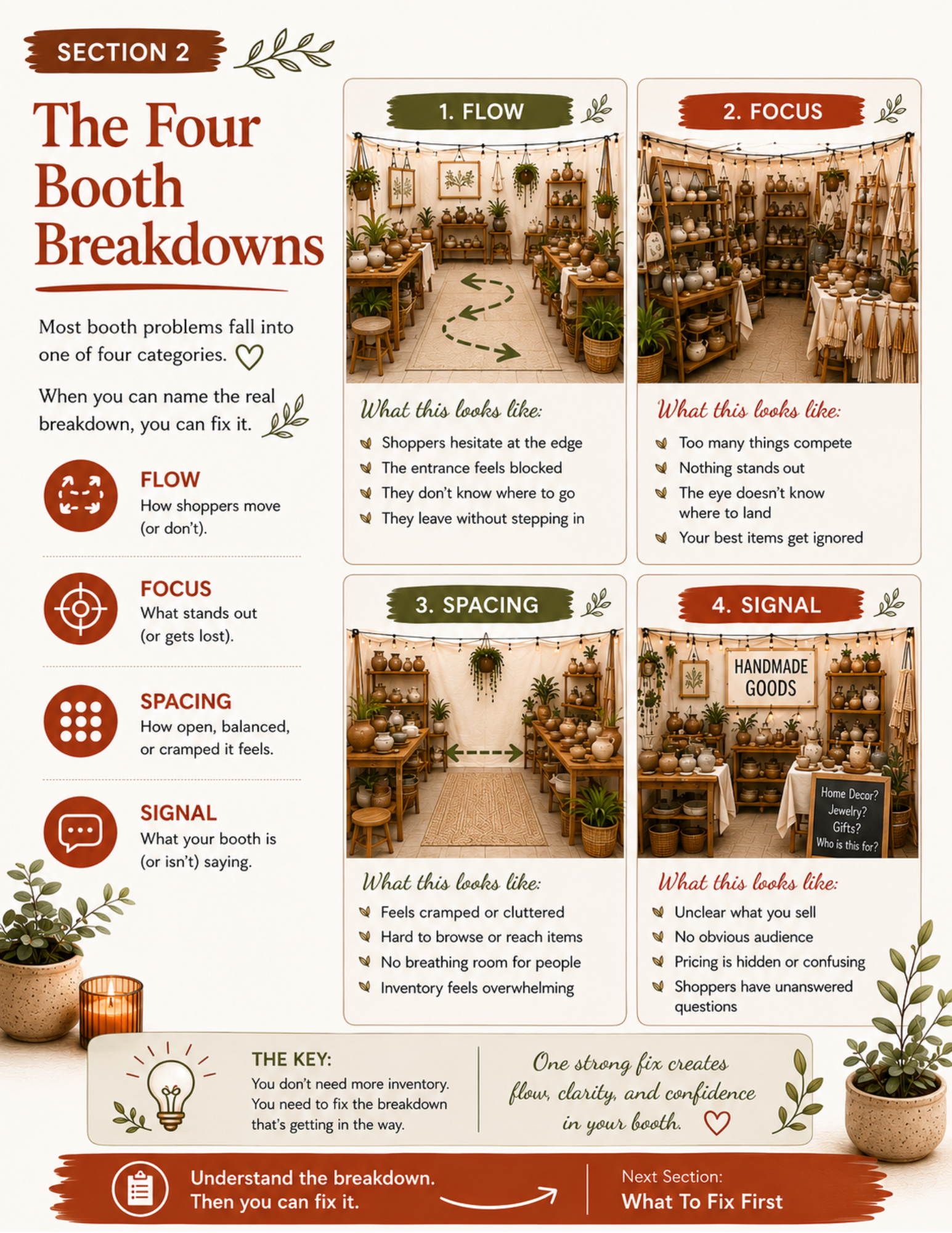
This visual guide and working planner explores four areas:
Flow: How shoppers approach, enter, and move through the space.
Focus: What catches their attention and what competes for it.
Spacing: How the arrangement gives people and products room.
Signal: How clearly the booth communicates what you sell.
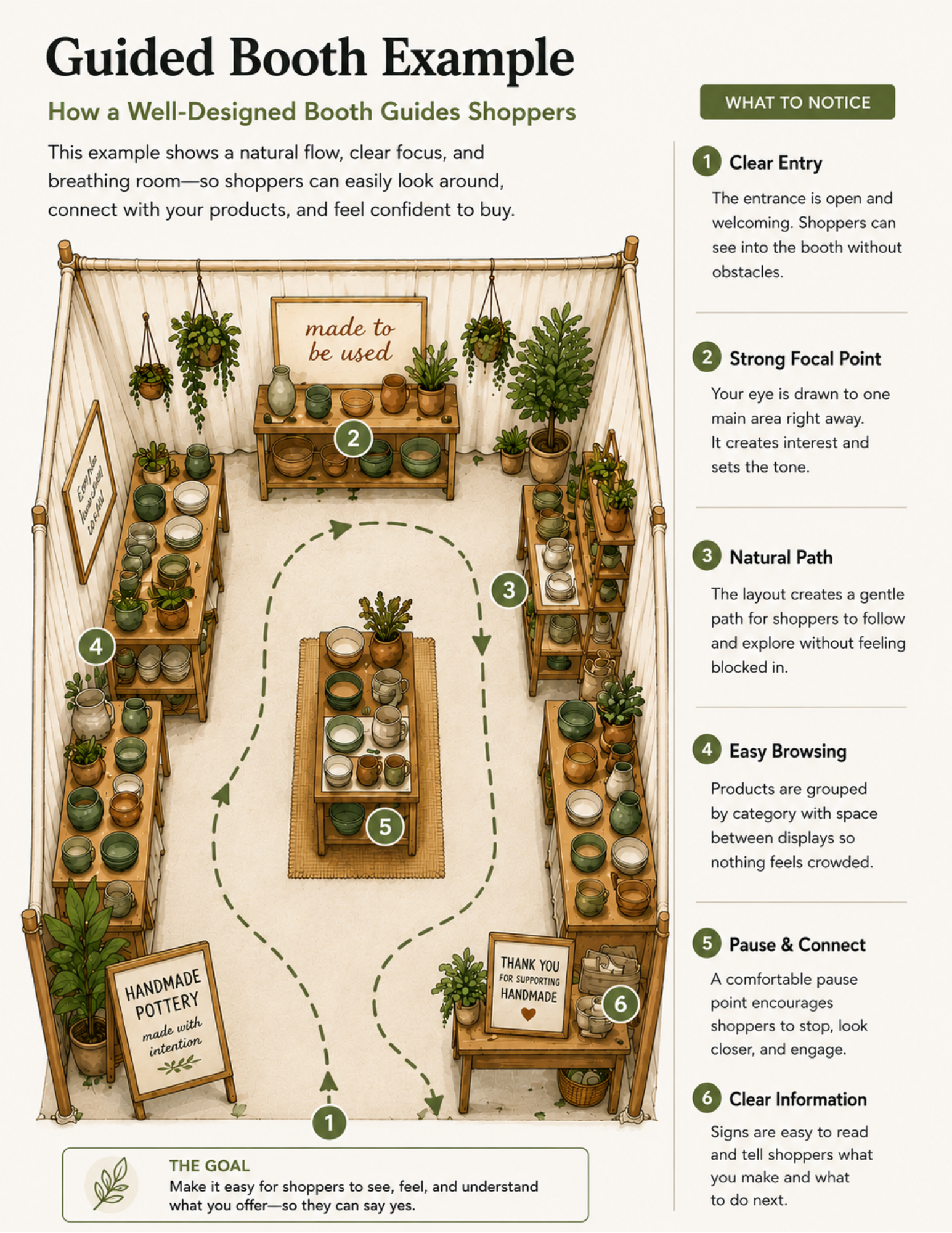
The Guided Booth Example brings those ideas into view, showing an open entrance, a natural browsing path, clear information, and space around displays. You can compare those details with what you’ve observed in your own setup.
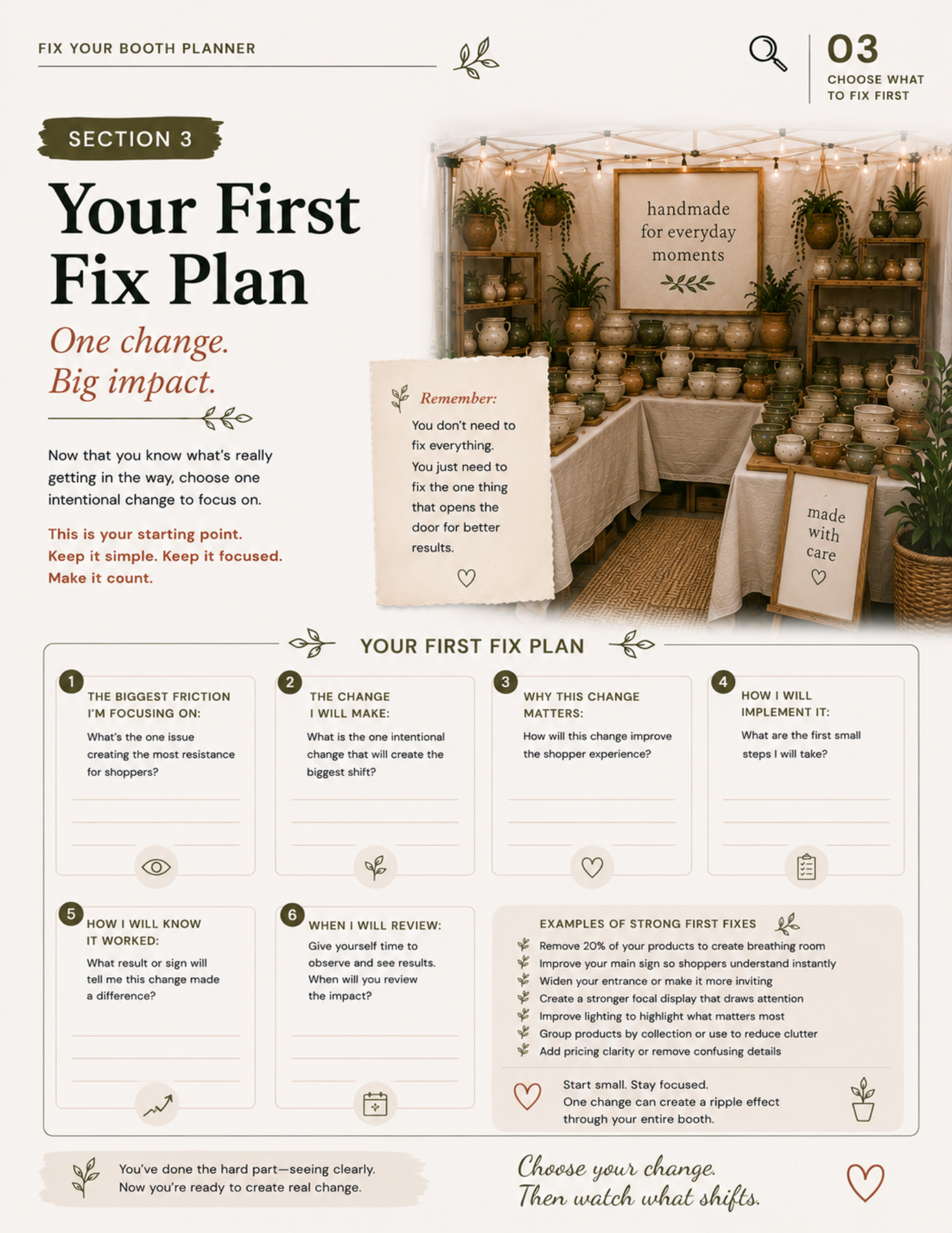
Then Your First Fix Plan helps you turn a chosen focus into something you can carry out and review.
Suppose further observation shows that shoppers move toward the mugs but repeatedly hesitate where a display rack narrows the route. Your first change might be to reposition that rack while keeping the mug display in place.
The plan gives you somewhere to record why you chose that change, how you’ll make it, and what you’ll watch afterward. In this example, you’d look for whether shoppers reach the shelf more comfortably and whether the same hesitation continues. You’d also note differences in traffic or crowding that could affect the comparison.
You’ll have a specific change to test and a way to review what happened—beyond whether the booth looks better after rearranging it.
50-page printable PDF • Digital download