

Why Shoppers Browse Your Booth But Don’t Buy
Someone pauses at your display, compares two items, and looks closely.
Then they put both back and leave.
It’s natural to wonder what stopped the purchase. Price, suitability, timing, or simply browsing could all be part of it. That interaction alone doesn’t tell you.
What you can examine is whether your setup makes products comfortable to reach, explore, and compare—and whether the same practical difficulty keeps appearing.
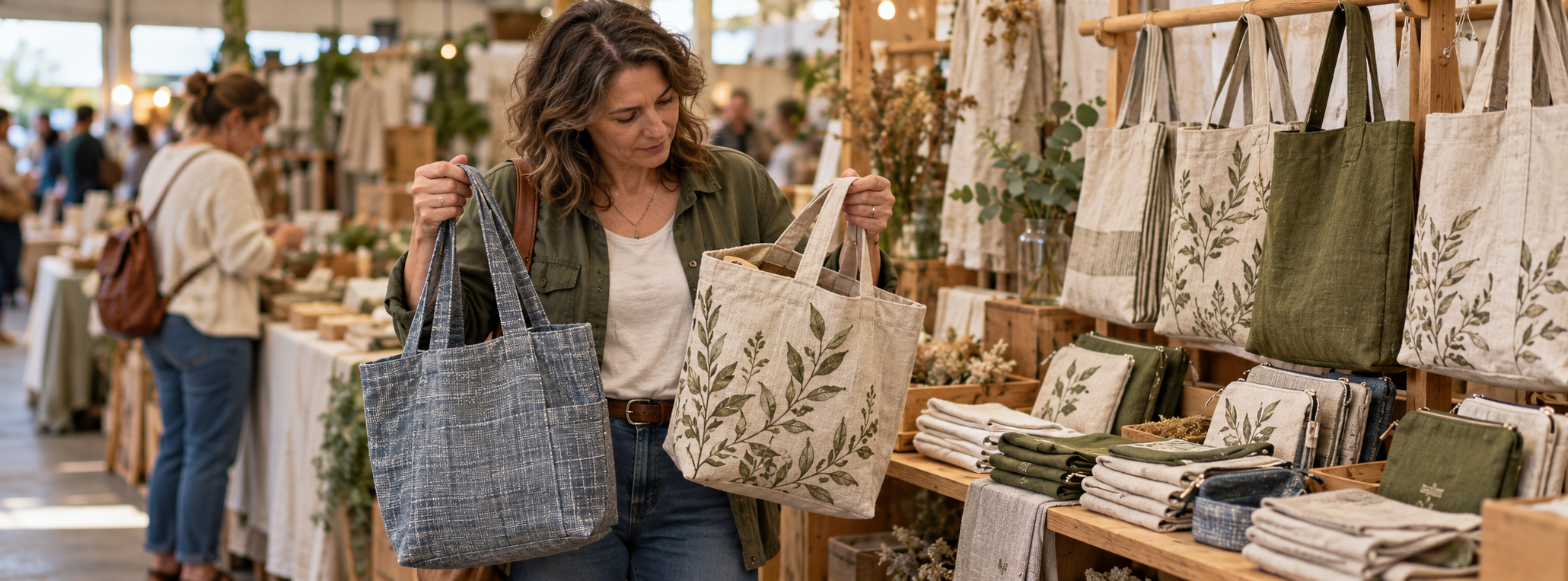
Browsing and buying are different decisions.
Someone can enjoy your work, examine it closely, and leave without buying. They may be comparing options, shopping for another occasion, working within a budget, or deciding whether the product suits their needs. They may also need information they haven’t found.
There isn’t one explanation to assume—and browsing without a purchase doesn’t, by itself, identify a booth problem.
You can, however, look at what your setup asks someone to do while considering an item:
Can they reach it and pick it up comfortably?
Can they examine the details that matter?
Can they compare options without juggling merchandise?
Can they find the price and relevant product information?
Can another person browse nearby without interrupting them?
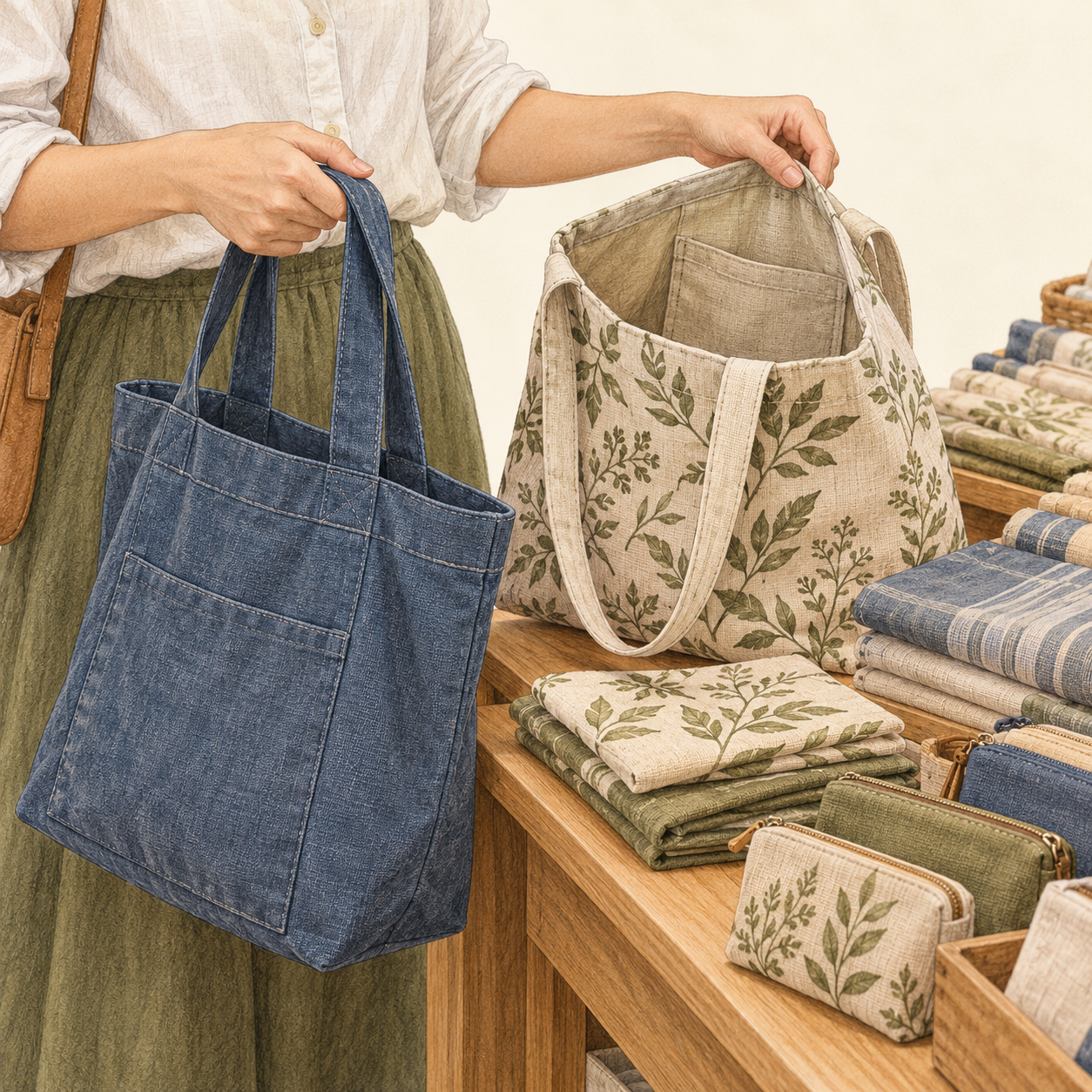
A shopper may do all of those things comfortably and still decide against buying. But if the same practical difficulty keeps appearing, you have something specific to address.
Start with the task the shopper is trying to complete. Comparing two tote bags, for example, involves more than seeing both designs—it may mean opening them, checking the pockets, and finding somewhere to set one down.
Look closely at what comparing involves.
Imagine two tote bags hanging on a display rail. A shopper takes down both, opens one to check the pockets, then looks for somewhere to set the other. The nearby table is covered with folded stock.
When another person approaches the rail, the shopper steps aside. Eventually, both bags go back.
In this example, you’ve seen a practical difficulty: examining one bag while holding another, with little room to compare them. You still don’t know why the shopper left. Neither bag may have suited them, or they may have been considering the price.
Now imagine the same interaction with a clear surface nearby. The shopper sets down one bag, checks the other, compares them, and returns both to the rail.
That visit also ends without a purchase, but there’s no obvious difficulty in the comparison itself.
The useful distinction is what happened while they browsed. If people repeatedly juggle products, move stock to make room, or interrupt each other to reach the display, you have something specific to examine. Returning an item alone doesn’t give you that answer.

Little room to compare
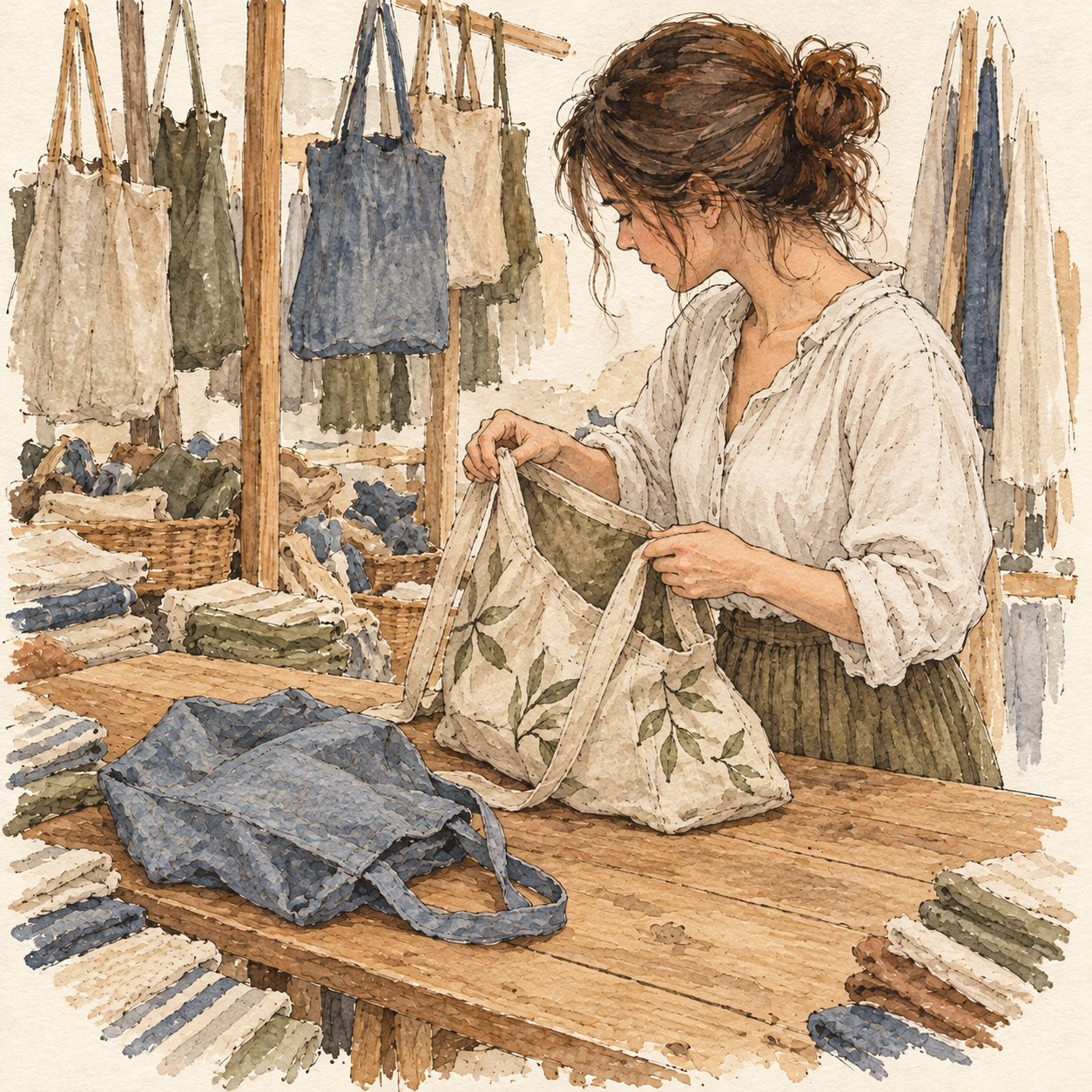
Room to examine both
Both visits could end without a purchase. The difference is whether the setup made comparing difficult.
Try the task your display asks shoppers to do.
Before the show opens, choose one product group and examine it from the shopper’s side of the display. Use the space as it is, without clearing a place first.
Pick something up. Can you reach it without moving other merchandise?
Examine it. Open it, turn it over, or check the details someone would need to assess it.
Compare two options. Can you check their differences comfortably? Is there somewhere to set one down if needed?
Find the information. Can you locate the price and relevant details from where you’re standing?
Return the items. Can you put them back easily, including when someone else is browsing nearby?
For the tote display, this might reveal that folded stock occupies the only convenient comparison surface. Clearing a small area gives shoppers somewhere to rest one bag while examining another.
During the show, notice whether that space is usable in practice. Do people use it? Can someone browse beside them? Does it remain clear, or become a holding place for packaging and stock?
Record one specific difficulty, if you find one. “There’s nowhere to set a second bag” gives you a practical task to address. If the interaction works comfortably, you don’t need to invent a display problem to explain a non-purchase.
Making room here also raises a wider question: where will the displaced stock go, and how will that affect the rest of the booth?
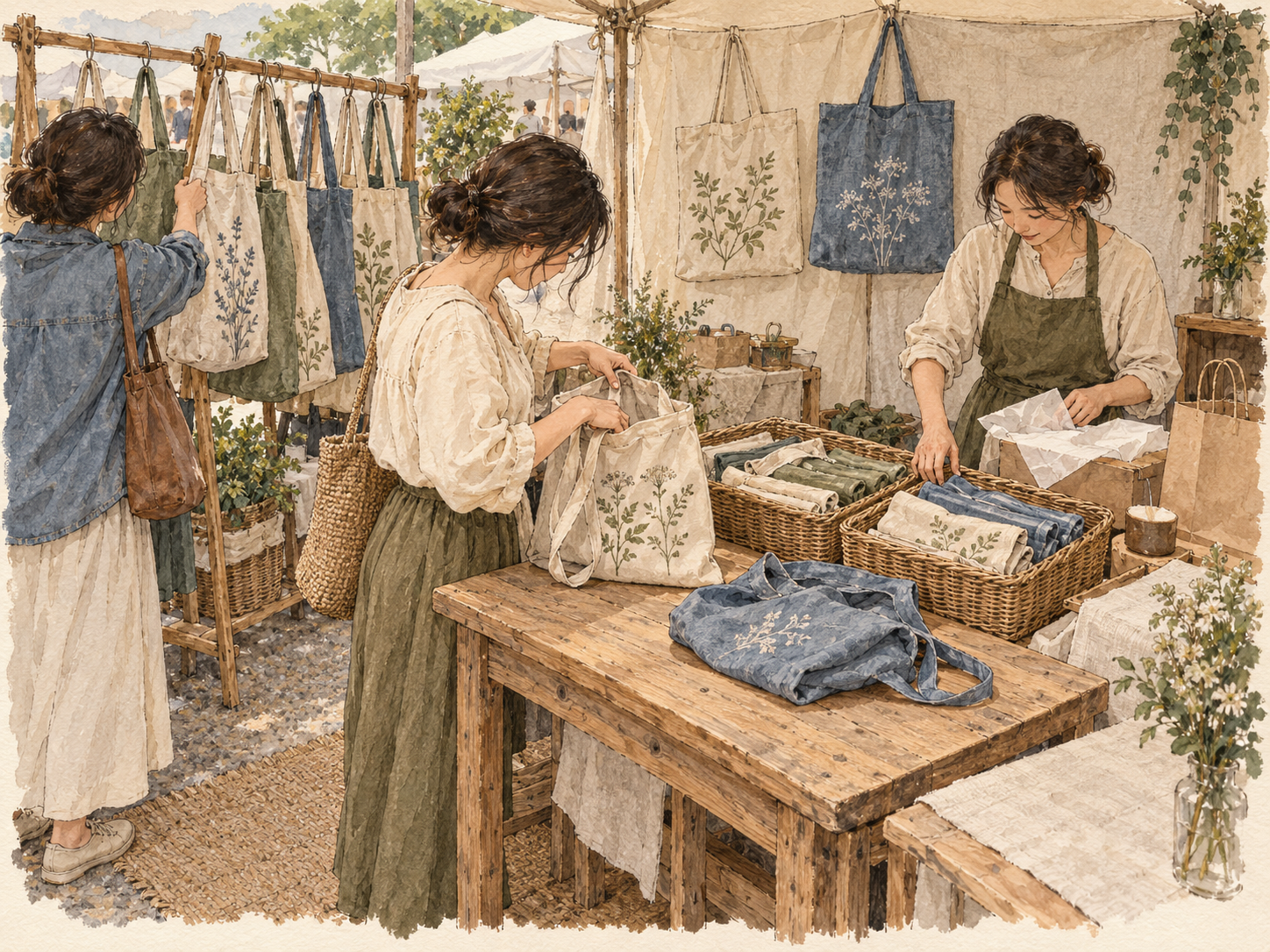
One change has to work with the rest of the booth.
Clearing a place to compare the tote bags may be straightforward. Keeping that space usable involves more of the setup.
The folded stock needs another home. Moving it beside the rail might interfere with reaching the hanging bags. Using part of the checkout table could leave less room for wrapping purchases. A surface that works before opening may serve several competing purposes during the show.
Before settling on an adjustment, look at what happens around it:
Where will shoppers stand while using the space?
Can someone else reach the neighboring products?
Can you replenish stock and handle purchases without taking the space back?
You may also notice several difficulties at once. That leaves a decision about which one deserves attention first.
When Shoppers Don’t Stay supports this wider review through illustrated booth studies and worksheets for examining movement, spacing, and attention. It gives you a structure for connecting an individual browsing difficulty to the surrounding setup and planning a manageable change.