

What Holiday Shoppers Are Weighing—and What It Means for Your Next Show
Your holiday shows are getting closer. There are products to finish, prices to check, and supplies to pack.
But shoppers are preparing, too. They’re thinking about people on their gift lists, comparing possibilities, and deciding where their money will go.
Recent holiday research gives us a closer look at those decisions—and some useful questions to bring to your booth before your next show.
These findings describe broader consumer intentions. They don’t predict what will happen at a particular craft show. The booth examples below are our interpretation of what the research could mean for makers during the weeks ahead.
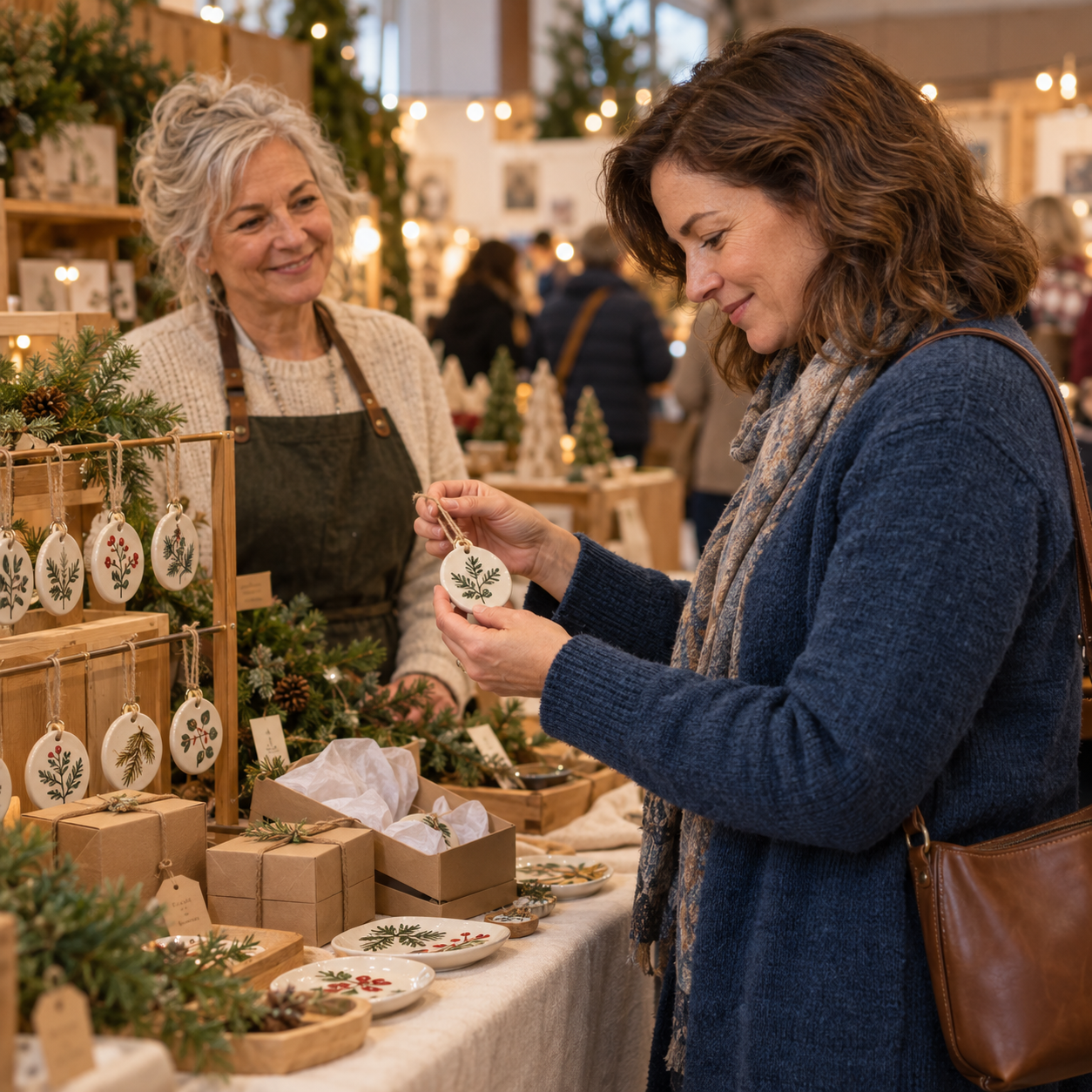
Some shoppers are starting. Others are still deciding.
The National Retail Federation’s October survey found that 43% of holiday shoppers planned to begin browsing and buying before November. At the same time, 64% said they were likely to wait until Thanksgiving weekend to do most of their shopping. Both figures are similar to last year’s results. cdn.nrf.com
Those answers can fit together. Someone can start looking early and make many of their purchases later.
At your booth, a shopper might be choosing a gift today, collecting ideas, or comparing options. Someone studying a print may want to check the recipient’s wall space. Someone admiring a necklace may be considering which person on their list would wear it.
Their browsing alone doesn’t tell you what happens next.
What you can check is whether they have a clear way to find you again.
Is your business name easy to read? Are upcoming show dates accurate? If you offer a shop link or QR code, does it lead somewhere useful—and can shoppers find the piece they were considering?
A shopper who leaves with an idea needs a reliable way back if they decide to act on it.
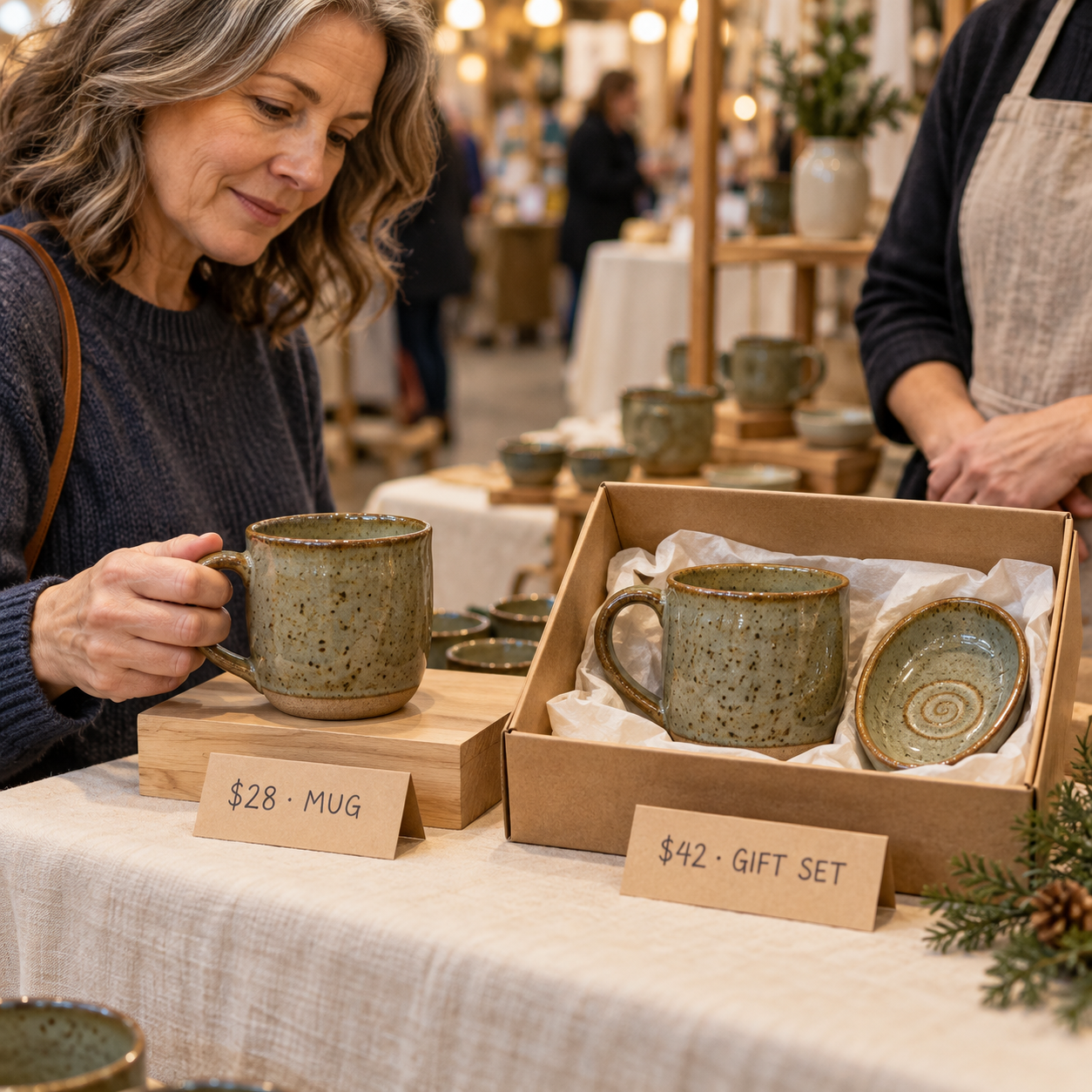
Value matters—but it isn’t one fixed price.
Deloitte’s holiday survey identifies 38% of respondents as value seekers who use several money-saving behaviors. Yet that group plans to spend 12% more than other shoppers. www.deloitte.com
Looking carefully at prices doesn’t necessarily mean someone has a small gift budget. They may be making deliberate choices about where to use it.
For a maker, that raises a practical question: can shoppers understand what they’re getting for the price?
Consider two gift options displayed beside decorative boxes. One price includes the box; the other doesn’t. If that difference isn’t clear, the shopper has to ask before they can compare them.
The same uncertainty can arise around a single item versus a set, an unframed print versus a framed example, or a standard piece versus a personalized version.
Before changing a price, look at the information around it.
Can shoppers find the price without searching? Can they tell what it includes? Are materials, sizes, and relevant differences understandable?
If your existing collection offers choices at different prices, make those choices recognizable. Give shoppers enough information to decide what fits their budget and the gift they have in mind.
Help shoppers picture the person receiving the gift.
In Michaels’ October research with Morning Consult, 60% said personal sentiment matters more than price when choosing a gift. The report also covers handmade and DIY gifting, including gifts people make themselves; it doesn’t establish how much they will purchase from professional makers. www.michaelspressroom.com
Etsy’s fall and winter report offers a more specific marketplace signal: interest in personalized gifts for friends and gifts connected to pets. www.etsy.com
For your booth, the useful question is: what helps someone connect this product with a person they know?
A botanical print might bring a gardening friend to mind. A pet ornament might suit someone celebrating their first holiday with a new puppy. A finished personalized sample can show how a name or inscription becomes part of the piece.
That connection may already exist in your work. Consider whether shoppers can recognize it.
A brief product story, a clear example, or a detail placed where someone can see it may help. Leave room for shoppers to make their own connections, too. The person they picture may be someone you hadn’t considered.
Make the strengths of buying from a maker visible.
Intuit QuickBooks’ holiday research found that reasons people choose small businesses include unique or higher-quality gifts, community support, and customer service or expertise. quickbooks.intuit.com
Those strengths can become tangible at a craft show.
A woodworker can explain why the grain differs between two pieces. A jewelry maker can demonstrate an unfamiliar clasp. A textile maker can help someone understand how a fabric feels and how to care for it.
These exchanges give shoppers something specific to consider.
So do details they can appreciate without asking: a stitched edge, an interesting finish, or a useful example of the product in use.
Think about a question shoppers regularly ask—or something they often overlook. Could its placement, a short explanation, or a simple demonstration make it easier to understand?
Your knowledge of the work is part of what you bring to the show. Give shoppers access to the parts that help them choose.
A promising gift still needs practical answers.
Once someone has a possible recipient in mind, the questions can become very practical:
Can I take it home today?
Can it be personalized, and what does that cost?
When will it be ready?
How will I receive it?
What packaging or care information comes with it?
A ready-made ornament and a personalized sample may sit beside each other while having very different purchase arrangements.
Help shoppers recognize the difference. If custom orders are available, show a realistic order-by date and explain the pickup or delivery arrangement you can fulfill.
If everything is ready to take home, useful answers may concern sizes, contents, care, or packaging instead.
Some organizers make gift readiness an explicit part of their expectations. Toronto’s Leslieville Farmers’ Market asks December applicants about gift options and holiday presentation, including sets or bundles. That is one market’s requirement, and a reminder to check the instructions for your own booked shows. form.jotform.com
For your shopper, gift readiness can be straightforward: understandable choices, suitable protection for the purchase, and accurate information about what happens next.
There is more than one holiday look.
The style research leaves room for different tastes. Michaels reports classic and natural décor preferences alongside more expressive preferences among some younger shoppers. Etsy also highlights playful, embellished holiday categories. www.michaelspressroom.com
Consider where your existing work fits. A quiet botanical collection and colorful ornaments can appeal to different people.
Whatever seasonal touches you use, shoppers still need to see the products, understand their choices, and find the information that matters.
Before your next holiday show
Choose one product or collection. Stand where a shopper would, or look at a photo of your setup.
Can someone picture who a gift might suit? Find its price? Understand what makes it special? Tell whether it is available in time? Find you again afterward?
Our free Holiday Booth Readiness Check gives you a place to record what you see, mark what remains uncertain, and choose one thing to clarify before your next show.
You can also find it in The Resource Library / Tools & Resources on the website.
For the wider context, visit What 2026 Is Teaching Craft Show Vendors in the Reading Room. In January, Craft Show Display & Shopper Trends for 2027 will look ahead with more of this season behind us.