

What Customers Notice First in a Craft Booth—and What They Think You Sell
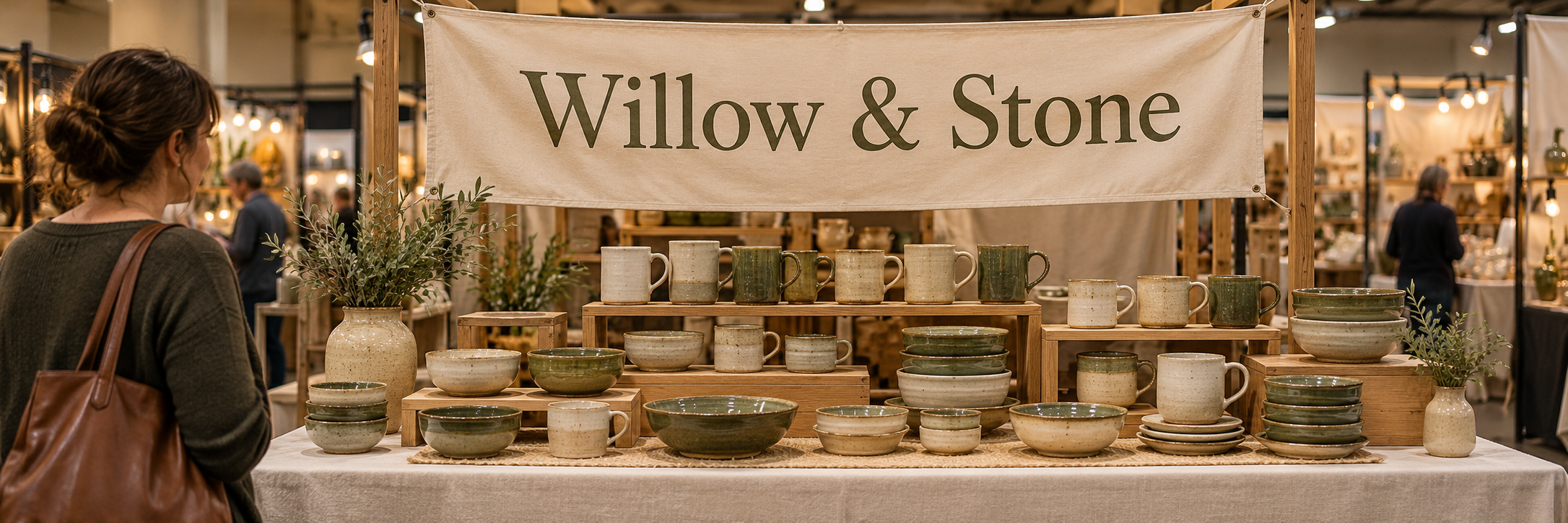
What catches someone’s eye first might be a product, a color, a sign, or the shape of your display. It varies with the booth and the person approaching it.
The useful question is what that first glance helps them understand.
Imagine a pottery booth with a prominent banner reading “Willow & Stone.” Someone notices the name immediately. But do they recognize the mugs and bowls beneath it as the handmade work being offered—or are they still unsure what the booth sells?
The name may attract attention while the products supply the context. That can work well. If the connection remains unclear, though, making the banner larger may do little to help.
What you intend to communicate and what someone takes in can be different. A fresh first impression gives you a place to examine that difference.
Ask someone who hasn’t seen your setup.
You already know what you make and why you arranged the display this way. Someone unfamiliar with your booth can help you notice what needs that inside knowledge.
Before opening, ask someone to look from a normal approach point in the aisle. Give them a few moments, then ask these three questions before explaining anything.
1
What did you notice first?
Let them name whatever caught their attention—a product, the banner, a color, or something you hadn’t considered.
Avoid directing them with a question such as “Did you notice my new display?”
2
What do you think I sell?
Ask for their own words. “Pottery,” “home décor,” and “I’m not sure” tell you different things about what came across.
If their answer surprises you, write it down before explaining what you intended.
3
Where would you approach to browse?
Ask them to point to where they would move closer. They may choose an entrance, a front table, or an aisle-facing display. Stepping inside isn’t necessary if they can comfortably shop from the edge.
Afterward, compare their answers with what you hoped they would notice and understand.
This is a fresh impression, not a test they need to pass.
A friend may try to be encouraging, and another vendor may study details a shopper would overlook. Make it clear that uncertainty is useful, too.
If you’re working alone, show someone an aisle photo for a few seconds and ask the same questions. It’s a useful fallback, though a photo leaves out the experience of approaching the actual space.
One person’s answers give you a perspective to consider. They don’t establish what shoppers will notice or do during the show.
Read the answers without turning them into a verdict.
The useful part of this check is comparing what you hoped would come across with what the person described. Here are three ways those answers might fit together.
The offer is clear.
They notice the mugs and bowls, identify the booth as handmade pottery, and point to a display they would approach.
That matches what you intended. This check hasn’t given you a reason to change the message. You can leave it alone while paying attention to how the booth works during the show.
Attention leads to understanding.
They notice “Willow & Stone” first, then recognize the pottery beneath it and know where to browse.
The banner attracted attention, and the products supplied the context. The fact that they noticed the name first doesn’t make it a distraction. Consider whether they understood the offer without needing you to explain it.
The offer remains unclear.
They remember the name but describe the booth as “home décor,” overlook the mugs, or say they aren’t sure what’s for sale.
That gives you a question to investigate. It doesn’t yet tell you whether the banner needs different wording, the pottery needs greater visibility, or another feature is drawing attention away.
Check the impression against what happens during the show.
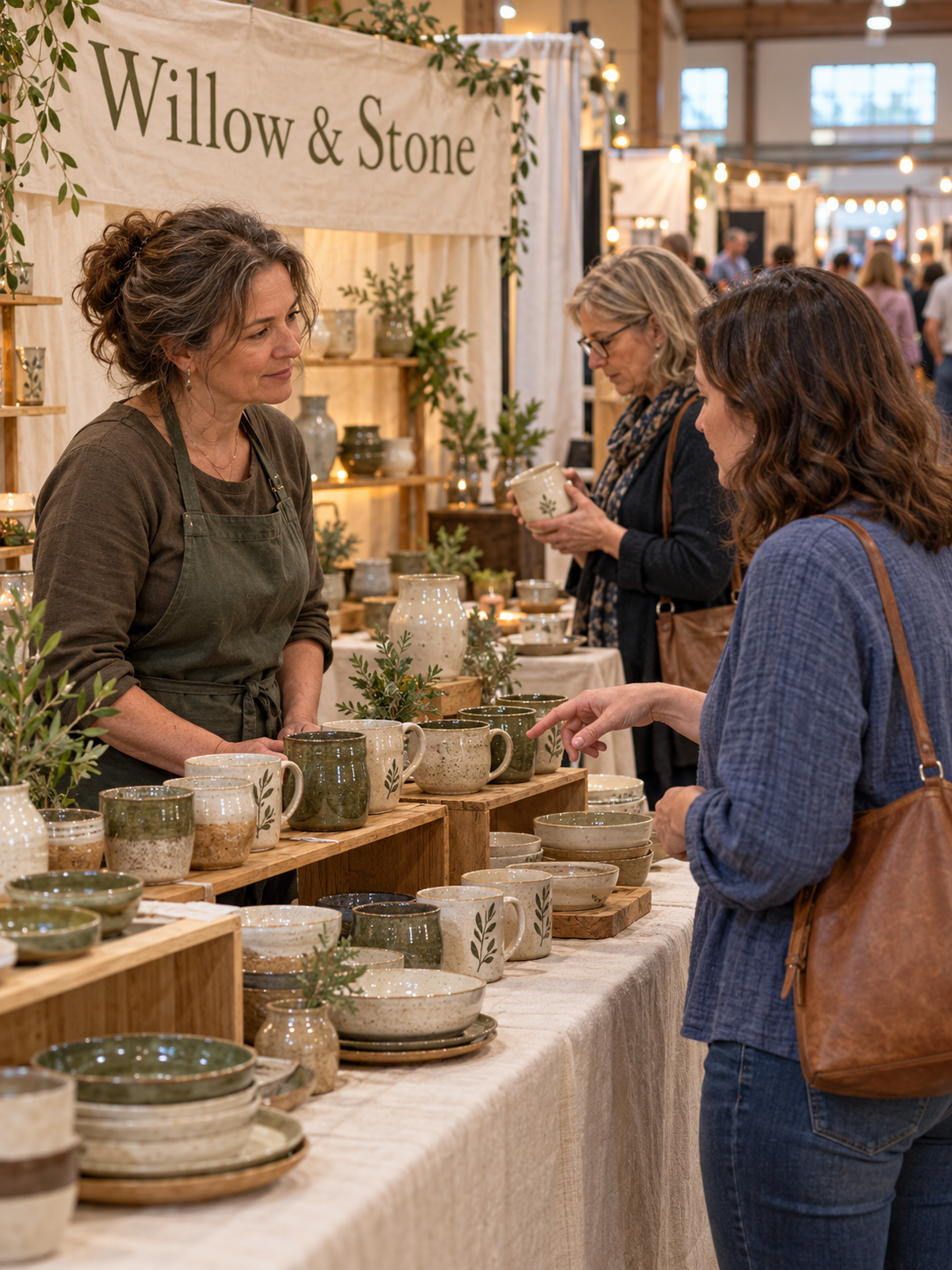
If someone couldn’t tell what “Willow & Stone” sells, you have a useful question to carry into the show: does that uncertainty appear when shoppers encounter the booth naturally?
Listen to the questions people ask. Do they recognize the pottery, ask whether you make it, or seem surprised to discover the mugs and bowls? Notice which displays they approach and what they pick up.
Someone walking past tells you little about whether the message was clear. A repeated question such as “What do you sell?” gives you something more specific to examine. Even then, consider the circumstances: what could that person see from where they stood?
Watching while running the booth can leave you with scattered memories. When Something Feels Off gives you observation pages to map where people stop, hesitate, turn away, and spend time, alongside illustrated examples to help you examine what may be contributing.
Its Focus pages explore what stands out and what competes for attention. Its Signal pages examine how the booth communicates what you offer, including the relationship between signs and visible products.
For the Willow & Stone example, those pages give you details to compare with your own setup: is the brand name the clearest message? Can shoppers readily see the pottery? Does the supporting information help them understand the work?
You may find a reason to test a simple product description beneath the name, or to give the pottery a more visible position. You may also find that the offer is understood and your attention belongs elsewhere.
Once you choose something to try, Your First Fix Plan helps you record the change, why you chose it, and what you’ll watch afterward.
The first-impression check gives you a question. The planner supports the work of checking it against real behavior and choosing a next step with a reason behind it.
50-page printable PDF • Digital download